

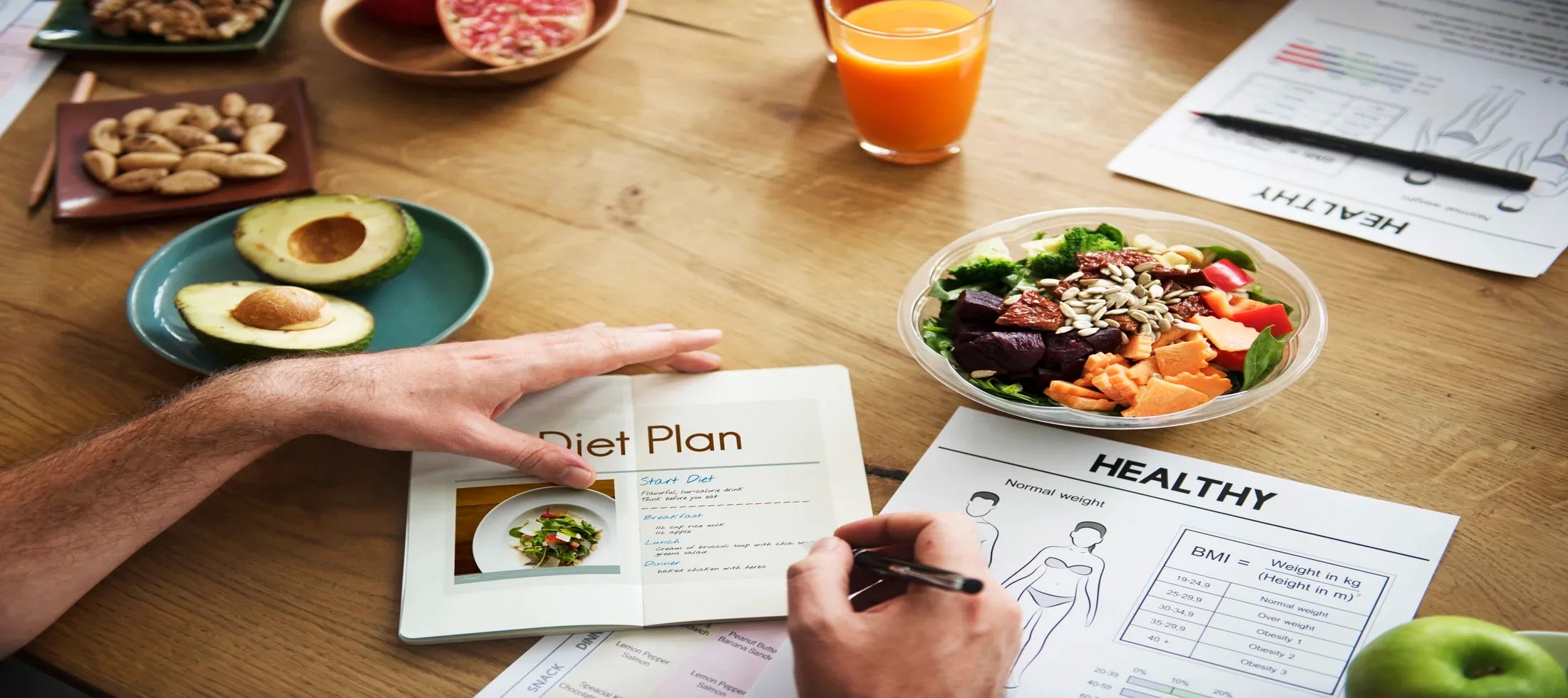
If your goal is to lose weight, everything starts with a calorie deficit. Simply put, you need to eat fewer calories than your body burns each day. When this happens, your body is forced to use stored fat for energy, leading to gradual and sustainable weight loss. A calorie deficit diet doesn’t mean starving yourself; it’s about eating smarter.
By focusing on nutrient-dense foods like lean proteins, whole grains, fruits, vegetables, and healthy fats, you can create a daily calorie shortfall while still feeling full and energized. The key is balance: enough protein to protect muscle, carbs for energy, and healthy fats for satiety.
What is a calorie deficit diet?
A calorie deficit diet simply means eating less energy than your body uses. Your body continuously burns calories for basic functions (breathing, circulation) plus any activity. When intake is lower than output, the body must use stored fuel (fat) to make up the difference. In other words, it’s an “eat less, move more” approach.
A calorie-deficit meal plan should still be balanced and filling. For example, a 7-day plan uses three meals plus two snacks daily, with each meal containing ~45% carbohydrates, 30% protein, and 25% healthy fats. This macronutrient balance keeps you satisfied while fueling activity. Even on a reduced-calorie diet, the focus is on nutrient density: lean proteins, whole grains, vegetables, fruits, and healthy fats.
How many calories should to eat to lose weight?
Your personal calorie goal depends on your age, size, and activity level. If you’re wondering how many calories are required in a day, adults typically need 1,600–3,000 calories to maintain weight. The exact number varies: active younger men may need closer to 3,000, whereas a sedentary older woman might need only 1,600. To lose weight, you must eat below that maintenance level.
A helpful calculator can estimate your maintenance calories based on your gender, age, height, weight, and activity. Once you know your maintenance number, how to calculate calorie deficit is simple: choose how much weight you want to lose per week and subtract accordingly. A common rule of thumb is a 500-calorie daily deficit (500 fewer calories than maintenance) to lose ~1 pound per week. Cutting ~1,000 calories/day would double the rate, but that can be too aggressive for most people.
Remember that physical activity counts too. If you also burn calories with exercise, you may achieve the same deficit with a slightly higher intake. For example, a brisk 30-minute walk burns roughly 150 calories for many people. Including exercise can let you eat a bit more while still losing weight.
What is the best 7 day diet plan to lose weight?
A 7 day diet plan for weight loss provides a structured menu that creates a calorie deficit each day. The goal is to eat filling, nutritious foods while staying within your calorie target. Below is an example menu (for an average adult) that totals around 1,500–1,700 calories per day.
Each day has three balanced meals plus two snacks. This one-week menu doubles as a fat loss meal plan by focusing on lean protein, fiber, and healthy fats.
One Week Diet Plan For Weight Loss
|
Day |
Breakfast |
Snack 1 |
Lunch |
Snack 2 |
Dinner |
|
1 |
Oatmeal with berries & nuts |
Greek yogurt with strawberries |
Grilled chicken salad + quinoa/brown rice |
Apple with nut butter |
Baked fish with broccoli & brown rice + fruit |
|
2 |
Smoothie bowl (banana, spinach, protein) |
Hard-boiled egg + veggie sticks |
Turkey & veggie wrap + side salad/soup |
Cottage cheese with pineapple/peach |
Shrimp/tofu stir-fry with veggies + quinoa/rice |
|
3 |
Veggie omelet + whole-grain toast |
Yogurt & berry smoothie |
Chicken/turkey salad + small fruit |
Mixed nuts + fruit |
Lean turkey/beef chili + roasted veggies |
|
4 |
Avocado toast with egg & tomato |
Veggie sticks + hummus |
Lentil soup/bean chili or quinoa-black bean salad |
Ricotta/Greek yogurt with berries |
Chicken kabobs + grilled veggies + couscous/sweet potato |
|
5 |
Yogurt parfait (berries + granola) |
Pear/apple + cheese stick or nut butter |
Chicken/veggie burrito bowl |
Almonds + baby carrots |
Baked fish with steamed veggies + barley/wild rice |
|
6 |
Protein pancakes with PB & berries |
Apple with PB or peanuts |
Tuna salad on lettuce + whole-grain crackers/roll |
Cottage cheese with pineapple/peach |
Beef/chicken stir-fry with veggies + brown rice |
|
7 |
Whole-grain cereal with milk + banana |
Hummus with cucumber & tomatoes |
Chicken/turkey salad wrap + veggie soup/fruit |
Yogurt & berry smoothie |
Tofu stir-fry with veggies + brown rice |
Each day’s plan is roughly 1,400–1,600 calories, depending on portions, which typically yields a deficit for most adults. It’s not ultra-low-calorie, but it’s modest enough to trigger weight loss. These menus double as a fat burning meal plan, since lean proteins and fibrous vegetables have a higher thermic effect (they burn more calories to digest.
Diet chart for weight loss for females
Women typically need fewer calories than men. For safe weight loss, many women aim for about 1,200–1,500 calories per day. This still provides enough energy and nutrients if the diet is well-designed. A female-oriented diet chart would slightly reduce portions. For instance, breakfasts might still center on high-protein choices but with smaller grain portions. Lunch and dinner remain focused on lean protein, lots of vegetables, and modest whole grains. Snacks can include fruit, low-fat dairy, or a small handful of nuts.
A female weight-loss diet chart might look like:
-
Breakfast: 1 serving (e.g., 1 slice whole-grain toast or ½ cup oats) with a protein (egg or Greek yogurt) and fruit/veggies.
-
Lunch: Protein (3–4 oz) + 1 cup veggies + ¼–½ cup whole grains (brown rice, quinoa) + 1 serving dairy or alternative.
-
Dinner: Protein (3–4 oz) + 1–2 cups vegetables + ¼ cup grains or starchy veggie (sweet potato, corn) + 1 tsp healthy fat (oil or nut).
-
Snacks: A piece of fruit, a cup of raw veggies, or 1 small protein-rich snack (like ½ cup cottage cheese or a boiled egg).
The key is balance and portion control. Following a calorie deficit diet plan with these elements ensures weight loss while keeping nutrition adequate.
What is a one-month diet plan for weight loss?
A one-month (30-day) diet plan simply extends a 7-day strategy across four weeks. It emphasizes consistency and variety over time. In practice, you might repeat or slightly rotate a weekly menu like the one above, introducing new recipes to avoid boredom. For instance, Weeks 1 and 3 could follow one set of meals, and Weeks 2 and 4 a variation (changing protein sources or vegetable mixes).
To build your own one-month plan, combine the weekly ideas above with new healthy recipes (grilled fish, stir-fries, stews, salads, smoothies). Use a food diary or app to ensure you stay in a calorie deficit overall. Also, include regular exercise each week.
Why choose Jacked Nutrition?
When choosing a partner for your fitness journey, Jacked Nutrition stands out. They are a leading supplement retailer trusted by over 1 million customers. Jacked Nutrition guarantees 100% authentic, GMP-certified products (DRAP-registered in Pakistan). That means you get genuine vitamins, protein powders, and fitness supplements without worrying about fakes.
Beyond products, Jacked Nutrition provides tools and support. Their website has a built-in calorie calculator and blog with diet tips. Plus, they offer fast delivery and secure checkout, so you get your orders quickly and safely.
FAQs
What is 7 day protein diet plan for weight loss?
A protein-focused meal plan maximizes lean protein at each meal to boost fullness and preserve muscle. For example, your 7-day plan might center breakfasts on eggs or Greek yogurt, lunches on chicken or turkey salads, dinners on fish or tofu, and snacks on nuts or cottage cheese.
How many calories do I burn in a day?
Every person’s daily calorie burn (Total Daily Energy Expenditure) depends on basal metabolic rate (BMR) plus activity. As a rough guide, many health organizations suggest a sedentary adult woman burns around 1,600–2,000 Cal/day, and a sedentary man 2,000–2,400, with higher needs if active.
How many calories do I burn sleeping?
It might seem like sleeping uses almost no calories, but your body actually burns a fair amount just to maintain functions. If you sleep 8 hours at ~50 Cal/hour, that’s ~400 calories burned overnight. This is why eating late or skipping sleep does not magically change your weight: the calories during sleep are part of your normal daily burn.
Conclusion
Losing weight doesn’t have to be complicated. At its core, it comes down to creating a calorie deficit in a way that feels balanced and sustainable. A meal plan gives you structure, but the real success lies in choosing foods you enjoy, eating in the right portions, and staying consistent over time.
Remember, this isn’t about perfection; it’s about progress. Small daily choices, like swapping sugary snacks for fruit or adding an extra walk to your day, add up to meaningful change. When you combine smart eating with movement, rest, and patience, weight loss becomes not just possible, but sustainable.
Share:
Pakistani Diet Plan for Weight Loss for Females
How to Combine Diet and Supplements for Weight Loss