

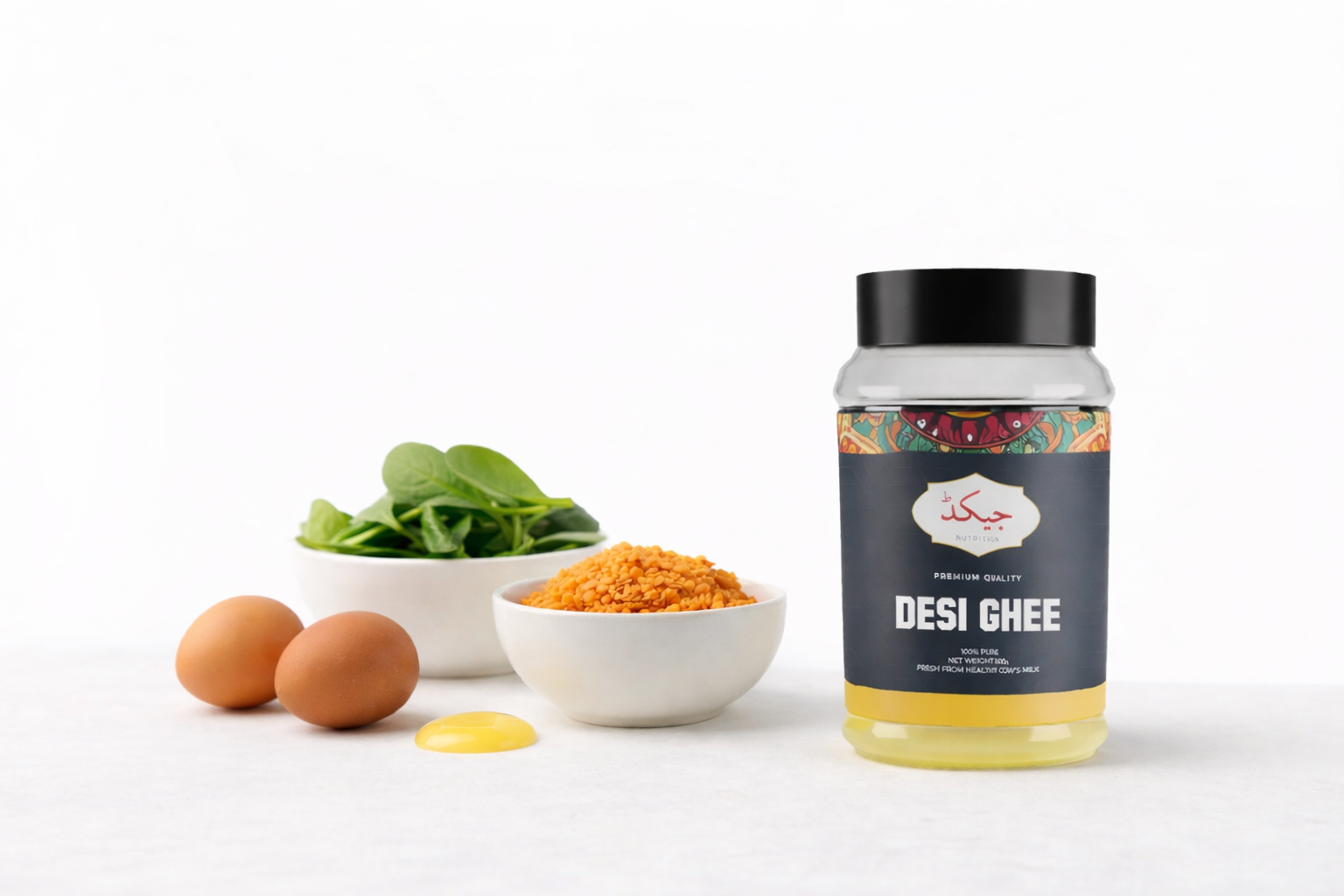

Desi ghee is a traditional cooking fat widely used in South Asian diets and is known for its rich taste and health benefits. One important benefit is the role of desi ghee in nutrient absorption. It provides the fat needed to absorb vitamins like A, D, E, and K. Adding ghee to meals helps the body use these nutrients more effectively.
What is Desi Ghee, and How Is It Made
Desi ghee is made by slowly heating butter from cow or buffalo milk until all the water is removed and the milk solids settle at the bottom. What remains is a golden-yellow fat with a rich, nutty smell. Ghee is almost pure fat and contains very little water, which is why it can be kept at room temperature for a long time.
Traditional methods of making ghee help keep its natural nutrients. Ghee can handle very high heat without burning, so it is good for cooking and frying. It also contains small amounts of important vitamins like A, D, E, and K. Overall, pure desi ghee is a nutritious fat that adds good flavor and supports health.
Understanding Nutrient Absorption in the Human Body
Food is digested and absorbed mainly in the small intestine, where most nutrients are taken in. Proteins and sugars enter the bloodstream directly, while fats and fat-soluble vitamins are absorbed through the lymph system. Bile helps break fats into smaller particles so these vitamins can be absorbed. Without enough dietary fat, fat-soluble vitamins are lost, while water-soluble nutrients like vitamin C and B vitamins do not need fat for absorption.
Why Dietary Fats are Essential for Nutrient Absorption
Dietary fats do more than give energy; they help the body absorb nutrients. Fats, like ghee or oil, make sure fat-soluble vitamins, such as vitamin A, are absorbed instead of wasted. They also help the body take in healthy plant compounds, like carotenoids from vegetables.
Moreover, some dietary fats (like omega-3s) can reduce inflammation in the gut, improving overall gut health and nutrient uptake. When you eat fat, bile helps break it into tiny pieces. Other digestive juices then break it down even more. This helps vitamins A, D, E, and K travel through the gut and get into your body. If there is not enough fat, these vitamins cannot be absorbed properly.
Thus, why dietary fats are essential is clear: fats are the vehicles that make vital nutrients bioavailable.
How Desi Ghee Improves Absorption of Fat-Soluble Vitamins
Since ghee is almost pure fat, it naturally boosts the uptake of vitamins A, D, E, and K. These vitamins dissolve in fat, so when you add ghee to a meal, it acts as a carrier for them.
For instance, cooking carrots in ghee helps your body absorb more β-carotene (provitamin A) from them. Many traditional diets add ghee to vegetables or legumes for this reason. Research confirms that fat is needed for these vitamins, so ghee-rich diets help ensure we absorb what’s in our food.
Interestingly, ghee itself contains some of these vitamins. It provides vitamin A and small amounts of D, E, and K. It even contains vitamin K2, which is important for bone health. Simply put, fat soluble vitamins absorption with desi ghee is significantly improved.
Role of Desi Ghee in Improving Mineral Absorption
Fat doesn’t just help with vitamins; it can affect minerals, too. For example, calcium absorption depends on vitamins D and K2, which need fat to work. Since ghee contains vitamin K2, it helps the body use calcium properly, supporting strong bones.
While evidence is still emerging, traditional medicine has long held that adding ghee can enhance the bioavailability of nutrients, including minerals, by supporting gut health.
Can desi ghee improve mineral absorption in real life? Likely yes, it's fat helps the body take up certain minerals, and the vitamin K2 in ghee supports calcium use in bones. In short, the healthy fats and vitamins in ghee create an environment that can aid mineral absorption.
Desi Ghee and Gut Health Connection
Desi ghee is known for boosting digestion. Modern research shows it also supports gut health. It contains butyric acid, a type of fat that feeds the cells lining the gut. This helps reduce inflammation and keeps the gut bacteria balanced.
Many wellness experts say that desi ghee benefits for gut health by improving digestion and healing the gut wall. Ghee also stimulates bile and pancreatic enzymes, helping break down food for absorption. All these, strong gut lining, balanced microbes, and active enzymes, lead to better nutrient absorption.
Put simply, is desi ghee good for digestion? Many sources say yes: it's fats and butyrate create a gut environment where nutrients can be absorbed efficiently.
Desi Ghee vs Cooking Oils for Nutrient Absorption
A common question is desi ghee better than oil for health and nutrient uptake. Both ghee and oils provide fat needed to absorb vitamins, but there are differences.
-
Ghee is rich in saturated fats and fat-soluble vitamins, while vegetable oils contain more unsaturated fats and vitamin E.
-
Both help with nutrient absorption, but ghee has a high smoke point (~250 °C), making it safer for high-heat cooking.
-
Ghee naturally provides vitamins A and K, while some oils offer omega-3s but are less heat-stable.
Both ghee and oil help the body absorb nutrients, but ghee also provides its own vitamins and stays stable during cooking.
SEE ALSO: The Impact of Circadian Rhythm on Nutrient Absorption
Final Thoughts
Desi Ghee helps your body absorb nutrients by providing healthy fats needed for fat-soluble vitamins. Just 1–2 teaspoons with meals are usually enough. Desi ghee derived from organic products and grass-fed milk offers superior nutritional benefits. Since it is calorie-dense, it should be used in moderation. When used wisely, it supports digestion, gut health, and better nutrient absorption.
FAQs
How does desi ghee help in nutrient absorption?
Ghee’s fats act as a carrier that enables fat-soluble vitamins (A, D, E, K) to be absorbed more effectively in the gut.
Which vitamins are better absorbed with desi ghee?
The fat-soluble vitamins A, D, E, and K are absorbed far better when a meal contains ghee (or another fat).
Who should include desi ghee in their diet?
Most people can benefit from small amounts of ghee; it’s often recommended for those needing healthy dietary fat. Even lactose-intolerant individuals usually tolerate ghee well since the milk solids are removed.
Can adding desi ghee to meals enhance overall nutrient uptake from food?
Yes, adding ghee provides dietary fat that boosts the uptake of fat-soluble vitamins, thereby enhancing overall nutrient absorption.
How does desi ghee support better digestion and nutrient utilization?
Ghee contains butyric acid that fuels gut lining cells, and it stimulates digestive enzymes (like bile), supporting smoother digestion and better nutrient use.
How does desi ghee support gut health for better nutrient absorption?
Ghee’s butyric acid nourishes the colon lining and reduces gut inflammation, creating a healthy digestive environment where nutrients are absorbed efficiently.
Can desi ghee help athletes and active individuals get more nutrients from their diet?
Yes, ghee’s medium-chain fats are easily burned for energy (good for athletes), and the added dietary fat helps absorb more vitamins from foods.
Share:
How Whey Protein Supports Immunity and Daily Energy
Can Daal Chawal Replace Whey Protein? Pakistani Nutrition Reality Check 2026