

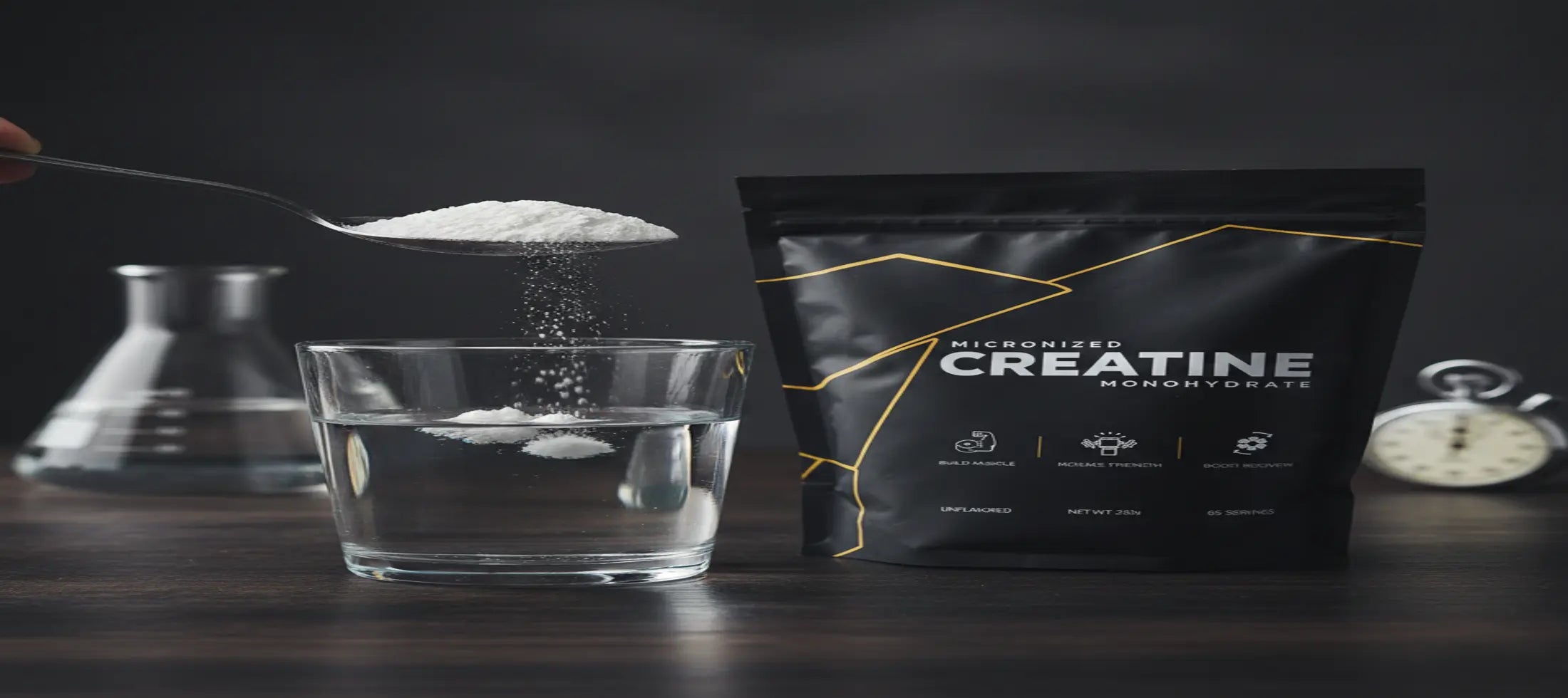

Not long ago, a TikTok/Instagram reel went viral claiming you can verify creatine by dropping it in water. Jacked Nutrition has to set the record straight: the creatine water test is a myth. Real creatine monohydrate naturally leaves a cloudy residue when mixed in liquid, so seeing undissolved powder doesn’t mean your supplement is fake.
In fact, authentic creatine does not dissolve perfectly. A gritty or cloudy mixture happens naturally due to creatine’s chemical structure, not because of poor quality. The short answer is simple: you cannot confirm creatine authenticity with a glass of water. Real verification happens in certified laboratories, not through viral home experiments.
What Is the Creatine Water Test?
Some fitness enthusiasts promote a DIY creatine water test: mix a scoop of creatine powder in a glass of water. If it dissolves instantly and the water is clear, they say the creatine is real. If it clumps or sinks, it’s labeled fake.
This home solubility test has even sparked debates over whether a creatine water test is real or fake.
In reality, however, it’s not an authenticity check at all. It’s simply a quick chemistry experiment on solubility, not a proof of purity. We at Jacked Nutrition hear this question often, and the answer is clear: the water test is fake. It reflects chemistry, not quality.
Why the Water Test Is a Myth
The heart of the myth is a misunderstanding of chemistry. Creatine monohydrate is a crystalline, hydrophobic molecule that is only sparingly soluble in water. A typical 3–5 g scoop will mostly remain as solid particles, leaving a cloudy solution or sediment when dissolved in water. At colder temperatures, it’s even less.
So, if you mix creatine in cold water and see undissolved granules, that’s normal. The creatine cloudy water meaning is simply that the solvent is saturated, not that the product is impure. In short, why creatine does not dissolve in water quickly is just chemistry. A gritty layer at the bottom is expected with pure monohydrate. Therefore, creatine powder not dissolving doesn’t prove it’s fake.
Moreover, using warm liquids or longer stirring usually helps. Sources confirm that a little heat (like stirring in warm water or tea) intensely increases solubility. But even then, your drink might not be crystal clear. A slight cloudiness or residue is completely normal for creatine monohydrate.
So, is undissolved creatine fake? Absolutely not. It’s exactly what happens with genuine creatine. In fact, industry experts explicitly warn that real creatine does not dissolve perfectly and gummy supplements should look cloudy and grainy, not shiny and clear.
SEE ALSO: Does Creatine Harm Your Kidneys: Myth vs. Reality
Common Creatine Myths in Pakistan’s Fitness Industry
In Pakistan’s gyms and online communities, the water test has become one of many myths. Let’s debunk the most common ones:
-
Myth: Undissolved powder means a fake product (the creatine water test myth). People think that if creatine clumps or sinks, it must be counterfeit. In truth, authentic creatine often leaves sediment. Real creatine does not dissolve perfectly. Expect some grittiness; it’s normal for true creatine monohydrate.
-
Myth: There is a reliable creatine quality test at home. DIY tricks (hot water, adding sugar or lemon) are popular, but none can confirm purity. The truth is, you can’t perform a valid quality test on creatine without lab equipment. Home experiments simply can’t identify heavy metals or adulterants.
-
Myth: Crystal-clear mixing proves authenticity. Some claim that if a scoop clears immediately, it’s the real deal. Actually, clear mixing usually means you used lots of water or heat. A clear solution doesn’t guarantee purity, and a cloudy one isn’t a red flag. Don’t trust flashy social media tests. These creatine fake test myths confuse more than clarify. Only scientific analysis can verify a supplement’s authenticity.
How Real Creatine Is Actually Tested
In quality-control laboratories, supplements like creatine undergo rigorous testing, not glassware tricks.
Scientists use advanced methods (like high-performance liquid chromatography and mass spectrometry) to identify and quantify ingredients. They perform a creatine purity test, checking that the label’s contents match exactly what’s in the jar.
Lab technicians also screen for contaminants: heavy metals (lead, arsenic, mercury) and microbial pathogens (Salmonella, E. coli) are carefully measured. Here’s what real lab testing involves:
-
Ingredient Verification: Each batch is analyzed to confirm it’s truly creatine monohydrate and in the correct amount. HPLC or MS will catch any substitution or dilution.
-
Potency Check: The test ensures the creatine dosage per serving matches the label. Under- or overdosing can affect safety and efficacy, so potency verification is crucial.
-
Purity Screening: Labs check for impurities or illegal substances. A proper creatine purity test scans for heavy metals and other additives.
-
Microbiological Testing: Even bacteria and mold are tested. This ensures the product is safe to consume.
-
Certificate of Analysis (CoA): After testing, the lab issues a report (CoA) documenting all results. This official document is the final creatine authenticity test, certifying that your supplement truly meets its claims.
How Jacked Nutrition Tests Its Creatine
At Jacked Nutrition, we follow these industry standards. Every creatine monohydrate product we offer comes from GMP-certified manufacturers and is DRAP-registered in Pakistan. DRAP approval means the Drug Regulatory
Authority has reviewed the product’s safety and labeling; it confirms the package contains what it claims. We require only GMP-certified creatine, ensuring each batch is made under strict quality controls.
While we may not run our own lab on-site, we rely on third-party lab certifications and Certificates of Analysis. In short, Jacked Nutrition trusts formal testing (identity assays, purity checks, and CoAs) over any home experiment. Our commitment is to sell only 100% original, tested creatine.
How to Identify Original Creatine in Pakistan
Spotting genuine creatine starts with the packaging and paperwork. Genuine creatine comes in sealed containers or pouches with clear labeling. For example, Jacked Nutrition’s Micronized Creatine shows Made in Europe and includes all ingredients, net weight, and serving count.
Check for quality logos: a DRAP registration number and a GMP or third-party certification on the label are good signs. Always look for a tamper-evident seal and batch/expiry dates.
Fake products often have spelling mistakes, faded printing, or missing certificates. The safest approach is to buy from authorized retailers (like Jacked Nutrition’s official stores or website) rather than street vendors. By verifying the packaging and seller, you can be confident your creatine is original.
Why Educating Pakistani Consumers Matters
Misconceptions about supplements can hurt your fitness and wallet. Without the right information, consumers are prey to misleading marketing tactics or counterfeit products. Third-party labs warn that thorough testing is essential for safety. In Pakistan’s supplement market, pushing for science-backed knowledge is crucial.
When consumers demand DRAP-approved, GMP-certified products and understand that true quality requires lab analysis, the whole industry benefits. Brands like Jacked Nutrition aim to build awareness so that Pakistani athletes base their decisions on facts, not on viral tests. Informed buyers foster transparency, higher standards, and better results for everyone.
Conclusion
To sum up, tossing creatine in water won’t reveal if it’s real. Creatine’s limited solubility means cloudy or gritty water is normal. Proper testing for supplements is done in accredited labs, checking identity, purity, and safety with scientific methods. Always rely on those results (or reputable certifications like GMP/DRAP) rather than TikTok tricks.
For Pakistani lifters, the takeaway is clear: buy from trusted brands like Jacked Nutrition that use certified, lab-verified creatine, and demand evidence over myths. Knowledge is your best supplement, and the real creatine test.
FAQs
Does creatine dissolve in cold water?
Only partially. In cold water, creatine is barely soluble.
Is cloudy creatine fake?
No, not at all. A cloudy or gritty drink after mixing creatine is completely normal. Real creatine monohydrate often leaves undissolved particles, which simply means you’re at the solubility limit.
Which creatine is best in Pakistan?
Jacked Nutrition micronized creatine monohydrate is the best creatine in Pakistan. It is halal-certified, DRAP-registered, and GMP-certified.
Share:
Pre-Workout & Heart Health - What Pakistanis Need to Know
Supplements and Medication Interactions - What to Avoid