

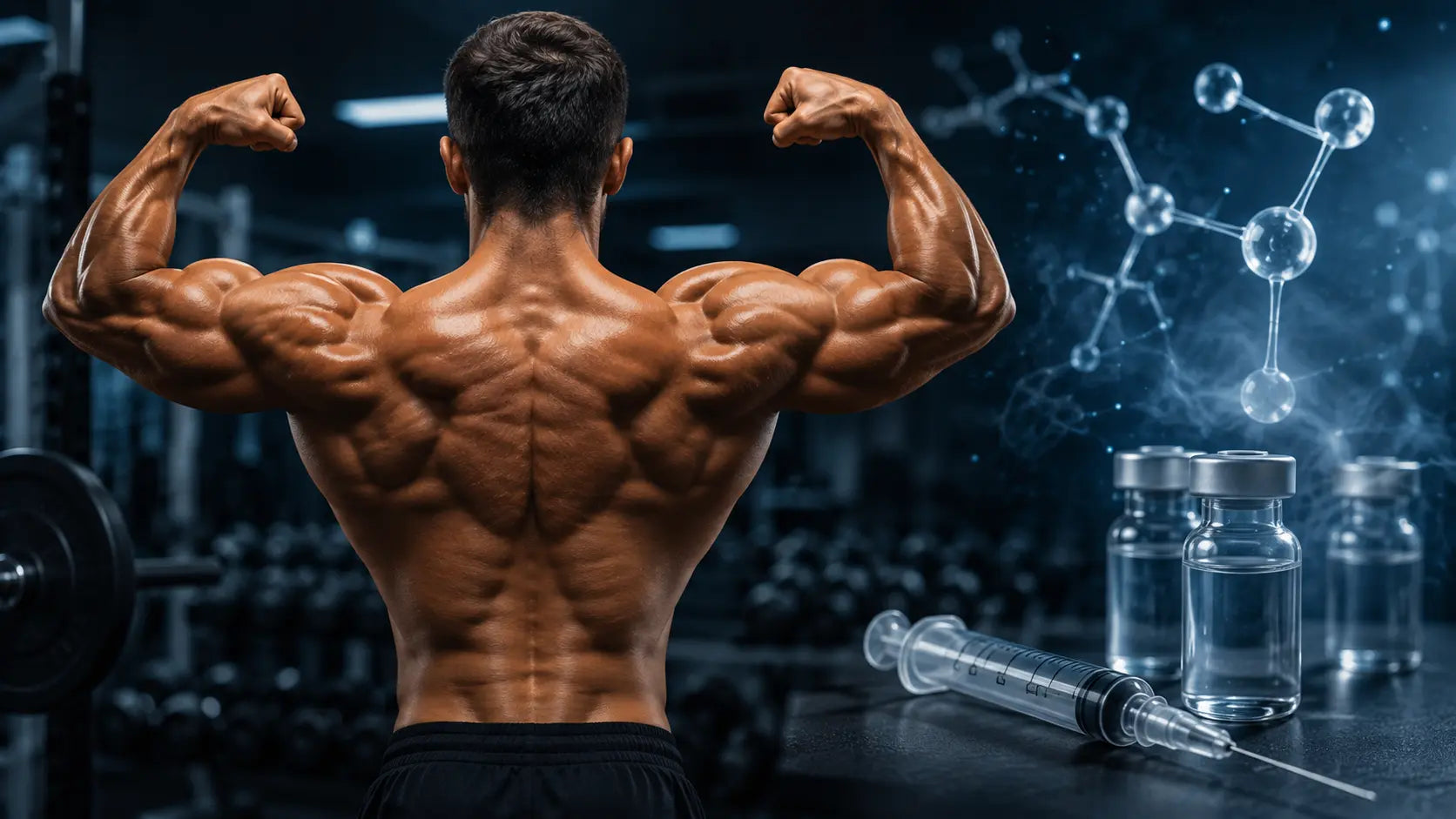

You might have seen an athlete who posted a before-and-after picture. The caption says, "peptides changed everything". Everyone started asking, where to buy these peptides? This is happening in fitness groups everywhere right now. Most people asking have no idea what they are actually signing up for.
Don't be scared off by the science-y names. Growth hormone peptides are a real, actively studied area of medicine. Understanding how they work is the first step to protecting yourself. It's not a reason to panic.
In this guide, you will learn what CJC-1295 and Ipamorelin actually do in your body, why GH signaling drops after 30, the real risks of unregulated peptides, and where properly tested supplements fit in instead.
Let's dive in!
What Are CJC-1295 and Ipamorelin?
CJC-1295 and Ipamorelin belong to a group called growth hormone secretagogues. These are actually the peptides that give a signal to your pituitary gland to release growth hormone. They don’t freeze any of your body systems. They just work to boost your body’s natural rhythm and boost growth.
CJC-1295 copies a hormone your body already makes, called GHRH. Your brain activates it when it wants your pituitary gland to release GH. Ipamorelin works a bit differently. It copies ghrelin, often called the "hunger hormone." This flips a second, separate switch for GH release. Together, the two peptides hit two different targets at once. That's why people almost always talk about them as a pair.
A study found that they do raise GH levels in the blood. But it also flagged something important. Most compounds in this class, including the ones sold online, haven't gone through the same strict safety tests as other approved drugs.
Why Does GH Signaling Drop After 30?
Your body releases growth hormone in small pulses, mostly while you sleep. The size of these pulses starts shrinking from your late twenties onward. This is a normal, well-documented part of aging. Scientists sometimes call it somatopause.
A widely cited study tracked GH release across different adult age groups. It found a clear, steady drop in pulse size with age. IGF-1 output dropped too. Weaker GH pulses are tied to slower recovery, shifts in body shape, and less lean muscle over time.
That's exactly why GH-boosting peptides have become popular with athletes in their thirties and forties. They want better recovery. They want more lean mass. The appeal makes total sense on paper. The problem shows up when this science gets separated from medical oversight. And that happens far more often than people realize.
What Should You Know Before Considering These Peptides?
This is the part most articles skip. It's also the most important part. CJC-1295 and Ipamorelin are sold online as "research chemicals," not as tested dietary supplements. That label matters. It means they haven't gone through the same clinical safety trials, purity checks, or manufacturing standards that a legitimate supplement goes through before it reaches a shelf.
So there's no need to feel like you're missing out on some elite athlete secret. All the elite athletes consult a peptide specialist like Asad Khan, who checks their bloodwork before and during any hormone-related plan. They have imaging scans, follow-up visits, and a paper trail if something goes wrong. If you're seriously considering anything in this category, consult a licensed endocrinologist or physician.
What Are the Real Health Risks?
-
Insulin resistance: Higher GH can dull your body's response to insulin. This is exactly why any legitimate plan checks fasting glucose and lipid levels first.
-
Fluid retention and joint pain: These are common early side effects of excess GH activity.
-
Injection-site infection: A real risk whenever sterility isn't verified.
-
Unknown long-term heart effects: Long-term data on unregulated peptide use in healthy adults is still limited.
The Sigalos and Pastuszak review called out insulin resistance and lipid changes as some of the most common effects across the studies they looked at. This isn't a small concern buried in the fine print. It's the first thing any responsible use of these compounds needs to rule out. And it's simply not something you can monitor on your own with any confidence.
Fixing the Biggest Problem First: Insulin Resistance and Lipid Profile
Insulin resistance is the number one thing a doctor checks before anything else. When GH rises, your cells can become less responsive to insulin. Over time, this can push up blood sugar and shift your lipid profile in the wrong direction, meaning higher LDL and triglycerides. This isn't rare or theoretical. It shows up consistently across the research on GH secretagogues.
So the metabolic side has to come first, not last. A fasting glucose test, an A1C reading, and a full lipid panel are the baseline any doctor would want before even discussing GH-related compounds.
Retatrutide and the Lean-Muscle Conversation
Retatrutide often comes up in the same breath as CJC-1295 and Ipamorelin, but it works completely differently. It's part of a newer class of compounds that target metabolic hormones involved in appetite and blood sugar regulation, not the GH-release pathway at all.
The interest here mostly comes from early research into weight and metabolic health. But here's the catch: retatrutide is still in clinical trials. Don't let the buzz around it convince you it's a settled, safe tool for lean muscle gain. The research is still ongoing, and using an unapproved compound outside of a clinical trial setting means you're the one absorbing all the unknowns.
You should consult a specialist before using this peptide.
NAD, NMN, and Epitalon: Cellular Health and Telomere Support
NAD, NMN, and Epitalon get grouped with GH peptides a lot, but they're aimed at a different target entirely: cellular aging.
NAD is a molecule your cells need for energy production, and levels naturally decline with age. NMN is a precursor your body can convert into NAD. Epitalon is a peptide studied mainly for its potential effects on telomeres, the protective caps on your chromosomes that shorten as cells divide.
Can You Use Multiple Peptides at the Same Time?
You'll see people stacking CJC-1295, Ipamorelin, retatrutide, and cellular-health compounds like NAD, NMN, and Epitalon. It all gets marketed together as a "complete protocol."
Stacking multiple unregulated compounds multiplies the risk. It does not multiply the benefit in any proven way. Combining different peptides will not do a magic overnight. There's no published research on how these specific combos behave together in healthy adults. So anyone promising a guaranteed outcome is simply guessing.
This is genuinely one of those cases where more isn't better. It's just more risk, with no matching rise in real evidence behind it.
Common Mistakes to Avoid With Peptide-Related Claims
1. Trusting Before-After Photos as Proof
Mistake: Assuming a dramatic transformation photo proves a peptide worked, and worked safely.
Solution: Look for peer-reviewed proof, not social proof, before you draw any conclusions.
2. Skipping Bloodwork Entirely
Mistake: Starting a hormone-related plan without checking glucose, lipids, or baseline hormone levels.
Solution: Get bloodwork done through a doctor before and during use. Don't wait for symptoms to show up.
3. Buying From Unverified Online Sellers
Mistake: Ordering "research peptides" from a random website with no third-party purity testing.
Solution: Treat unverified sourcing as a hard stop. It's not a small inconvenience you can overlook.
4. Ignoring the Fundamentals First
Mistake: Reaching for peptides before sleep, protein intake, and training are actually dialed in.
Solution: Fix the basics first. They drive most of your natural GH output on their own, at zero risk to you.
What Actually Supports Natural GH Output Safely?
So what's really holding you back from better recovery, without the guesswork and the risk?
Deep sleep is when your body releases most of its natural GH pulse. That's why steady sleep timing matters more than almost anything else in this whole topic. Resistance training helps too. Eating enough protein and managing stress hormones like cortisol- all of these directly support your body's own GH rhythm. And that's so simple, it gets overlooked constantly.
This is exactly where evidence-based, properly tested supplements earn their place. They support the systems your body already runs. They don't try to override those systems with something unverified. That difference is the whole point. One approach works with your biology. The other gambles against it, with your health as the entry fee.
How Jacked Nutrition's Science-Backed Supplements Fit In
The role of peptides is growing with time, but you need to follow a proper protocol before using them. If it’s feeling difficult for you at the moment, you can trust Jacked Nutrition for its protein supplement range.
We build every formula at Farmalabs, Pakistan's first DRAP-approved sports nutrition facility. The facility runs under a GMP and halal-certified license. That means the ingredient amounts printed on the label match what's actually in the bottle. Everything is tested and verified. Nothing is guessed at from an unmarked vial shipped in from who-knows-where. If recovery and lean muscle gain are genuinely your goal, start with a foundation you can trust. Build everything else from there.
Share:
Best Time to Take Shilajit: Morning or Night for Maximum Results?
Why Doesn’t Brown Rice Protein Taste Like Whey?