

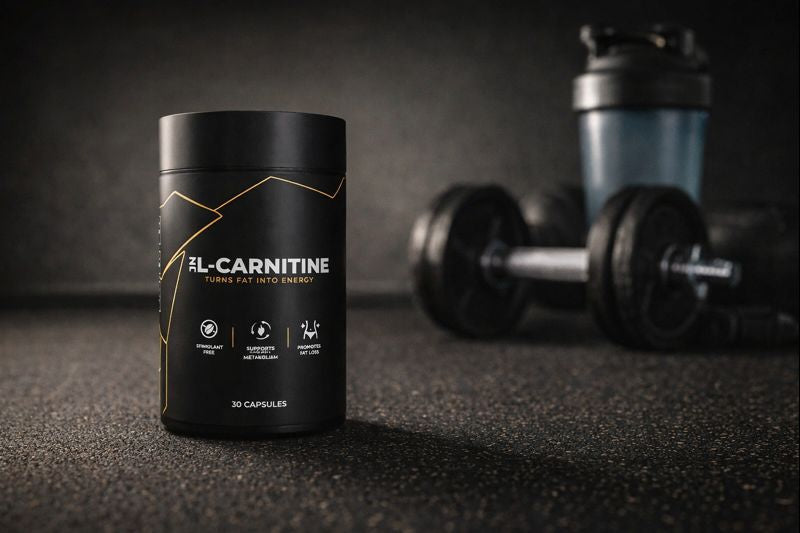

Curious about L-carnitine benefits for enhanced recovery and endurance? A lot of athletes are curious about it. L-carnitine is one of the most talked-about supplements in sports nutrition, especially among athletes who train hard and often. It’s naturally produced in the body and plays a key role in how we create energy during exercise.
At its core, L-carnitine helps your body turn fat into fuel. It works like a transport system, carrying fatty acids into the mitochondria, the power plants of your cells, where they’re burned for energy. This becomes especially important during long or intense workouts when fat is a major energy source.
For athletes, this matters in two big ways. Better fat utilization can mean improved endurance and less early fatigue. At the same time, improved blood flow and oxygen delivery may support faster muscle recovery after training. That’s why many athletes use L-carnitine as part of their routine to train longer, feel less exhausted, and bounce back quicker between sessions.
Role of L-Carnitine in Fat Utilization during Exercise
L-carnitine’s main job is fatty acid transport. During prolonged exercise (like cycling or distance running), your body shifts to using more fat for energy. L-carnitine shuttles those fat molecules into mitochondria so they can be oxidized (burned). This increases the energy produced without using up limited glucose stores.
In other words, L-carnitine helps your body tap into fat reserves, preserving glycogen and preventing early exhaustion. It’s why many say, “does L carnitine support fat burning?”, and indeed, by its nature, it does.
Without enough L-carnitine, fatty acids can’t enter the energy cycle efficiently. Some studies suggest that supplementing L-carnitine can raise the amount of free carnitine in muscle, possibly enhancing this fat-burning pathway. However, note that the body makes enough L-carnitine on its own, and normal diets (especially with meat) provide a lot. Vegans or endurance athletes might consider supplements to ensure levels stay high during heavy training.
How L-Carnitine Enhances Endurance and Stamina
Think of endurance as your body’s ability to sustain activity. L-carnitine supplementation has been linked to improvements in measurable endurance markers. People taking L-carnitine saw higher VO₂ max (maximal oxygen consumption). A higher VO₂ means your muscles are using more oxygen efficiently. Athletes with higher VO₂ often perform better in long sessions.
Furthermore, L-carnitine can reduce muscle fatigue. It appears to increase the time it takes to reach exhaustion during exercise. This is partly because it transports more fatty acids for fuel, and partly because it buffers lactic acid buildup (by shuttling excess acetyl groups).
The net effect: you may be able to train or compete longer before feeling wiped out. That’s why many athletes say L-carnitine improves stamina during intense training.
Of course, not all studies see magic, but several find a positive trend: L-carnitine supplementation improves sports endurance and delays the onset of fatigue. You might notice feeling less out-of-breath and less tired in endurance workouts when you’re supplementing appropriately.
Impact of L-Carnitine on Muscle Recovery
After a tough workout, recovery is important. L-carnitine seems to give muscles a faster healing boost. Research shows L-carnitine supplementation reduces muscle damage markers and soreness. How? By improving blood flow and oxygen to stressed muscles, and by buffering toxins.
L-carnitine also increases acetyl-L-carnitine levels in cells, which helps cells generate energy for repair. It has antioxidant effects too, neutralizing free radicals formed during intense exercise. Plus, there’s evidence that it enhances growth hormone response post-workout, which aids recovery.
All this means quicker muscle repair and less downtime between sessions. For athletes, that’s a big deal: faster recovery means more consistent training gains.
In older or deconditioned athletes, extra L-carnitine has even been linked to increased muscle mass and strength when combined with exercise, along with lower fatigue.
L Carnitine: Food Sources vs Supplements
Naturally, we get L-carnitine from food. Red meat (especially beef) is the richest source, followed by dairy and fish. A regular omnivore diet usually provides more than enough L-carnitine. However, cooking can destroy some, and vegetarian diets provide very little.
Supplements come in various forms: the most studied for sports is L-carnitine L-tartrate (often just called “carnitine”). People typically take 1–3 grams per day. It’s sometimes paired with carbohydrates (insulin can help muscles take it in). Another form, acetyl-L-carnitine, is popular for brain health, but for exercise effects the regular form is fine.
Whether from food or pills, L-carnitine absorption into muscle can be slow. It may take several days of dosing to raise muscle levels. That’s why athletes often carb-load with carnitine over weeks. When choosing a supplement, look for pure L-carnitine L-tartrate powder or capsules from a trusted brand.
Who Benefits Most from L-Carnitine Supplements
Not every athlete will feel a difference. Those who might benefit include:
-
Endurance athletes (runners, cyclists, rowers): They rely heavily on fat metabolism and oxygen use. L-carnitine could help them squeeze out more energy and recover better.
-
Vegetarians/Vegans: Plant-based diets are low in L-carnitine. Supplements can fill this gap and support performance.
-
Older adults: Natural production of L-carnitine declines with age, so supplements can combat fatigue and muscle loss.
-
Strength athletes: Some studies show even weightlifters can benefit from better recovery and potentially a small boost in lifting power, though effects are generally smaller than in endurance sports.
-
High-level trainers: If you train multiple times per day or have competitions back-to-back, faster recovery is golden. L-carnitine is often used by serious competitors. If you’re a casual exerciser, you might not notice a big change. But if you’re pushing your limits, L-carnitine can be a helpful part of your supplement stack.
Conclusion
L-carnitine is a naturally occurring compound that acts like a fuel delivery worker in your cells. It supports endurance and fat-burning. It also helps muscles recover faster by reducing damage and improving blood flow. While it’s not a magic pill, many athletes find that taking L-carnitine supplements (especially with meals) helps them train harder and bounce back quicker. Think of it as an edge; it may enhance stamina, reduce fatigue, and aid muscle repair when used smartly.
FAQs
How does L-carnitine help athletes recover faster after workouts?
L-carnitine boosts blood flow and oxygen to muscles during exercise. After workouts, this means less muscle damage and quicker repair. Studies report less soreness and lower injury markers with L-carnitine supplementation.
Can L-carnitine improve endurance during long training sessions?
Yes. It helps the body burn fat more efficiently for energy. This spares muscle glycogen and delays fatigue. Many athletes notice they can go longer before tiredness sets in, which suggests improved stamina.
Does L-carnitine reduce muscle soreness and fatigue?
It can. Research shows L-carnitine reduces markers of muscle injury and eases soreness after intense exercise. It shuttles out toxins and improves cellular recovery, and helps you feel ready for the next session sooner.
How does L-carnitine support energy production during exercise?
L-carnitine transports long-chain fatty acids into mitochondria, where they are burned to produce cellular energy. It helps your muscles tap into fat for fuel, providing energy over longer periods.
Is L-carnitine effective for both endurance and strength athletes?
Evidence is stronger for endurance benefits, but both types of athletes use it. Endurance athletes benefit from better fat utilization and oxygen use. Strength athletes may see slight gains in recovery and muscle function, but results vary.
Does L-carnitine support fat metabolism without harming performance?
Yes. By design, L-carnitine aids fat metabolism. It doesn’t block muscle fuel or hurt performance, quite the opposite. Enhanced fat burning can actually spare muscle glycogen and keep you working efficiently.
Share:
How Pre Workout Supplements Support Better Mind Muscle Connection
Difference Between Clean Mass Gainers and High Calorie Mass Gainers