

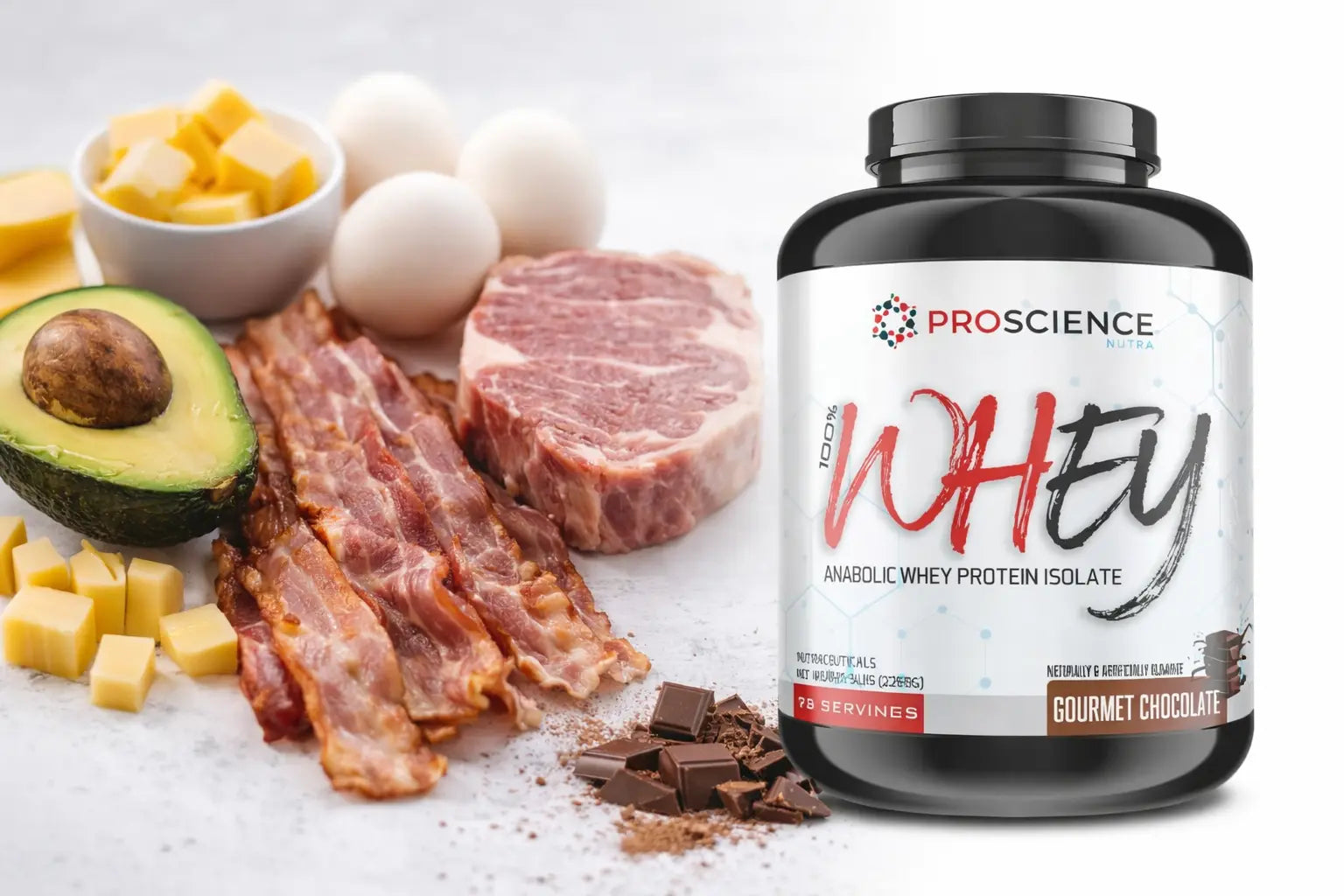

Many keto dieters ask, how whey protein isolate fit into a keto diet? Very well, if chosen wisely. Whey protein isolate is the high-purity form of whey, meaning it’s packed with protein but has almost no carbs. This makes it a smart choice for keto, where carbs must stay very low.
Understanding Keto and Low-Carb Diets
The ketogenic diet focuses on very low carb intake (usually 20–50 grams per day) with moderate protein and high fat. A typical keto macro split might be 70-75% fat, 20-25% protein, and 5-10% carbs. This means most of your calories come from fats like oils, butter, and fatty meats, with very few carbs. Every gram of carb counts, so supplements and foods are chosen carefully. Whey protein isolate fits into this picture because it provides the protein needed for muscle and recovery without using up much of that carb allowance.
Low-carb diets (not quite as extreme as keto) simply limit carbs significantly. Even then, reducing carb sources like sugar and starch often leaves protein as a larger portion of the diet. Whether full keto or moderate low-carb, people need protein to maintain muscle and stay full. Using protein powders can help hit those targets easily.
Nutritional Profile of Whey Protein Isolate
Whey protein isolate (WPI) is made by filtering whey to remove almost all fat and lactose (milk sugar). The result is a powder that’s 90–95% protein by weight, with minimal carbs. A typical scoop (around 30 grams) gives you about 25 grams of pure protein and only 1–2 grams of carbs (often even less if it’s unflavored).
Because isolate is so lean, it’s very keto-friendly. It mixes easily into shakes, coffee, or recipes without spiking your blood sugar. Many high-quality isolates, like 100% whey protein isolate, show purity. These products are ideal on keto: you maximize protein per scoop and avoid extra carbs or fats that could knock you out of ketosis.
Benefits of Whey Protein Isolate on Keto
-
High Protein, Low Carbs: This balance helps you meet keto protein goals without blowing your carb limit. Staying in ketosis relies on low carb, so a whey isolate with ~0-1g carbs is a safe pick.
-
Supports Muscle Preservation: On keto, your body can burn some protein for energy if carbs are scarce. Extra protein from isolate helps protect muscle. Research shows that having enough protein preserves lean mass during weight loss. Whey isolate supplies those building blocks efficiently.
-
Promotes Fat Loss: High protein is satiating (it keeps you full). Using whey isolate can help curb cravings and reduce total calories, aiding fat loss on keto.
-
Quick Absorption: Whey isolate is absorbed rapidly. This makes it a great post-workout, when fast protein delivery helps muscle recovery. Quick recovery can mean you maintain strength on keto, which is key for long-term success.
-
Low Additives: Many whey isolates for keto have no added carbs or sugars. A product with Whey protein isolate for weight loss on the label likely has zero fillers and just pure protein, ensuring it won’t kick you out of ketosis.
-
Convenience: Keto meals can sometimes be tedious to prep. Whey isolate gives a quick way to hit protein macros in a shake or blended into keto-friendly recipes.
Whey Protein Isolate vs Concentrate for Low Carb Diets
The main difference is carb content. Whey concentrate retains more milk sugar, so it usually has 2–5 grams of carbs per serving. In a keto diet, that can be significant. For example, a typical whey concentrate might have around 3–4g carbs (from lactose) per scoop. In contrast, a high-quality whey isolate usually has about 0.5–1 g of carbs per scoop.
Because of this, isolate is often better for strict keto. If you use concentrate, you must track those carbs carefully and fit them into your daily limit. Some people can use a bit of concentrate on keto, especially if they’re doing cyclical keto or have a higher carb target. But for most, isolate is safer to ensure you stay under ~30g carbs.
Another factor: lactose intolerance. Keto dieters sometimes cut dairy; isolate is almost lactose-free, so it’s easier on digestion than concentrate. So, is whey protein isolate better than concentrate for keto? Yes, in terms of keeping carbs low and fitting keto macros. Only choose concentrate if you absolutely need variety or aren’t as strict on carbs.
See More: Whey Protein Isolate vs. Concentrate
Protein Intake and Ketosis: Finding the Right Balance
Protein is vital on keto, but too much can momentarily pull you out of ketosis through gluconeogenesis (conversion of excess amino acids to glucose). The sweet spot is usually moderate protein. Research suggests that around 1.2–1.7 grams of protein per kilogram of body weight daily supports muscle without stopping ketosis. For a 70kg person, that’s roughly 84–119g of protein per day.
Use whey isolate to help reach this range comfortably. For example, two shakes (each 25g protein) already give 50g protein, allowing you to spread the rest from food. Timing also matters: having some whey after workouts or between meals ensures your muscles get a steady supply of amino acids.
Remember: even on keto, always prioritize fats for energy and keep carbs low.
Common Mistakes to Avoid
-
Not counting carbs in protein powder: Always check the label. Some flavored whey isolates add sugar. Stick to pure or naturally sweetened versions.
-
Overlooking overall diet: A shake can’t fix a high-carb meal. Keto success is about total carb control. Use whey isolate along with low-carb foods (meats, veggies, healthy fats).
-
Ignoring protein needs: Some keto beginners think they should limit protein too much. Don’t skimp. Muscle preservation matters. If you’re lifting weights or active, lean on whey isolate to help meet higher protein needs.
-
Using whey at the wrong times: Drinking whey isolate with a high-fat meal is still fine, but you’ll digest it more slowly. Some people prefer taking it post-workout when their body craves protein.
Final Thoughts
Whey protein isolate is very keto-friendly due to its high protein and low carb content. It can help you maintain muscle, stay full, and support fat loss while keeping you in ketosis. For diabetics or those watching blood sugar, isolates are a safe supplement choice because they have minimal impact on blood glucose. Just be mindful of your macros: count the small carbs in your protein shake as part of your daily total.
If you’re searching for the best whey protein isolate for a keto diet, look for one made with grass-fed or hormone-free sources to ensure quality. Use it as a support for convenience and nutrition.
FAQs
Is whey protein isolate suitable for a keto diet?
Yes. It provides high protein with very few carbs, so it fits well into keto macros and helps keep you in ketosis.
Can whey protein isolate stop ketosis?
Not usually. It has almost no carbs, so it won’t kick you out of ketosis if your overall macros are on track. Just avoid shakes with hidden sugars.
Is whey protein isolate good for fat loss on keto?
Yes. It boosts protein intake (which helps preserve muscle and increase satiety), so you’re more likely to stick to a calorie deficit and lose fat.
How to use whey protein isolate without disrupting ketosis?
Choose an unflavored or low-carb flavor, measure your scoops, and include its macros in your daily limit. Drink it as a snack or post-workout, but always factor it into your total carb count.
Can diabetics use whey protein isolate on a low-carb diet?
Generally, yes. It has minimal carbs and can help control blood sugar by providing steady protein. However, anyone with diabetes should monitor their response and consult a doctor.
Does whey protein isolate spike insulin on keto?
Whey is somewhat insulinogenic (it can trigger an insulin release due to its amino acids), but because it has so little sugar, the effect is mild. In a well-formulated keto diet, an occasional shake typically won’t cause issues.
Is whey protein isolate better than plant protein for keto?
Often yes. Whey isolate is a complete protein with all essential amino acids and nearly zero carbs. Many plant proteins have more carbs and may lack some amino acids, so whey isolate is usually more efficient on a strict keto diet.
Share:
How Whey Protein Concentrate Fits into a Balanced Diet
The Role of Multivitamins in Maintaining Healthy Skin