

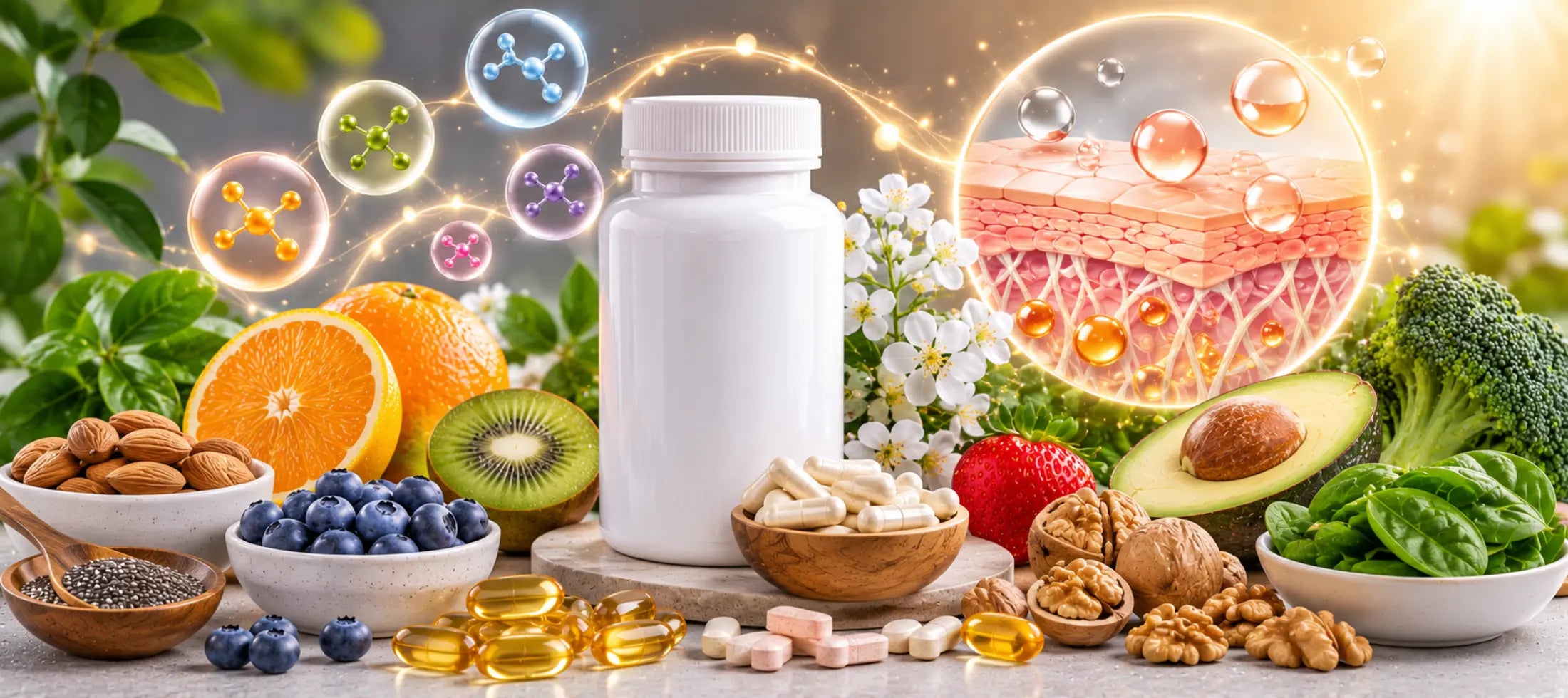

Your body needs a range of nutrients to look its best. Vitamins A, C, D, E, B-complex, and minerals like iron, zinc, and omega-3 fats play key roles in skin, hair, and nail health. A healthy diet gives you most of these, but many people have gaps. A good multivitamin acts like a nutritional insurance policy, giving your body what it needs for hydrated skin, shiny hair, and strong nails.
Foundations of Healthy Skin, Hair, and Nails
Your hair, skin, and nails are built from proteins and nutrients, so they reflect your overall nutrition. Collagen (a protein) and keratin (in hair/nails) require vitamin C, biotin (B7), and protein to form. Essential fatty acids (omega-3s) keep skin supple and hair shiny. Vitamins A and C help rebuild skin cells and support the skin’s barrier.
Iron carries oxygen to the skin and follicles; without enough iron, hair thins and nails weaken. These should come from food first, but if your diet is missing some, a multivitamin can help make sure you don’t fall short.
SEE ALSO: Top Supplements for Better Skin, Hair, and Nails
How Nutrient Gaps Affect Appearance
When you lack nutrients, it often shows. For example, if you don’t get enough vitamin C or E, your skin may look dull because it can’t make collagen or fight off oxidative stress. If iron or vitamin D is low, hair loss or thinning can follow. Even nails can become brittle without enough biotin or minerals.
In fact, studies have found that people with acne often have deficiencies in vitamins A, E, and zinc, and correcting those can improve skin clarity. Low iron, B12, or biotin can trigger hair fall or brittle nails.
Identifying and fixing a deficiency can make a big visual difference: healthcare providers often test vitamin D or iron levels if someone has unexplained hair loss or very thin hair.
Core Vitamins for Skin Health
Your skin needs constant renewal and protection. Vitamin C is vital because it helps your body build collagen, keeping skin firm and bright. It also shields against sun and pollution damage. Vitamin E is another antioxidant that protects skin and helps the outer barrier stay smooth. Vitamin A (think retinoids in skincare) promotes healthy cell turnover and even skin tone.
A multivitamin for skin often includes all these, so it covers a range of beauty nutrients at once. Overall, getting these vitamins (through diet or supplements) helps your skin heal, stay hydrated, and maintain a healthy glow.
Critical Nutrients for Hair Strength
Hair grows from follicles that need fuel. Vitamin D plays a key role in hair follicle growth and cycling. If you are vitamin D–deficient, hair shedding can worsen. Iron is also vital for hair: it carries oxygen and nutrients to the scalp, so low iron often means thinner, weaker hair.
B-vitamins, especially biotin (B7), help produce keratin, the main protein in hair and nails. Studies note that if you are low in biotin, you may have dry, thinning hair and brittle nails.
So, can daily multivitamins improve hair thickness? They can if you were missing nutrients to start with, for example, if a multivitamin corrects a biotin or iron deficiency, hair may grow thicker over time. Omega-3 fatty acids (from fish oil or flax) also nourish follicles, making hair shinier and less prone to breakage.
In short, a multivitamin with D, iron, B-vitamins, and healthy fats can support stronger hair. But remember, if hair fall is due to genetics or stress, vitamins alone won’t stop it; they help most when a nutritional gap is part of the problem.
Essential Support for Nail Integrity
Nails grow slowly and need sturdy protein (keratin) plus vitamins to stay strong. Biotin is often recommended for nails because it promotes keratin formation. If you’re low in biotin, supplements can help strengthen nails over time. Vitamins E and C also support nail health by protecting the skin around nails and aiding collagen.
A loss of nutrients can make nails dry, cracked, or discolored. Are multivitamins effective for brittle nails? They can be, since they often include biotin, zinc, and collagen, all linked to nail strength.
With consistent supplement use, people see improvements in fingernails in about 4–6 months. Essentially, if weak nails are tied to diet gaps, a daily multivitamin that covers biotin and minerals can help your nails grow harder and healthier over time.
Why Multivitamins Deliver Broader Support
Taking a broad-spectrum multivitamin covers all bases. One vitamin alone (like biotin) won’t fix problems unless that was the only missing nutrient. This is why multivitamins in Pakistan are increasingly recommended for overall health and daily wellness.
A multivitamin provides 100% of essential vitamins and minerals. This ensures you’re not only getting biotin, but also the C, D, E, B-complex, iron, zinc, and other nutrients your hair, skin, and nails need together.
For instance, vitamin C helps iron absorption, so including both in a multivitamin makes them more effective. Research suggests extra biotin alone has little effect unless you have a true deficiency. By contrast, a quality multivitamin fills multiple gaps at once.
This means you avoid wasting money on one nutrient that you might already have enough of; instead, you nourish your whole body’s needs for natural beauty.
Tracking Visible Improvements
Patience is key. Skin, hair, and nails regenerate slowly. Your skin cell turnover takes about a month per cycle, hair grows roughly 1 cm per month, and nails grow even slower. As a result, supplements take time to show results. Experts say you often need 4–6 months of daily use before seeing noticeable changes.
If you had a severe deficiency, you might start feeling and seeing benefits sooner, even within a few weeks or a couple of months. But for most people, give it at least three to six months.
When results do appear, you’ll notice things like better skin hydration and tone, less hair breakage, and smoother, stronger nails. Keep in mind, multivitamins work alongside a healthy lifestyle; they’re not overnight magic, but a steady boost for your body’s natural beauty cycle.
Key Takeaways
-
Multiple nutrients matter: Healthy skin, hair, and nails rely on vitamins A, C, D, E, and B (biotin, etc.), plus minerals like iron, zinc, and healthy fats.
-
Diet first: Try to eat fruits, vegetables, lean proteins, and healthy oils; use a multivitamin to fill any gaps.
-
Gentle support: Multivitamins deliver 100% of daily vitamins and minerals together, giving broad support rather than a single boost.
-
Timeframe: Expect gradual changes; visible benefits usually start after a few months of consistent use.
-
Deficiency fix: If hair or nails are falling out or weak due to a nutrient shortfall, supplements can help strengthen them over time.
FAQs
What vitamins are essential for healthy skin?
Important nutrients include vitamins C and E for antioxidant protection and collagen support, vitamin A to encourage skin cell renewal, plus vitamin D and omega-3 fats that help keep skin healthy and balanced.
Do multivitamins help reduce hair thinning?
They can if thinning is due to a lack of nutrients. For example, low iron or vitamin D can cause hair fall, and supplementing these helps. If hair loss has other causes, multivitamins won’t be a cure-all.
Can a multivitamin strengthen weak or brittle nails?
Yes, if brittle nails result from a deficiency. Biotin, collagen, and vitamin E in a multivitamin can improve nail strength over time. Healthy nails also need protein and minerals like zinc.
Are multivitamins better than taking biotin alone?
Often yes. Biotin alone targets only one B vitamin. A multivitamin covers all essential vitamins and minerals in one dose. In fact, getting too much biotin alone (beyond a deficiency) doesn’t usually yield extra benefits.
Can vitamin deficiencies cause dull skin and hair loss?
Absolutely. For instance, a lack of vitamin C/E can lead to dull, dry skin because collagen is not supported. Insufficient vitamin D or iron often causes hair thinning or loss. Restoring normal levels usually improves these issues.
Do multivitamins help with acne and skin breakouts?
They may support skin health, but aren’t a cure for acne. Acne sufferers often are low in vitamins A, E, and zinc, so a multivitamin could help if it fills that gap. However, managing acne usually also requires topical care and addressing hormones or diet.
Share:
How Whey Protein Isolate Fits into Keto and Low Carb Diet
Why You Might Need a Multivitamin Even with a Balanced Diet