

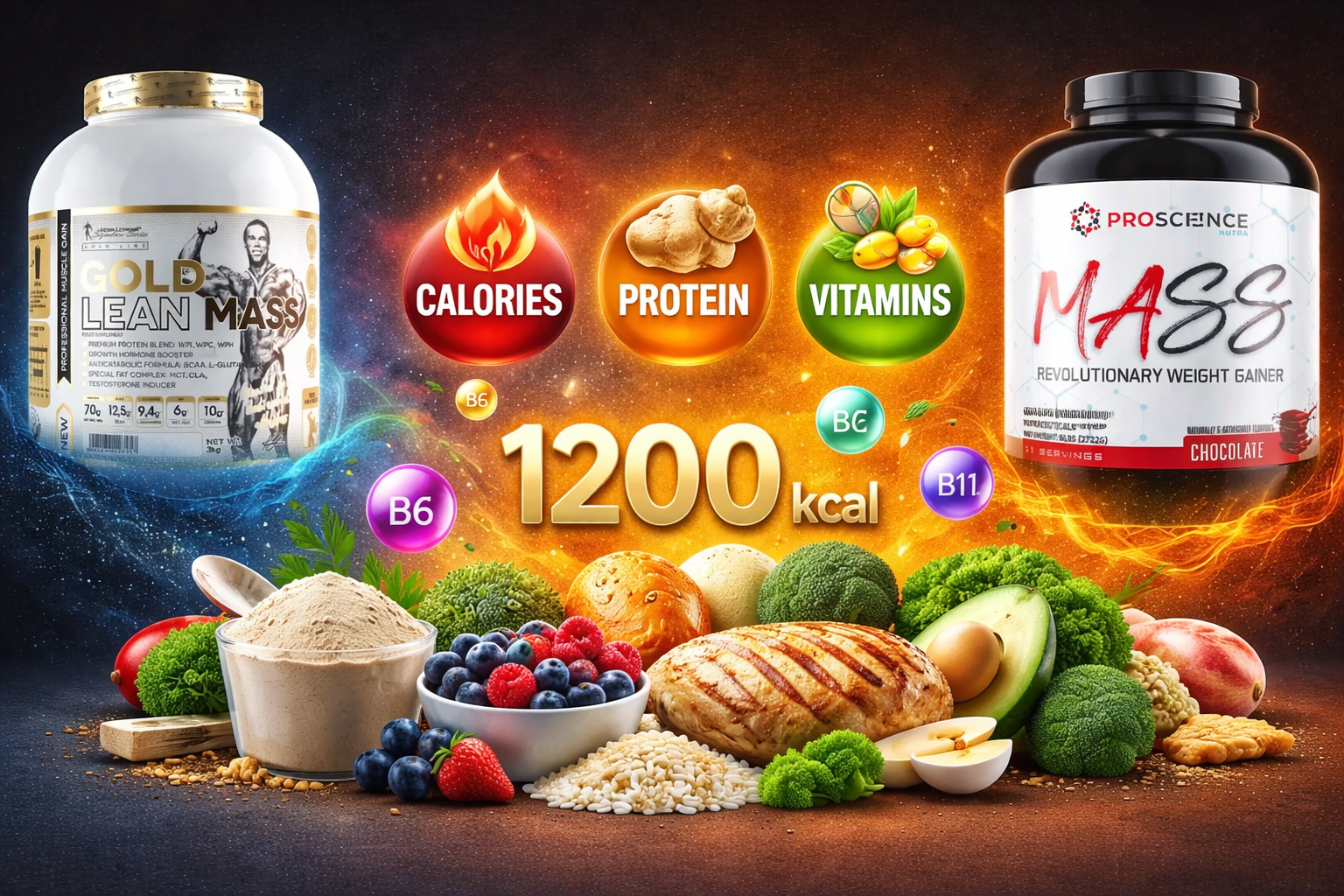

Ever wondered what’s really inside a mass gainer shake and how it helps you build muscle? Mass gainers are high-calorie shakes made to help you gain weight and build muscle. They combine protein, carbs, and fats; protein builds muscle, carbs fuel workouts, and fats support hormones and absorption. Many also add vitamins and minerals, making it easier to hit calorie goals and bulk smart without excess fat.
Whether you’re trying to bulk up, recover faster, or hit your calorie goals more easily, knowing the science behind mass gainers helps you make smarter choices, without adding unnecessary fat.
What Mass Gainers Are and Why Nutrition Matters
Mass gainers are special weight-gain formulas for people who struggle to eat enough calories through food alone. A mass gainer shake delivers protein, carbohydrates, and fats, not just protein alone. The main goal is to supply the extra calories and nutrients your body needs to grow muscle.
Nutrition matters because the type of calories you consume will affect whether you build muscle or just add unwanted fat. When you drink a mass gainer, you’re not just chugging empty calories; you’re delivering building blocks for muscle (protein) plus energy fuels (carbs and fats).
Understanding Calories in Mass Gainers
You might ask: What are the calories in mass gainers? These shakes are much higher in calories than regular protein shakes, usually 500–1,200 per serving. They’re meant to help you reach a calorie surplus, which is essential for weight gain and muscle growth.
So, are mass gainers high in calories? Yes, they can add hundreds of extra calories per serving. The right calorie amount depends on your goals. Hard gainers may need 1,000+ calories, while lean bulking may only require 500–800 calories. The crucial part is picking a shake that fits your daily calorie goals.
Macros Explained: Protein, Carbs, and Fats
How do macros work in mass gainers? Every mass gainer shake delivers all three macronutrients: protein, carbohydrates, and fats. Protein (often whey or casein) repairs and builds muscle after workouts. Carbs refill energy stores, fuel training, and help spare protein for muscle growth. Fats supply essential fatty acids, aid vitamin absorption, and support hormones like testosterone.
Mass gainers are usually carb-heavy, with ratios around 1:3 or 1:5 (protein to carbs). More carbs fuel workouts, while protein rebuilds muscle. For lean bulking, a higher protein ratio is better; for fast bulking, more carbs may help.
The best macro ratio for mass gainer depends on your goals: around 1:2 or 1:3 (protein: carbs) works for balanced lean gains, while 1:5 can give extra energy for hard gainers. Match the ratio to your metabolism and training needs.
Why Micronutrients Matter in Mass Gainers
You might wonder: what micronutrients are in mass gainers? Mass gainers are mainly for calories and macros, but many include added vitamins and minerals. These support overall health and recovery, such as Vitamin D, calcium, magnesium, and B vitamins. Micronutrients help your body use protein and carbs efficiently, aid energy, bone strength, and immunity.
However, remember macros vs micronutrients in weight gain supplements: mass gainers prioritize calories and macronutrients. Most only have a small amount of vitamins and minerals, so they can’t replace whole foods. Continue eating fruits, vegetables, and nutrient-rich foods to meet all your micronutrient needs.
SEE ALSO: Organic Health and Nutrition Tips
Common Vitamins and Minerals in Mass Gainers
Mass gainer formulas often include a basic vitamin/mineral mix. Some common examples are:
-
Vitamin D: Helps your body absorb calcium for strong bones and muscle function.
-
Calcium: Supports bone health and muscle contraction, important when you train hard.
-
Magnesium: Plays a key role in muscle relaxation and energy production, aiding recovery after workouts.
-
B Vitamins (B6, B12, etc.): Critical for converting food into usable energy. B vitamins help your muscles get oxygen and fuel during exercise.
These nutrients help turn the shake’s macros into useful energy and repair. You might also see extras like zinc or vitamin C added for immune support.
Who Benefits from Mass Gainers
Who should use mass gainer supplements? Mass gainers can be great for people who have trouble eating enough calories from regular meals alone. Specifically, mass gainers help:
-
Hard gainers: Helps you reach calorie goals if you burn energy fast or struggle to eat enough.
-
Endurance athletes or heavy lifters: Provides the extra fuel needed for training and recovery.
-
Beginners: Supports early muscle growth when your body responds quickly to training.
-
Busy people: A quick and convenient way to add calories when meals are hard to prepare.
For serious bulking, mass gainers for weight gain indicates a high-calorie formula built for fast weight gain.
Common Mistakes When Using Mass Gainers
Many people misuse mass gainers, so be careful. Common pitfalls include:
-
Using it as a meal: A mass gainer is a supplement, not a replacement for whole foods.
-
Skipping training: Without hard workouts, the extra calories won’t turn into muscle.
-
Too many calories: Excess calories without enough activity can lead to fat gain.
-
Poor ingredient quality: Some gainers are high in sugar or low-quality fats, so always check the label.
-
Digestive issues: Large shakes can cause bloating, so split servings or add more liquid.
By avoiding these mistakes, you’ll use your mass gainer more effectively and healthily.
Final Thoughts
Mass gainers can be helpful, but they are not magic. They simply add extra calories and macros to your diet. How healthy they are depends on how you use them. For best results, combine your shake with whole foods and a solid training plan. A quality formula provides protein and sometimes added vitamins and minerals, not just empty calories.
If fat gain worries you, go for a lean mass gainer with more protein and fewer calories. It supports muscle growth without extra fat. Still, rely on whole foods first and use mass gainers only to meet calorie needs.
In the end, calories drive weight gain. Mass gainers just make those calories easier to consume. When used correctly and paired with training, they support progress with better control.
FAQs
Do mass gainers cause fat gain?
No, mass gainers only cause fat gain if they push your total daily calories beyond what your body needs.
What role do calories in mass gainers play in weight gain goals?
They provide the extra calories required to create a surplus that supports muscle growth and recovery.
How should I balance macros in mass gainers for optimal results?
Choose a balanced protein-to-carb ratio, such as 1:3 for balanced gains or higher protein for lean muscle focus.
Can mass gainers provide all the essential micronutrients I need daily?
No, they may include some vitamins and minerals, but whole foods are still needed for full micronutrient coverage.
How do I choose a mass gainer that supports lean muscle growth instead of fat gain?
Select a lean mass gainer with lower calories and higher protein to direct gains toward muscle.
Can mass gainers help improve my workout recovery and performance?
Yes, the carbs restore energy while protein repairs muscle, improving recovery and future performance.
How do I adjust mass gainer intake based on my metabolism and activity level?
Adjust serving size to match your activity and metabolism so you meet, but don’t exceed, your calorie needs.
Share:
Does Gym Stop Height? The Ultimate Guide for Teens, Parents & Fitness Enthusiasts
How Plant-based Protein Supports Long-term Health and Longevity