

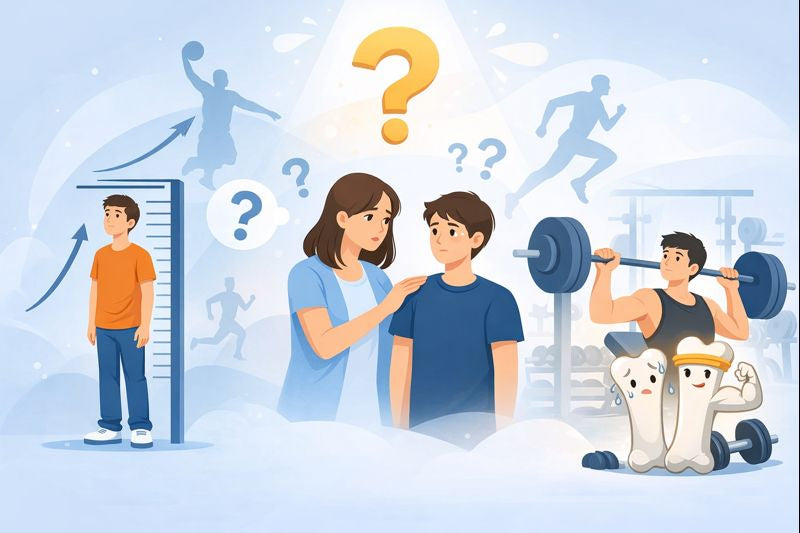

No. Going to the gym or lifting weights does not stunt your height when done with proper form. Height is primarily determined by genetics, hormones, and nutrition, not by exercise. In fact, proper resistance training can improve posture, muscle coordination, bone strength, and stimulate Human Growth Hormone (HGH), supporting your maximum genetic potential.
Why This Myth Persists
If you are a Pakistani teen (14–18) or a parent, you may have heard:
“Beta, Qad Ruk Jaye Ga – Don’t lift heavy weights, your height will stop.”
This advice comes from outdated myths from the 1970s and not modern science.
Some parents also see short professional weightlifters on TV and think lifting makes you short. The truth: they are short because shorter limbs have a mechanical advantage, not because lifting weights stunts growth. This is similar to the logic that basketball doesn’t make people tall; tall people naturally play basketball.
How Height Growth Works
Your height depends on four main factors:
|
Factor |
How It Affects Height |
|
Genetics |
Determines your maximum potential height. |
|
Growth Plates (Epiphyseal Plates) |
Cartilage at the ends of long bones. Allow bone elongation until puberty ends. |
|
Hormones |
Growth Hormone (HGH), IGF-1, thyroid, and sex hormones regulate bone growth. |
|
Nutrition |
Adequate protein, calcium, vitamin D, zinc, and calories support growth. |
Key Truth: Growth plates only close naturally at the end of puberty or due to severe trauma. Controlled gym exercises cannot damage them.
The Science: Does Gym Affect Height?
Evidence from Experts:
-
American Academy of Pediatrics (AAP, 2008): Proper strength training does not stunt growth.
-
National Strength and Conditioning Association (NSCA, 2009): Age-appropriate and supervised resistance training is safe for children and adolescents.
-
British Journal of Sports Medicine: Children are more likely to injure growth plates playing sports or falling than lifting weights.
-
Research Reviews: Proper weightlifting improves bone density, neuromuscular coordination, and reduces injury risk.
Benefits of Gym Training for Height
-
Bone Strength: Wolff’s Law: bones respond to stress by depositing calcium and collagen, becoming stronger.
-
Posture & Spine Health: Core and back exercises prevent slouching, helping you appear taller.
-
HGH Stimulation: Compound lifts (squats, deadlifts) trigger natural growth hormone release.
-
Injury Prevention: NSCA states supervised resistance training reduces sports-related injuries by up to 50%.
Safe Gym Guidelines by Age
|
Age Group |
Recommended Exercises |
Notes |
|
8–12 |
Bodyweight (push-ups, pull-ups, squats), resistance bands |
Focus on form and fun. No heavy weights. |
|
12–15 |
Light supervised weights, compound lifts, stretching |
Gradually add resistance. Avoid 1-rep max. |
|
16–18 |
Moderate weights, posture & core exercises |
Focus on balanced strength. Max lifts only with supervision. |
|
18+ |
Adult-style training |
Height fixed; exercises improve posture, bone strength, and appearance. |
Tip: Supervision is critical. Most injuries come from poor technique, improper load, or lack of guidance, not lifting itself.
Nutrition: The Real Growth Factor
Even perfect training cannot overcome poor nutrition. In Pakistan, protein deficiency is the main cause of stunted growth, not gym workouts.
Key Nutrients for Height
-
Protein: Bones are ~50% protein (collagen). Eggs, chicken, dairy, or whey protein are essential.
-
Calcium & Vitamin D: Vital for bone mineralization; supplements may be needed.
-
Zinc: The “height mineral”; deficiency can stop linear growth.
-
Balanced Diet: Ensure sufficient calories and micronutrients to reach genetic potential.
RDN-Approved “Vertical Diet”
-
Growth Fuel (Whey Protein): 1 scoop daily if protein intake is low.
-
Bone Builders (Micronutrients): Multivitamins for Zinc, Vitamin D, Calcium gaps.
-
Anti-Gravity Training: Posture-correcting moves:
-
Dead Hangs: 1 min daily
-
Face Pulls: fix hunched shoulders
-
Cobra Stretch: spine decompression
Quick Guide: Safe vs Unsafe Gym Moves for Teens
|
Exercise Type |
Safe for Height? |
Notes |
|
Bodyweight (push-ups/pull-ups) |
✅ YES |
Excellent for posture, core, and neuromuscular coordination. |
|
Dumbbells/Machines |
✅ YES |
Safe with controlled form (10–15 reps). |
|
Heavy 1-Rep Max Squats |
⚠️ CAUTION |
Avoid until 17+; use reps instead of max load. |
|
Stretching/Hanging |
✅ YES |
Decompresses spine and improves posture. |
Conclusion:
Gym workouts do not stunt height when done with proper form. Height is determined by genetics, growth plates, hormones, and nutrition, not lifting weights. Safe, supervised exercises improve posture, bone strength, and natural growth hormone release, helping teens reach their maximum potential.
FAQ: Gym, Height, and Muscle Growth for Teens
At what age can I safely start working out or going to the gym?
Bodyweight exercises like push-ups, squats, and pull-ups are safe from age 12. Supervised weightlifting can start around 14–15 years with proper guidance and technique.
Will lifting weights or doing squats/deadlifts make me short or compress my spine?
No. Heavy lifts may cause temporary spinal compression of a few millimeters, which disappears after rest. In fact, strengthening your back and core improves posture, making you appear taller.
Can stretching or exercises make me taller?
Stretching improves flexibility and posture, helping you stand taller, but cannot increase bone length once growth plates have closed.
Will I get bulky if I lift weights as a teen (13–14 years)?
No. Before puberty, low testosterone levels prevent large muscle growth. Weight training at this age improves strength, coordination, and bone density, while visible muscle development usually appears around 16–18 years.
Can supplements make me taller?
No supplement will magically increase height. However, Whey Protein, Zinc, and Vitamin D ensure you reach your maximum genetic height potential, especially if you were deficient during growth years.
Can poor posture reduce my height?
Poor posture may cause temporary spinal compression, making you appear slightly shorter. Strengthening your core and back can restore posture and reveal your full height.
Scientific References
-
American Academy of Pediatrics (AAP) – Exercise and Growth
-
National Strength and Conditioning Association (NSCA) – Youth Resistance Training
-
British Journal of Sports Medicine – Adolescent Strength Training Safety
-
K.T. Borer, The Effects of Exercise on Growth
-
National Nutrition Survey (NNS) Pakistan 2018
-
UNICEF Pakistan – Child Nutrition & Growth Data
Share:
How Multivitamins Aid Digestion and Gut Health
Understanding Calories, Macros, and Micronutrients in Mass Gainers