

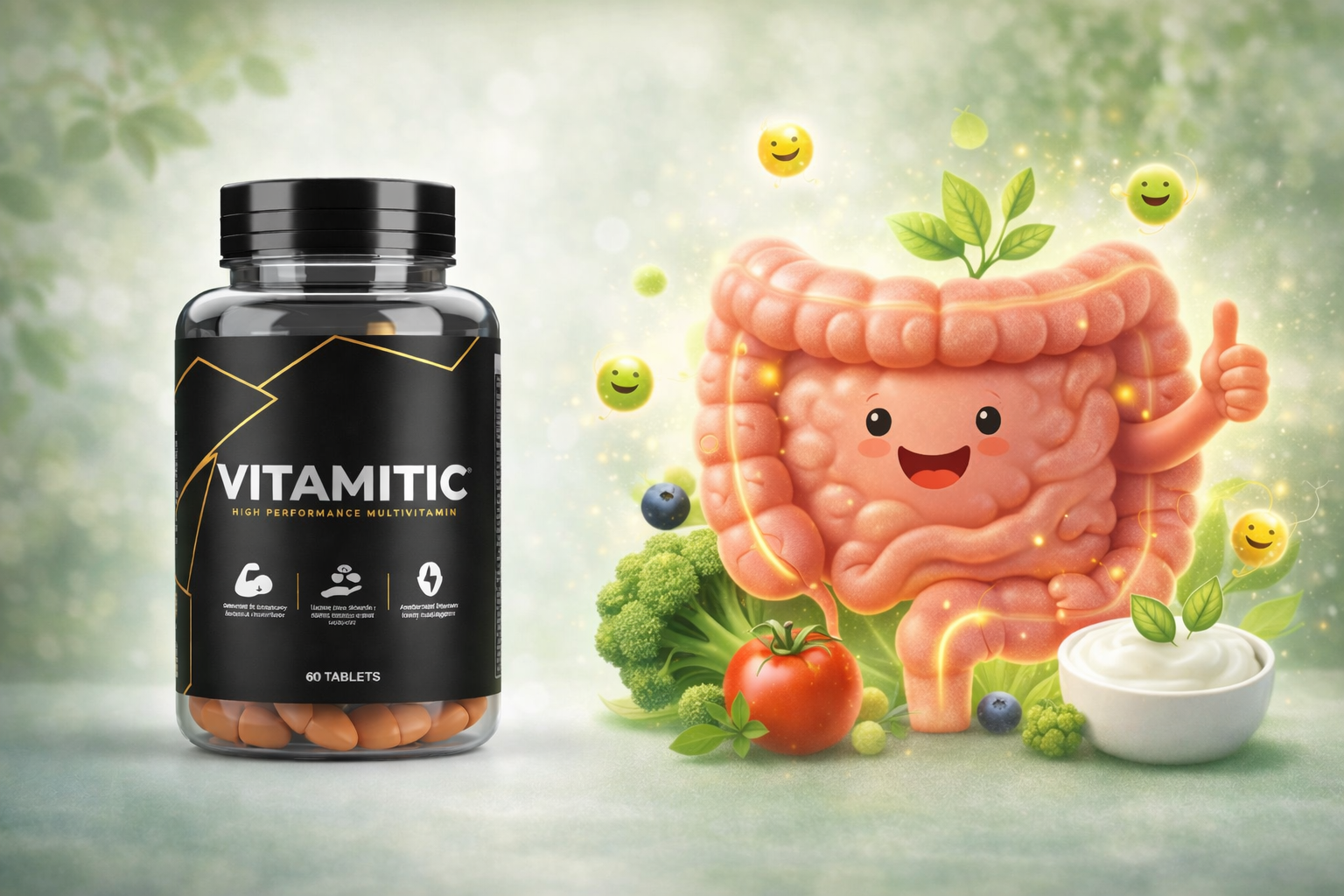

Have you ever wondered how multivitamins support digestion and gut health? Think of your gut like an engine. It needs the right nutrients to run smoothly. Multivitamins supply essential vitamins and minerals that help break down food, support stomach acid and enzymes, and keep the gut lining strong. By filling common nutrient gaps, they help your digestive system work more efficiently, from digestion to nutrient absorption.
Key Vitamins and Minerals for Gut Health
Below are some important nutrients multivitamins provide for a healthy gut:
-
Zinc: Crucial for stomach acid and gut barrier. Zinc helps your stomach make enough acid to digest food, and it tightens the cells lining the gut to prevent leaks. A multivitamin with zinc can ease mild indigestion and support overall gut lining health.
-
Magnesium: Helps relax and contract digestive muscles. It keeps food moving through your intestines to prevent constipation and bloating. If your multivitamin includes magnesium, it can naturally relieve occasional constipation.
-
Vitamin D: Beyond bones, it regulates immune cells in the gut. Adequate D lowers gut inflammation and helps your gut-associated lymphoid tissue (GALT) fight pathogens. Low vitamin D has been linked to IBS and other gut issues.
-
Vitamin A: Repairs the gut’s mucosal lining. Vitamin A promotes growth and maintenance of the gut’s inner wall, acting as a barrier against toxins. It also boosts gut immune cells. Deficiency can harm gut flora balance, so a multivitamin with vitamin A supports a healthy microbiome.
-
Vitamin C: An antioxidant that aids absorption. Vitamin C helps your intestines absorb nutrients like iron, and it helps build collagen for a strong gut lining. Including vitamin C in a multivitamin means your gut can better absorb the food you eat.
-
B Vitamins: Each B plays a role. For digestion, B1 (thiamine) helps produce stomach acid, which is needed to break down food. B2, B3, B6, B12, etc., are cofactors for dozens of enzyme reactions that process nutrients. A good multivitamin has a full B-complex, ensuring your digestive enzymes and metabolic pathways work smoothly.
How Multivitamins Support Digestive Enzymes
Digestive enzymes need cofactors – think of them as helper vitamins – to work effectively. For example, vitamin B1 (thiamine) is required for making hydrochloric acid in the stomach, and other B vitamins help activate enzymes that break down carbs and fats.
Minerals like magnesium and zinc also stabilize enzyme structures. By taking a multivitamin, you supply all these helpers at once, so your body can produce digestive enzymes and stomach acid in balance. This means better breakdown of your meals and more nutrients released.
Take your multivitamin with meals. This not only prevents stomach upset but also times the nutrients to aid the digestive process immediately.
Multivitamins and the Role of Probiotics
Although not a vitamin, probiotics (friendly bacteria) play a vital role in gut health. While multivitamins supply nutrients, adding probiotics can further improve digestion. Probiotics restore gut balance and enhance nutrient absorption. They help ease bloating and gas by breaking down foods in ways your own enzymes might not.
Many gut-healthy multivitamins on the market combine vitamins with probiotics and even digestive enzymes to give an all-in-one boost. In short, if your multivitamin includes probiotic strains like Lactobacillus or Bifidobacterium, expect better gut flora balance and fewer digestive woes.
SEE ALSO: Do Multivitamins Make You Healthier?
Benefits for Nutrient Absorption and Metabolism
Multivitamins can also help you absorb nutrients better. For instance, vitamin C in a multivitamin helps your body absorb iron and other minerals. Vitamins D and K support calcium and bone health. When your gut lining is healthy (thanks to vitamins A, C, and D) and you have enough stomach acid, your intestines can more fully absorb the foods you eat.
Think of a multivitamin as nutritional insurance – it provides all the key micronutrients that your body needs but might be missing from a busy diet. With these in place, your digestive system works as a well-oiled machine. You’ll likely notice less bloating and fatigue after meals, because each bite of food is fully broken down and its nutrients are put to work.
Conclusion
Multivitamins support gut health in many ways. They deliver a cocktail of vitamins and minerals that your digestive tract needs: from making acid and enzymes (B1, zinc, etc.) to keeping the gut lining strong (A, C) and immune defense active (D). While a multivitamin won’t cure a serious GI condition on its own, it lays the groundwork for smoother digestion and nutrient uptake. You should pair a good daily multivitamin with plenty of fiber, water, and a balanced diet for the happiest stomach.
For folks choosing the right multivitamins in Pakistan, especially comprehensive formulas or gut-health options with added probiotics, can make a real difference in digestion and overall wellness. Check labels to include B-complex, zinc, magnesium, vitamins A, C, D, and maybe a bit of fiber or probiotics. Over time, you should feel less bloated, more regular, and generally more energized after meals.
FAQs
How do multivitamins improve digestion naturally?
They supply the vitamins and minerals your gut needs to work well. For example, B vitamins help break down food and create stomach acid. Zinc and magnesium support acid production and intestinal muscle function.
Which vitamins are best for gut health?
Key ones include vitamins A, D, C, and the B-complex, plus minerals like zinc and magnesium. Vitamin A repairs gut lining, vitamin D regulates gut immunity, vitamin C aids absorption, and B vitamins drive enzyme function. A good multivitamin or balanced diet provides them.
Can multivitamins reduce bloating and constipation?
Yes, partly. A multivitamin with magnesium can ease constipation by helping muscles move food along. B vitamins help break down food more completely, which can reduce gas. Also, multivitamins often add fiber or probiotics that directly relieve bloating.
Are probiotics necessary with multivitamins for digestion?
They aren’t strictly necessary, but they complement multivitamins well. Probiotics balance gut bacteria and improve absorption.
How long does it take for multivitamins to benefit gut health?
It varies. Some people notice better digestion (less bloating or constipation) in a few days when a nutrient deficiency is corrected.
Can multivitamins help with nutrient absorption?
Yes, by ensuring you have enough of every cofactor your body needs. For example, vitamin C in a multivitamin helps absorb iron from food, and vitamin D helps absorb calcium. Without these, your gut can’t take in all the nutrients, even if they’re in your diet. A complete multivitamin covers such gaps.
Are there any side effects of taking multivitamins for digestion?
Multivitamins are generally safe. Taking them on an empty stomach can cause minor nausea or upset.
Share:
How Collagen Supports Stronger Bones and Prevents Osteoporosis
Does Gym Stop Height? The Ultimate Guide for Teens, Parents & Fitness Enthusiasts