


Introduction
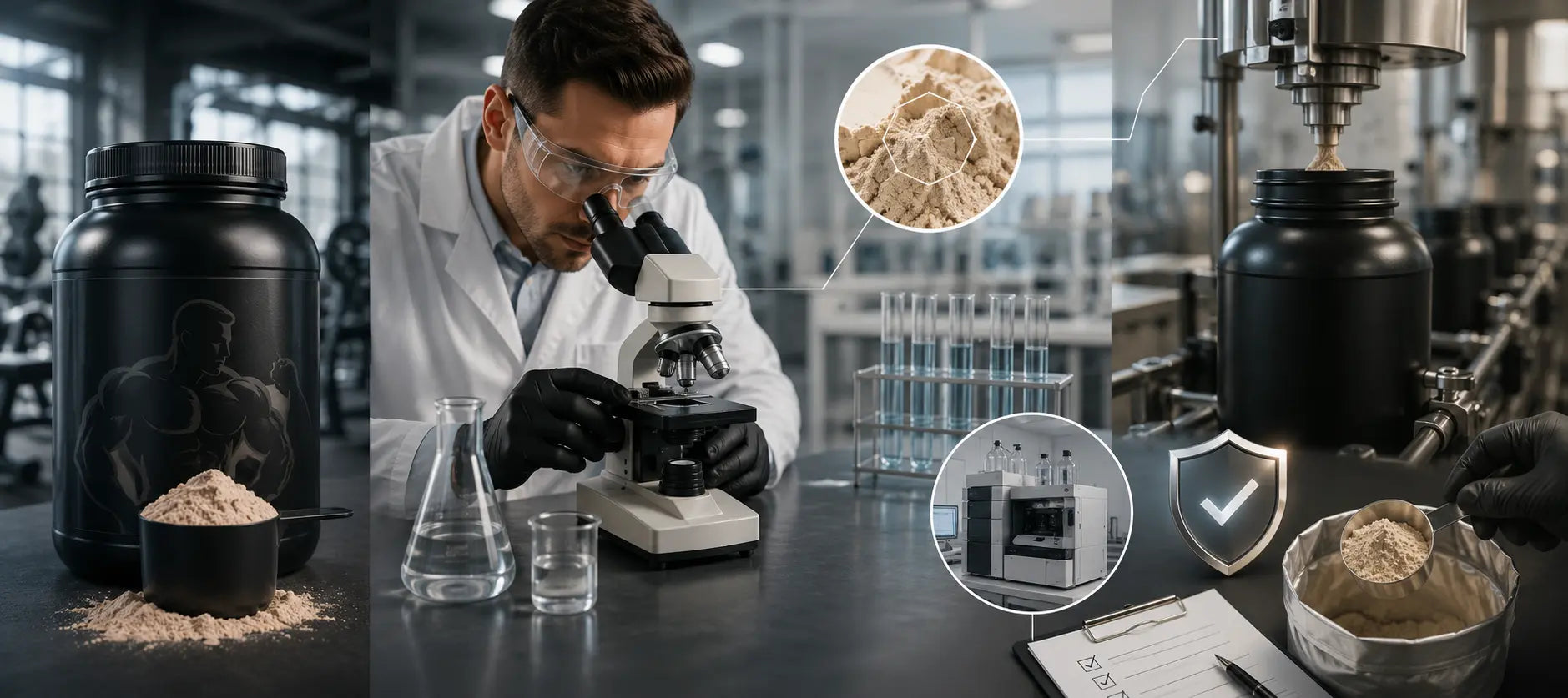
Protein testing is important because customers buy whey protein for one main reason: to get the protein amount written on the label. Without proper testing, a product may look premium but fail to deliver accurate protein content.
For Jacked Nutrition, protein testing quality control helps verify product authenticity, protect customer trust, and ensure every batch meets expected quality standards.
Jacked Nutrition’s Commitment to Quality Control
Quality control is not just one lab test. It is a complete process that starts from raw material selection and continues until the final product is released.
A strong quality control system includes:
-
Raw material verification
-
Supplier documentation
-
Batch testing
-
Lab testing
-
Protein verification
-
Label claim checking
-
Batch record maintenance
Jacked Nutrition should only claim regulatory approvals or certifications that are officially documented. If the facility is DRAP-approved only, it should not be described as FDA-approved or GMP-certified unless verified.
What Is the Kjeldahl Method?
The Kjeldahl Method is a widely used laboratory method for estimating protein content by measuring nitrogen.
Protein contains nitrogen, so the Kjeldahl method helps calculate the crude protein value of a sample. In whey protein testing, this method helps verify whether the product contains the expected amount of protein.
However, Kjeldahl measures nitrogen, not protein directly. That is why it should be supported with other checks when needed, such as amino acid profiling and supplier verification.
Step-by-Step Protein Testing at Jacked Nutrition
1. Raw Material Checking
Before production, whey protein raw materials should be checked for supplier details, batch number, certificate of analysis, expiry date, storage condition, and physical quality.
2. Sample Collection
A representative sample is collected from the batch for testing. Proper sampling is important because poor sampling can give inaccurate results.
3. Laboratory Testing
The sample is tested in the lab to estimate protein content. The Kjeldahl Method may be used to measure nitrogen and calculate crude protein.
4. Production Control
During manufacturing, the approved formula, ingredient quantity, mixing process, and batch record should be carefully followed.
5. Finished Product Testing
After production, the finished whey protein batch should be tested again to confirm that the final product matches the expected protein value.
6. Label Claim Verification
The test result is compared with the label claim. This helps ensure that customers receive the protein amount promised on the packaging.
7. Batch Release
A batch should only be released after quality documents and lab results are reviewed and approved.
Other Testing Methods That Support Accuracy
Kjeldahl is useful, but a complete quality system may also include:
-
Amino acid profile testing
-
Dumas method
-
Moisture testing
-
Microbiological testing
-
Heavy metal screening
-
Supplier qualification
These methods help improve accuracy, safety, and product confidence.
How Testing Ensures Authentic Protein
Protein testing helps confirm that the product contains the declared protein amount. But true authenticity depends on a complete quality system, not one test alone.
Authentic protein verification includes:
-
Raw material testing
-
Finished product testing
-
Amino acid profile review
-
Supplier verification
-
Batch traceability
-
Label claim verification
This protects consumers from misleading claims and helps athletes plan their nutrition accurately.
Benefits for Consumers and Business Partners
Protein testing gives customers confidence that they are getting real protein value. It also helps athletes track their daily protein intake more accurately.
For retailers and distributors, batch testing improves business trust because the product is supported by quality documentation and lab verification.
In the long term, testing helps build brand reputation and customer loyalty.
Conclusion
Protein testing matters because whey protein is based on one core promise: real protein in every serving.
For Jacked Nutrition, protein testing quality control should include raw material checks, lab testing, batch testing, label verification, and proper documentation.
The Kjeldahl Method is an important tool for protein verification, but the strongest quality system combines it with other testing and supplier controls.
Quality should not only be claimed on the label. It should be verified through testing.
FAQs
Why does Jacked Nutrition use the Kjeldahl method for protein testing?
Jacked Nutrition uses the Kjeldahl Method because it is a recognized method for estimating protein content through nitrogen analysis.
How often are protein batches tested at Jacked Nutrition?
Ideally, every important raw material batch and finished protein batch should be tested or verified according to the company’s quality control protocol.
Can other methods replace Kjeldahl?
Yes. Methods such as Dumas testing and amino acid profiling can support protein analysis. However, each method has its own strengths and limitations.
Does protein testing guarantee authentic labels?
Protein testing supports label accuracy, but complete authenticity also depends on supplier control, correct formulation, finished product testing, and batch documentation.
How does Jacked Nutrition maintain quality compliance?
Jacked Nutrition can maintain quality compliance through raw material verification, batch testing, proper records, lab reports, and only making regulatory claims that are officially documented.
Share:
No Amino Spiking, No Compromise: How We Ensure Real Protein Content
Inside Jacked Nutrition's Quality Control Process: The Role of HPLC