

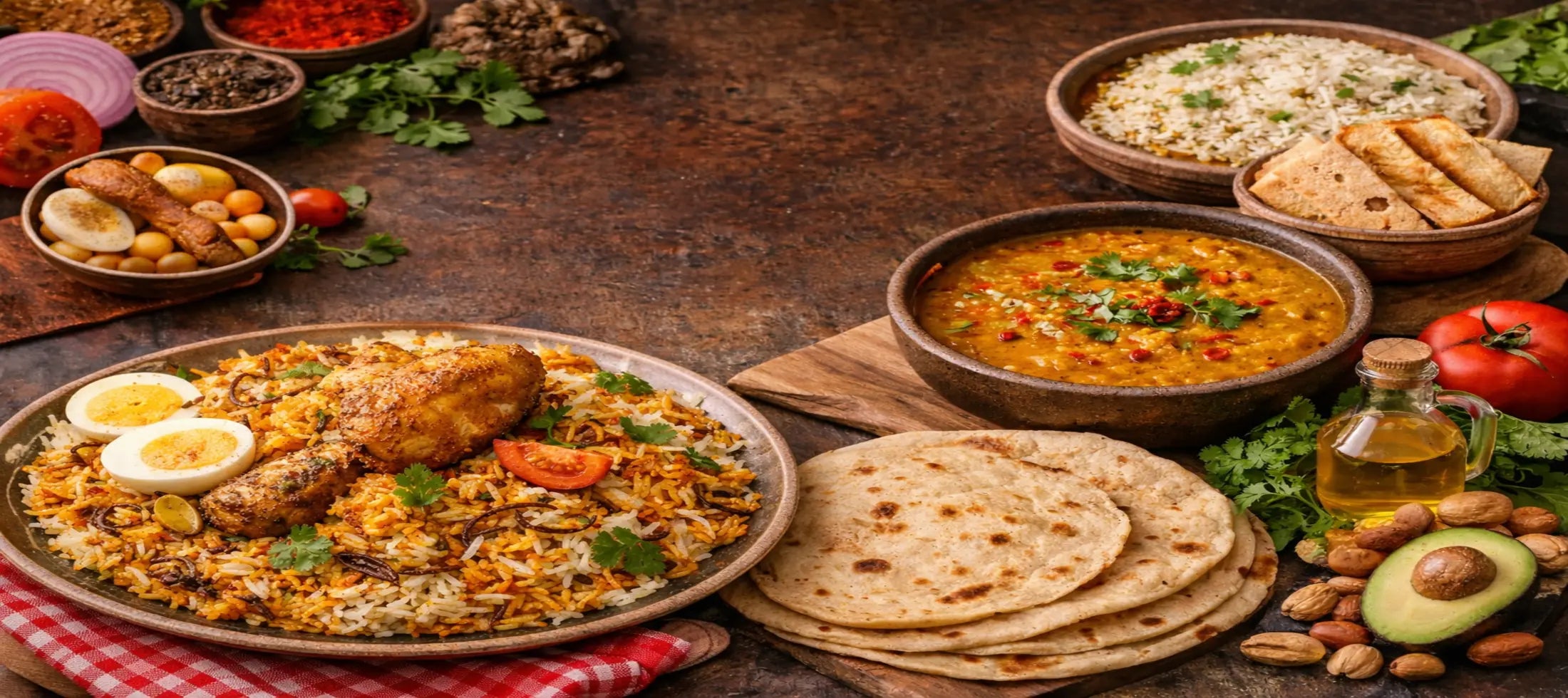

Pakistani food gets a bad rap. People often assume staple dishes like biryani, daal, and roti naturally ruin diets. The truth is, you don't need to quit your culture to stay healthy. You just need to understand biryani daal roti nutrition.
Traditional Desi cuisine actually provides a solid mix of nutrients. The problem isn't the food, it's the portion sizes and the heavy hand with oil. This Pakistani food nutrition guide cuts through the myths. We look at the science of balancing your plate so you can enjoy these meals without stalling your health goals.
Understanding Macronutrients in Pakistani Food
To make better choices, look at the macronutrients in the Pakistani diet. Your body relies on three main fuel sources: protein, carbohydrates, and fats.
Most of our meals contain all three, but the ratio often leans too heavily toward fats and carbs. A balanced Pakistani meal doesn't require expensive imported ingredients. It just requires adjusting how much of each component lands on your plate.
What are Protein, Carbohydrates, and Fats?
Protein:
Protein is your body’s repair kit. It maintains muscle, supports immunity, and regulates hormones. You get protein, carbs, and fats in Pakistani food from sources like chicken, beef, mutton, lentils (daal), chickpeas, eggs, and dairy.
Carbohydrates:
Carbs are your primary energy source. They are abundant in our cuisine, found in rice, roti, naan, potatoes, and fruits. Quality matters. Whole grains give you fiber and steady energy, while refined carbs like white flour (maida) cause quicker sugar spikes.
Fats:
Fat is vital for brain health and absorbing vitamins. In Pakistani cooking, fats come from ghee, oil, meat, and nuts. The difference between a nutritious meal and a heavy one usually comes down to oil quantity.
Nutritional Breakdown of Biryani
Biryani is the country's most loved dish, but also the most debated. Is it a nutritional disaster or a complete meal? The answer lies in the biryani's nutritional value and how you prepare it.
Biryani nutritional value per average serving. A standard homemade plate of chicken biryani typically contains:
-
Calories: 350 to 450.
-
Protein: 20 to 25 grams.
-
Carbohydrates: 45 to 55 grams.
-
Fats: 12 to 18 grams.
Protein in biryani. If you eat chicken or mutton biryani, you get high-quality protein containing all essential amino acids. Make sure you actually eat the meat pieces rather than filling up on just the rice.
Carbohydrates in biryani rice are the main energy source here. Since white rice is low in fiber, eating too much spikes blood sugar. Portion control is critical.
Fats in biryani. This is where chicken biryani calories skyrocket. Restaurant versions are loaded with excess oil and deep-fried onions. A homemade version with controlled oil drastically reduces the calorie count.
Nutritional Value of Daal
Daal is the unsung hero of our diet. It is affordable, versatile, and nutrient-dense.
How much protein is in Pakistani daal? A single cup of cooked daal generally offers:
-
Protein: 12 to 18 grams
-
Carbohydrates: 30 to 35 grams
-
Fats: 2 to 5 grams
-
Calories: 180 to 220
Why daal is nutritionally powerful. Unlike refined grains, daal is packed with slow-digesting carbs and fiber. This keeps blood sugar stable and improves gut health. When paired with rice or roti, it creates a complete protein profile. Just watch the tarka (tempering); floating oil adds empty calories without extra nutrition.
Roti: The Backbone of the Pakistani Diet
Roti is a daily staple, yet many fear it leads to weight gain. To understand roti carbs and calories, look at the flour used.
Roti carbs and calories A medium-sized whole wheat roti (approx. 6 inches) contains:
-
Calories: 100 to 120
-
Carbohydrates: 18 to 22 grams
-
Protein: 3 to 4 grams
-
Fats: 1 to 2 grams
Does roti have protein or only carbs? The idea that roti is "just carbs" is false. Whole wheat roti contributes to your daily protein intake. Eating two rotis gives you nearly as much protein as an egg. Plus, the fiber in whole wheat keeps you fuller longer than white bread or naan.
Comparing Biryani, Daal, and Roti
When you look at calories in biryani daal roti, clear differences emerge:
-
Biryani is a high-energy, calorie-dense meal. It is rich in protein but can easily become high-fat.
-
Daal is the most balanced option, offering high fiber and moderate protein with fewer calories.
-
Roti is a moderate-calorie fuel source.
Ideally, biryani works best as an occasional treat or a strictly portioned meal, while daal and roti are excellent for daily nutrition.
How to Balance Protein, Carbs, and Fats in a Pakistani Meal
You don't need to cook separate meals to stay fit. You just need to restructure your plate.
A well-balanced Pakistani dinner looks like this:
-
50% Vegetables: Fill half your plate with fresh salad or cooked sabzi (with minimal oil).
-
25% Protein: Add a solid serving of chicken, fish, daal, or yogurt.
-
25% Carbs: Limit this section to one roti or a small cup of rice.
This simple rule keeps calories in check. Combining yogurt with your meal also boosts digestion and calcium.
Pakistani Diet Tips for Different Goals
For Weight Loss
-
Prioritize roti over large servings of rice.
-
Double your intake of salad and daal to stay full.
-
Skim the oil off curries before serving.
-
Focus: Calorie deficit with high fiber.
For Muscle Gain
-
Increase protein portions (more chicken pieces, thicker daal).
-
Add an extra roti or a bit more rice to fuel workouts.
-
Include eggs and dairy in your daily routine.
-
Focus: High protein and moderate surplus.
For Diabetes & Metabolic Health
-
Stick strictly to whole wheat roti (chakki atta).
-
Treat biryani as a cheat meal or eat a very small portion.
-
Load up on fiber from raw vegetables.
-
Focus: Blood sugar stability.
Conclusion
Pakistani food isn't the enemy. The nutritional profile of biryani daal roti proves these foods fit into a healthy lifestyle. The real issue is "plate crowding"; too much rice, too much oil, and not enough protein or fiber.
Focus on portion control and mindful cooking to maintain your cultural diet while hitting fitness targets. It’s about balance, not elimination.
FAQs
Does roti have protein or only carbs?
Roti is primarily a carbohydrate source, but it does contain protein. A standard whole wheat roti provides about 3 to 4 grams of protein, making it a helpful contributor to your daily intake.
How much protein is in Pakistani daal?
Depending on the lentil variety, one cup of cooked daal offers between 12 and 18 grams of protein. It is one of the best plant-based protein sources in our local diet.
Is biryani healthy or unhealthy?
Biryani is not "unhealthy," but it is calorie-dense. If cooked with controlled oil and eaten in moderation, it is a nutritious meal. It only becomes unhealthy when portion sizes are huge, and it is dripping with grease.
Share:
Fish Oil vs Cod Liver Oil: What’s the Difference?
High Protein Pakistani Foods You Should Add to Your Diet