

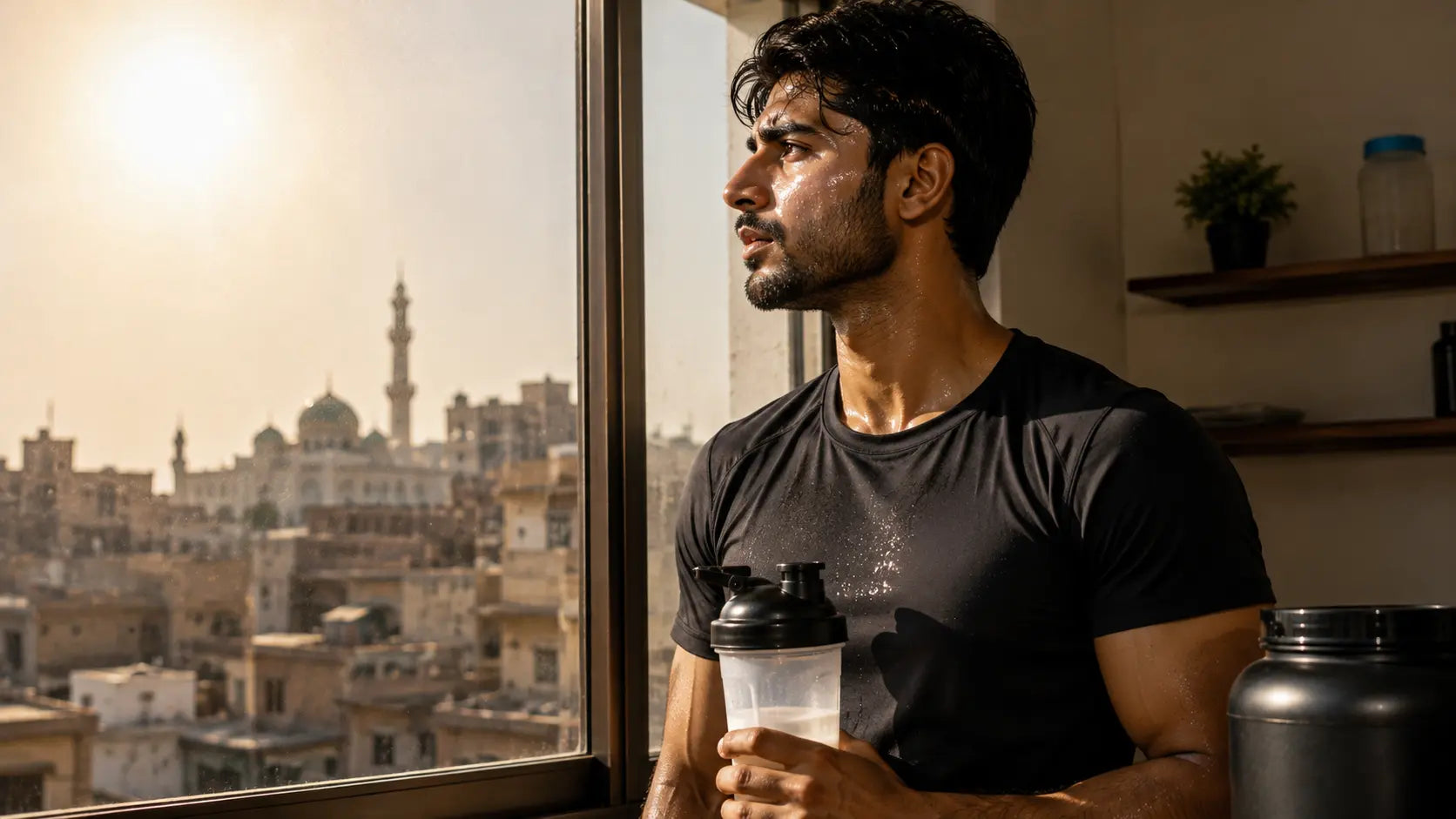

Creatine does not cause dehydration when used correctly. This is a common myth, especially in hot countries like Pakistan. Creatine can increase water inside your muscles, but that is not dehydration. Dehydration happens when your body loses more fluid than it takes in. This usually happens because of sweating, heat, poor water intake, long workouts, or fasting. Creatine itself is not the main cause. For most healthy adults, 3-5 grams of creatine monohydrate daily is safe when taken with enough water and proper hydration.
Creatine and Hydration Concerns
Many people in Pakistan worry about creatine during summer because the weather is hot, sweating is high, and gyms are often not fully air-conditioned.
The concern is simple:
If creatine pulls water into muscles, does it dry out the rest of the body?
The answer is no. Creatine helps muscles store more water inside muscle cells. This may slightly increase body weight, but it does not mean your body is dehydrated. The real dehydration risks are:
-
Training in extreme heat
-
Not drinking enough water
-
Heavy sweating
-
Long outdoor workouts
-
Fasting without proper fluid intake
-
Training at peak afternoon heat
So, creatine is not the problem. Poor hydration is the problem.
What Science Says About Creatine and Dehydration
Research does not show that creatine causes dehydration, cramps, or heat illness when used properly.
In fact, creatine is one of the most studied sports supplements. It is widely used for strength, power, muscle performance, and high-intensity training.
The dehydration myth became popular because creatine increases water storage in muscles. But this water is still inside the body. It is not lost.
Creatine does not “dry” your body. It supports muscle energy and may increase intracellular water, which means water inside the muscle cells.
How Creatine Affects Body Water
Creatine increases phosphocreatine stores in muscles. This helps produce quick energy during weight lifting, sprinting, and intense exercise.
When creatine enters muscle cells, water also moves into the muscle cells. This is called intracellular water retention.
This can cause:
-
Slight weight gain
-
Fuller-looking muscles
-
Better muscle cell hydration
-
Improved training performance in some people
This is not the same as dehydration.
Dehydration means low body fluid. Creatine-related water retention means more water is stored inside the muscles.
Creatine Use in Pakistan’s Hot Weather
Pakistan’s summer can be very hot, especially in cities like Multan, Lahore, Karachi, Faisalabad, Hyderabad, and Islamabad during heatwaves.
If you use creatine in summer, you must manage your hydration properly.
You should be more careful if you:
-
Train outdoors
-
Play cricket, football, or other sports in heat
-
Sweat heavily
-
Work out during the day
-
Train in a hot gym
-
Fast during Ramadan
-
Do not drink enough water
Creatine can still be used in hot weather, but your water and electrolyte intake must match your sweat loss.
Hydration Rules for Creatine in Summer
There is no fixed water amount for everyone. A person who trains lightly indoors needs less water than someone training outdoors in 40°C heat.
Use these simple hydration rules:
-
Drink water throughout the day.
-
Start your workout already hydrated.
-
Do not wait until you feel very thirsty.
-
Check urine color. Pale yellow is usually a good sign.
-
Dark yellow urine means you may need more fluids.
-
Add electrolytes if you sweat a lot.
-
Avoid long intense workouts in peak heat.
-
Replace fluids after training.
During very hot days, water alone may not be enough. If you sweat heavily, you also lose sodium and electrolytes. In that case, use ORS, electrolyte drinks, lemon water with a pinch of salt, or a proper sports hydration drink.
Best Time to Take Creatine in Summer
Creatine timing is not complicated. You do not need to take it at an exact time. The best time is the time you can take it daily with water or a meal.
Good options include:
-
After workout
-
With breakfast
-
With lunch
-
After iftar in Ramadan
-
At suhoor if it suits your stomach
For most people, 3–5 grams daily is enough. You do not need a loading phase. Loading can cause bloating or stomach discomfort in some people. In Pakistan’s summer, a simple daily dose is better for most users.
Creatine During Ramadan Fasting
You can take creatine during Ramadan, but only during non-fasting hours.
Best times:
-
After iftar
-
After workout if you train after iftar
-
At suhoor with enough water
Do not take creatine dry. Do not take it with very little water. During Ramadan, the bigger issue is not creatine. The bigger issue is low water intake, less sleep, changed meal timing, and training while dehydrated. If you feel dizzy, weak, or have a headache while training in fasting, reduce workout intensity or train after iftar.
Signs of True Dehydration
Creatine does not usually cause dehydration, but you can still become dehydrated from heat, sweat, and poor fluid intake.
Watch for these signs:
-
Strong thirst
-
Dark yellow urine
-
Very little urination
-
Dry mouth
-
Headache
-
Dizziness
-
Muscle cramps
-
Fast heartbeat
-
Nausea
-
Unusual fatigue
-
Confusion
-
Fainting
Stop training if these symptoms appear. Rest, cool down, and drink fluids. If symptoms are severe, get medical help.
Who Should Be Careful With Creatine?
Healthy adults can usually use creatine safely. But some people should speak to a doctor first. Get medical advice before using creatine if you have:
-
Uncontrolled blood pressure
-
Diabetes complications
-
Liver or kidney-related medical history
-
Use medicines that affect kidneys or fluid balance
-
Repeated dehydration issues
-
Any serious medical condition
Creatine is safe for many people, but it is not for everyone without guidance.
Final Verdict
Creatine does not cause dehydration when used correctly. It increases water inside muscle cells, but that is not dehydration. In Pakistan’s hot climate, the main risk is not creatine. The main risk is poor hydration, heavy sweating, heat exposure, low electrolytes, fasting, and training at the wrong time.
Use creatine properly:
-
Take 3–5 grams of creatine monohydrate daily.
-
Drink enough water.
-
Add electrolytes when sweating heavily.
-
Avoid peak heat training.
-
Take creatine after iftar or at suhoor in Ramadan.
-
Stop training if dehydration symptoms appear.
Creatine can be used safely in Pakistan’s summer if your hydration is managed properly.
FAQs: Creatine and Dehydration
Does creatine cause dehydration?
No. Creatine does not cause dehydration when used correctly. It increases water inside muscle cells, not water loss from the body.
Is creatine safe in summer in Pakistan?
Yes, creatine can be safe in Pakistan’s summer if you drink enough water, replace electrolytes, and avoid intense training in peak heat.
How much water should I drink with creatine?
There is no single amount for everyone. Drink enough so your urine stays pale yellow, and you do not feel thirsty, dizzy, or weak during training.
Can I take creatine while fasting in Ramadan?
Yes. Take creatine after iftar or at suhoor with enough water. Do not take it during fasting hours.
Should I stop creatine during Pakistani summers?
No, you do not need to stop creatine only because it is summer. Use it correctly, stay hydrated, and avoid training in extreme heat.
Does creatine cause muscle cramps?
Research does not show that creatine causes muscle cramps when used properly. Cramps are more often linked with dehydration, low electrolytes, fatigue, or overtraining.
Does creatine make you gain water weight?
Yes, creatine may increase water weight because muscles store more water. This is normal and not fat gain.
What is the best creatine dose in hot weather?
The best dose for most adults is 3–5 grams of creatine monohydrate daily. A loading phase is not necessary.
Share:
Is Creatine Safe for Teenagers? Age Limit, Risks and Safe Use Explained
Bladesport Blade Strike: The Pre-Workout Game Just Changed