

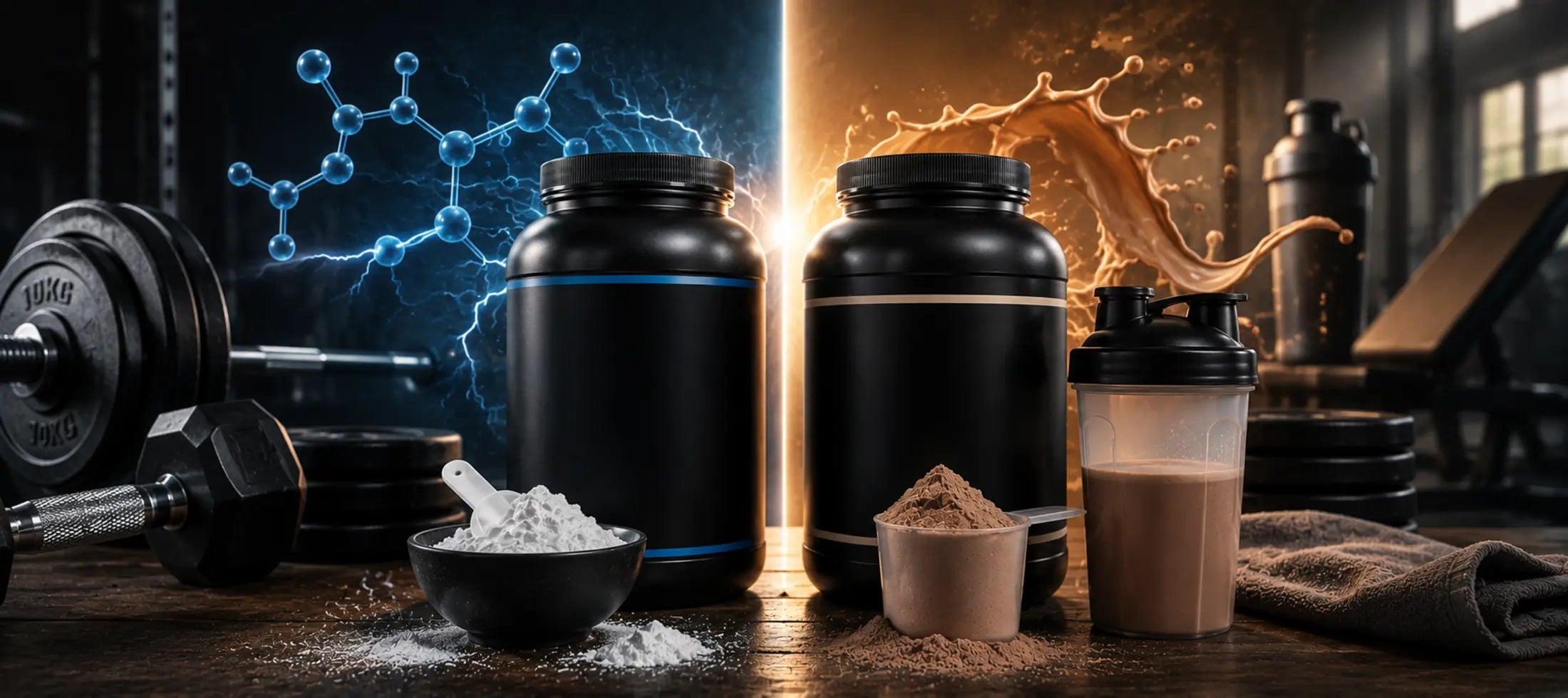
Athletes and gym-goers often ask “Whey Protein vs Creatine”: which supplement is better for improving performance? Both are popular fitness supplements, but they work in different ways. Creatine is a small molecule that fuels quick energy bursts, while whey protein is a high-quality protein source for muscle building.
Introduction to Creatine and Whey Protein
Creatine is a natural compound produced in your body and found in meat and fish. In supplement form, it increases the stores of phosphocreatine in muscles, helping rapidly regenerate the energy molecule ATP. This boost in energy supply makes creatine a top strength supplement for explosive movements and heavy lifts. People take creatine to lift heavier, sprint faster, and build muscle quicker.
Whey protein is the main protein found in dairy. It’s a complete, fast-absorbing protein that provides all essential amino acids. Bodybuilders and fitness enthusiasts use whey after workouts because it helps muscle recovery and repair. Whey protein shakes offer a quick dose of protein to stop muscle breakdown and promote growth.
How Creatine Boosts Muscle Strength and Performance
Creatine’s primary benefit is to increase your muscles’ energy supply. When you perform short, intense efforts (like sprints or heavy reps), your muscles use ATP for fuel. Creatine helps regenerate ATP faster by donating a phosphate group (as phosphocreatine) to ADP, giving you more power for each rep. This means you can lift heavier weights or do more reps per set.
Beyond immediate energy, creatine also helps muscle growth over time. By allowing heavier training, you stimulate more muscle adaptation. Creatine also causes muscle cells to draw in extra water, which may signal growth. This makes creatine one of the most effective performance boosters for strength exercises.
Key ways creatine helps performance:
-
More power and strength: Enables heavier lifts and more reps.
-
Faster recovery between sets: Lets you maintain intensity throughout a workout.
-
Supports muscle mass: By boosting workout intensity, it indirectly encourages growth.
How Whey Protein Supports Muscle Recovery and Growth
Whey protein works differently: it provides the raw materials your muscles need to rebuild and grow after stress. When you lift weights, your muscle fibers experience tiny tears. Consuming whey after exercise floods muscles with amino acids (the building blocks of protein), jump-starting repair and growth. This speeds post-workout recovery and promotes lean muscle gains.
Whey is especially effective because it contains all essential amino acids, including leucine, which directly signals muscle protein synthesis. It’s absorbed very quickly, so taking whey soon after a workout gives rapid nutrition to your muscles.
Typical benefits of whey protein after workouts:
-
Rapid muscle repair: Delivers essential amino acids that repair microscopic muscle damage.
-
Increased protein synthesis: Whey’s high leucine content boosts muscle-building signals.
-
Improved recovery: Faster recovery means you can train more frequently.
Whey protein is an excellent post workout recovery supplement. It helps you bounce back after training by supporting muscle recovery and growth and gradually increases muscle size when used with resistance exercise.
Key Differences Between Whey Protein and Creatine
Here are the main differences between these two muscle gain supplements:
|
Category |
Creatine |
Whey Protein |
|
Type |
Energy compound (not protein) |
Milk-based protein |
|
Function |
Boosts strength & power |
Builds & repairs muscle |
|
Timing |
Daily, even on rest days |
Post-workout or between meals |
|
Main Benefit |
Faster strength gains |
Increased muscle growth |
|
Nutrients |
No calories or protein |
~20–30g protein per scoop |
Research confirms both can build muscle, but via different routes. Creatine is more of an instant strength supplements and whey is a pure muscle recovery supplement.
Benefits of Using Creatine and Whey Protein Together
Using both supplements in your routine can give you the best of both worlds. Since they work through different mechanisms, they complement each other:
-
Maximized muscle growth: Whey protein ensures your muscles have the raw materials to grow, while creatine lets you train harder to stimulate that growth.
-
Enhanced recovery and strength: You get the recovery boost from whey and the extra energy for workouts from creatine.
-
Safe combination: Studies show taking them together is safe. Many lifters take both simply because they fit different roles in training.
For example, you might sip a whey shake after exercise to aid recovery, and take creatine before or after workouts to top up muscle energy stores. Using whey for post-workout recovery and creatine for extra strength boost gives a well-rounded approach.
Common Myths About Creatine and Whey Protein
There are plenty of rumors about these supplements. Let’s debunk a few:
-
Myth: Creatine is a steroid or only for men. Fact: Creatine is a natural molecule, not a hormone or drug.
-
Myth: Whey protein causes kidney damage. Fact: For healthy individuals, whey is safe. It increases protein intake, but studies show no harmful effects on kidneys unless you have an existing condition.
-
Myth: Creatine causes dehydration and cramping. Fact: Creatine may actually draw water into muscles, but research shows no higher risk of cramps or dehydration in creatine users.
-
Myth: Whey makes you fat because it’s protein. Fact: Whey protein itself isn’t fatty (it’s often low in fat). It helps preserve muscle and can aid fat loss by boosting metabolism and satiety.
-
Myth: You only need one supplement. Fact: Creatine and whey serve different needs. If your diet already has enough protein, whey offers little extra benefit; if you aren’t doing high-intensity training, creatine won’t do much. They don’t replace each other.
Conclusion
Creatine and whey protein both boost muscle performance, but in different ways. Creatine is a powerful performance booster for strength training, providing quick energy for intense exercise. Whey protein is a superb muscle recovery supplement, delivering essential amino acids to rebuild muscle fibers after workouts. Neither one can truly replace the other, since they serve unique roles. Many athletes find the best results by using them together: creatine to train harder, and whey to recover faster.
Ultimately, “Whey Protein vs Creatine” isn’t an either/or choice; it’s about how each fits your goals. Beginners might start with whey to ensure adequate protein intake, then add creatine once they’re pushing heavier loads. More experienced lifters often use both. By leveraging the creatine benefits and whey protein benefits as directed, you can maximize muscle strength, recovery, and overall fitness.
FAQs
Can I take Creatine and Whey Protein together?
Yes. Taking them together is safe and common. They don’t interfere with each other’s benefits.
How does Creatine improve workout performance?
Creatine boosts your muscles’ energy supply. This means more power and reps in high-intensity sets, leading to better strength gains.
How does Whey Protein help with muscle recovery?
Whey provides fast-absorbing protein after exercise. It floods your muscles with essential amino acids to repair micro-tears and build new muscle. This accelerates recovery, reduces soreness, and supports lean muscle growth.
Should beginners start with Creatine or Whey Protein?
Usually, beginners focus on getting enough protein first, so whey is often recommended early. Whey protein helps meet daily protein needs easily. Creatine can be added once you’re training regularly and pushing strength.
Can Creatine replace Whey Protein in a fitness routine?
No. Creatine cannot replace whey protein because they serve different purposes. Creatine is not a protein; it’s an energy metabolite.
Share:
Best Pre-Workout Supplements For Women
Why Authenticity Is the Foundation of Every Trusted Fitness Brand