

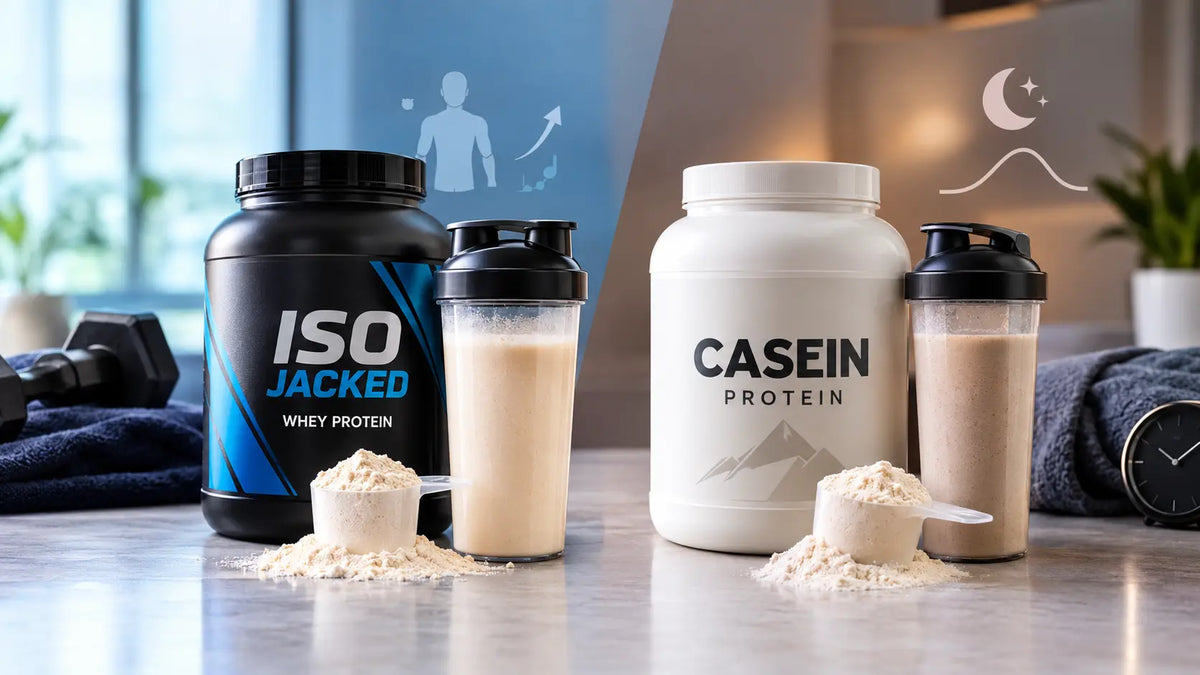

Consider two scoops of protein powder on your kitchen counter. One hits your blood fast, in under an hour. The other feeds your muscles slowly, for the next six hours, while you sleep. That's the real story behind whey vs. casein protein. Once you get it, you'll never look at your shaker bottle the same way again.
Don't stress if you've been grabbing whichever tub was on sale. Nobody gets this right on day one. In this guide, you'll learn how whey and casein digest, when each one helps you, and how to build a simple daily plan with both.
Let's dive in!
Whey vs Casein at a Glance
Whey and casein both come from milk. Both are complete proteins. Both give you all nine essential amino acids. That's where the similarities end.
Whey, the protein inside ISO Jacked, is fast. Casein, the protein inside micellar casein powders, is slow. This one gap shapes almost everything else about how you should use them.
|
Feature |
Whey (ISO Jacked) |
Casein |
|
Digestion speed |
Fast |
Slow |
|
Amino acid release |
Sharp spike, short window |
Slow release, several hours |
|
Best timing |
Post-workout, morning |
Before bed, between meals |
|
Texture |
Light, mixes easily |
Thick, gel-like |
|
Leucine content |
High |
Moderate |
Now you can see the two side by side. Let's look at what happens inside your stomach.
How Each Protein Digests
Whey: A Fast Spike in Amino Acids
Whey leaves your stomach fast. It gets absorbed in your small intestine almost right away. Your blood amino acid levels shoot up fast. They stay high for a short while. Then they drop back down.
This is why whey feels so good right after a workout. Your muscles are ready to soak up amino acids. Whey gives them fast, with no delay. A classic milk protein study tracked this pattern. Whey caused a sharp but short rise in blood amino acids. Casein caused a slower, longer rise instead, because it moves through the stomach at a different pace.
Casein: The Slow-Release Gel Effect
Casein acts very differently once it hits stomach acid. It clumps together and forms a gel. That gel slows everything down. Instead of a quick spike, you get a slow trickle of amino acids. This trickle can last five to seven hours.
That's so simple, but it makes a real difference. This is why casein is the go-to pick before bed. It's also great during long gaps between meals, times when your body would go hours with no amino acids at all.
Muscle Protein Synthesis: Spike vs Sustained Release
Here's where many gym-goers overthink things. Whey's sharp spike does trigger a bigger short-term jump in muscle building. This is largely because whey is rich in leucine, the amino acid that kickstarts the whole process. Casein's slow release causes a smaller jump at first. But it also blocks muscle breakdown for longer.
So which one builds more muscle? Neither wins alone. A well-known review found that total daily protein mattered far more than exact timing. In plain terms: hitting your daily protein target beats chasing the "perfect" amino acid curve.
That doesn't mean digestion speed is pointless, though. It just means you should use it wisely instead of stressing over it. Think of digestion speed as a tool for shaping your day, not a magic switch for extra muscle. Total protein still does the heavy lifting.
Best Use Cases for Each Protein
Post-Workout: Why ISO Jacked Wins
Right after training, your muscles want amino acids fast. That's whey's home turf. ISO Jacked blends whey isolate, hydrolyzed whey, and whey concentrate in one scoop. You get a fast first hit, plus a slightly longer tail of amino acids after. This works well if you train after work, fit a session in between roti and rice at home, or grab a shake straight from the gym locker.
Before Bed and Long Gaps Between Meals
Sleep is the longest stretch most people go without food, often seven to eight hours. Your muscles keep working during that time, fed or not. A sleep study found that casein taken before bed digested well overnight. It also improved the body's protein balance while people slept. In simple terms, it turned a fasting window into a useful one.
Casein also fits a long gap between lunch and dinner. This is common on busy office days when your next real meal is still five or six hours away.
Fat Loss and Appetite Control
Casein's slow digestion has a nice side effect: it keeps you full for longer. Its thick, gel-like texture slows things down in your stomach, so hunger takes longer to creep back. If cravings between meals keep messing up your fat loss plan, a casein shake can help you crush that afternoon snack urge before it even starts.
Taste, Texture and Mixability
Whey is light. It mixes into a smooth, almost milkshake-like drink with just a shaker bottle and water or milk. ISO Jacked in particular is built to blend cleanly, with no clumps left behind. Flavours tend to feel closer to a dessert shake, which makes it easy to enjoy daily without getting bored.
Casein is thicker by design. It's meant to sit heavier in your stomach. That's exactly why it works so well in protein puddings, overnight oats, or a thick shake you sip slowly before bed. Some people even freeze a casein shake for a few minutes to turn it into a soft-serve style treat. Don't expect casein to mix as smoothly as whey. That thickness is the whole point, not a flaw.
Availability and Price in Pakistan
Whey and casein powders are easy to find across Pakistan now. You'll spot them at gym supplement stores, pharmacies, and online shops. Prices change based on the brand, the pack size, and whether you pick isolate, concentrate, or a casein blend. It's worth comparing a few options instead of grabbing the first tub you see.
Whatever you choose, buy from a trusted seller. Fake supplements are a real problem in Pakistan's fitness market. A fake tub won't give you the protein the label promises, and it may not be safe either. Check the batch details and, where the brand offers one, scan the CoA QR code before you trust a new tub.
Can You Use Both? A Simple Daily Protein Plan
Yes, you can, and most serious lifters do exactly this. Here's a simple way to build your day around both proteins:
-
Morning or pre-workout: A light whey shake if breakfast is short on protein, next to your usual paratha or eggs.
-
Post-workout: An ISO Jacked shake within 30 to 60 minutes of finishing your session.
-
Between meals: A casein shake, or a scoop stirred into yoghurt, if lunch and dinner sit five or more hours apart.
-
Before bed: A casein shake or a thick casein pudding about 30 minutes before sleep.
-
Everything else: Daal, chicken, eggs, and roti doing most of the work, with powders filling the gaps.
Common Mistakes to Avoid
1. Treating Protein Powder as a Meal Replacement Mistake: Leaning on shakes instead of real food for most of your daily protein. Solution: Use whey and casein to fill gaps around whole meals like daal, chicken, and eggs, not to replace them.
2. Chasing Timing While Ignoring Total Protein Mistake: Stressing over exactly when you drink your shake, while under-eating protein overall. Solution: Hit your total daily protein target first. Then use whey and casein timing to fine-tune, not fix, your results.
Want to compare whey isolate against regular whey concentrate before you build your stack? Our guide on whey protein vs isolate breaks it down in plain terms.
Final Verdict
There's no single right answer in whey vs casein protein. Whey earns its spot right after training, when your muscles want amino acids fast. Casein earns its spot before bed and between meals, when you need a slow, steady supply instead. The real win comes from using both the way they're built to work, not picking one side out of habit.
Ready to build your stack? ISO Jacked and Superior 14 Casein are both DRAP-approved, GMP- and halal-certified, and made right here in Pakistan at Farmalabs, with a CoA on every batch via QR code. Grab whichever one fills the gap in your day, and let your training do the rest.
Frequently Asked Questions
Is whey or casein better for building muscle?
Neither wins outright. Whey gives a bigger short-term boost to muscle building. Casein keeps amino acids flowing for longer. Your total daily protein matters more than which one you pick.
Can I mix whey and casein in the same shake?
Yes. Many lifters blend both to get a fast spike plus a longer, steady release. This helps a lot when meals are far apart.
Is casein protein good for weight loss?
Casein's slow digestion can help with appetite control between meals, which may support fat loss. But your total calories and daily protein still matter most.
How long does casein take to digest?
Casein usually releases amino acids over roughly five to seven hours. Whey clears out much faster, in about one to two hours.
Can beginners use ISO Jacked?
Yes. ISO Jacked works well for beginners and experienced lifters alike. Just check your daily protein needs and start with the label's recommended serving.
Is it safe to take casein every night?
For most healthy adults, yes, when used as directed. If you have a milk allergy or a medical condition, check with a doctor first.
Share:
Types of Magnesium: A Complete Guide to Choosing the Right Form
Brown Rice Jacked vs Pea Protein: Which Plant Protein Has the Better Amino Acid Profile?