

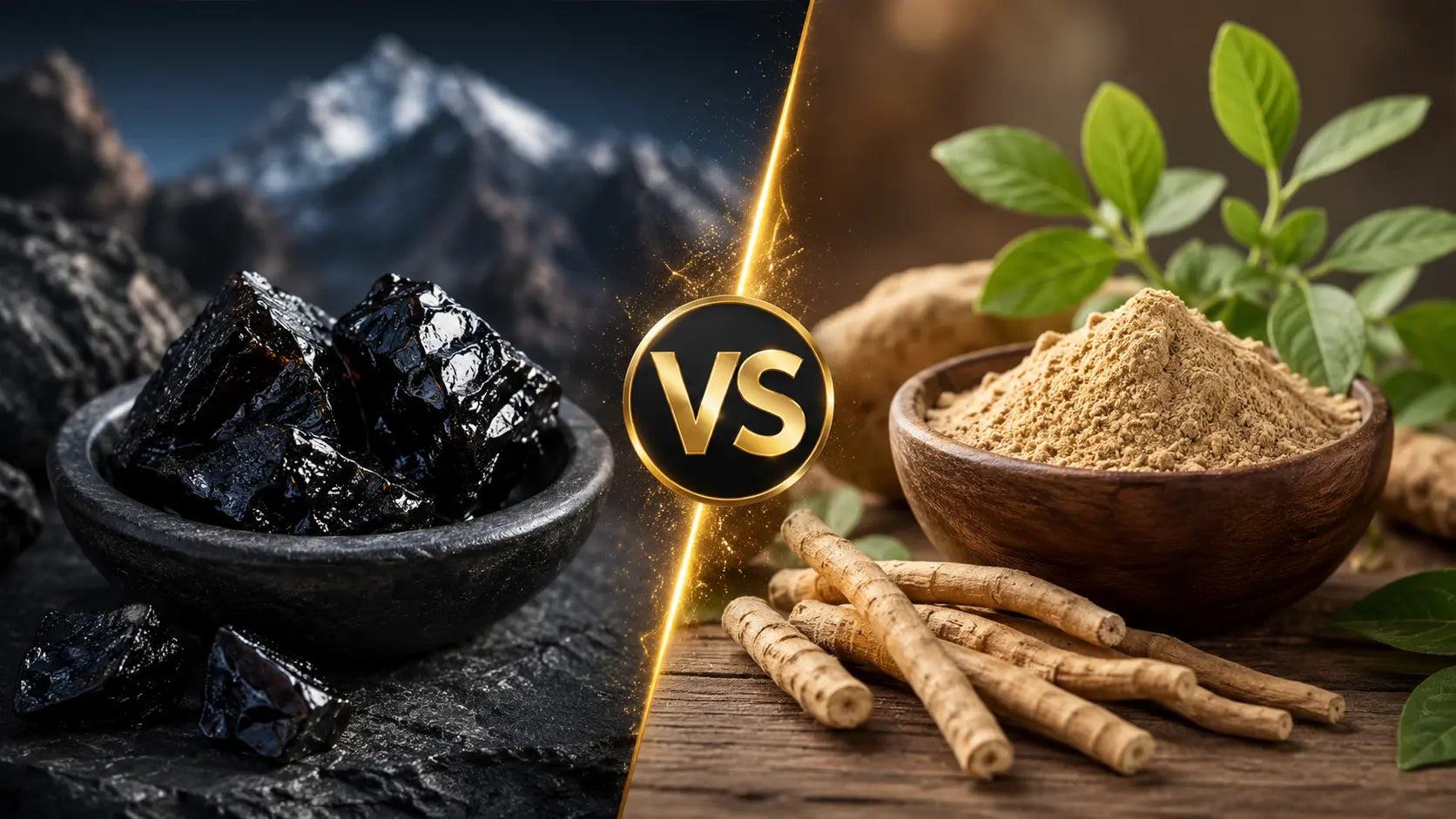

Many people use Shilajit and Ashwagandha for energy, recovery, and overall wellness, but they often don't understand the difference between the two. Shilajit is a mineral-rich substance commonly associated with energy and vitality, while Ashwagandha is an adaptogenic herb often used to support stress management and recovery.
So, which one is right for you?
The answer depends on your goals. In this guide, we'll compare Shilajit and Ashwagandha, explore their benefits, discuss dosage recommendations, and help you decide which supplement may be the better fit for your lifestyle.
Overview of Herbal Supplements for Modern Health
As more people focus on their health, interest in herbal supplements continues to grow. Many individuals use these supplements alongside proper nutrition, exercise, and sleep to support energy, recovery, and overall well-being.
Among the most popular options are Shilajit and Ashwagandha. While both have roots in Ayurvedic traditions, they work differently and are often chosen for different reasons. Understanding those differences can help you choose a supplement that aligns with your specific health and fitness goals.
Understanding Shilajit
What is Shilajit and Its Traditional Uses?
Shilajit is a naturally occurring substance found in mountainous regions, particularly the Himalayas. It forms over centuries through the gradual breakdown of plant matter and minerals, resulting in a nutrient-rich resin.
Traditionally, Shilajit has been used to support vitality, stamina, and overall well-being. Today, it is commonly used by active individuals looking to support energy levels and physical performance.
Key Active Components: Fulvic Acid, Minerals, and Trace Elements
One of the reasons people choose Shilajit is its naturally occurring fulvic acid, minerals, and trace elements. Together, these compounds are often associated with the supplement's potential to support energy levels, physical performance, and an active lifestyle.
Proven Health Benefits of Shilajit
Shilajit is most commonly associated with energy and vitality. Many individuals use it as part of their daily wellness routine to support an active lifestyle.
Research has also explored its potential role in male health. A study published in Andrologia reported improvements in certain testosterone-related markers among healthy men supplementing with purified Shilajit. While more research is still needed, Shilajit remains a popular choice among people seeking support for performance and overall well-being.
Understanding Ashwagandha
What is Ashwagandha and Its Historical Background?
Ashwagandha is an adaptogenic herb derived from the root of the Withania somnifera plant. It has been used in Ayurvedic practices for centuries and is now one of the most widely researched herbal supplements. Today, Ashwagandha is commonly used by individuals looking to support stress management, recovery, and overall wellness.
Key Active Components: Withanolides, Alkaloids, and Saponins
The primary active compounds in Ashwagandha are known as withanolides. These compounds are believed to contribute to many of the herb's potential benefits. Ashwagandha also contains alkaloids and saponins, which add to its unique composition. Both of these components help in stress management and act as antioxidants.
Proven Health Benefits of Ashwagandha
Ashwagandha is best known for its role in stress management. Research has shown that Ashwagandha supplementation may help reduce perceived stress and support healthy cortisol levels.
It has also been studied for its potential role in exercise performance and recovery. Some research suggests that Ashwagandha supplementation may support strength and recovery when combined with resistance training. For people dealing with demanding schedules, poor recovery, or everyday stress, Ashwagandha is often the preferred choice.
Comparing Shilajit and Ashwagandha
Differences in Composition and Nutrients
The biggest difference between these supplements is their composition. Shilajit is a mineral-rich resin containing fulvic acid and trace minerals. Ashwagandha is a herbal supplement containing naturally occurring plant compounds such as withanolides. This difference influences how they are commonly used and the benefits most often associated with them.
Effects on Energy, Stress, and Cognitive Function
If your primary goal is energy and vitality, Shilajit may be the better choice. Its mineral content and traditional use have made it popular among people looking to support physical performance and daily energy levels.
If stress management is your priority, Ashwagandha may be the stronger option. It is one of the most researched adaptogenic herbs and is frequently used to support resilience to everyday stress.
When it comes to cognitive function, both supplements have been studied, but they appear to work through different mechanisms. Shilajit is often associated with supporting overall vitality, while Ashwagandha is more commonly linked to stress-related mental performance.
Impact on Immunity and Overall Wellness
Both supplements are often used as part of a broader wellness routine. While neither should be viewed as a substitute for healthy habits, they are commonly chosen by individuals looking to support their overall health, recovery, and quality of life.
Side Effects and Safety Considerations
Most healthy adults tolerate both supplements well when used as directed.
For Shilajit, choosing a purified and reputable product is important because low-quality products may contain contaminants. You can use Jacked Nutrition Shilajit as it is pure and trusted by many fitness experts.
For Ashwagandha, individuals taking medication or managing existing health conditions should consult a healthcare professional before use. As with any supplement, following recommended serving sizes is important.
Recommended Dosage and Usage
Typical Dosage for Shilajit: Resin, Powder, and Capsules
Dosage recommendations vary between products, but many Shilajit supplements provide between 250 mg and 500 mg per day. Always follow the instructions provided by the manufacturer.
Typical Dosage for Ashwagandha: Root Powder and Capsules
Many studies have used standardized Ashwagandha extracts in the range of 300 mg to 600 mg daily. The ideal amount may vary depending on the product and individual needs.
Timing and Best Practices for Each Supplement
Many people prefer taking Shilajit earlier in the day as part of their morning routine. Ashwagandha is often taken later in the day or in the evening, particularly by individuals using it as part of a stress-management routine. Consistency is generally more important than exact timing for both supplements.
Who Should Use Shilajit or Ashwagandha?
Ideal Candidates for Shilajit
Shilajit may be a good option for:
-
Active individuals looking to support their energy levels
-
People focused on physical performance
-
Individuals seeking support for vitality and endurance
-
Those looking to complement a fitness-focused lifestyle
Ideal Candidates for Ashwagandha
Ashwagandha may be suitable for:
-
Individuals experiencing high levels of everyday stress
-
People looking to support recovery
-
Those interested in adaptogenic supplements
-
Individuals seeking support for overall resilience and well-being
Situations Where Both Supplements Can Be Combined
Some people choose to use both supplements because they serve different purposes. In many cases, Shilajit is used for energy and vitality, while Ashwagandha is used for stress management and recovery.
However, combining supplements should always be done according to product guidelines and, when necessary, under professional guidance.
Assessing Your Health Goals and Needs
The best supplement is the one that matches your goals. If your priority is energy, vitality, and physical performance, Shilajit may be the better fit. If your focus is stress management, recovery, and overall resilience, Ashwagandha may be the better choice.
Evaluating Quality and Authenticity
Quality matters. Look for products that provide clear ingredient information, quality testing, and transparent sourcing.
Consulting Healthcare Professionals
If you are pregnant, nursing, taking medication, or managing a health condition, consult a healthcare professional before introducing any new supplement into your routine.
FAQs About Shilajit and Ashwagandha
Can I Take Shilajit and Ashwagandha Together?
Many people use both supplements together because they support different goals. However, individual needs vary, so follow product guidelines and professional advice when necessary.
How Long Before I Notice Benefits?
Results vary depending on the individual, the supplement, and the consistency of use. Many people use these supplements for several weeks before evaluating their effects.
Are There Any Risks or Interactions?
Both supplements may interact with certain medications or health conditions. It is always a good idea to seek professional guidance if you have concerns.
Which Supplement Is Better for Stress or Fatigue?
For stress management, Ashwagandha is generally the more commonly recommended option. For energy and vitality, Shilajit is often preferred.
Can They Support Physical Performance or Muscle Health?
Some research suggests that both supplements may support aspects of physical performance and recovery when combined with proper training, nutrition, and rest.
Choose the one as per your goal
Shilajit and Ashwagandha are both popular supplements, but they are designed to support different goals. Shilajit is often chosen for energy, vitality, and physical performance, while Ashwagandha is commonly used for stress management and recovery.
Rather than asking which supplement is better overall, a better question is which supplement is better for your needs. By understanding your goals and choosing a high-quality product, you can make a more informed decision about which option deserves a place in your routine.
Share:
Why L-Carnitine May Not Work for Everyone: Science Explained
Protein Peanut Butter Explained: Does It Really Help in Building Muscle?