


Walk into any supplement store in Pakistan, or browse an online fitness shop, and the sheer volume of choices is enough to make you walk right back out. You see shiny tubs, bold claims, and aggressive marketing.
For years, the choice was simple: Whey was King. It was the gold standard for fitness. But recently, the script flipped. Plant-based diets are exploding, and suddenly, everyone is talking about pea, soy, and rice protein.
For women, the confusion is specific and frustrating. You hear conflicting advice: "Whey makes you bloated," "Dairy gives you acne," or conversely, "Plant protein doesn't build muscle," and "It tastes like dirt."
When comparing Whey vs Plant Protein for Women, there is no single "magic powder." There is only the right choice for your gut and your goals. This guide strips away the marketing hype to help you decide which tub actually belongs in your kitchen.
What Is Whey & Plant Protein?
To make a smart choice, you need to know what you are actually drinking. These aren't scary chemicals; they are simply processed food.
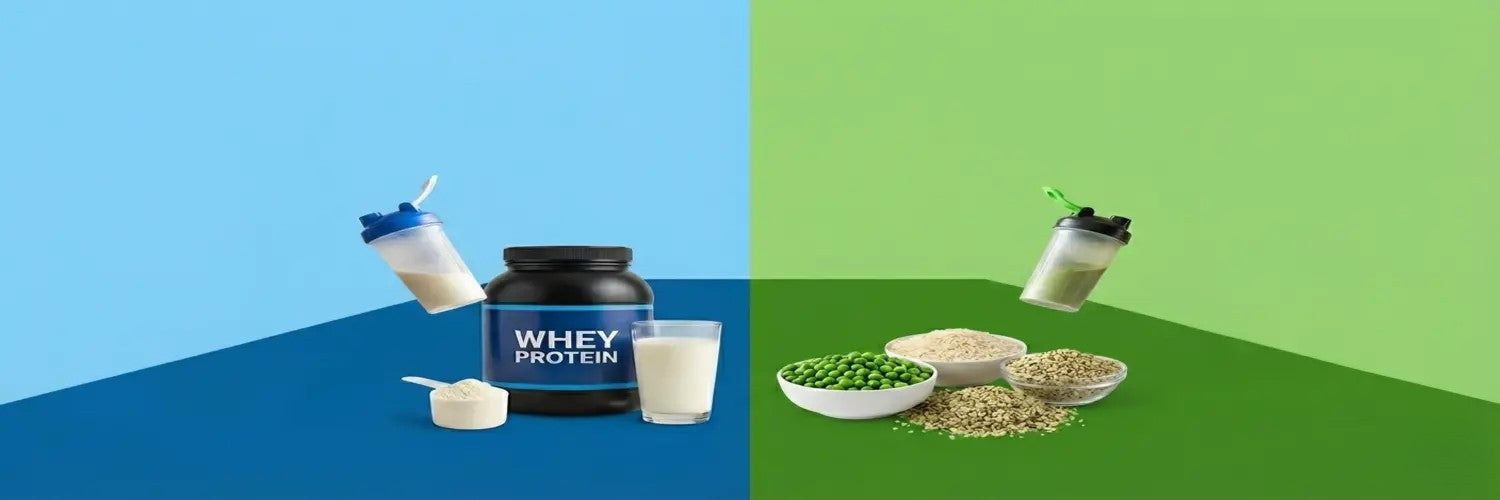
Whey Protein is the dairy powerhouse. It is a byproduct of cheese production. When milk is curdled, the liquid that separates is whey. It is filtered, dried, and flavored. It is a "complete" protein, meaning it naturally contains all the amino acids your body needs.
Plant Protein is the natural alternative. It is derived from sources like yellow peas, brown rice, soy, or hemp. Since most plants (except soy) are not complete proteins on their own, manufacturers create a "blend" (e.g., mixing pea and rice) to ensure you get a complete nutritional profile that rivals dairy.
Whey vs Plant Protein for Women
The battle between these two comes down to three real-world factors: Digestion, Muscle Potential, and Taste.
1. Digestion and "The Bloat"
This is the number one reason women switch from Whey protein vs plant protein. Whey contains lactose. Even if you aren't fully lactose intolerant, concentrated dairy is hard to digest. It often leads to that heavy, uncomfortable "bloated" feeling right after a workout. Plant protein for women is naturally lactose-free. It digests slower and is generally much gentler on the gut. If you often feel like you swallowed a balloon after your shake, plant protein is usually the fix.
2. Muscle Building (The Science)
If we look purely at biology, Whey protein for women has a slight edge. It is naturally packed with Leucine, an amino acid that acts like an ignition switch for muscle growth. It hits your bloodstream fast (within 30 minutes), making it the perfect recovery tool. However, high-quality plant protein blends now add extra amino acids to match the profile of whey. Unless you are an elite athlete, the difference in actual muscle gain is negligible.
3. Taste and Texture
Let's be honest: Whey tastes better. It’s milk-based, so it has a creamy texture that mimics a milkshake. Plant protein has a reputation for being "gritty" or "earthy." While technology has improved this massively, a pea protein shake will never be quite as silky as a chocolate whey shake.
Benefits of Whey & Plant Protein
Benefits of Whey Protein for Women
-
Speed: It absorbs incredibly fast, making it the best "emergency fuel" for muscles post-workout.
-
Complete Profile: It naturally contains everything your body needs without complex blending.
-
Cost-Effective: In Pakistan, imported Whey is widely available and usually offers a better price per serving than high-end Plant proteins.
-
Satiety: It triggers fullness hormones, helping to kill cravings quickly.
Benefits of Plant Protein for Women
-
Gut Health: It is high in fiber, which aids digestion and promotes a healthy gut microbiome.
-
Clear Skin: Dairy is strongly linked to insulin spikes that trigger hormonal acne. Switching to plant protein often clears up skin issues for women sensitive to milk.
-
Metabolic Boost: Because plant protein is fibrous and harder to break down, your body burns slightly more calories digesting it.
-
Nutrient Density: You often get vitamins and minerals naturally found in the plants.
Which Protein Is Better for Pakistani Women?
Context matters. Our diet and lifestyle play a huge role in this decision.
The "Desi Stomach" Factor A huge percentage of South Asians are lactose sensitive without realizing it. We grow up drinking milk and eating yogurt, so we assume we are fine. But Whey Concentrate is a processed, heavy hit of dairy. If you drink a shake and feel gas or lethargy, your body is waving a red flag.
-
The Move: If milk upsets your stomach, skip the Whey. Switch to Plant protein for women or a high-purity Whey Isolate.
The Weight Loss Factor If your main goal is fat loss, Plant Protein might win. Because it is thicker and digests slower, it acts as a genuine meal replacement that keeps you full for 3-4 hours. Whey digests so fast that you might be looking for snacks again an hour later.
The Availability Factor In Pakistan, finding authentic supplements is a headache. Whey is imported by major distributors (like Jacked Nutrition, Synergize, Orah) and is easier to find in authentic forms. The best protein for women in the plant category is often harder to find and more expensive.
Side Effects & Safety Concerns
Protein powder for women is food, not a steroid. It is generally safe. But individual bodies react differently.
-
Whey Side Effects: The most common complaints are bloating, gas, and acne breakouts due to the insulin spike dairy causes.
-
Plant Side Effects: Some studies showed cheap plant proteins can contain trace heavy metals from soil. This is why you must buy from reputable brands, not unbranded tubs.
-
The "Soy" Myth: Many women avoid Soy because they fear it increases Estrogen. The Truth: Moderate consumption (1 serving a day) is proven safe and doesn't mess with your hormones.
Conclusion
So, who wins the Whey vs Plant Protein for Women battle?
-
The Winner for Muscle & Value: Whey Protein Isolate. If you can handle dairy, want the best value for money, and prioritize taste, Whey is the champion. It is efficient and proven.
-
The Winner for Health & Digestion: Plant Protein Blend. If you struggle with bloating, acne, or just want a cleaner, gut-friendly option, Plant Protein is superior. The slight trade-off in taste is worth the feeling of being light and energized rather than heavy and gassy.
Ultimately, the best protein for women is the one you actually drink. Consistency is key. Buy a small sample pack of each, try them out, and listen to your stomach.
FAQs
Can women use whey protein daily?
Absolutely. Whey protein for women is safe for daily use. It isn't "too strong" or "only for men." It is simply a convenient way to hit your protein targets, especially in a Pakistani household where daily meals might be low in protein.
Is plant protein good for weight loss?
Yes. Because of its high fiber content and slower digestion, plant protein is excellent for controlling appetite. It keeps insulin levels steady and prevents the sugar crashes that lead to junk food cravings.
Which protein is best for beginners?
For a beginner in Pakistan, Whey Protein Isolate is usually the best starting point. It mixes easily, tastes good (which helps you build the habit), and ensures your muscles recover from the new soreness of the gym. If you find it upsets your stomach, switch to Plant.
Share:
Supplements For Everyday Energy and Focus
Why Vitamin D and B12 Supplements Are Essential for Health-Conscious Pakistanis