

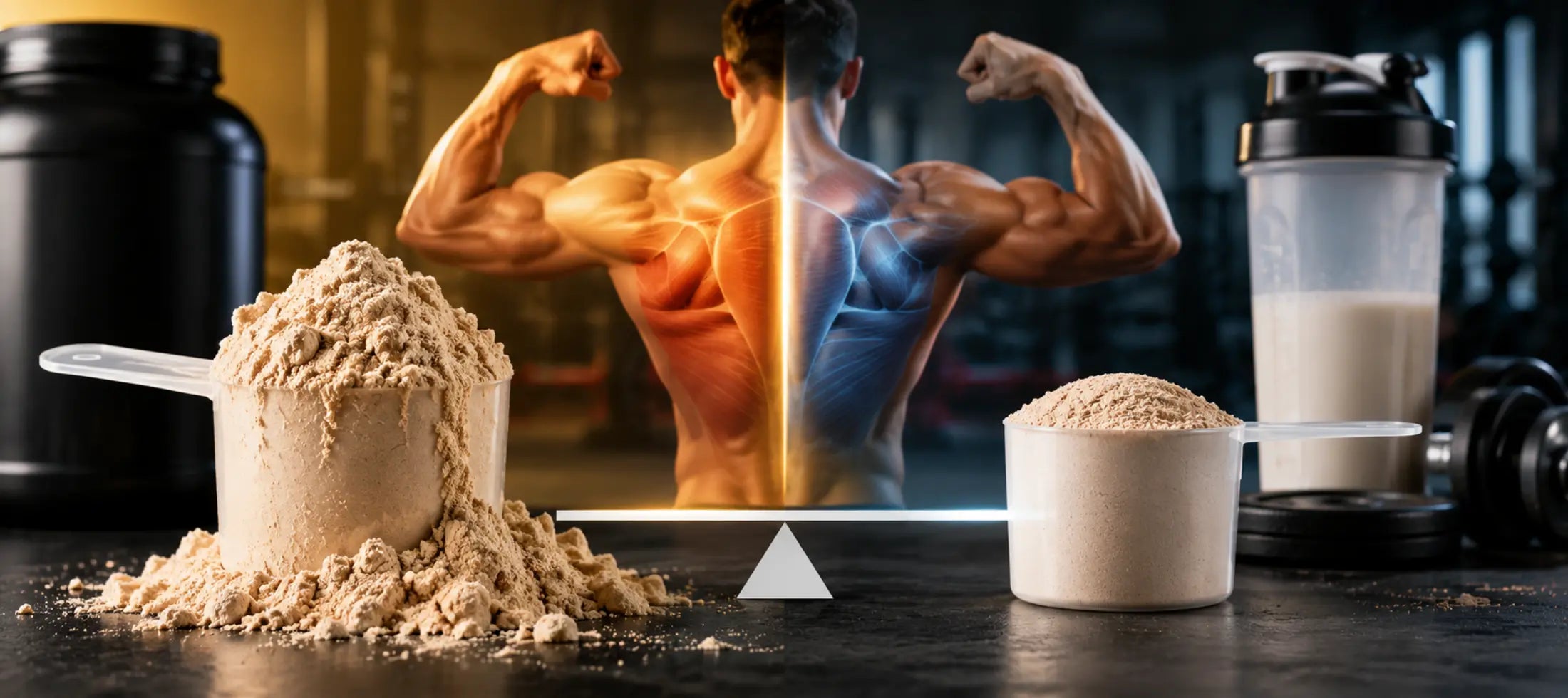

The short answer is, no, more whey protein does not automatically mean more muscle. Muscle growth depends on total daily protein intake, training stimulus, and recovery, not excessive whey consumption.
Most research shows muscle-building benefits plateau around:
1.6 to 2.2 grams of protein per kg body weight per day
After this range, extra whey protein provides minimal additional muscle gain.
Key insight: There is an “optimal zone” for protein intake. Beyond it, results do not increase significantly.
Introduction: The Misunderstanding About “More Protein = More Muscle”
In Pakistani gyms and online fitness discussions, one belief is very common: “If one scoop works, three scoops must work faster.” This thinking leads many lifters to overconsume whey protein, expecting faster muscle growth. At the same time, others worry about kidney damage or wasting money. The reality is more balanced and based on physiology, not marketing. Muscle growth follows a limit, not a straight upward curve.
How Muscle Growth Actually Works
Muscle growth happens through a process called muscle protein synthesis (MPS).
The basic cycle:
You train muscles (gym or resistance work)
Muscle fibers break down
Protein supports repair and rebuilding
Muscle grows over time
Important point:
Muscle growth is triggered by:
Training intensity
Total daily protein
Recovery quality
Not by excessive protein in a single sitting.
What Is the Optimal Whey Protein Intake?
Scientific studies suggest a clear range for muscle gain.
Optimal daily protein intake:
1.6 to 2.2 grams per kg body weight
Example:
If you weigh 70 kg:
Minimum effective: ~112g protein/day
Upper optimal range: ~154g protein/day
Key insight:
Whey protein is only a part of this total. The rest comes from food like eggs, chicken, milk, and lentils.
Can You Take Too Much Whey Protein?
Yes, you can consume more than your body needs, but it does not increase muscle growth beyond a point.
What happens with excess intake:
Extra protein is used for energy
Converted into urea and excreted
No additional muscle gain beyond threshold
Important clarification:
In healthy individuals, high protein intake is generally safe. The issue is not safety, but diminishing returns.
Muscle Protein Synthesis and the “Leucine Threshold”
Muscle growth is triggered by a specific amino acid called leucine.
Key concept:
Each protein meal has a “trigger point” for muscle building.
Typical effective dose:
20 to 40 grams of high-quality protein per meal
This is enough to maximize muscle protein synthesis
After this point:
Extra protein does not significantly increase muscle building in that same meal.
Why More Scoops Do Not Mean More Muscle
Many people assume whey protein works like fuel:
more input = more output.
But muscle growth does not work that way.
What actually happens:
Muscle growth has a biological ceiling
Once protein needs are met, extra intake is not stored as muscle
Training stimulus becomes the limiting factor
Key insight:
Without progressive training, extra whey protein has no extra benefit.
Protein Distribution Matters More Than Overloading
Instead of focusing on total whey scoops, distribution matters more.
Ideal daily pattern:
3 to 5 protein feedings per day
20 to 40g protein per meal
Example structure:
Breakfast: eggs or milk
Lunch: chicken or daal
Post-workout: whey protein
Dinner: chicken or eggs
Why this works:
Muscle protein synthesis is activated multiple times throughout the day, not just once.
Is Too Much Whey Protein Bad for Kidneys?
This is one of the most common concerns in Pakistan.
Scientific consensus:
In healthy individuals, high protein intake does NOT damage kidneys
Kidney issues are linked to pre-existing medical conditions, not protein intake in normal ranges
What actually increases risk:
Existing kidney disease
Poor hydration
Uncontrolled medical conditions
Key takeaway:
For healthy lifters, protein intake within recommended ranges is safe.
Diminishing Returns: The Most Important Concept
More protein eventually stops giving more benefit.
The curve looks like this:
Low intake → poor muscle growth
Optimal intake → maximum growth
Excess intake → no extra gain
Key insight:
The body prioritizes efficiency. It does not store extra protein as muscle.
Whey Protein Scoops Per Day: Practical Reality
Most lifters overestimate how much whey they need.
General guideline:
1 to 2 scoops per day is enough for most people
Remaining protein should come from whole foods
When more may be used:
Very high body weight athletes
Poor access to protein-rich food
Busy schedules with missed meals
Optimal Protein Strategy for Pakistani Lifters
Instead of increasing whey blindly, focus on total intake.
Smart approach:
Set protein target based on body weight
Use whey protein only to fill gaps
Prioritize whole food first
Example:
If your target is 140g protein:
90g from food
50g from whey or supplements
Final Verdict
More whey protein does not mean more muscle. Muscle growth depends on reaching an optimal protein threshold, not exceeding it.
For Pakistani lifters, the most effective strategy is:
Hit daily protein target
Stay within 1.6 to 2.2 g/kg body weight
Use whey protein as a supplement, not the foundation
Final takeaway:
Muscle growth is not about maximum protein intake. It is about optimal intake combined with consistent training and recovery.
FAQs
1. How much whey protein per day for muscle gain?
Most people need 1.6 to 2.2 grams of protein per kg body weight daily. Whey protein should only be used to complete this target, usually 1 to 2 scoops per day, depending on diet.
2. Can I take 3 scoops of whey protein a day?
Yes, you can take 3 scoops, but it is usually not necessary. If your total protein intake is already sufficient from food and supplements, extra scoops will not significantly increase muscle gain.
3. Is too much whey protein bad for the kidneys?
In healthy individuals, high protein intake does not damage the kidneys. However, people with existing kidney disease should consult a doctor before increasing protein intake.
Share:
Rooftop to Stage: A Pakistani Bodybuilder's Journey
12 Weeks of Whey Protein and Gym: Here's What Actually Happens to Your Muscles