

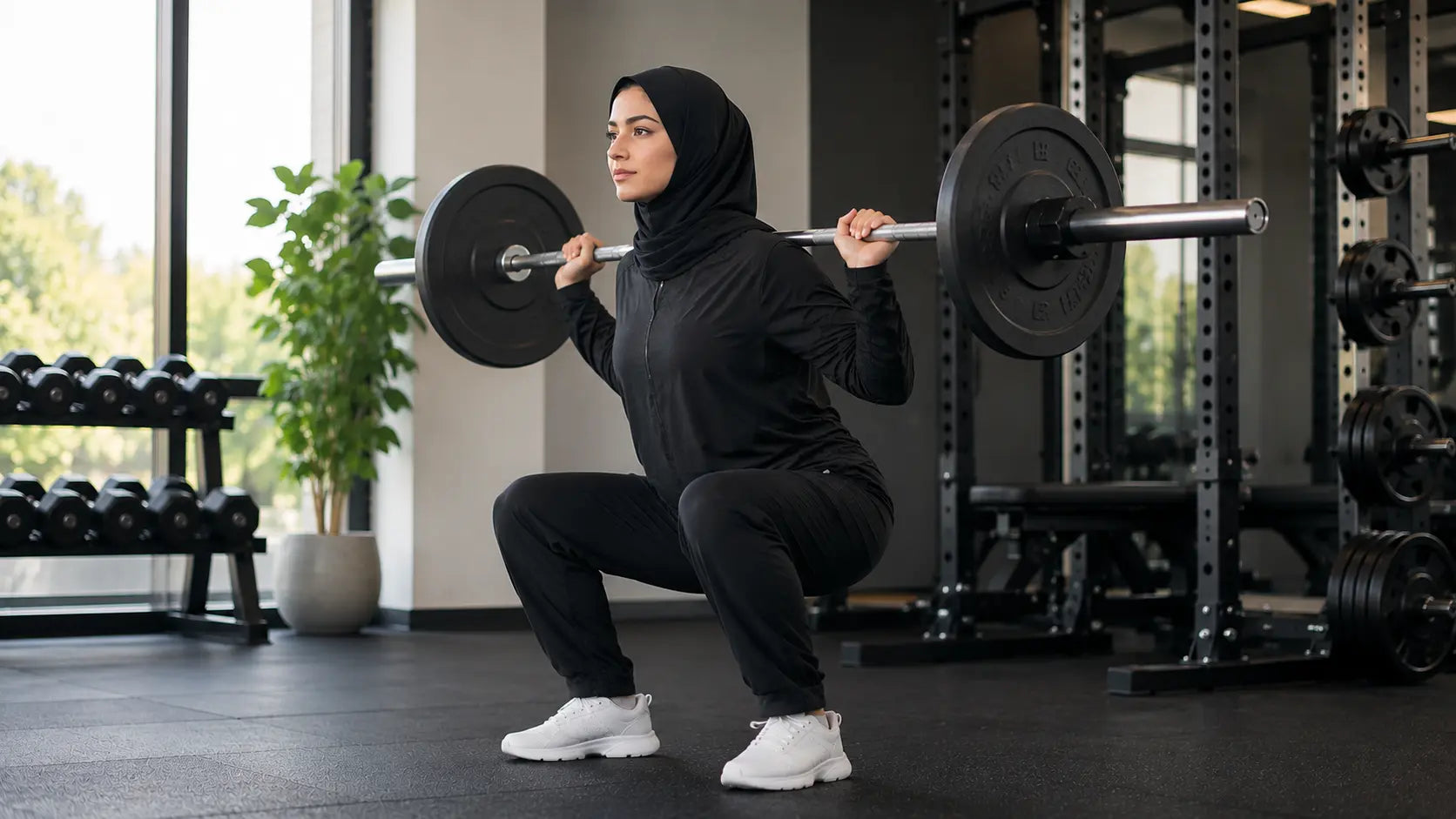

No, Strength Training Does Not Make Females Bulky. Building large, visible muscle needs very high testosterone, years of heavy training, and usually extra calories. The average female body isn't built for that. What strength training does give you is lean muscle, better tone, a faster metabolism, and fat loss. That's the "toned" look most women want in the first place.
Don't be scared of the barbell. That fear is holding back thousands of women from the exact results they actually want: a toned, strong, lean physique.
In this guide, you will learn why females don't bulk up easily, what actually causes visible muscle mass, and how to train with weights for a lean, sculpted look. Let's dive in!
Why Don't Women Bulk Up From Lifting Weights?
Here's the nitty-gritty: the biggest factor separating a bodybuilder's physique from a toned physique is testosterone, not the exercise itself.
-
Men have about ten times more testosterone than women after puberty. This gap is the main reason men build bigger muscles over time, not the lifting itself.
-
Men gain slightly more raw muscle size. But the percentage of growth, compared to where each person started, was nearly the same for men and women.
-
Testosterone helps build muscle in both sexes. But a lifting session barely raises testosterone in women, simply because there's much less of it to raise, according to a study on testosterone physiology in resistance training.
So what does this mean for you? Your body responds to the same squat and the same deadlift very differently than a man's body does. That's so simple, and it's exactly why the "bulky" fear doesn't hold up.
Common reasons women appear bulkier are rarely the strength training itself:
-
Excess calorie surplus — eating far more than your body needs, on top of training
-
Genetics — a small percentage of women naturally carry higher androgen levels
-
Water retention and lack of fat loss — muscle sitting under a layer of fat looks different than lean muscle
-
Performance-enhancing drug use — the extreme physiques that fuel the bulky stereotype are often built with external hormones, not natural training
There's no need to stress about accidentally training your way into a size you didn't ask for. Muscle growth is a slow, deliberate process that takes months of dedicated effort even under ideal conditions. It doesn't happen by accident after a few weeks of squats.
Does Muscle Weigh More Than Fat?
Not exactly, but this is where a lot of the confusion starts. A kilogram of muscle and a kilogram of fat weigh the same. The difference is density: muscle takes up noticeably less space than fat for the same weight.
That's why two women at the same weight can look completely different. It comes down to muscle-to-fat ratio. So when someone says weights "made them bulky," what actually happened is body recomposition. They gained muscle and lost fat at the same time. The shape changed, even if the scale barely moved. That's a win, not something to fear.
What Strength Training Actually Does for a Female Body
Now let's talk about what you're actually going to get, because it really is that easy to understand once you strip away the myth.
-
Fat loss without losing lean mass. A large review of studies on postmenopausal women found that resistance training built muscle and cut fat mass, waist size, and belly fat at the same time, according to a systematic review and meta-analysis.
-
A toned, defined look. Muscle is denser and more compact than fat. Lifting weights plus good nutrition is what creates real shape.
-
Stronger bones. Bone density drops with age. Resistance training is one of the best ways to protect it, especially around menopause.
-
Higher resting metabolism. More muscle means your body burns more energy, even while resting.
-
Better everyday function. Groceries, stairs, playing with your kids, all of it gets easier when you're strong.
How Long Does It Take to See Toning Results?
Most beginners feel stronger within two to four weeks. Visible changes usually take eight to twelve weeks of steady training and good nutrition. So there's no need to stress if week two shows nothing in the mirror. Your nervous system adapts first. Your muscles follow. Your visible shape comes after that. Trust the timeline.
Strength Training vs Cardio: Which Is Better for Toning?
There isn't a single perspective by which we can decide which is better. It purely depends on your goals and your body's needs.
Cardio wins if you want heart endurance, quick calorie burn, or stamina for running and cycling.
Strength training wins if you want lean muscle, a shaped physique, strong bones, and a faster long-term metabolism.
So it depends on your goals. But for most women chasing a "toned" look, strength training should take up the bigger share of the week. Add cardio for heart health.
How to Start Strength Training Without Fear
-
Start with two to three sessions a week. You don't need to live in the gym. Consistency beats intensity when you're new.
-
Learn the big compound lifts first. Squats, deadlifts, presses, and rows work the most muscle for your time.
-
Use progressive overload. Slightly increase weight, reps, or sets over time. This drives real change, not random workouts.
-
Prioritize protein intake. Your muscles need building blocks to recover and tone.
-
Track your progress, not just the scale. Photos, measurements, and strength numbers tell the real story.
Common Mistakes to Avoid When Strength Training as a Female
1. Avoiding Weights Out of Fear
Mistake: Sticking only to light cardio because of the bulky myth. Solution: Add two structured strength sessions per week and trust the process for at least eight to twelve weeks before judging results.
2. Under-Eating Protein
Mistake: Cutting calories hard while skipping protein, which leaves you flat and undefined instead of toned. Solution: Add a protein-rich meal or shake around your training sessions.
3. Comparing Your Physique to Bodybuilders
Mistake: Assuming your results will look like a competitive female bodybuilder. Solution: Remember that extreme physiques take years of specialized training and, often, external hormone use. That's not standard gym training.
4. Skipping Recovery
Mistake: Training every single day without rest, which increases injury risk and blunts progress. Solution: Give major muscle groups at least 48 hours before training them again.
What About Women With PCOS or Hormonal Imbalances?
Some women worry more, because conditions like PCOS involve higher androgen levels. Don't be scared here either. Strength training is still one of the best tools for managing PCOS symptoms. It improves insulin sensitivity and supports a healthier hormone balance over time. If you have a diagnosed condition, work with your doctor or a certified trainer to fine-tune your program. But the training itself is not the enemy.
Signs You're Building Tone, Not Bulk
Not sure how to track progress the right way? Watch for these signs instead of obsessing over the scale:
-
Your clothes fit differently, even if your weight barely changes
-
You can lift more than last month
-
Your energy and posture improve
-
Muscle definition shows up in your arms, shoulders, or legs
-
Your waist and stomach feel firmer, not wider
That's so simple, and it really is that easy to spot once you know what to look for.
Fueling Your Strength Training Journey
A lean, toned physique needs consistent training and consistent nutrition, together. If protein is your weak link, that's where Jacked Nutrition can help. A quality whey protein makes it easier to hit your daily protein target without overeating. It supports recovery and that toned look you're training for, not bulk. So what's holding you back? Start your next session knowing the science is on your side.
FAQs About Strength Training and Bulking in Females
Will lifting heavy weights make me look like a bodybuilder?
No. Female bodybuilders train for years with specific programs, strict nutrition, and often external hormone support. Regular strength training gives you tone and strength, not that scale of muscle.
How many days a week should a woman strength train to avoid bulking and just tone up?
Two to three sessions a week is plenty for most beginners. This builds lean muscle and shape, without the calorie surplus needed for real size gains.
Can I strength train and still lose weight?
Yes. Strength training plus a modest calorie deficit is one of the best ways to lose fat while keeping your muscle. That's what creates a toned look.
Does lifting weights increase testosterone in women to unsafe levels?
No. Resistance training raises testosterone slightly for a short window after a session. The rise is small next to male levels, and it returns to baseline fast.
Is strength training safe during and after menopause?
Yes, and it's actually recommended. Resistance training protects bone density and muscle mass at a stage when both naturally decline.
Should beginners start with light weights only?
Start with a manageable weight to learn good form, then increase it step by step. Staying too light for too long just slows your results.
What should I eat to support toning instead of bulking?
Focus on enough protein, a slight calorie deficit or maintenance intake, and steady training. big surplus is what drives size gains, not the training itself.
Can genetics make some women bulk up faster than others?
Yes, a small number of women naturally carry higher androgen levels, which can speed up muscle gain. This is the exception, not the rule.
Share:
Best Natural DHT Blocking Ingredients for Hair Health
Creatine is Only for Bodybuilders, Not Functional Athletes