

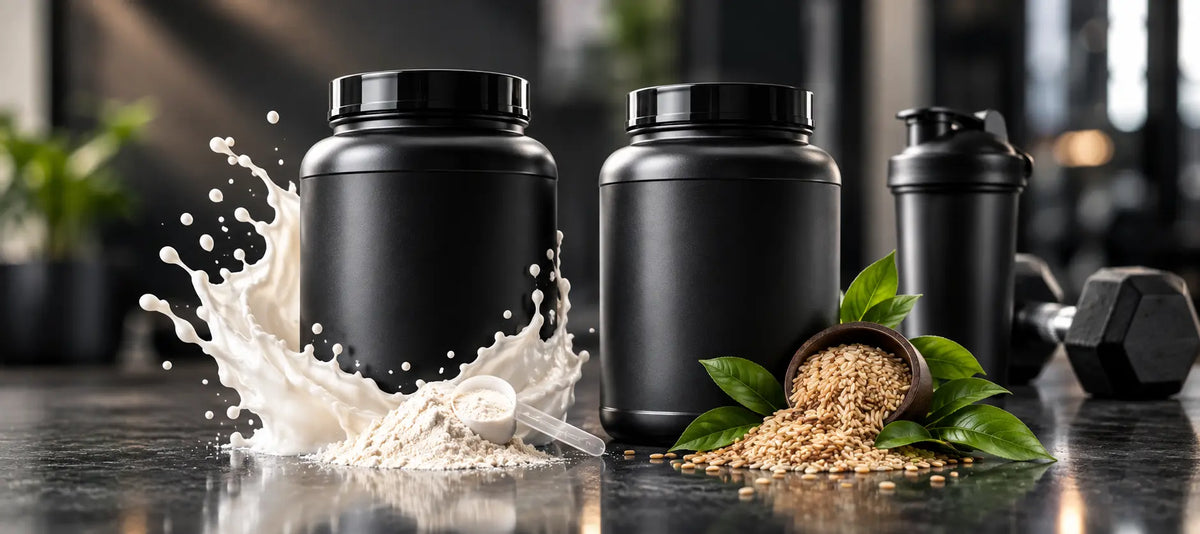

Are you standing in a supplement store for the first time, staring at forty tubs that all stare right back? Whey, isolate, hydrolysate, plant blends, and casein. Every label promising the same thing. Bigger muscles. Faster recovery. A better you. That's the story of every beginner's first trip to the protein aisle.
But wait, does it even matter which tub you grab, as long as it says "protein" on the label? Well, it does, and that gap in knowledge is usually where beginners waste money. Don't be stressed, though. You don't need a nutrition degree for this; you just need to know what you're looking at.
In this guide, you will learn the main protein types, the seven things worth checking on any label, and how ISO Jacked stacks up against Brown Rice Jacked and everything else on the shelf. If you tolerate dairy well, ISO Jacked is built for fast digestion and muscle recovery. If you don't, Brown Rice Jacked covers the same ground without the lactose.
Let's dive in!
Do You Even Need a Protein Powder?
Here's the truth nobody at the counter wants to tell you. Most people already get enough protein from daal, chicken, eggs, and roti. Protein powder isn't magic. It's convenience in a scoop, nothing more.
So when does it actually help? It helps when your day is packed. It helps when cooking six protein-rich meals just isn't realistic. It helps when you train hard and food alone can't keep up. It also helps on days when you're travelling or working long shifts. That's so simple, and it's the honest answer.
It does not help if you already hit your protein target through daal, chana, chicken, and eggs. In that case, a shake just adds extra calories you don't need. Be honest with yourself about which camp you fall into. That's the real question to answer before you spend money on a tub.
Working out your daily protein target
Start with your body weight in kilograms. For someone lifting weights regularly, research shows that 1.4 to 2.0 grams per kilogram works well for muscle building and recovery. A 70 kg lifter would land somewhere between 98 and 140 grams a day. A sedentary adult needs much less. Closer to 0.8 grams per kilogram covers basic repair.
Now add up what you already eat. A cup of daal gives you around 9 grams. A chicken breast gives you roughly 30 grams. Two eggs give you about 12 grams. Add these up for a normal day, and compare that total to your target. If you're short by 20 or 30 grams, that gap is exactly what a scoop of protein powder is meant to fill. No need to overthink it beyond that.
The Main Types of Protein Powder Explained
Every tub on the shelf falls into one of a few buckets. Knowing these buckets makes the rest of this guide click into place, and it stops you from getting confused by fancy marketing names.
Concentrate, isolate, and hydrolysate
These three are all whey. They're just processed differently, so here's the nitty-gritty of what actually separates them.
-
Concentrate keeps more of the original milk. It still has some lactose and fat in it. Being the cheapest option on the shelf, it works fine for most people who tolerate dairy well.
-
Isolate goes through extra filtering. It lands around 90% protein with very little lactose or fat left. This makes it a smart pick if you're watching calories or a bit sensitive to lactose.
-
Hydrolysate gets broken down even further into smaller peptides, so your body absorbs it fast. It usually costs more because of the extra processing.
You can read more about how concentrate and isolate compare. Grab the nitty-gritty details there and come back here for the buying decisions.
Casein and blends
Casein is also a milk protein, but it digests slowly. It can take several hours to break down, instead of the one or two hours whey takes. That makes casein a popular pick right before bed, since your body is fasting overnight anyway and can use a slow, steady stream of amino acids. Some products blend whey and casein on purpose. You get a fast hit first, then a slower release later.
Plant proteins
Soy, pea, and rice are the big three plant options. Soy is a complete protein on its own. It has all nine essential amino acids your body can't make by itself. Pea and rice aren't complete individually, but combined, they cover the full amino acid profile between them. That's why you'll often see pea-rice blends marketed as "complete" plant proteins. If dairy doesn't sit well with you, take this category seriously. It's not just a backup plan.
Seven Things to Check on Any Label
Before you buy anything, run through this checklist. It takes two minutes, and happily, it can save you from a bad purchase, or worse, a fake product.
-
Protein per serving, not just the big number on the front.
-
Where that protein actually comes from: whey, rice, pea, or soy.
-
Ingredient order, since ingredients are always listed by weight.
-
Added sugar and the type of sweetener used.
-
Allergen warnings for milk, soy, or gluten.
-
Batch number and expiry date printed on the tub.
-
Halal and safety certification, since this matters a lot in Pakistan.
Protein per 100g
Don't just glance at "27g protein" on the front. Flip the tub over. Check protein per 100g instead. This lets you compare products fairly, even when scoop sizes differ. A tub with a smaller scoop can actually deliver more protein per gram than a flashier-looking competitor.
Ingredient order and fillers
Ingredients are listed heaviest first, always. If "maltodextrin" or "protein blend" sits above the actual protein source, that tub is filler-heavy. A clean label puts the real protein source right at the top. Nothing should be buried under cheap fillers.
Sweeteners and additives
Most powders use sucralose, stevia, or acesulfame K. These keep calories low while the shake still tastes good. None of these should worry you at normal serving sizes. That said, if you're sensitive to artificial sweeteners, look for a stevia-based or unflavored option instead.
Batch number and expiry date
This one sounds boring, but it's crucial. As we all know, counterfeit supplements are unfortunately common in Pakistan's market. A legitimate batch number lets you verify a product is authentic. Often, you can check it through a QR code on the tub. If a seller can't show you a batch number, that's your cue to buy elsewhere.
Matching a Protein to Your Goal
Not every protein fits every goal, and that's okay. Here's how to match yours to what you're actually trying to achieve.
Muscle gain
If muscle and strength are your target, whey is hard to beat for speed. A meta-analysis of 49 studies found that protein supplementation boosted muscle size and strength during resistance training. Fast-digesting isolate, like the blend used in ISO Jacked, delivers amino acids to your muscles quickly after a workout. That's exactly when your body is primed to use them. So timing does matter a little here.
Fat loss
Protein is the most filling of the three macronutrients. That matters more than most people realize during a fat-loss phase. One review found that protein reduces hunger and increases fullness, compared to carbs or fat at the same calorie count. A higher-protein, lower-calorie shake between meals can genuinely help. It keeps you on track without white-knuckling your way through hunger all day.
Dairy-free or vegan
If dairy upsets your stomach, plant protein is your lane. Brown Rice Jacked is lactose-free, gluten-free, and gentle on sensitive stomachs. It still delivers a solid dose of protein per scoop. And you know what, you don't lose out on quality just because you're skipping dairy. Plenty of serious lifters train and grow perfectly well on plant protein alone.
ISO Jacked vs Brown Rice Jacked vs Everything Else
There isn't a single right answer here. It purely depends on your body, your goals, and what actually sits well in your stomach.
If you handle dairy fine and want maximum protein density with fast digestion, ISO Jacked wins this round. It's built for the lifter who trains hard and wants quick recovery. If dairy doesn't agree with you, or you follow a vegetarian or vegan diet, Brown Rice Jacked covers the same ground. No lactose involved.
Here's a side-by-side to make the comparison easier to picture:
|
Feature |
ISO Jacked |
Brown Rice Jacked |
Generic Concentrate |
|
Protein source |
Whey isolate, hydrolysate, concentrate blend |
Organic sprouted brown rice |
Whey concentrate |
|
Protein per serving |
27g |
~24g |
Varies, often 20-24g |
|
Lactose |
Low |
None |
Higher |
|
Digestion speed |
Fast |
Moderate |
Slower |
|
Best for |
Muscle gain, post-workout |
Dairy-free, sensitive stomachs |
Budget, general use |
So it comes down to your body and your budget. Neither option is objectively better than the other. They're simply built for different people with different needs.
How and When to Take It
Now comes the practical part. Buying the right protein is only half the job. Using it correctly is the other half, and beginners often skip this part.
Timing, dosage, and mixing
Your body can only put so much protein to work in one sitting. Aim for 20-30g per serving. Don't dump the whole scoop plus extra into one shake, thinking more is better. Mix your scoop with 250-300ml of water or milk. Shake it well. Drink it within 20-30 minutes after your workout if muscle gain is the priority. Water keeps the shake lighter. Milk adds extra calories and protein on top.
If your goal is just a convenient snack, exact timing matters far less. So don't stress over the so-called "anabolic window" myths floating around online. Consistency across the week beats obsessing over a 30-minute window.
Common Beginner Mistakes to Avoid When Choosing a Protein Powder
1. Judging a product by the Front Label Alone
Mistake: Buying based on "27g protein!" in bold on the front, without checking the ingredient list. Solution: Flip the tub and read the ingredient panel before you decide anything.
2. Ignoring Your Actual Diet
Mistake: Adding a protein powder without checking how much protein you already eat in a normal day. Solution: Track a typical day of eating first. Then supplement only the gap that's left.
3. Buying From Unverified Sellers
Mistake: Grabbing the cheapest tub from an unofficial reseller with no visible batch number. Solution: Buy from authorised stores or the brand's own website. You can then verify the batch and halal certification.
4. Overloading a Single Shake
Mistake: Using three scoops in one shake, thinking more protein means faster results. Solution: Stick to 20-30g per serving. Spread your total intake across the day instead.
5. Picking a Flavour Before Checking the Label
Mistake: Choosing a tub purely because the flavour sounds good, then getting surprised by the sugar or filler content later. Solution: Shortlist products on protein quality and label first. Pick your flavour from that shortlist.
Buying Safely in Pakistan
Counterfeit supplements are unfortunately common in Pakistan's market. So where you buy matters just as much as what you buy. Look for DRAP registration, GMP certification, and halal certification. Also look for a batch number you can verify, ideally through a QR code. Be cautious with unmarked resellers on general marketplaces. Fake or expired stock does circulate there.
Jacked Nutrition products are manufactured at Farmalabs. It's Pakistan's first DRAP-approved, GMP, and halal-certified sports nutrition facility. Every tub carries a certificate of analysis, accessible through a QR code. You know exactly what's inside before you scoop it into your shaker. That's the kind of paper trail worth checking for, whatever brand you choose.
Frequently Asked Questions
Is protein powder safe for beginners?
Yes. For healthy adults, a standard serving of whey or plant protein is safe. If you have a kidney condition or another medical concern, check with a doctor first.
Can I take protein powder without working out?
You can, but it's not necessary unless food alone can't hit your daily protein target. Think of it as a top-up tool, not a requirement.
Is Brown Rice Jacked as effective as whey for muscle gain?
Plant protein can absolutely support muscle gain, as long as your total daily protein is adequate. Whey digests slightly faster, but consistent daily intake matters more than the exact source.
What's the best time to drink a protein shake?
Within 30 minutes after training is ideal for recovery. But your total daily intake matters more than hitting an exact minute.
Can I mix protein powder with milk instead of water?
Yes. Milk adds extra protein and calories. Water keeps the shake lighter and lower in calories. Either works, so pick based on your own calorie goals.
How do I know if a protein powder is halal certified in Pakistan?
Check the tub for a visible halal mark. Then cross-check the batch number on the brand's website, or via a QR code if one is provided.
Do I need a different protein powder for weight loss versus muscle gain?
Not necessarily. The same high-protein powder can support both goals. What actually changes is your total daily calories, not the protein source itself.
Which Option Will Work Best For You?
Choosing a protein powder doesn't need to feel like a guessing game. Not once you know what to look for. Check the label. Match the protein type to your actual goal. Buy from a source you can verify.
If you want a fast-digesting, high-protein option and dairy doesn't bother you, ISO Jacked gives you 27g of protein per scoop from a proven whey blend. If you're dairy-free, vegetarian, or just want a gentler option, Brown Rice Jacked is Pakistan's first rice protein. It covers the same nutritional ground, minus the lactose. Both are made at Farmalabs, DRAP-approved and halal-certified. You know exactly what you're scooping into your shaker every time. So what's holding you back? Pick the one that fits your body, and start building the routine that actually works for you.
Share:
Whey Isolate vs Whey Hydrolysate: Where ISO Jacked Fits and Who Actually Needs Hydrolysate?
ISO Jacked vs Mass Gainers: Which One Should You Buy for Your Goal?