

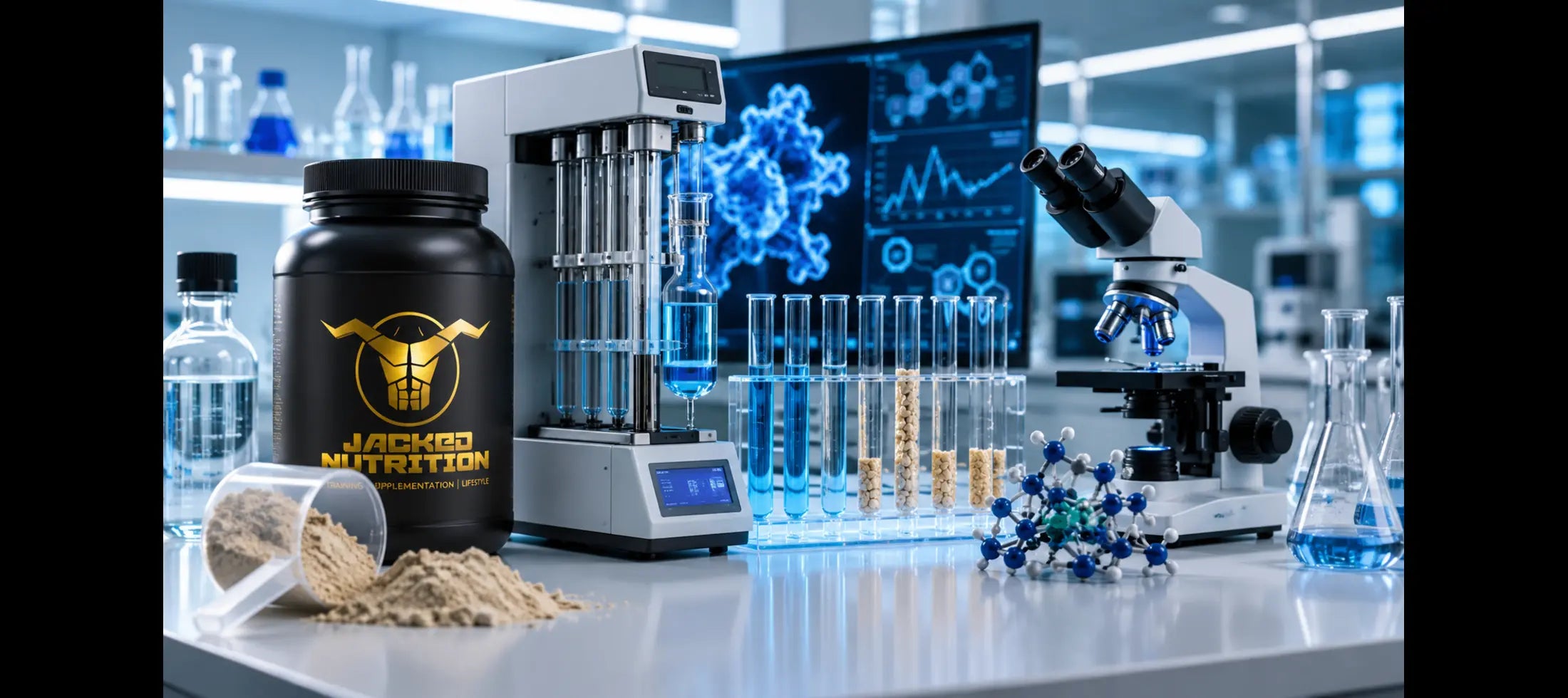

Protein supplements are now a regular part of many fitness and nutrition routines. From athletes and bodybuilders to students, professionals, and active adults, many people use whey protein to support muscle recovery, daily protein intake, and overall performance. But when a customer buys a protein supplement, one question matters more than everything written on the front label:
Does the product actually contain the protein amount mentioned on the label?
This is where protein quality testing becomes important. Protein testing helps verify the nutritional accuracy, quality, and authenticity of a supplement. For Jacked Nutrition, protein verification is not just a technical process. It is part of building consumer trust through lab technology, quality assurance, and transparent manufacturing practices.
Why Protein Quality Matters
Protein quality matters because consumers depend on accurate nutrition information. When a whey protein product says it provides a certain amount of protein per serving, that value should be supported by proper testing and quality checks.
For gym users, even a small difference in protein content can affect their daily nutrition plan. For athletes, accurate protein intake supports muscle repair, recovery, and performance. For general consumers, it helps them make better dietary choices.
Protein quality testing also helps protect customers from misleading claims. In the supplement market, some products may look attractive because of packaging, flavor, or marketing, but the real value depends on what is inside the product. A good protein supplement should be verified for its actual protein content, not only promoted through label claims.
This is why protein verification is an essential part of supplement testing. It confirms whether the product matches its declared nutritional profile and gives customers confidence in what they are consuming.
Understanding Jacked Nutrition’s Commitment to Accuracy
Jacked Nutrition focuses on providing supplements that are tested, reliable, and transparent. In the case of whey protein, accuracy is especially important because customers usually compare products based on protein per serving, serving size, ingredients, digestibility, taste, and value for money.
A whey protein product is not only judged by how it mixes or tastes. It is also judged by whether its label is accurate. If the label mentions a specific protein value, that value should be backed by testing and documentation.
Jacked Nutrition’s approach to quality is based on checking the product through proper lab methods and quality assurance steps. This includes reviewing raw materials, testing samples, verifying protein content, checking nutritional values, and ensuring that the final product meets internal quality standards before it reaches customers.
This process helps reduce the risk of inconsistency and supports consumer confidence. It also shows that protein quality testing is not a one-time activity but an important part of the overall supplement manufacturing system.
Advanced Lab Technology in Protein Testing
Advanced lab technology plays a central role in protein testing. It helps check whether the supplement contains the expected amount of protein and whether the nutritional profile matches the product label.
Protein testing may include the analysis of protein content, moisture, fat, carbohydrates, ash, and other nutritional parameters depending on the product type and testing requirements. For whey protein supplements, the most important parameter is usually the amount of protein per serving.
Lab testing helps answer key questions such as:
-
Does the product meet its claimed protein content?
-
Is the serving size accurate?
-
Are the nutritional values consistent?
-
Does the batch meet the required quality standards?
-
Is the product suitable for final release?
By using lab-based testing, Jacked Nutrition can verify the quality of its products before they are made available to consumers. This helps ensure that the final supplement is not based only on formulation estimates but is supported by actual testing.
The Role of the Kjeldahl Method in Verifying Protein Content
The Kjeldahl method is one of the most widely used methods for protein verification. It works by measuring the nitrogen content in a sample. Since protein contains nitrogen, the nitrogen value is used to estimate the protein content of the product.
In simple words, the Kjeldahl method helps laboratories check whether the protein amount in a product matches the value mentioned on the label. This makes it an important method in protein quality testing, especially for food and supplement products.
For whey protein, this method can help verify whether the finished product contains the expected level of protein. However, like all testing methods, it should be used properly through controlled sampling, trained personnel, suitable equipment, and documented procedures.
The importance of the Kjeldahl method is that it provides a scientific basis for protein verification. Instead of relying only on supplier information or formula calculations, the product can be tested in a lab to confirm its actual protein value.
This supports transparency and helps customers trust that the label is backed by testing.
Step-by-Step Protein Testing Process at Jacked Nutrition
Protein quality testing follows a structured process. Each step helps ensure that the final product is accurate, safe, and consistent.
1. Raw Material Selection
The process begins with the selection of raw materials. For whey protein products, this may include whey protein concentrate, whey protein isolate, hydrolyzed whey protein, flavors, sweeteners, and other supporting ingredients.
The quality of the final product depends heavily on the quality of the raw materials. That is why raw material selection is one of the most important steps in supplement manufacturing.
2. Raw Material Inspection
Before manufacturing begins, raw materials are checked to ensure they meet the required specifications. This may include reviewing supplier documentation, ingredient quality, appearance, odor, and other basic quality parameters.
This step helps prevent low-quality ingredients from entering the production process.
3. Batch Preparation
After raw material approval, the ingredients are measured and prepared according to the product formula. Accuracy during this stage is important because incorrect measurement can affect protein content, taste, texture, and serving size.
Controlled batch preparation helps maintain consistency from one production batch to another.
4. Sample Collection
A representative sample is collected from the batch for testing. Proper sample collection is very important because the sample should accurately represent the full batch.
If sampling is not done correctly, the test result may not reflect the actual quality of the complete product.
5. Protein Verification
The collected sample is tested to verify protein content. Suitable laboratory methods, including methods such as the Kjeldahl method, may be used to estimate protein content.
The purpose of this step is to confirm whether the product contains the protein amount expected from the formula and declared on the label.
6. Nutritional Profile Review
After testing, the results are reviewed against the product’s nutritional information. This includes checking protein, carbohydrates, fats, calories, and other relevant values.
This step helps ensure that the product label is accurate and that the finished supplement matches its declared nutritional profile.
7. Quality Assurance Review
The quality assurance team reviews the testing results, production records, and product specifications. If the batch meets the required standards, it can move forward for packaging and release.
If any issue is found, the batch may be reviewed further before approval.
8. Final Product Approval
Once the product passes quality checks, it is approved for packaging and distribution. This final approval step helps ensure that only verified products reach customers.
Ensuring Quality and Safety Standards
Jacked Nutrition products are manufactured in a DRAP-approved facility, which supports regulated manufacturing and quality control within Pakistan.
A DRAP-approved facility follows required local standards for production, documentation, and product handling. This helps ensure that supplements are produced in a controlled environment with proper quality checks.
Quality assurance is not limited to protein testing only. It also includes production control, batch documentation, equipment cleanliness, ingredient handling, packaging checks, and final product review.
For a supplement brand, these steps are important because customers are not present during manufacturing. They rely on the brand’s quality system to ensure that the product they receive is safe, consistent, and accurately labeled.
By producing supplements in a DRAP-approved facility and using lab-based testing, Jacked Nutrition supports a more reliable and transparent supplement experience for consumers.
How Accurate Testing Builds Consumer Trust
Trust is one of the most important factors in the supplement industry. Customers want to know that the product they are buying is real, tested, and worth their money.
Accurate protein quality testing helps build this trust. When a product is tested for protein content, the label becomes more than a marketing claim. It becomes a statement supported by quality assurance.
Protein testing helps customers feel confident that:
-
The product contains the declared protein amount.
-
The nutritional label is based on testing.
-
The brand follows a quality control process.
-
The supplement is produced in a regulated facility.
-
The product is checked before reaching the market.
This is especially important for whey protein because many customers use it daily. If someone is taking one or two servings every day, they need to trust the accuracy and consistency of the product.
For Jacked Nutrition, transparent protein testing helps strengthen the relationship between the brand and its customers. It shows that the company understands the importance of label accuracy and product verification.
Why Transparency Matters in Whey Protein
Whey protein is one of the most commonly used supplements in the fitness industry. Because of its popularity, customers have become more aware and more careful when choosing a product.
They want to know what type of whey is used, how much protein is present per serving, whether the product is tested, and whether the company follows proper quality standards.
Transparency helps answer these questions. A transparent brand does not rely only on bold claims. It supports its products through testing, documentation, and clear communication.
In protein supplements, transparency means showing that the product has gone through proper quality checks. It means helping customers understand that what is written on the label is supported by a verification process.
This is the real meaning of “behind the label.” It is not only about packaging. It is about the science, testing, and quality assurance behind the product.
Conclusion: Transparency Behind Every Label
Protein quality testing is essential for verifying label accuracy, product authenticity, and consumer trust. In whey protein supplements, the amount of protein per serving is one of the most important product claims, and that claim should be supported by proper testing.
Through advanced lab technology, protein verification methods such as the Kjeldahl Method, structured supplement testing, and quality assurance in a DRAP-approved facility, Jacked Nutrition works to maintain transparency behind every label.
For customers, this means they can make a more informed choice. Instead of relying only on marketing claims, they can look for a brand that values testing, accuracy, and quality control.
A reliable whey protein supplement should be more than good taste and attractive packaging. It should be tested, verified, and produced with a clear commitment to quality.
FAQs
What lab technologies does Jacked Nutrition use for protein testing?
Jacked Nutrition uses lab-based testing methods to verify protein content and review the nutritional profile of its supplements. These methods help confirm whether the product matches its declared label values.
Why is the Kjeldahl method important for protein verification?
The Kjeldahl method is important because it helps estimate protein content by measuring nitrogen levels in a sample. Since protein contains nitrogen, this method is commonly used for protein quality testing and label verification.
How does protein testing ensure product authenticity?
Protein testing confirms whether the actual protein content matches the amount mentioned on the label. This helps verify product authenticity and protects consumers from misleading protein claims.
Are all batches of Jacked Nutrition tested for protein content?
Protein testing is part of the quality assurance process. For specific batch details, customers may check available product documentation or contact Jacked Nutrition directly.
Is Jacked Nutrition produced in a regulated facility?
Yes. Jacked Nutrition products are manufactured in a DRAP-approved facility, supporting regulated production, quality control, and product safety standards in Pakistan.
Share:
Can Protein Shakes Replace Real Food? The Truth Pakistani Lifters Need to Know (2026 Guide)
How the Kjeldahl Method Ensures 100% Authentic Protein at Jacked Nutrition