

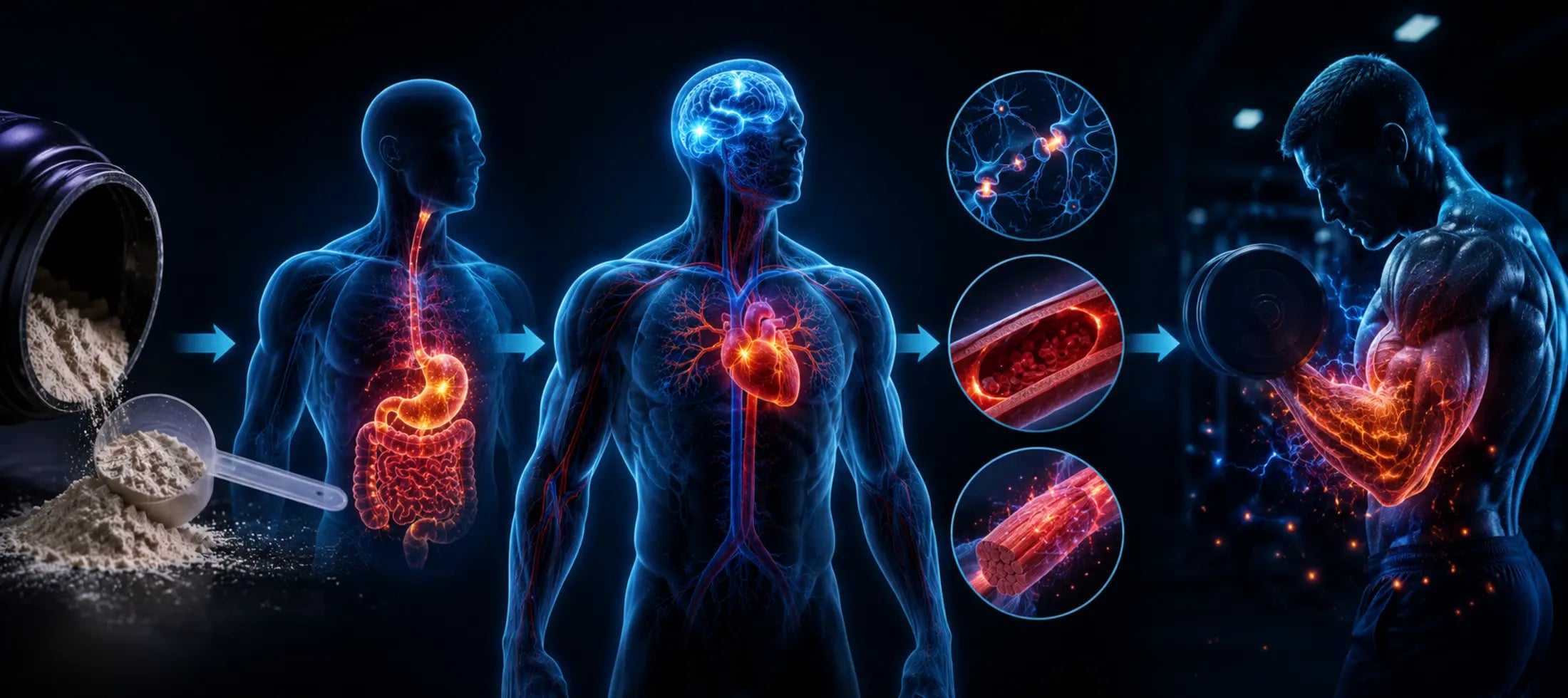

You take your pre-workout. Fifteen minutes later, you feel it. But what's actually happening inside your body during that window? A lot more than just a caffeine buzz. Your nervous system, blood vessels, and muscle cells all respond in ways most people never think about. Let's discuss the real science behind energy, pump, and focus, so you know exactly what you're getting from every scoop.
Why Pre-Workout Supplements Work Beyond Just Energy
Most people assume a pre-workout is just caffeine in a tub. It's not. A good formula works on several systems at once. It supports blood flow, helps muscles fire faster, and keeps your brain locked in. That's why a well-formulated formula, like the Jacked Megalith Green Apple Fury pre-workout, combines multiple ingredients instead of relying on one stimulant.
The Role of Blood Flow, Oxygen Delivery, and Muscle Activation
When you train, your muscles need oxygen fast. Blood carries that oxygen. Certain compounds in pre-workouts widen blood vessels, so more blood reaches working muscles. This means better oxygen delivery and less early fatigue. Your muscles also respond more effectively because stimulants increase nervous system activity while better circulation helps deliver oxygen and nutrients to working muscle tissue.
How Performance Ingredients Interact With the Body
Different ingredients target different systems. Caffeine wakes up your central nervous system. Beta-alanine buffers acid buildup in muscles. Citrulline supports blood vessel dilation. None of this works in isolation. They layer on top of each other, which is why timing and dosage actually matter.
The Science of Workout Energy Production
Energy during a workout doesn't come from one single source. Your body switches between systems depending on how hard and how long you push.
ATP System and Immediate Energy Release
Your muscles run on a molecule called ATP. It's your body's immediate fuel. During short, intense efforts, like a heavy squat or a sprint, your muscles burn through ATP stores within seconds. Creatine helps rapidly regenerate ATP during repeated high-intensity efforts, which is why it's often paired with pre-workout formulas for strength-focused training.
Why Muscles Fatigue During High-Intensity Training
Once ATP runs low, your body shifts to other energy pathways. As ATP stores are used, your body relies more on glycolysis. This process increases hydrogen ion accumulation, which contributes to the burning sensation during hard efforts. Beta-alanine helps buffer this acidity, allowing you to maintain high-intensity exercise a little longer.
What "Pump" Really Means in Training Science
The pump isn't just for looks. It actually reflects real physiological changes happening in your muscles.
Nitric Oxide and Blood Vessel Expansion
Nitric oxide is a molecule your body produces naturally, and it plays a direct role in widening blood vessels. Ingredients like citrulline malate boost nitric oxide production, allowing more blood to flow into muscles during exercise. According to this detailed guide of nitric oxide supplements and how they affect blood flow, this process can meaningfully improve exercise performance in some people.
How Muscle Fullness Impacts Performance Output
More blood in a muscle means more nutrients and oxygen available right when you need them. It also stretches the muscle cell, which some research suggests may support long-term growth signals. That tight, full feeling during a workout isn't just cosmetic. It's your muscles getting better fuel access in real time.
Mental Focus During Training – The Hidden Performance Factor
Physical output only tells half the story. Your brain plays a huge role in how hard you can actually push.
Neurotransmitters and Training Intensity
Caffeine and certain amino acids affect neurotransmitters like dopamine and norepinephrine. These chemicals sharpen focus and reduce the perception of effort. That's why a heavy set can feel more manageable after a dialed-in pre-workout, even though the physical demand hasn't changed.
Why Focus Drops During Long Workouts
As a session drags on, mental fatigue creeps in. Blood sugar dips, dehydration builds, and your brain simply gets tired of firing at full intensity. This is often why the last few sets of a long session feel harder to stay locked into, regardless of how strong you are physically.
Hydration and Electrolyte Balance in Exercise Performance
Energy and pump mean little if your body is running low on fluids and minerals.
How Sweat Loss Affects Strength and Endurance
Sweat isn't just water. It carries sodium, potassium, and other electrolytes out of your body. Even a small drop in hydration can reduce strength output and shorten your endurance. This is one reason athletes training in hot climates often notice performance drops off faster.
Importance of Mineral Balance During Training
Electrolytes help muscles contract properly and support nerve signaling. Without enough sodium or potassium, you may experience cramping or early fatigue. Many pre-workout formulas now include electrolyte blends for exactly this reason, especially for longer or more intense sessions.
|
Factor |
What It Affects |
Common Ingredient |
|
Energy |
ATP regeneration, alertness |
Caffeine, Creatine |
|
Pump |
Blood flow, nutrient delivery |
Citrulline |
|
Focus |
Mental sharpness, effort perception |
Caffeine, Tyrosine |
|
Hydration |
Cramping, endurance |
Sodium, Potassium |
How Consistent Pre-Workout Use Impacts Training Adaptation
A single dose gives short-term benefits. But consistent use over weeks can shift how your body adapts to training.
Short Term vs Long Term Performance Effects
In the short term, you'll likely notice better energy and focus almost immediately. Long-term benefits, like improved strength from creatine or better endurance from consistent beta-alanine use, tend to build gradually. Ingredients like creatine often need a few weeks of regular use before full benefits show up.
Building Training Consistency Over Time
Perhaps the biggest underrated benefit of a pre-workout is consistency. When you feel ready to train, you're more likely to show up and push hard. Over months, that consistency often matters more than any single ingredient. Pairing a strong formula with Jacked Nutrition's protein range can also support recovery between sessions.
Key Takeaways for Athletes and Gym Users
When you know what happens inside your body, you can use pre-workout smarter, not just harder.
What Actually Improves Performance vs What Feels Like Energy
A jittery, buzzing feeling isn't always performance. Real improvement comes from better blood flow, efficient energy systems, and steady focus, not just stimulation. If you want to track how your training responds over time, tools like a calorie and macro calculator can help you connect nutrition with performance goals.
In short, a good pre-workout works with your body's natural systems. It doesn't replace them. Once you understand the science, you know what to look for instead of just hoping for the best.
Share:
Jacked University: The Complete Guide to Sports Nutrition for Pakistani Athletes