

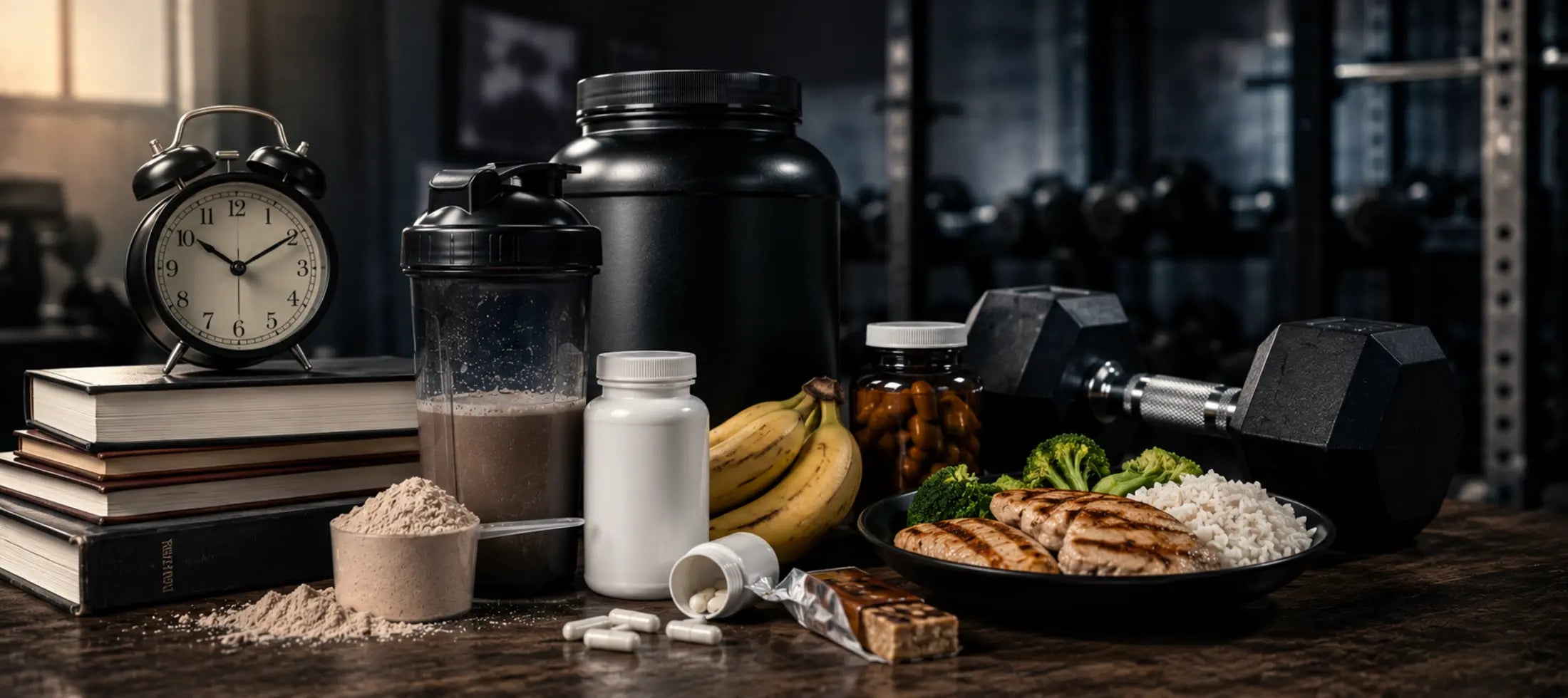

Sports nutrition in Pakistan looks different from sports nutrition anywhere else, and that's the point of this guide. Most advice online gets written for someone eating oats and turkey breast in a cold climate, training on a full night's sleep, with no Ramadan on the calendar. That advice doesn't map cleanly onto a Karachi gym at 6 am in July, or a Lahore athlete fasting through a summer training block.
This guide discusses the actual science of macronutrients, protein, carbs, fats, and supplements, then places it inside a Pakistani context that most guides skip entirely.
Read it start to finish, or jump to the section you need.
Macronutrients and Performance: The Foundation
People obsess over the perfect macro ratio. Forty percent carbs, thirty protein, thirty fat, or some version of it. Honestly, that question misses the point for most athletes.
What actually matters is total energy first. Then protein. Everything else falls into place around training demands after that. If you're not eating enough overall, no ratio saves you. Your body pulls from muscle tissue. Hormone production suffers. Recovery slows down, no matter how good the pie chart looks on paper.
This is where energy availability comes in. It's the calories left over for the body to run on after training burns its share. When that number drops too low for too long, performance drops with it. Athletes usually notice this as fatigue that doesn't lift with sleep. Sometimes it shows up as nagging injuries. Sometimes it's just stalled progress despite hard training weeks.
So, the real starting point isn't a ratio. It's making sure you're eating enough to support your training load. Only then should you adjust your protein, carbs, and fat based on your goal and sport. A sprinter and a marathoner need different things, even at the same body weight. A powerlifter needs different fuel than a footballer running for ninety minutes.
This is also where a lot of Pakistani athletes go wrong without realizing it. Training loads get planned in detail. Meal timing rarely gets the same attention. A session can be programmed perfectly and still underperform if the fuel around it isn't there. Once total energy and protein are locked in, carbs and fats can flex around training volume, personal preference, and even how someone feels on a given day. There's room for adjustment here. This isn't a rigid formula that applies the same way to every person.
Protein: How Much, What Type, and When
Protein gets more attention than any other nutrient in gym culture. For once, the attention is deserved.
For most training athletes, somewhere between 1.4 and 2.0 grams per kilogram of body weight per day covers it well. This range comes from the International Society of Sports Nutrition's position stand on protein and exercise. It's one of the most cited references in the field.
A 70kg athlete training seriously would sit somewhere between 98 and 140 grams a day. Where exactly in that range depends on intensity and goals. Strength athletes tend to sit near the higher end. Endurance athletes can often do fine closer to the lower end, since their carbohydrate needs pull more of the focus.
Type matters less than most people assume. What matters more is getting enough essential amino acids spread across the day, ideally with a meal every three to four hours. Chicken, eggs, dal, fish, dairy, and lean beef all get the job done in a Pakistani kitchen. None of these need to be replaced by a shake. They just need to show up consistently, meal after meal, week after week.
Quality does matter to some extent, though. Animal proteins tend to carry a fuller amino acid profile than most plant sources on their own. That doesn't rule out a plant-based approach. It just means someone eating mostly lentils and chickpeas may need to plan portions a bit more carefully, or combine sources throughout the day, to land at the same total.
Where does a supplement genuinely help then? Mostly convenience. Whey protein solves the problem of hitting your number on a busy day. It helps after a late session too, or when appetite is low post-training. It's not magic, and it's not required. It's a support for people who struggle to hit protein targets through food alone. That describes a lot of working professionals and students training around a packed schedule, where cooking three protein-rich meals a day just isn't realistic every single day.
If you're shopping for a protein powder specifically, our Protein Powder Buyer's Guide breaks down what to check on the label before you buy. It also covers what separates a genuine product from one riding on a familiar logo alone.
Carbohydrates and Training Performance
Carbs still get treated like the enemy in a lot of gym conversations. That doesn't hold up once you look at what they actually do for a training athlete.
Needs shift a lot depending on the type of training. Someone doing low-intensity resistance work three times a week needs far less than a footballer running for ninety minutes. A cyclist covering long distances needs more still. According to the ISSN's position stand on nutrient timing, daily carbohydrate needs commonly range from 5 to 12 grams per kilogram commonly, with the upper end reserved for athletes training at moderate to high intensity for extended hours each week. These aren't rules carved in stone. They're starting points to adjust from based on how your body actually responds.
Timing plays a role too, though it's less rigid than older bodybuilding advice suggested. Eating carbs a few hours before a session helps top up glycogen stores. A smaller carb source closer to training, something easy to digest, can help performance in longer sessions. After training, carbs alongside protein speed up glycogen replenishment. This matters more for someone training again within 24 hours than for someone with a rest day ahead.
Pakistani staples work perfectly well here. Rice, roti, daal, potatoes, and fruit all provide solid, accessible carbohydrate sources. There's no need to chase quinoa or imported oats when a plate of chawal and daal does the same physiological job. Cost matters too, and these staples are usually far cheaper than anything imported and marketed as a superfood. The goal is matching intake to training load. It's not about chasing a specific food because it trends online this month.
Fats, Hormones and Recovery
Cutting fat too low is a common mistake. It's especially common among people chasing a lean look fast, and it tends to backfire more often than not.
Fat plays a direct role in hormone production, including testosterone. This affects strength, recovery, and muscle retention over time. Drop fat intake too aggressively for too long, and those systems start to suffer. Athletes sometimes notice this as flat training sessions. Sleep can get worse too. Sometimes it just shows up as a stalled physique, despite eating in a calorie deficit that should be working.
A reasonable floor sits around 0.5 to 1 gram of fat per kilogram of body weight daily for most people. This can flex depending on total calories and personal response, so it's not a strict rule to follow blindly. Quality matters here too. Ghee, olive oil, nuts, fish, and eggs all provide fat along with other nutrients the body uses well. Heavily processed fried foods technically count as fat, but they don't offer the same benefit. It's worth distinguishing between the two rather than treating all fat sources as equal on a nutrition label.
Fat also plays a supporting role in absorbing certain vitamins, including vitamin D and vitamin A. Cutting it too aggressively can quietly affect more than hormones alone. This tends to get overlooked in most cutting advice aimed at a general audience.
Supplementation: What Fills the Gaps and What Does Not
Food comes first. Always. That's not a marketing line. It's just how the body prioritizes nutrients best when they arrive as part of a full meal rather than isolated in a scoop or capsule.
Supplements exist to fill specific gaps. They're not meant to replace a diet that isn't working. If someone eats poorly and expects a pre-workout or a fat burner to compensate, they'll be disappointed. Supplementation can help close a protein shortfall. It can support recovery. It can provide an evidence-backed ergogenic edge, as creatine does. What it cannot do is fix a fundamentally unbalanced diet. It definitely can't outrun poor sleep or inconsistent training either, no matter how well formulated the product is.
This is also where the Pakistani market gets complicated. Browse most online supplement stores here, and you'll notice a pattern. A large share of them are resellers. They import stock from international brands and mark it up, without any manufacturing footprint of their own. There's nothing inherently wrong with that model on its own. But it does mean the brand selling you the product often has no visibility into how it was actually made, stored, or shipped before it reached them.
Locally manufactured, DRAP-registered products flip that setup. The company making the claims on the label is also the one running the facility. That doesn't automatically make a product better on paper. It does mean there's someone accountable at every step, from raw material sourcing through to the final sealed bottle, rather than a supply chain spread across several countries and middlemen.
Evidence Tier List for Common Supplements
Not every supplement on the market is worth your money. It helps to separate them by how strong the research actually is, rather than how loud the marketing is.
|
Evidence Tier |
Supplements |
What the Research Shows |
|
Strong |
Creatine, protein powder, caffeine |
Consistently supported across decades of research for strength, power output, and endurance |
|
Moderate |
Beta-alanine, citrulline malate |
Reasonable support for specific outcomes like muscular endurance and reduced fatigue |
|
Weak or context dependent |
BCAAs, most fat burner blends, many "pump" ingredients |
Effects are small, inconsistent, or only relevant when total protein intake is already inadequate |
Creatine is at the top for a reason. It's one of the most researched supplements in sports science. The ISSN's position stand on creatine safety and efficacy describes it as one of the most effective ergogenic aids available for improving high-intensity exercise capacity and lean body mass. That track record holds up across different training populations, from beginners to elite athletes.
Protein powder earns its place for the convenience reason covered earlier, not because it's superior to food in any meaningful way. Caffeine has solid backing for endurance and focus. However, tolerance and individual sensitivity vary a lot, so a dose that works well for one person might feel too strong for another.
Beta-alanine and citrulline sit a step below. Both have reasonable evidence, mostly for muscular endurance and reduced fatigue during higher rep training. Still, the effect sizes are smaller and less universal than creatine's, so expectations should stay realistic.
BCAAs land in the weak tier. Mostly, this is because if you're already eating enough complete protein, extra BCAAs add very little on top of that. Many fat burner and pump formulas fall here too. They often get built around ingredient lists that sound impressive on the label, but lack solid backing at the doses typically used in commercial products.
Curious specifically about creatine and whether it's worth adding to your routine? Our Creatine in Pakistan guide covers dosing, timing, and what to check before buying.
The Pakistani Context: Diet, Deficiencies and Ramadan
This is the section most international guides simply can't write. It depends entirely on local conditions that don't translate from a Western template.
Dietary patterns here often lean heavy on refined carbs and fried foods. Protein intake tends to run lower than what training athletes actually need, especially outside of red-meat-heavy household diets. That's not a criticism of Pakistani food, which offers plenty of good options when planned around. It's more a reflection of what's convenient and affordable day-to-day. It's worth being deliberate about closing that protein gap, rather than assuming it happens automatically as part of a normal diet.
Deficiency risks worth knowing about include vitamin D, given how much time people spend indoors relative to sun exposure. Iron deficiency is common too, particularly for female athletes with higher monthly losses. These aren't guaranteed problems for every person. They're common enough to be worth checking through bloodwork, rather than guessing based on symptoms alone.
Ramadan changes the entire training equation for a month each year. Training during a fast shifts what's realistic. Lower intensity sessions tend to work better than trying to push maximal effort while dehydrated and glycogen depleted. Timing workouts close to iftar helps too, when fuel and fluids are more available. Post-iftar becomes the main window for protein and carbohydrate intake. Spreading meals across the evening and pre-dawn suhoor helps more than trying to cram everything into one sitting right before bed.
Climate adds another layer on top of all this. Pakistani summers push hydration needs well above what most Western guides account for. Training in extreme heat means electrolyte losses climb fast through sweat. Thirst alone isn't always a reliable signal of how much fluid you actually need, especially once someone is already a bit dehydrated. Building a habit of proactive hydration, rather than reactive, matters more here than in a temperate climate. That means drinking on a schedule through the day, not just when training starts to feel hard.
Building a Supplement Stack: Principles, Not Products
Most people build a stack backwards. They see a product on a shelf, then look for a reason to buy it. It works better the other way around.
Start with the goal. Strength, fat loss, general health, endurance- they all point toward slightly different priorities. From there, ask what your diet is actually missing. If protein intake is inconsistent, that's the first gap to close. It's not the third or fourth item on a wish list built from someone else's Instagram routine.
For most people training consistently, the actual list is short. Protein powder, if food alone falls short. Creatine, for the strength and power benefit. Maybe caffeine, if you train early and need the lift. That's often the whole stack, at least to start. Everything beyond that should earn its place based on a specific, identified gap. It shouldn't get added just because it showed up in someone else's routine or a product bundle.
It also helps to reassess every few months. Goals change. Training phases change. A stack built for a bulking phase doesn't necessarily suit a cutting phase, and what worked last year might not be the right fit today.
How to Read a Supplement Label in Pakistan
This is arguably the most practical section in the whole guide. It's also the one most likely to save you money, or worse.
Every legitimately sold supplement in Pakistan should carry a DRAP reference. That's Form 6 for imported products, or Form 7 for locally manufactured ones. This number should appear on the packaging, usually on the side or bottom panel. It's worth checking this against the official DRAP portal, rather than taking the printed number at face value. A number alone doesn't confirm anything until it's actually verified against the database.
Manufacturing licences matter too. They confirm the facility itself meets regulatory standards, not just that the product got registered on paper somewhere. Batch numbers and expiry dates should be clear and legible. If the batch number or expiry date is missing, altered, or difficult to read, treat it as a warning sign and verify the product with the manufacturer or seller before using it.
It's also worth checking whether the ingredient list matches what's actually claimed on the front of the packaging. Some products list a proprietary blend without breaking down individual amounts. That makes it hard to know if a dose is meaningful or mostly filler. A transparent label, with amounts listed clearly per ingredient, tends to reflect more confidence from the manufacturer.
Want to understand what DRAP approval actually covers and what it doesn't? Our earlier piece, What DRAP Approval Actually Means for Supplement Manufacturing in Pakistan, goes deeper into the registration process itself.
We've also written more broadly about this topic on the blog. Our post on understanding DRAP regulations and consumer safety explains how counterfeit and unauthorized imports slip into the market, and what that means for you as a buyer trying to avoid them.
The Complete Jacked University Series
This guide is at the top of a nine-part series. Each piece digs deeper into one specific angle of sports nutrition and manufacturing in Pakistan.
-
Are Supplements in Pakistan Fake? How to Tell the Difference Before You Buy
-
What DRAP Approval Actually Means for Supplement Manufacturing in Pakistan
-
Why Most Pakistani Supplement Brands Don't Manufacture Their Own Products
-
Pakistan's First Sports Nutrition Manufacturing Facility: The Farma Labs Story
-
What Goes Into a DRAP-Compliant Supplement, From Raw Material to Final Product
-
Protein Powder in Pakistan: Complete Buyer's Guide
-
The Real Difference Between Imported and Locally Manufactured Supplements in Pakistan
-
Pre-Workout Supplements in Pakistan: What Actually Works and What Is Just Hype
-
Creatine in Pakistan: Everything You Need to Know Before You Start
Together, they cover the science, the regulation, and the manufacturing side of the industry. Nothing is left for you to guess at. If you want to see what a DRAP-registered, locally manufactured product actually looks like, you can shop by goal or read more about where our products are made.
Frequently Asked Questions
What is sports nutrition?
Sports nutrition is the practice of matching food and, where needed, supplements to the demands of training. It covers macronutrient intake, hydration, timing, and recovery. All of it aims to support performance and adaptation, rather than general everyday eating alone.
How much protein does an athlete in Pakistan need?
Most training athletes do well somewhere between 1.4 and 2.0 grams per kilogram of body weight daily, based on ISSN guidance. The exact number depends on training type, intensity, and individual goals. It's worth adjusting over time, rather than treating it as fixed forever.
Which supplements actually work?
Creatine, protein powder and caffeine have the strongest research support. Beta-alanine and citrulline show moderate benefits for specific training types. Many other popular supplements, including most BCAA products, show weak or inconsistent results once total diet is accounted for properly.
How should I train and eat during Ramadan?
Lower intensity sessions timed close to iftar tend to work better than pushing maximal effort while fasted. Spread protein and carbohydrate intake across iftar and suhoor, rather than one large meal. Prioritize hydration during the eating window too, since it's your main chance to catch up.
Do I need supplements to build muscle?
No. Muscle growth depends on consistent training, adequate protein, and enough total calories. All of that can come from food alone. Supplements can make hitting those targets easier, but they aren't a requirement for progress.
What is the best diet for gym-goers in Pakistan?
There's no single best diet, but a solid baseline includes enough total calories for your training load. Add a protein source at most meals, and carbohydrates timed around workouts. Traditional foods like daal, roti, rice, and chicken all fit well into this, without needing anything imported.
Are Pakistani athletes at risk of specific nutrient deficiencies?
Vitamin D and iron deficiencies show up fairly often, particularly for people with limited sun exposure or female athletes with higher iron needs. Bloodwork is the most reliable way to confirm this, rather than assuming based on diet alone.
Where should a beginner start with sports nutrition?
Start with total calorie intake and protein, since these matter more than anything else early on. Once those are consistent, layer in carbohydrate and fat adjustments based on training volume. Only then does it make sense to consider whether a supplement fills a genuine gap.
Share:
Protein Powder in Pakistan: Complete Buyer's Guide (What to Buy, What to Avoid)
What Happens Inside Your Body After Taking a Pre-Workout? Understanding Energy, Pump & Focus Response