
Does zinc actually boost testosterone, or is that just a myth? Yes, it does boost your testosterone, but only if you have lower levels in your body. If you take it more than your requirements, it will not give you results. Knowing this will save you money and stop you from ignoring a mineral your body truly needs.
Don't worry if you have never thought about zinc before. Most men haven't, until their energy dips or their skin acts up for no clear reason. In this guide, you will learn what zinc does for your testosterone, your immunity, and your skin. You will also learn how much you need each day, the warning signs of low zinc, and where to get it from Pakistani food.
Let's dive in!
What Zinc Does in the Body
Zinc is a trace mineral. That means your body needs only a small amount. But that small amount does a huge amount of work. Zinc acts as a helper in hundreds of enzyme reactions across your body. Without it, countless processes simply cannot run the way they should.
Zinc plays a direct role in your immune function, protein synthesis, and wound healing. Every time you cut yourself, catch a cold, or build muscle after a workout, zinc is quietly at work in the background.
Here's the thing to remember. Your body cannot store zinc the way it stores fat or even iron. So it needs a steady supply from your diet, day after day. If you skip it for too long, the deficiency symptoms show up faster than you might expect. That's the nitty-gritty of why this mineral deserves your attention.
Zinc and Testosterone: What the Evidence Actually Shows
This is the section where most supplement marketing gets it wrong. So let's be straight with you. Zinc deficiency lowers testosterone; it's proven from research. A research paper confirms that zinc plays a direct role in testosterone production and normal hormonal function. Low zinc status is linked to lower testosterone levels.
Here's the part that most sales pages leave out. Correcting a deficiency brings your levels back to normal. But taking extra zinc when you are not deficient does not push your testosterone higher. If your zinc status is already fine, more zinc will not give you more hormone. That's simply not how it works.
So who is actually at risk of low zinc? Men with gut conditions, older men, and men on strict vegetarian or vegan diets face a higher chance of low zinc status. If none of that describes you, and your diet includes regular meat, dairy, or legumes, your testosterone troubles likely have a different cause.
Don't be scared by any of this. It just means zinc is essential for normal hormonal function. It is not a guaranteed testosterone booster in a bottle. Low testosterone has many possible causes. Don't pin it on zinc alone without a proper check. That honesty is what makes this information worth trusting.
Zinc and Immunity
Now let's talk about the benefit zinc is best known for. Zinc supports normal immune function. It helps your immune cells grow and respond the way they should. It also plays a role in cell division and protein building, which support how your body grows and repairs itself.
When it comes to the common cold, the evidence leans in zinc's favour. A systematic review found that zinc supplements cut the duration of common colds in healthy adults.
What zinc does not do is replace sleep, water, or a balanced diet as your main defence against getting sick. It acts as one player on your immune team, not the whole squad. And that's so simple to remember.
Zinc and Skin
Your skin renews itself all the time, and zinc supports that process. It helps wound healing and normal skin health. That matters whether you are healing a shave nick, a gym scrape, or breakouts that will not clear up.
Zinc has long been linked to managing acne and other inflamed skin conditions. This comes down to its role in cell repair and calming inflammation in the skin. If your skin takes its time to heal, or you deal with repeated breakouts, low zinc could be one piece of that puzzle. It is rarely the only one, though.
Skin health is never about one nutrient working alone. Omega-3 fats also help calm skin inflammation. That's why products like Omega 3 Fish Oil often come up alongside zinc for full skin support. So think of your skin as a system, not a single switch.
Zinc, Training and Recovery
If you train regularly, this part is for you. You lose zinc through sweat, and that loss adds up faster in hot, humid weather. Heavy sweat losses to a diet that already runs light on zinc-rich foods can lead to severe deficiencies. This does not mean you need to panic or take huge doses. It just means your training is one more reason to keep your zinc intake steady, not occasional.
Signs of Zinc Deficiency
So how do you know if you are running low? A few signs tend to show up together. Frequent infections and slow-healing wounds are two of the most common ones. Zinc also supports normal hair, nails, and skin. So thinning hair or sudden skin problems are worth noting too.
Loss of appetite or a change in how food tastes can also point to low zinc. Zinc directly supports your normal sense of taste and smell.
Here's the important part, and it's non-negotiable. These signs overlap with many other conditions, from thyroid issues to iron deficiency to plain stress. Don't try to self-diagnose from a symptom list. See a doctor and ask for a blood test if you notice several signs together. That's the only way to know what's really going on, instead of guessing.
How Much Zinc Do Men Actually Need?
Adult men generally need about 11 mg of zinc a day. This comes from official guidance published by the NIH Office of Dietary Supplements. Most men can hit that number through a normal diet alone, with no supplement needed.
More is not automatically better here, so don't fall into that trap. The commonly cited upper limit for adults sits at 40 mg a day. Going over that regularly can bring on nausea, stomach cramps, and headaches.
There is a longer-term risk too. High-dose zinc over time can block how your body absorbs copper. That throws off a mineral balance you need for other functions. So more zinc is not automatically a win. Staying in a sensible range matters just as much as getting enough in the first place.
Zinc-Rich Foods Available in Pakistan
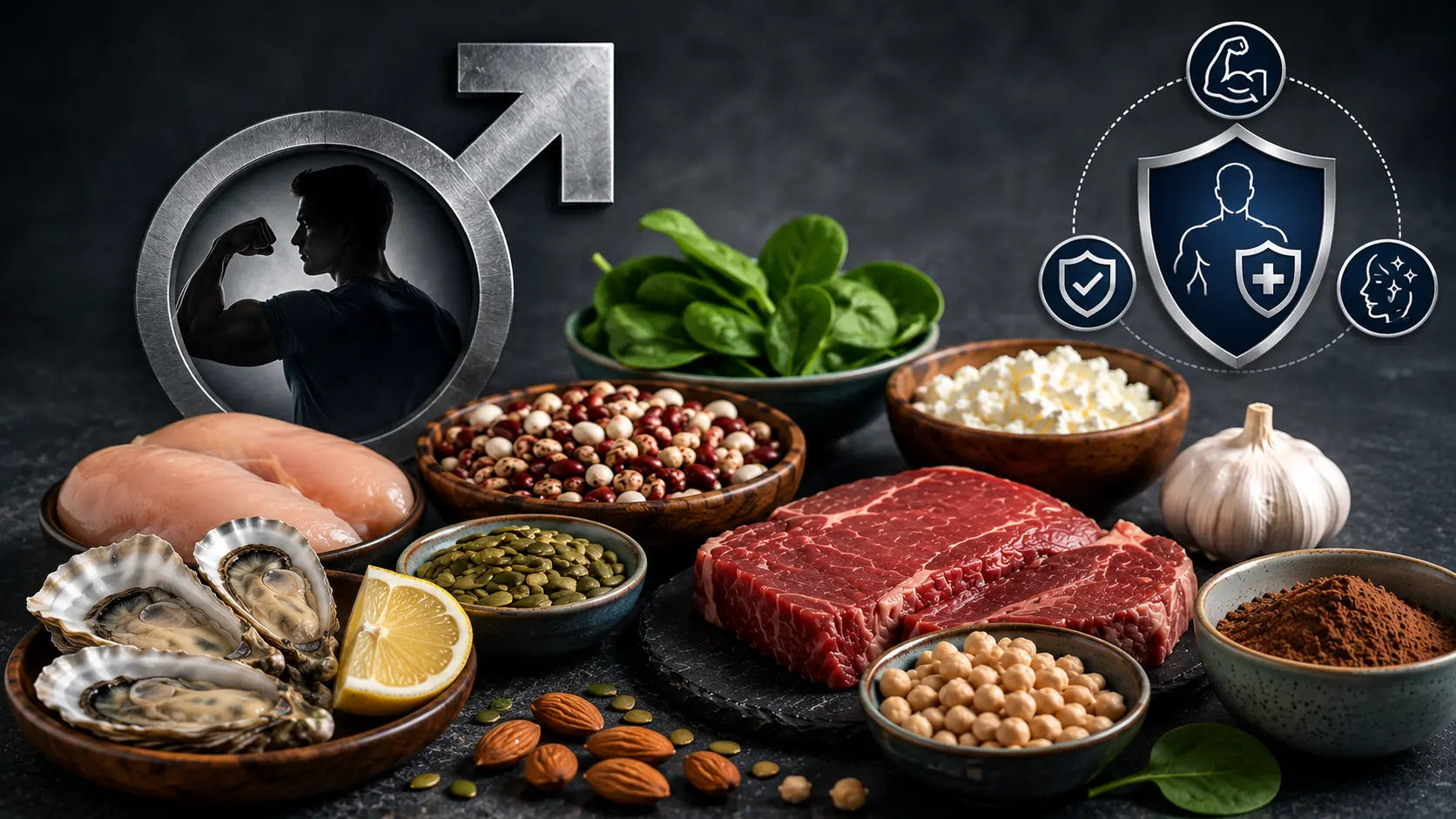
The good news is that zinc is easy to find in everyday Pakistani meals. That's the cherry on top of this whole topic. Meat, liver, and seafood sit at the top of the list. They deliver zinc in a form your body absorbs well.
Daal, chickpeas, and other legumes are present in almost every Pakistani table, and they do carry useful zinc. There's one catch worth knowing, though. These plant foods also carry phytates. These are compounds that can lower how much zinc your body actually absorbs from that meal.
Nuts, seeds and dairy round out a solid zinc-rich plate. If your diet leans mostly vegetarian, know this: plant foods generally give you less absorbable zinc than meat and seafood do. So it's worth eating a wider mix of these foods often, rather than leaning on just one or two.
When a Supplement Makes Sense
A supplement makes more sense if you fall into a higher-risk group. This includes strict vegetarian diets, gut conditions, or a blood test that has actually confirmed low zinc status. Training hard through hot weather can also tip the scales, especially if your meals already run light on zinc-rich foods, as covered earlier.
So how do you actually decide? Start by looking at your last few days of meals, not your last few weeks of symptoms. If meat, daal, chickpeas or dairy show up regularly, you are probably fine without adding anything. If your plate leans heavily plant-based, or you've had ongoing digestive issues, that's a stronger case for a supplement, or at least a conversation with your doctor about testing your levels first.
Standalone zinc and a multivitamin that includes zinc serve different purposes. A standalone supplement gives you a higher, more targeted dose, which matters if a blood test has confirmed a real deficiency. A multivitamin gives you a smaller, maintenance-level amount alongside other nutrients your body also needs, which suits most men who just want to close small daily gaps. Neither one is automatically the better choice. It depends on what your diet and your doctor tell you.
Do you Actually Need Zinc Supplementation?
Zinc is not a magic testosterone switch, and it never claimed to be one. But it is genuinely essential for your hormones, your immune system, and your skin to work the way they should. Get your food sources right first. Know the deficiency signs. Only reach for a supplement if your diet or your doctor tells you it's needed.
You can try out Vitamitic by Jacked Nutrition, our multivitamin built for skin, joints and immunity. It covers zinc alongside the other nutrients this guide has walked you through. If you want a simpler, everyday option, Vitabasic is the lighter, cheaper route for bone strength, heart health and energy.
So what's holding you back? Take a real look at your daily intake today, and give your body the zinc benefits for men it actually needs to perform at its best.
Frequently Asked Questions
Does zinc increase testosterone?
Only if you are deficient. Zinc is essential for normal testosterone production, and fixing a deficiency restores your levels. If your zinc status is already fine, taking more will not raise your testosterone further.
How much zinc should a man take per day?
Adult men generally need about 11 mg of zinc a day. Most men reach this through a normal diet, so check your food intake before assuming you need a supplement.
What are the symptoms of zinc deficiency?
Frequent infections, slow-healing wounds, hair thinning, skin problems, and changes in taste or appetite are common signs. These overlap with other conditions too, so see a doctor rather than guessing.
Can you take zinc every day?
Yes. Daily intake within the recommended range is normal, since the body does not have a large specialized zinc storage system, so regular dietary intake is important. Just stay under the upper limit of 40 mg a day unless a doctor says otherwise.
Does zinc help with acne?
Zinc supports skin healing and helps calm inflammation. That's one reason it's linked to acne and skin recovery. It works best as part of a full skin routine, not as a standalone fix.
When is the best time to take zinc?
Taking zinc with a meal helps prevent stomach upset. Avoid pairing it with high-dose iron supplements at the same time, since the two minerals can block each other's absorption.
What are the side effects of zinc overdose?
Yes, and it happens more easily than most men expect. Going over 40 mg a day regularly can cause nausea, cramps, and headaches. Prolonged high doses can also interfere with your copper levels.
Share:
Vitamin B12: Deficiency Signs, Foods, and Supplement Guide
How Much Protein Do You Really Need? Food vs Whey Protein Explained