

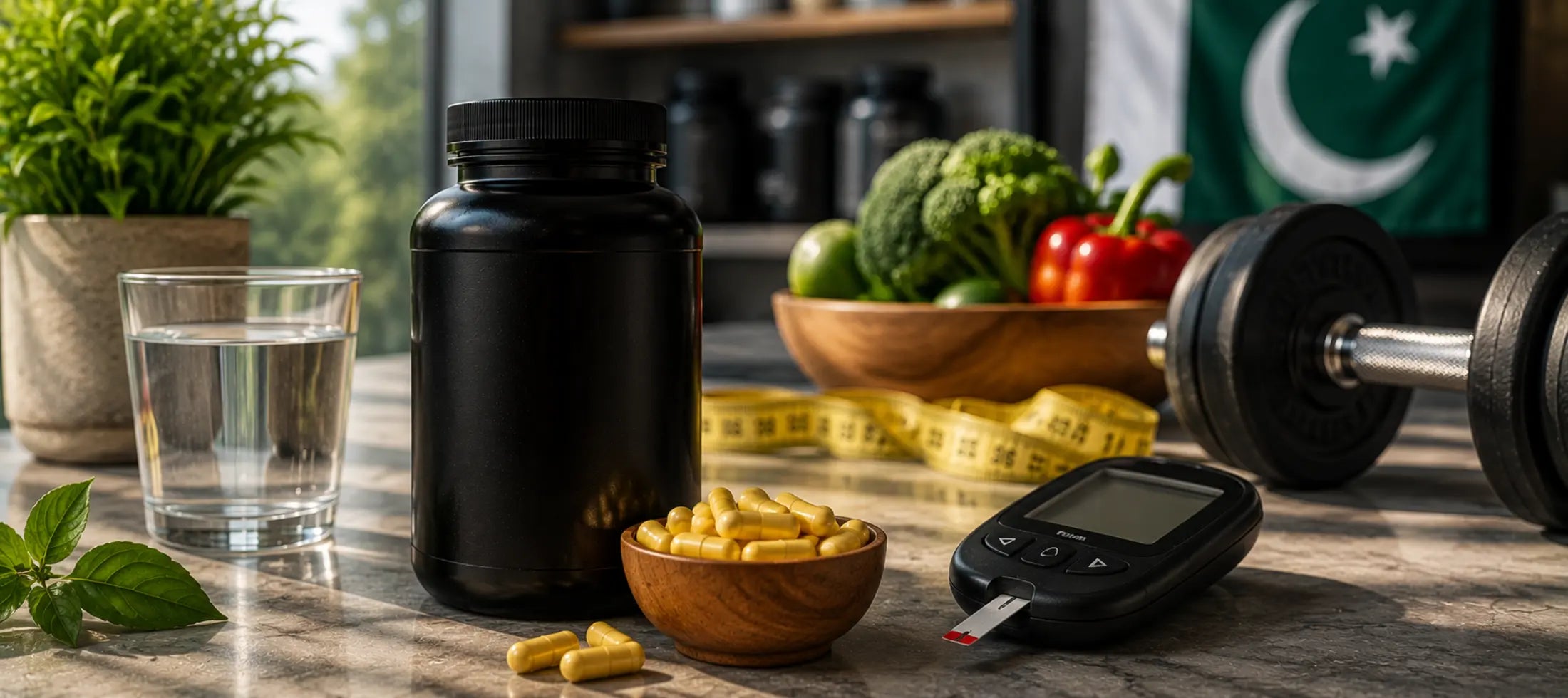

If you have been trying to lose weight but feel like your body is fighting you at every step, you are not alone. Millions of adults across Pakistan carry stubborn belly fat that simply does not respond to diet changes. The reason may have less to do with willpower and more to do with blood sugar.
Berberine a natural plant compound taken in a standard 500mg dose has become one of the most researched supplements for blood sugar control and fat loss. This article explains what berberine is, how it works in your body, what the clinical evidence says, and who is most likely to benefit from taking it in Pakistan.
Pakistan's Blood Sugar Problem: Why It Makes Weight Loss Harder
Pakistan has one of the highest rates of type 2 diabetes in the world. According to national health estimates, more than 30 million Pakistani adults are living with diabetes or prediabetes. Millions more have a condition called insulin resistance where the body produces insulin but cells stop responding to it properly without ever being diagnosed.
Insulin resistance is important because insulin is the hormone that controls fat storage. When insulin levels stay high, your body holds onto fat especially around the belly and blocks it from being burned for energy. You can eat less and exercise more, and the fat still refuses to move. This is not a personal failure. It is a metabolic obstacle.
The Pakistani diet makes this challenge even harder to manage.
How Rice, Roti, and Sweet Chai Drive Insulin Spikes
Three foods sit at the center of the Pakistani daily diet: white rice, wheat roti, and sweet chai. Each one raises blood sugar quickly after eating a process called postprandial hyperglycaemia (high blood sugar after meals). When blood sugar spikes, the pancreas releases a large burst of insulin to bring it back down. Over time, this repeated cycle gradually dulls your cells' response to insulin.
The result is higher and higher baseline insulin levels. And higher insulin means more fat storage, more hunger, and less fat burning even on a calorie-controlled diet.
Pakistani Women and PCOS: A Double Metabolic Challenge
For many Pakistani women, insulin resistance comes bundled with polycystic ovary syndrome (PCOS). Research suggests PCOS affects between 8–20% of women of reproductive age in Pakistan. Insulin resistance is both a cause and a consequence of PCOS, creating a cycle that makes weight gain easier and weight loss much harder. Elevated insulin also drives up androgens (male hormones like testosterone), which further disrupts metabolism, mood, and hormonal balance.
This is the metabolic landscape berberine was built to address.
What Is Berberine?
Berberine is a naturally occurring alkaloid a type of bioactive compound found in several plants including Berberis vulgaris (barberry), Coptis chinensis (goldenseal), and tree turmeric. It has been used in traditional Chinese and Ayurvedic medicine for centuries, primarily for digestive and metabolic conditions.
What makes berberine stand out from most herbal supplements is the sheer volume and quality of clinical research behind it. Multiple randomized controlled trials (RCTs) the gold standard for evidence have examined berberine's effects on blood sugar, body weight, and metabolic markers in human subjects.
The standard dose studied in most clinical trials is 500mg taken three times per day, for a daily total of 1,500mg.
How Berberine Works: 5 Mechanisms Explained
Berberine does not work through a single pathway. It influences several interconnected systems in the body, which is likely why it produces meaningful effects on both blood sugar and body composition.
1. AMPK Activation: Flipping Your Body's Fat-Burning Switch
The most well-established mechanism behind berberine is its ability to activate an enzyme called AMPK adenosine monophosphate-activated protein kinase. Think of AMPK as your body's master energy sensor. When AMPK is active, it shifts your metabolism from fat storage mode into fat-burning mode.
Specifically, AMPK activation promotes a process called beta-oxidation (the breakdown of fatty acids for energy), supports mitochondrial biogenesis (your cells building more energy-producing units), and triggers lipolysis (the release of stored fat). Research also shows that AMPK activity naturally declines with age, which helps explain why fat loss becomes progressively harder after age 40. Berberine helps restore this signaling pathway.
2. Insulin Sensitisation: Unlocking Your Belly Fat Stores
Berberine improves how well your cells respond to insulin a process called insulin sensitisation. It does this primarily by increasing the activity of GLUT4, the protein responsible for transporting glucose from the bloodstream into muscle cells. When GLUT4 works better, your body needs less insulin to manage blood sugar after a meal.
Lower insulin levels mean your body can more easily access stored fat for energy, particularly the visceral fat (deep belly fat) that accumulates with insulin resistance. This is the core mechanism connecting berberine's blood sugar effects to its fat-loss effects.
3. Gluconeogenesis Inhibition: Stopping Your Liver's Sugar Output
Between meals, the liver can produce glucose on its own a process called gluconeogenesis. In people with insulin resistance or prediabetes, this process is often overactive, leading to elevated fasting blood sugar even without eating anything.
Berberine helps reduce this excess glucose production by inhibiting key enzymes in the liver specifically PEPCK and G6Pase that drive gluconeogenesis. Studies show this is one reason berberine consistently reduces fasting glucose levels within the first two weeks of use.
4. GLP-1 and Gut Microbiome: The Appetite Connection
Berberine also acts on the gut in two important ways. First, research suggests it stimulates the release of GLP-1 (glucagon-like peptide-1), a hormone that slows stomach emptying, reduces appetite, and improves insulin secretion after meals. Second, berberine appears to positively shift the gut microbiome the community of bacteria in your digestive tract including increasing levels of Akkermansia muciniphila, a bacterium associated with healthier metabolism and reduced gut inflammation.
These gut effects likely contribute to reduced hunger and improved blood sugar regulation over time.
5. Adipogenesis Inhibition: Blocking New Fat Cell Formation
Finally, berberine appears to inhibit a process called adipogenesis the formation of new fat cells from pre-adipocyte cells. It does this by interfering with PPARγ (peroxisome proliferator-activated receptor gamma), a key regulator of fat cell development. By reducing how many new fat cells your body creates, berberine may help improve body composition over the long term, not just reduce the fat already stored.
What the Clinical Research Shows
A Meta-Analysis of 14 Randomized Controlled Trials
A 2012 meta-analysis by Dong and colleagues published in the journal Evidence-Based Complementary and Alternative Medicine pooled the results of 14 RCTs examining berberine's effects on metabolic parameters. The analysis found that berberine produced meaningful reductions in body mass index (BMI), waist circumference, and body weight compared to placebo. These results were consistent across different study populations.
The Head-to-Head Blood Sugar Trial
A landmark 2008 study published in Metabolism by Yin and colleagues directly compared berberine at 500mg three times daily to the prescription diabetes medication metformin in patients with newly diagnosed type 2 diabetes. Both groups were followed over 13 weeks. The study found that berberine reduced HbA1c (a three-month average of blood sugar control) by approximately 1.0–1.5%, comparable to the metformin group's results. Both groups also showed similar improvements in fasting glucose and BMI.
It is important to note that berberine is not a medication and should not replace prescribed treatments. If you are managing diabetes or prediabetes, speak with your doctor before starting any supplement.
Visceral Fat and Metabolic Syndrome: Zhang 2008
A separate 2008 clinical trial by Zhang and colleagues studied berberine at 500mg three times daily in adults with metabolic syndrome over 12 weeks. Researchers observed significant reductions in visceral fat (the deep abdominal fat linked to heart disease and insulin resistance), along with improvements in triglycerides, LDL cholesterol, and fasting insulin.
Berberine and PCOS: Female-Specific Evidence
A 2012 study by Wei and colleagues examined berberine specifically in women with PCOS and insulin resistance. The study found that berberine reduced testosterone levels, improved insulin sensitivity, and led to meaningful weight loss all of which are meaningful outcomes for this population.
Who Is Most Likely to Benefit From Berberine 500mg?
Based on the clinical evidence, berberine tends to produce the strongest results in specific populations.
Adults with prediabetes or type 2 diabetes: People with elevated fasting glucose or HbA1c see the most consistent improvements in blood sugar markers. Always use berberine as a complement to not a replacement for medical care.
Pakistani women with PCOS: Given PCOS's strong link to insulin resistance, berberine directly addresses the underlying metabolic driver behind hormonal weight gain.
Adults over 40 with stubborn belly fat: As AMPK activity naturally declines with age, berberine's ability to reactivate this pathway becomes more metabolically meaningful. Adults in this group who have not responded well to diet and exercise alone may find berberine particularly useful.
Diet-resistant adults on high-carbohydrate diets: For people whose daily diet includes substantial rice, roti, and sweet chai and who struggle with postprandial blood sugar spikes berberine's meal-timing mechanism offers a practical way to reduce those spikes.
The Berberine 500mg Protocol: Dosage and Timing
Why Timing Matters: Take It Before Meals
Berberine's most important use is blunting the blood sugar spike that follows a carbohydrate-heavy meal. To do this effectively, you need to take it before eating not with the meal, and not afterward.
The recommended protocol studied in most clinical trials is:
-
500mg, three times daily
-
Taken 15–30 minutes before each main meal
-
Consistent daily use for at least 8–12 weeks to see full effects
Taking berberine at random times throughout the day reduces its postprandial (after-meal) effectiveness.
What to Expect: A Realistic Timeline
Results vary by individual, but based on clinical trial timelines, here is a reasonable expectation:
-
Within 2 weeks: Fasting blood sugar levels begin to decrease; many users notice reduced post-meal energy crashes
-
By week 4: Body weight and waist measurements may begin to shift; appetite tends to stabilize
-
By week 8: HbA1c and longer-term blood sugar markers show measurable improvement in those with elevated baseline levels
Berberine is not a rapid-result supplement. It works gradually by improving metabolic function, not by forcing the body into an unnatural state.
Berberine During Ramadan
Berberine can be taken during Ramadan with a simple two-dose adjustment:
-
At Sehri: Take 500mg before your pre-dawn meal, 15–30 minutes ahead of eating
-
At Iftar: Take 500mg before breaking your fast, again 15–30 minutes before eating
The third dose can be skipped on fasting days, as there is no meal to accompany it. Staying well-hydrated during non-fasting hours remains important, as berberine can occasionally cause mild digestive discomfort, particularly on an empty stomach.
Pairing Berberine With Diet: Foods That Work With It
Berberine's effects are amplified when combined with lower glycaemic index (GI) food choices. You do not need to overhaul your entire diet. Small strategic shifts make a meaningful difference.
Foods that work well with berberine:
-
Daal (lentils): Naturally low GI, high in protein and fibre one of the best base foods for blood sugar management
-
Sabzi (cooked vegetables): Non-starchy vegetables like bhindi, tinda, and palak have minimal blood sugar impact
-
Brown rice or less white rice: Reducing white rice portion size or switching partially to brown rice meaningfully lowers the post-meal glucose spike
-
Eggs and lean protein: Protein slows gastric emptying and blunts glucose absorption
Foods to moderate:
-
Sweetened chai: A single cup of typical Pakistani sweet chai can contain 10–15g of sugar; switching to unsweetened or lightly sweetened versions supports berberine's blood sugar effects
-
White bread (naan, paratha on high-fat days): Limit refined flour portions at meals where carbohydrate load is already high
Building a Stack: Berberine With Ashwagandha and Magnesium
For adults dealing with both insulin resistance and high stress a common combination in urban Pakistan pairing berberine with ashwagandha and magnesium addresses multiple overlapping metabolic problems at once.
Why this matters: Chronic stress elevates cortisol. High cortisol directly drives insulin resistance, promotes visceral fat storage, and makes blood sugar harder to control. Berberine addresses the insulin side of this equation; ashwagandha (particularly the KSM-66 extract studied in clinical trials) works on the cortisol side by supporting the HPA (hypothalamic-pituitary-adrenal) axis.
Magnesium plays a supporting role: it is required for over 300 enzymatic reactions in the body, including glucose metabolism, and research suggests that magnesium deficiency is associated with increased insulin resistance. Many Pakistani adults are low in magnesium without realizing it.
Used together, these three supplements address the cortisol-insulin resistance loop from multiple angles making the overall effect greater than any single supplement alone.
Frequently Asked Questions
Is berberine as effective as metformin for blood sugar?
The 2008 Yin study found comparable HbA1c and fasting glucose reductions between berberine and metformin over 13 weeks in newly diagnosed type 2 diabetes patients. That said, metformin is a prescription medication backed by decades of large-scale clinical data. Berberine should not replace prescribed treatment. If you are managing diabetes, talk to your doctor about whether berberine may be a useful addition to your current care plan.
Can Pakistani women with PCOS take berberine?
Clinical evidence, including the Wei 2012 trial, suggests berberine may be beneficial for women with PCOS by improving insulin sensitivity and reducing testosterone levels. However, women who are pregnant, breastfeeding, or trying to conceive should consult a healthcare provider before taking berberine or any new supplement.
What is the correct dose and when should I take it?
The dose studied in most clinical trials is 500mg three times daily, taken 15–30 minutes before each main meal. This timing is important for maximizing its blood sugar-blunting effect.
How long does berberine take to work?
Most people see initial blood sugar improvements within two weeks. Body weight and waist changes typically begin around week four. HbA1c improvements become measurable around the eight-week mark.
Is berberine halal and safe for Muslim adults in Pakistan?
Berberine is derived entirely from plant sources, with no animal-based ingredients. High-quality products should use HPMC (plant-based) capsules rather than gelatin. Look for products that provide a Certificate of Analysis (COA) confirming purity and that are manufactured in GMP-certified facilities. Check for DRAP registration as an additional quality indicator for supplements sold in Pakistan.
Can I take berberine with ashwagandha and magnesium together?
These three supplements are generally used together in metabolic health stacks and are not known to interact adversely. That said, if you are taking any prescription medications particularly for blood sugar, blood pressure, or thyroid conditions consult your doctor before adding any supplement to your routine.
The Bottom Line
Berberine 500mg is one of the most clinically supported natural supplements for blood sugar management and fat loss particularly for the metabolic patterns common in Pakistan's adult population.
By activating AMPK, improving insulin sensitivity, reducing liver glucose output, supporting gut health, and inhibiting new fat cell formation, it addresses the metabolic root causes of stubborn weight gain, not just the symptoms.
The strongest candidates for berberine are adults with prediabetes or type 2 diabetes, Pakistani women with PCOS, adults over 40 with belly fat that has not responded to diet alone, and anyone eating a high-carbohydrate Pakistani diet with signs of blood sugar dysregulation.
The standard protocol 500mg before each of three daily meals is straightforward, well-tolerated by most adults, and supported by multiple randomized controlled trials.
As with any supplement, berberine works best as part of a broader approach that includes a nutrient-dense diet, regular physical activity, and ongoing care from a qualified healthcare provider. If you have a diagnosed health condition or take prescription medications, speak with your doctor before starting berberine
Share:
Why Pakistani Adults Are Turning to Berberine for Weight Loss: The AMPK Science Explained
Choosing the Right Magnesium for a Sensitive Stomach: A Complete Guide