


If you have been eating less and exercising more but the scale still refuses to move, you are not failing. Your metabolism may be.
Millions of Pakistani adults are dealing with a specific kind of weight gain that standard diets simply cannot fix, the kind driven by insulin resistance, a high-carbohydrate diet, and a metabolic slowdown that tends to accelerate after 35 or 40. This is where berberine, a plant-derived compound with decades of clinical research behind it, is earning serious attention.
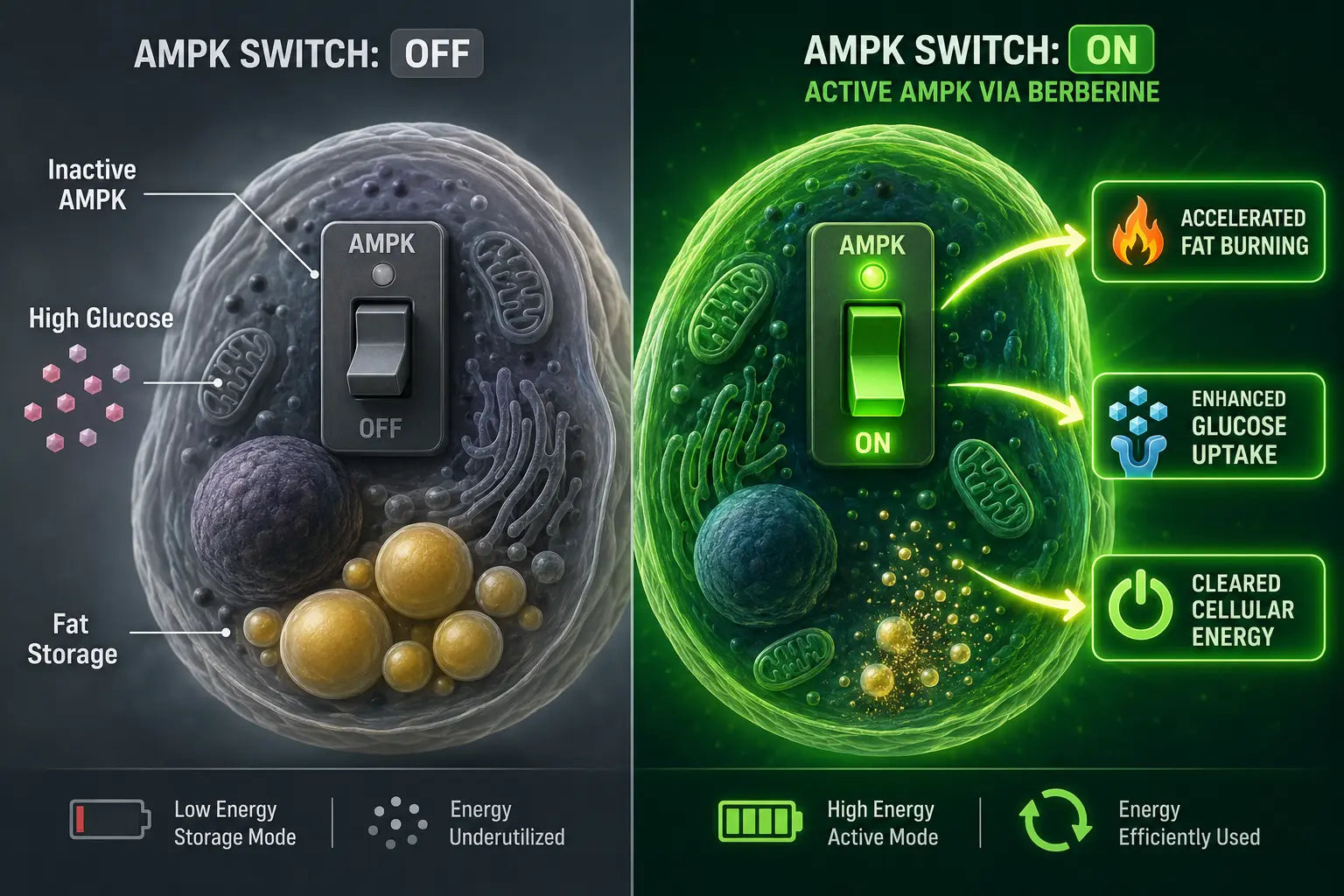
What makes berberine different from ordinary weight loss supplements is not marketing. It is a measurable mechanism, one that works at the cellular level to flip a metabolic switch your body already has. That switch is called AMPK.
Why Conventional Weight Loss Is Failing Pakistani Adults
Most weight loss advice is built around one idea: eat less, move more. For many Pakistani adults, this approach produces results for a few weeks and then stops working entirely.
The reason is metabolic adaptation. When you cut calories from a diet already high in refined carbohydrates, rice, roti, sugary chai, and fried snacks, your body responds by lowering its metabolic rate, increasing hunger hormones, and becoming better at storing whatever you do eat as fat.
Add insulin resistance to the picture, and the problem compounds. When your cells stop responding properly to insulin, glucose stays in the bloodstream instead of being used for energy. Your body interprets this as a reason to produce even more insulin, and high insulin is one of the most powerful fat-storage signals in human physiology.
The result is a plateau that diet and exercise alone cannot fully break. To change the outcome, you need to change the underlying metabolic environment.
Why Berberine Is Fundamentally Different From Every Other Weight Loss Supplement
Most weight loss supplements work through one of two mechanisms: they either suppress appetite by stimulating the central nervous system or they generate heat (thermogenesis) to burn slightly more calories. Both approaches require you to keep taking the supplement to maintain any effect.
Berberine does neither of these things.
Instead, berberine targets a specific enzyme inside your cells, MP-activated protein kinase, or AMPK, that regulates how your body uses and stores energy. By activating this enzyme, berberine essentially instructs your cells to burn glucose and fat for fuel rather than store them.
This is not a temporary stimulant effect. It is a cellular signalling change that affects how your metabolism operates at the most fundamental level. That distinction matters enormously when you understand what AMPK actually does.
What Is AMPK? The Master Metabolic Switch
AMPK stands for AMP-activated protein kinase. It is an enzyme found in virtually every cell in your body, and researchers often describe it as the master metabolic switch because of how many processes it controls simultaneously.
AMPK is activated by cellular energy stress, the kind that happens when your cells are running low on readily available energy. It monitors the ratio of AMP (a low-energy molecule) to ATP (a high-energy molecule) inside your cells. When AMP rises relative to ATP, AMPK switches on.
When AMPK turns on, a cascade of metabolic changes follows:
-
Glucose uptake increases AMPK, which triggers the movement of GLUT4 transporters to the cell surface, pulling sugar out of the bloodstream
-
Fat oxidation causes cells to switch to burning stored fat for fuel
-
Fat storage shuts down lipogenesis (the process of making new fat), which is suppressed
-
Gluconeogenesis decreases the liver reduces its production of new glucose
-
mTOR inhibits the fat-storage and cell-growth pathway, which is turned off
In short, AMPK activation tells your body to behave more as it does during exercise or fasting, even when you are not doing either. It is worth noting that AMPK activity naturally declines with age, which helps explain why weight gain tends to accelerate after 40, particularly around the abdomen.
How Berberine Activates AMPK: The Molecular Pathway
Berberine activates AMPK through a precise molecular sequence, and understanding it helps explain why this compound is so effective compared to lifestyle interventions alone.
When you take berberine, it is absorbed into the bloodstream and taken up by cells throughout the body. Inside the cell, it partially inhibits mitochondrial Complex I, a component of the electron transport chain responsible for generating ATP.
This partial inhibition causes a modest, temporary decrease in ATP production. In response, AMP levels inside the cell rise. This shift in the AMP-to-ATP ratio is the exact signal that activates AMPK.
Once AMPK is activated, it triggers a downstream cascade through an enzyme called LKB1, which phosphorylates (activates) AMPK. Activated AMPK then moves GLUT4 transporter vesicles to the cell membrane, increasing glucose uptake by muscles. At the same time, it suppresses SREBP-1c, the transcription factor that drives fat synthesis, effectively turning off lipogenesis.
The result is a coordinated metabolic shift: more glucose entering muscle cells, less fat being made, and more stored fat being burned, all triggered by a single compound at a dose as low as 500mg.
Why AMPK Science Is Especially Relevant to Pakistani Adults
The Pakistani dietary pattern creates a specific metabolic environment that makes AMPK activation particularly valuable.
The high-carbohydrate diet problem. Rice, roti, and sweetened beverages are staples across Pakistani households. These foods produce large postprandial glucose spikes, sharp rises in blood sugar after eating. Repeated glucose spikes over the years are one of the primary drivers of insulin resistance. Berberine, taken before meals, activates AMPK in the window when glucose is entering the bloodstream, helping cells absorb and use that glucose rather than leaving it to trigger another insulin surge.
Belly fat and visceral adipose tissue. The most common complaint among Pakistani adults seeking weight loss is central obesity, or fat accumulation around the abdomen. Research suggests that visceral adipose tissue (the fat surrounding internal organs) has a high density of AMPK receptors, making it particularly responsive to AMPK activation. This may explain why clinical studies on berberine consistently show preferential reductions in waist circumference.
PCOS in Pakistani women. Polycystic ovary syndrome is both common and underdiagnosed in Pakistan. PCOS involves ovarian dysfunction closely tied to insulin resistance and AMPK impairment in ovarian tissue. Studies have found that berberine can reduce testosterone levels, improve menstrual regularity, and support weight loss in women with PCOS outcomes that other weight loss supplements cannot match because they do not address the underlying AMPK mechanism.
The Clinical Evidence: What Trials Show About Berberine and Weight Loss
Berberine is not a new supplement with limited data. It has been studied in human clinical trials for over two decades.
A landmark 2008 randomised controlled trial published in Metabolism found that overweight adults taking 500mg of berberine three times daily for 12 weeks experienced significant reductions in BMI (average 1.5–2.0 points), waist circumference, and body weight compared to placebo. These results have been replicated in multiple subsequent trials.
Importantly, AMPK activation by berberine has been confirmed in vivo, meaning in real human tissue, not just cell cultures or animal models. Researchers measuring phosphorylated AMPK levels in muscle biopsies from berberine-treated patients have documented the actual enzyme activation that the mechanistic theory predicts. This is a critical distinction: the molecular pathway is not theoretical; it has been observed in human subjects.
The Berberine AMPK Weight Loss Protocol for Pakistani Adults
Getting results from berberine requires the right dose, timing, and supporting habits.
Dosage: The clinical standard is 500mg taken three times daily before breakfast, before lunch, and before dinner. This timing is intentional: pre-meal berberine activates AMPK in the period when postprandial glucose is highest, maximising the glucose disposal effect.
Timeline: Most users notice improved appetite regulation and reduced post-meal energy crashes within the first one to two weeks as blood sugar stabilises. Visible weight changes typically begin around weeks four to eight. The full metabolic effect, including meaningful reductions in waist circumference, generally develops over eight to twelve weeks of consistent use.
Diet support: Pairing berberine with a lower-GI version of your existing diet amplifies results. You do not need to abandon roti or rice entirely, switching to smaller portions, adding fibre (vegetables, lentils, sabzi), and reducing sugary drinks gives berberine more to work with.
Exercise synergy: Both exercise and berberine activate AMPK through different pathways. Taking berberine before a workout stacks two AMPK activators, producing a cumulative effect greater than either alone.
Ramadan fasting: Fasting is itself a powerful natural AMPK activator. The energy deficit that occurs between sehri and iftar raises the AMP: ATP ratio. Berberine taken at sehri and iftar amplifies this fasting-induced AMPK signal, making Ramadan an especially productive period for metabolic improvement.
The Complete Berberine Weight Loss Stack for Pakistan
Berberine works well on its own, but three additional compounds address the other obstacles to weight loss that AMPK alone cannot fully resolve.
Berberine + Ashwagandha (KSM-66): High cortisol, the stress hormone, directly impairs AMPK signalling and promotes visceral fat storage. KSM-66 ashwagandha is the most researched adaptogen for cortisol reduction. Adding it to berberine addresses the hormonal side of metabolic dysfunction that is especially prevalent in stressed, sleep-deprived adults.
Berberine + Magnesium: Magnesium is a cofactor for over 300 enzymatic reactions, including insulin receptor function. Low magnesium, common in Pakistani adults who eat a low-vegetable diet, directly worsens insulin resistance. Supplementing magnesium glycinate (the most bioavailable form) improves insulin sensitivity and supports the same glucose metabolism pathway that berberine targets.
Berberine + Piperine (Black Pepper Extract): Berberine has naturally low bioavailability. Studies estimate that without enhancement, only 1–5% of an oral dose reaches systemic circulation. Piperine (the active compound in black pepper, also sold as BioPerine) has been shown to increase the absorption of berberine by up to 10 times by inhibiting intestinal enzymes that break it down. Adding even a small amount of piperine to berberine significantly improves the dose efficiency of every capsule.
Jacked Nutrition Berberine 500mg: Standardised for AMPK, Made for Pakistan
Not all berberine supplements deliver what they claim. The berberine market contains products with inconsistent purity, unverified concentrations, and no third-party testing, meaning the dose on the label may bear little relationship to the dose in the capsule.
Jacked Nutrition Berberine 500mg is manufactured at FarmaLabs, a GMP-certified facility, and standardised to 97%+ purity via HPLC analysis, the gold standard for verifying active alkaloid content. Every batch is accompanied by a Certificate of Analysis (COA), which means the 500mg per capsule you take is a verified 500mg of actual berberine hydrochloride, not a partially active extract.
The product is DRAP-compliant and Halal-certified, addressing the two regulatory and ethical standards that matter most to Pakistani consumers. Cash on delivery (COD) is available nationwide across Karachi, Lahore, Islamabad, Rawalpindi, and Faisalabad, removing the payment barrier that limits access to quality supplements for many buyers.
Frequently Asked Questions
How exactly does berberine activate AMPK to cause weight loss?
Berberine partially inhibits mitochondrial Complex I, causing a rise in AMP relative to ATP inside your cells. This energy stress signal activates AMPK via LKB1, which then triggers GLUT4 movement to cell membranes (increasing glucose uptake), suppresses SREBP-1c (blocking fat synthesis), and increases fat oxidation. The net result is your cells burning more and storing less at the molecular level.
How long does berberine take to produce visible weight loss in Pakistan?
Blood sugar stabilisation is typically felt within one to two weeks. Visible weight reduction usually begins at four to eight weeks. The most significant changes in waist circumference and body composition occur between weeks eight and twelve with consistent 500mg three-times-daily dosing.
Is berberine effective for PCOS-related weight gain in Pakistani women?
Yes. PCOS involves direct AMPK impairment in ovarian tissue. Clinical studies show berberine can reduce testosterone levels, restore menstrual regularity, lower fasting insulin, and support weight loss in women with PCOS, making it one of the few supplements with a mechanism directly relevant to this condition.
Should I take berberine before or after exercise for maximum AMPK effect?
Before. Taking berberine 30 minutes before exercise stacks two independent AMPK activators. Exercise activates AMPK through physical energy demand; berberine activates it through the AMP: ATP shift. Together, the cumulative AMPK stimulation is greater than either one produces alone.
The Bottom Line
Weight loss resistance in Pakistani adults is often a metabolic problem driven by insulin resistance, a high-carbohydrate dietary pattern, declining AMPK activity with age, and chronic stress. Standard supplements that suppress appetite or raise body temperature do not address any of these root causes.
Berberine does. By activating AMPK, the cellular energy sensor that controls glucose uptake, fat oxidation, and fat storage simultaneously, berberine addresses the underlying metabolic dysfunction that keeps weight loss stalled. The clinical evidence is robust, the mechanism is confirmed in human tissue, and the protocol is practical for the Pakistani lifestyle, including Ramadan.
If you have been stuck despite your best efforts, the issue may not be your effort. It may be your metabolism, and berberine may be the most evidence-based tool available to change it.
Share:
Who Should Avoid Shilajit? Safety, Side Effects, and Precautions
Berberine 500mg: The Blood Sugar Secret Behind Faster Fat Loss in Pakistan