

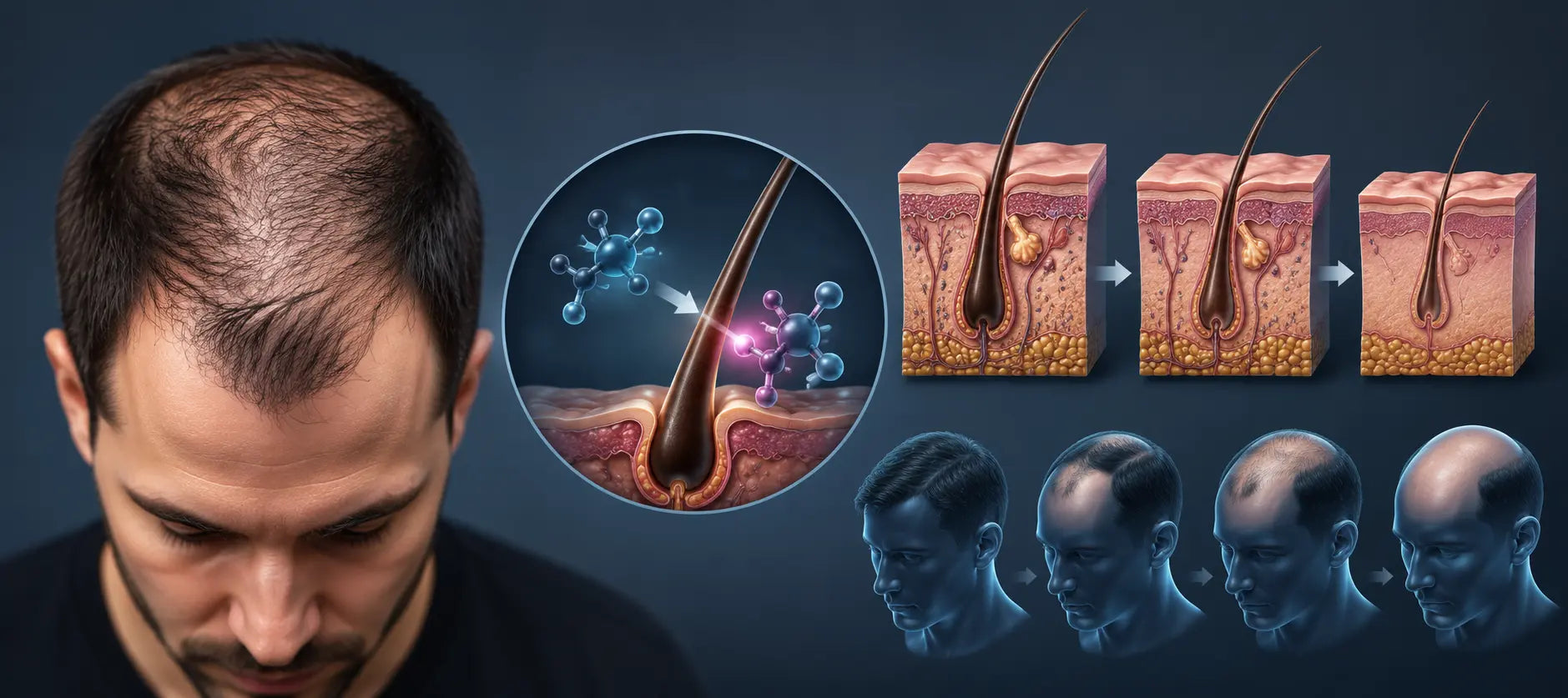

Why DHT Is the Leading Cause of Pattern Hair Loss
DHT and hair loss go hand in hand. If you are losing hair in a predictable pattern, DHT is almost certainly the cause. It is the single biggest driver of pattern baldness in both men and women worldwide.
Understanding DHT is the first step to stopping balding. Most people try shampoos, oils, and home remedies without addressing the actual root cause. Once you understand how DHT damages follicles, you can make smarter choices and pick solutions that actually target the problem.
What Is DHT and Where Does It Come From
DHT stands for dihydrotestosterone. Your body produces it from testosterone using an enzyme called 5-alpha reductase. This conversion happens in the scalp, skin, and prostate. The more active this enzyme is in your scalp, the more DHT builds up around your follicles, and the faster damage occurs.
Everyone has some DHT. The problem starts when levels rise too high or when your follicles are overly sensitive to it. Even normal DHT levels can cause significant hair loss if your follicles carry high genetic sensitivity to the hormone.
How DHT Causes Hair Loss Step by Step
DHT binds to androgen receptors in hair follicles and triggers hair follicles to shrink. Each hair growth cycle becomes shorter. The hair that grows back gets finer, shorter, and weaker with every cycle. Over time, the follicle stops producing visible hair entirely. DHT-induced hair miniaturisation is the core mechanism behind pattern baldness.
The top and front of the scalp have far more androgen receptors than the sides and back. This is why male pattern baldness, DHT, typically causes a receding hairline and crown thinning first. The back and sides remain resistant because their follicles are less sensitive to DHT.
Who Is Most at Risk of DHT-Related Hair Loss
DHT sensitivity genetics is the biggest predictor of hair loss. If your parents or grandparents experienced pattern baldness, your follicles are likely more sensitive to DHT. You inherit this sensitivity from both sides of the family, not just your mother's side, as the common myth suggests.
Age also plays a major role. As you get older, more testosterone converts to DHT. High stress, poor diet, and poor sleep all raise 5-alpha reductase activity and push DHT levels higher. These lifestyle factors accelerate DHT levels and hair thinning even in people without high genetic risk.
DHT in women's hair loss is real but less commonly discussed. Hormonal shifts during menopause, PCOS, or after stopping birth control can raise DHT enough to trigger noticeable diffuse thinning across the top of the scalp. Women rarely get a receding hairline, but can experience significant volume loss over time.
How to Know If DHT Is Behind Your Hair Loss
A receding hairline, crown thinning, or a widening parting in women all point to DHT as the root cause of hair loss. The shedding is gradual, and the hairs that fall out are finer and shorter than normal. This is different from sudden shedding after illness or stress, which has a different cause entirely.
Patchy or circular bald spots are also unrelated to DHT. If your loss follows a clear pattern and progresses slowly over the years, DHT is almost certainly involved. If you are unsure, see a dermatologist. Early hair loss diagnosis and DHT confirmation give you the best chance to slow the process before significant hair is gone.
How to Address DHT-Related Hair Loss
Natural DHT Blockers: First Line of Defence
Saw palmetto is the most studied natural DHT blocker. According to Healthline's guide on saw palmetto and hair loss, it blocks the conversion of testosterone into DHT and may help slow follicle shrinkage. Pumpkin seed oil, nettle root, and green tea extract also reduce 5-alpha reductase activity naturally.
Pairing a natural DHT blocker with a quality multivitamin containing zinc and biotin helps support overall follicle health from the inside. Zinc is particularly important as it directly inhibits 5-alpha reductase activity.
Medical Options for Faster Results
Finasteride is a prescription DHT blocker that inhibits 5-alpha reductase directly and reduces DHT levels significantly. Minoxidil improves scalp blood flow and extends the active growth phase of follicles. Both work faster than supplements but come with potential side effects. Always consult a doctor before starting either.
Diet and Lifestyle Changes That Lower DHT
A DHT blocker diet makes a real difference. Foods rich in zinc, lycopene, and omega-3 fatty acids reduce 5-alpha reductase activity. Green tea, pumpkin seeds, and fatty fish are all worth including regularly. Cut back on alcohol, which increases DHT conversion, and manage chronic stress consistently.
For additional hair and skin support, Marine Collagen from Jacked Nutrition works well alongside a DHT-focused routine, supporting follicle strength and scalp health at the same time.
Conclusion
DHT is the primary cause of pattern baldness. Genetic sensitivity, age, and lifestyle all influence how much damage it does to your follicles. Act early, use proven ingredients, combine supplements with a healthy diet, and consider medical options if thinning is progressing fast. The earlier you address DHT hair follicle damage, the better your chances of protecting your hair long term.
FAQs: DHT and Hair Loss
Is DHT the Main Cause of Balding in Men?
Yes. DHT causes balding, especially in men with genetic follicle sensitivity to the hormone.
Can You Stop DHT-Related Hair Loss Naturally?
You can slow it significantly. Saw palmetto, zinc, and a DHT blocker diet reduce activity but rarely stop loss completely without any medical support.
Does High Testosterone Always Mean High DHT?
Not always. 5-alpha reductase activity matters more than raw testosterone levels alone. You can have average testosterone and still produce excess DHT.
Can DHT Hair Loss Be Reversed?
Partially. Early-stage miniaturised follicles can sometimes recover with treatment. Fully dormant follicles rarely regenerate with supplements alone.
At What Age Does DHT Start Causing Hair Loss?
As early as the late teens, in men with high genetic sensitivity. Most men notice visible thinning in their thirties.
Does Diet Affect DHT Levels and Hair Loss?
Yes. A DHT blocker diet rich in zinc, omega-3s, and antioxidants can reduce 5-alpha reductase activity and support follicle health over time.
Share:
L-Carnitine Liquid vs Capsules: Which Form Works Faster
L-Carnitine Stack Guide: What Supplements Work Best With It?