

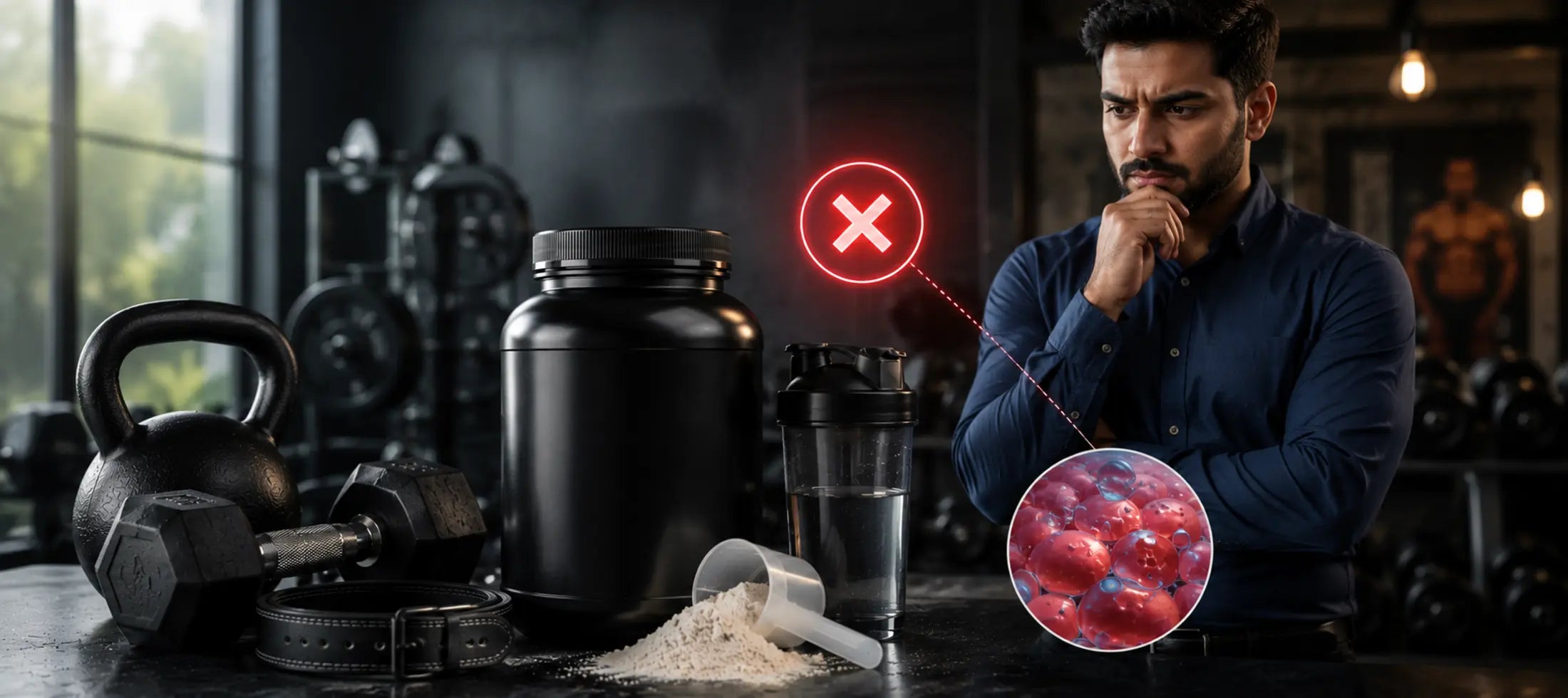

Many people ask: Does creatine make you fat? The short answer is no. Creatine does not add body fat. What you see on the scale is not fat. It is water and muscle. This article breaks down exactly what happens in your body when you take creatine.
Does Creatine Increase Body Weight?
Yes, creatine increases body weight. But that weight is not fat.
Why Creatine Is Often Mistaken for Fat Gain
People step on the scale after one week of creatine and panic. They see 1 to 3 kg added and assume they are getting fat. This is a wrong conclusion. The body is holding more water inside the muscles. That is it.
Water Weight vs Fat Gain: Key Difference
Fat gain happens when you eat more calories than you burn over time. Creatine has zero calories. It cannot cause fat gain on its own. Water weight is temporary and sits inside your muscle tissue, not under your skin as visible fat.
Why Creatine Causes Initial Water Retention
Creatine pulls water into muscle cells. This is an expected response.
How Creatine Pulls Water Into Muscle Cells
Creatine is stored in muscles as phosphocreatine. When creatine levels rise, your muscles hold more water to support energy production. This is called creatine water retention, and it is part of how creatine works.
Intracellular vs Subcutaneous Water Retention
This is the most important distinction. Creatine causes intracellular water retention. This means water is stored inside the muscle cell. Subcutaneous water sits under the skin and makes you look soft or puffy. Creatine does not cause subcutaneous retention in most people.
Duration of Initial Water Weight Gain
Most people notice weight gain in the first 7 to 14 days. After that, the body adjusts. The scale may stabilize. Over time, actual lean muscle mass begins to increase as training performance improves.
Does Creatine Cause Fat Gain
No. There is no mechanism by which creatine creates fat in your body.
What the Scale Increase Actually Represents
The scale increase you see is muscle fullness and water. Muscles that are loaded with creatine and water actually look bigger and fuller. This is not fat. This is your muscles performing better and holding more fuel.
Why Creatine Has Zero Caloric Content and Cannot Create Fat
Fat is stored when excess calories enter the body. Creatine contains no calories. It does not raise insulin. It does not affect fat storage pathways. The creatine weight scale increase is purely from water and muscle tissue growth over time. For a detailed breakdown of how creatine works and its benefits, check out this guide.
Research Shows Body Composition Improves With Creatine Use
Studies consistently show that creatine users gain lean muscle and often reduce body fat percentage when combined with resistance training. Creatine and body composition go hand in hand when you train consistently.
How to Minimise Bloating When Using Creatine
Creatine bloating is manageable. A few simple habits reduce it significantly.
What Scale Weight Actually Reflects
Ignore the scale for the first two weeks. The number going up does not mean you are getting fat. It means your muscles are fuelled and full. Focus on how you look and perform, not the number.
Why Creatine Cannot Produce Fat
Repeat this: creatine has no calories. Fat requires a caloric surplus. If you are eating at maintenance or a slight deficit, creatine cannot make you fat. Period.
Evidence on Body Composition Change
People using creatine for lean muscle consistently show improved muscle-to-fat ratios over time. This is not bloat. This is progress. If you want to explore the best creatine options available in Pakistan, check out our creatine range at Jacked Nutrition.
To specifically avoid bloating, try these steps:
-
Start with 3 to 5 grams daily. Skip the loading phase.
-
Drink at least 3 liters of water per day.
-
Take creatine post-workout with a meal.
-
Avoid taking creatine with large amounts of simple sugars.
Conclusion
Creatine Does Not Make You Fat: The Weight Gain Is Muscle and Water
Creatine does not make you fat. The weight gain is real, but it is not fat. It is water stored inside muscle cells, and over time, it converts into actual lean muscle mass through training.
Final Recommendation for Using Creatine Without Bloating Concerns
Start with a low daily dose. Stay hydrated. Train hard. Give it 4 to 6 weeks before judging results. If you are sensitive to bloating, consider trying Creatine HCL vs monohydrate, as HCL dissolves faster and may cause less water retention in some users.
FAQs: Creatine, Bloating, and Weight Gain
Does Creatine Make You Permanently Bloated?
No. Initial bloating settles within 1 to 2 weeks as your body adjusts to creatine storage.
Will I Lose the Water Weight When I Stop Creatine?
Yes. When you stop taking creatine, your muscles release stored water, and your weight drops slightly.
Does Creatine Increase Body Fat Percentage?
No. Creatine does not affect fat storage. It only increases muscle water content and supports muscle growth.
Why Did I Gain Weight in the First Week of Creatine?
Your muscles pulled in extra water to store creatine. This is normal and expected. It is not fat.
Is Creatine HCL Better for Avoiding Bloating?
Creatine HCL absorbs faster and may reduce water retention compared to monohydrate. It is a good option if you experience issues with standard creatine causing bloating.
Share:
DHT Blockers in Supplements: Do They Help with Hair Regrowth?
L-Carnitine Liquid vs Capsules: Which Form Works Faster