

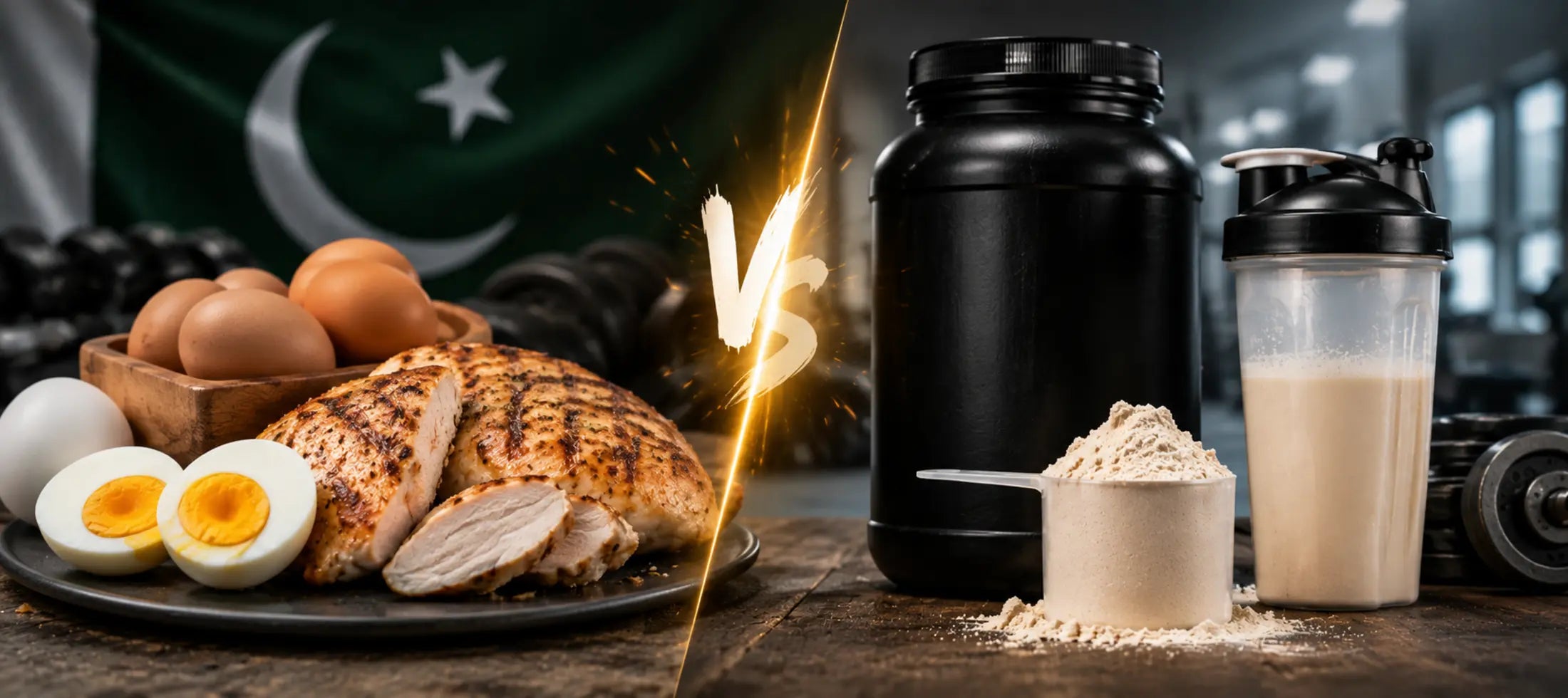

Eggs and chicken are excellent whole food protein sources, while whey protein is a more convenient and concentrated protein option.
-
Eggs and chicken: better for overall nutrition, affordability, and daily meals
-
Whey protein: better for convenience, fast intake, and meeting protein targets quickly
Key insight: The best option is not one or the other. It depends on cost, lifestyle, and protein needs.
Introduction: The Real Question Pakistani Lifters Ask
In Pakistan, most lifters do not struggle with “what has protein.” They struggle with what is practical. Eggs are everywhere. Chicken is part of almost every home meal. Whey protein is available but expensive compared to food. This creates a simple but important question: Should you rely on real food like eggs and chicken, or use whey protein for better results? To answer this properly, we need to compare protein quality, cost, digestion, and real-life practicality.
Understanding the Three Protein Sources
Before comparing, it is important to understand what each option actually is.
Eggs
Eggs are one of the most complete natural protein sources. They contain all essential amino acids in a balanced profile.
Chicken
Chicken, especially breast meat, is a lean animal protein with high protein density and low fat content.
Whey Protein
Whey protein is a processed dairy supplement designed to deliver high protein in a small, convenient serving.
Protein Content Breakdown (Real Numbers)
Eggs (Whole Eggs)
-
1 egg: ~6 grams protein
-
2 eggs: ~12 grams protein
-
4 eggs: ~24 grams protein
Eggs also contain fats and micronutrients like vitamins A, D, and B12.
Chicken Breast
-
100g cooked chicken breast: ~25 to 31 grams protein
Chicken is one of the most protein-dense whole foods available.
Whey Protein
-
1 scoop: ~22 to 25 grams protein
-
Calories: low compared to whole foods
Whey delivers protein in a concentrated form without cooking or preparation.
Protein Quality: Bioavailability Matters
Not all protein is equal in how the body uses it.
Key protein quality indicators:
-
PDCAAS score (Protein Digestibility Corrected Amino Acid Score)
-
DIAAS score (Digestible Indispensable Amino Acid Score)
-
Leucine content (important for muscle growth)
Comparison:
Eggs
-
Very high PDCAAS (~1.0)
-
Complete amino acid profile
-
Excellent digestion
Chicken
-
Very high digestibility
-
High leucine content
-
Strong muscle-building profile
Whey Protein
-
Highest biological value among all three
-
Very high leucine content
-
Fast absorption rate
Key insight:
All three are “complete proteins,” but whey absorbs fastest, while eggs and chicken provide slower digestion.
Cost Per Gram Protein in Pakistan (2026 Reality)
This is where the real decision happens for most Pakistani lifters.
Eggs
-
1 dozen eggs: fluctuates widely
-
Cost per gram protein: generally low to moderate
Eggs are one of the most affordable protein sources when prices are stable.
Chicken Breast
-
100g chicken: moderate to high cost depending on market
-
Cost per gram protein: efficient but variable
Chicken becomes expensive during market fluctuations and festivals.
Whey Protein
-
Higher upfront cost per tub
-
Cost per gram protein: higher than eggs and chicken
However:
-
No cooking cost
-
No spoilage
-
No preparation time
Convenience Factor: The Hidden Advantage
This is where whey protein stands out.
Eggs and chicken require:
-
Cooking time
-
Storage management
-
Meal planning
-
Preparation effort
Whey protein requires:
-
Water or milk
-
10 seconds of preparation
Key insight:
Even if whey is more expensive per gram, it saves time and effort, which matters for busy lifestyles.
Muscle Building Effect: Does One Work Better?
All three support muscle growth when total protein intake is sufficient.
Eggs:
-
Great for steady protein intake
-
Good for breakfast and meals
Chicken:
-
Ideal for lunch and dinner
-
Strong lean muscle support
Whey protein:
-
Fast protein delivery for recovery
Important truth:
Muscle gain depends on total daily protein, not the source alone.
Whole Food vs Whey Protein: The Real Difference
Whole foods (eggs and chicken):
-
Provide vitamins and minerals
-
Increase fullness
-
Support long-term health
Whey protein:
-
Provides only protein
-
Very low micronutrients
-
Extremely efficient for the supplementation of protein
Key insight:
Whole food builds the foundation; whey fills the gap.
Practical Strategy for Pakistani Lifters
The smartest approach is combining all three.
Example daily structure:
-
Breakfast: eggs
-
Lunch: chicken + rice/roti
-
Post-workout: whey protein
-
Dinner: chicken or eggs
Why this works:
-
Affordable
-
High protein intake
-
Balanced nutrition
-
Easy to maintain long term
Common Mistake Most Lifters Make
Many people try to choose only one source:
-
Only eggs
-
Only chicken
-
Only whey protein
This leads to:
-
Nutrient gaps
-
Poor adherence
-
Inconsistent protein intake
Key insight:
The best results come from combination, not replacement.
Final Verdict
Eggs, chicken, and whey protein are not competitors. They are different tools.
-
Eggs and chicken = real food foundation
-
Whey protein = convenience and supplementation
For Pakistani lifters, the best strategy is to prioritize whole foods first and use whey protein to fill gaps when needed.
Final takeaway:
Muscle growth does not depend on choosing the “best” protein source. It depends on consistently hitting your daily protein target in a way that fits your budget and lifestyle.
FAQs
1. How many eggs equal one scoop of whey protein?
On average, 3 to 4 whole eggs provide similar protein (18 to 24 grams) as one scoop of whey protein. However, eggs also contain fats and micronutrients, while whey provides pure protein with faster absorption.
2. Is chicken better than whey protein for muscle gain?
Neither is strictly better. Chicken is better as a whole food meal due to nutrients and satiety, while whey protein is better for quick digestion and post-workout recovery. Both support muscle growth equally when total protein intake is sufficient.
3. Which is the cheapest protein source in Pakistan for lifters?
Eggs are usually the most cost-effective protein source, followed by chicken depending on market prices. Whey protein is more expensive per gram but offers convenience and easy tracking, especially for busy individuals.
Share:
Is All Whey Protein Spiked in Pakistan? How to Verify Your Protein Quality
Is Whey Protein Only for Bodybuilders? Busting the Myth for Pakistani Fitness Lovers (2026 Guide)