

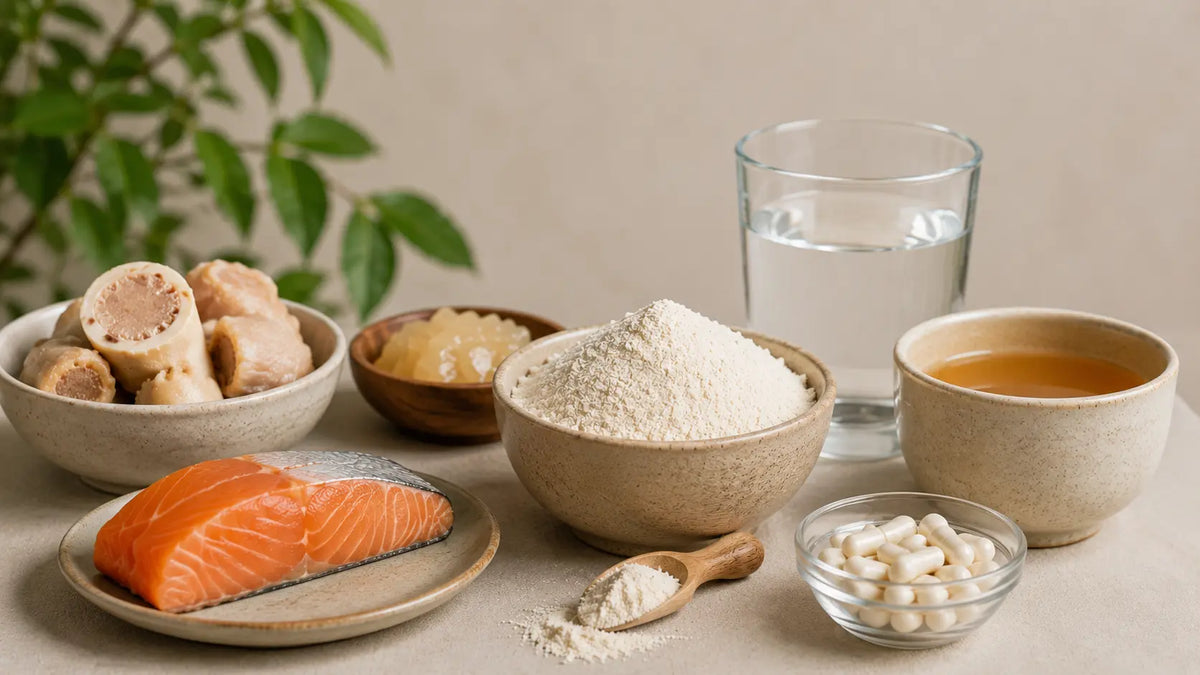

Collagen is made of amino acids, mainly glycine, proline, and hydroxyproline. These amino acids form long protein chains that twist together into a strong triple helix structure.
This structure makes collagen strong and flexible. It supports the skin, bones, joints, tendons, ligaments, muscles, blood vessels, and connective tissues.
In simple words, collagen is the body’s main structural protein. It helps keep the skin firm, joints mobile, bones strong, and tissues healthy.
What Is Collagen?
Collagen is the most abundant protein in the human body. It acts like a natural support system for your skin, joints, bones, muscles, tendons, ligaments, and organs.
Your body makes collagen naturally, but production decreases with age. Poor diet, smoking, high sugar intake, sun exposure, stress, and lack of sleep can also reduce collagen levels.
What Is Collagen Made Of?
Collagen is mainly made of three amino acids:
1. Glycine
Glycine is the most common amino acid in collagen. It helps collagen chains pack tightly and form a strong structure.
2. Proline
Proline helps maintain the shape and stability of collagen. It supports skin structure, wound healing, and connective tissue strength.
3. Hydroxyproline
Hydroxyproline helps stabilize collagen. The body needs vitamin C to produce hydroxyproline properly.
Nutrients Needed for Collagen Production
Your body also needs these nutrients to make collagen:
-
Zinc
-
Copper
-
Protein
-
Iron
That is why collagen health depends on both protein intake and micronutrient intake.
Collagen Structure: Why the Triple Helix Matters
Collagen has a unique triple helix structure. Three protein chains twist together like a rope.
This structure gives collagen strength and flexibility. It allows collagen to support tissues that face pressure, stretching, and movement, such as skin, cartilage, tendons, ligaments, and bones.
Types of Collagen
There are many collagen types, but Type I, Type II, and Type III are the most important for skin, joints, and general health.
Type I Collagen
Type I collagen is the most abundant type in the body.
It is found in:
-
Skin
-
Bones
-
Tendons
-
Ligaments
-
Teeth
Best For
Type I collagen is best for skin firmness, skin elasticity, bone strength, and connective tissue support.
Type II Collagen
Type II collagen is mainly found in cartilage.
Cartilage cushions the joints and helps bones move smoothly.
Best For
Type II collagen is best for joint health, cartilage support, mobility, and flexibility.
Type III Collagen
Type III collagen is found in:
-
Skin
-
Muscles
-
Blood vessels
-
Organs
-
Intestinal tissues
Best For
Type III collagen supports tissue structure, skin elasticity, blood vessels, and organ support.
Other Collagen Types
Type IV Collagen
Type IV collagen is found in basement membranes and supports skin layers, kidneys, and blood vessels.
Type V Collagen
Type V collagen helps form collagen fibers and is found in skin, hair, and the placenta.
Type X Collagen
Type X collagen is involved in cartilage development and bone formation.
Natural Sources of Collagen
Collagen is naturally found only in animal-based foods because it comes from connective tissue.
Animal-Based Collagen Sources
Good sources include:
-
Bone broth
-
Chicken skin
-
Fish skin
-
Beef connective tissue
-
Cartilage
-
Tendons
-
Gelatin
Can Plant Foods Provide Collagen?
No. Plant foods do not contain collagen.
However, plant foods can help your body produce collagen naturally by providing vitamin C, zinc, copper, and antioxidants.
Good collagen-supporting plant foods include:
-
Citrus fruits
-
Berries
-
Guava
-
Kiwi
-
Bell peppers
-
Leafy greens
-
Pumpkin seeds
-
Sesame seeds
-
Lentils
-
Beans
Collagen Supplements
Collagen supplements are usually made from bovine, marine, chicken, or porcine sources.
Common supplement forms include:
-
Hydrolyzed collagen
-
Collagen peptides
-
Gelatin
-
Collagen capsules
-
Collagen drinks
Hydrolyzed Collagen vs Collagen Peptides vs Gelatin
Hydrolyzed Collagen
Hydrolyzed collagen is collagen broken down into smaller pieces for easier digestion.
Collagen Peptides
Collagen peptides are small chains of amino acids. They mix easily in water and are commonly used in powders.
Gelatin
Gelatin is partially broken-down collagen. It is used in gummies, desserts, capsules, and food products.
Collagen Powder vs Capsules: Which Is Better?
Collagen powder is usually better for daily use because it gives a higher dose per serving.
Capsules are convenient, but they usually contain a smaller amount. You may need several capsules to reach an effective dose.
Best Choice
For most people, collagen peptide powder is the most practical option.
Benefits of Collagen
1. Skin Health
Collagen supports skin firmness, hydration, and elasticity. It may help reduce the appearance of fine lines when used consistently.
2. Joint Health
Collagen supports cartilage and connective tissue. It may help with joint comfort, movement, and flexibility.
3. Bone Support
Collagen gives bones structure. Calcium and minerals make bones hard, while collagen helps maintain flexibility and support.
4. Muscle and Recovery Support
Collagen supports tendons, ligaments, and connective tissues around muscles. It may be useful for active people, but it should not replace complete protein sources.
5. Hair and Nail Support
Collagen provides amino acids that may support stronger nails and healthier hair structure.
6. Gut Support
Collagen may support the gut lining, but evidence is still limited. It should not be treated as a cure for digestive diseases.
How to Take Collagen Properly
Recommended Collagen Dosage
A practical daily collagen dose is:
-
2.5 to 5 grams daily for skin support
-
5 to 10 grams daily for general wellness
-
10 to 15 grams daily for joints, tendons, and active people
For most beginners, 5 to 10 grams daily is a good starting range.
Best Time to Take Collagen
The best time to take collagen is the time you can take it consistently.
You can take collagen:
-
In the morning
-
With breakfast
-
Before workout
-
After workout
-
At night
-
With tea, coffee, milk, smoothie, or water
Timing is less important than daily consistency.
Should You Take Collagen on an Empty Stomach?
You can take collagen with or without food. There is no strong need to take collagen on an empty stomach. If it causes stomach discomfort, take it with meals.
Should You Take Collagen Before or After a Workout?
For joint, tendon, and ligament support, collagen can be taken 30 to 60 minutes before exercise with vitamin C. For general skin and wellness benefits, any time of day is fine.
How Long Does Collagen Take to Work?
Collagen takes time. It does not work overnight.
Expected timeline:
-
Skin hydration: 4 to 8 weeks
-
Skin elasticity: 8 to 12 weeks
-
Nails: 8 to 12 weeks
-
Joints: 3 to 6 months
-
Tendons and ligaments: several months
Results depend on dose, product quality, diet, age, lifestyle, and consistency.
How to Improve Collagen Absorption and Results
1. Take It Daily
Consistency matters more than timing.
2. Take It With Vitamin C
Vitamin C helps the body produce collagen. Take collagen with vitamin C-rich foods like lemon, orange, guava, kiwi, berries, or bell peppers.
3. Eat Enough Protein
Collagen is not a complete protein. You still need quality protein from eggs, fish, chicken, milk, yogurt, lentils, beans, soy, or whey.
4. Choose Collagen Peptides
Hydrolyzed collagen peptides are easier to digest and mix well in drinks.
5. Reduce Sugar Intake
High sugar intake can damage collagen and speed up skin aging.
6. Protect Skin From Sun Exposure
Excessive UV exposure breaks down skin collagen. Use sunscreen and avoid unnecessary sun exposure.
7. Sleep Well
Good sleep supports tissue repair, hormone balance, and collagen maintenance.
Factors That Reduce Collagen Production
Collagen production may reduce due to:
-
Aging
-
Menopause
-
Low protein intake
-
Vitamin C deficiency
-
Smoking
-
High sugar intake
-
Excessive sun exposure
-
Poor sleep
-
Chronic stress
-
Alcohol overuse
-
Poor diet
How to Boost Collagen Naturally
To support collagen naturally:
-
Eat enough protein
-
Take vitamin C-rich foods daily
-
Add zinc and copper sources
-
Eat colorful fruits and vegetables
-
Sleep properly
-
Avoid smoking
-
Limit sugar
-
Protect skin from UV exposure
Are Collagen Supplements Safe?
Collagen supplements are generally safe for healthy adults when taken in reasonable doses.
Possible side effects may include:
-
Bloating
-
Stomach discomfort
-
Bad taste
-
Fullness
-
Allergy in sensitive people
Avoid marine collagen if you have a fish allergy. Check the source if you avoid beef, pork, chicken, or fish.
Pregnant women, breastfeeding mothers, people with kidney disease, liver disease, allergies, or medical conditions should consult a healthcare professional before using collagen.
Final Verdict
Collagen is made of amino acids, mainly glycine, proline, and hydroxyproline. These amino acids form a triple helix structure that gives collagen strength and flexibility.
Collagen supports skin, joints, bones, tendons, ligaments, muscles, blood vessels, and connective tissues.
For best results, take 5 to 10 grams of collagen peptides daily, pair it with vitamin C, eat enough protein, sleep well, reduce sugar, and protect your skin from excessive sun exposure.
Collagen works best when used consistently for several weeks to months.
FAQs About Collagen
What is collagen made of in the human body?
Collagen is made of amino acids, mainly glycine, proline, and hydroxyproline. These amino acids form a triple helix structure.
Which type of collagen is best for skin?
Type I collagen is best for skin because it supports skin firmness, elasticity, and strength.
Which type of collagen is best for joints?
Type II collagen is best for joints because it supports cartilage structure and mobility.
Can you get collagen from plant foods?
No. Plant foods do not contain collagen. But vitamin C-rich fruits, leafy greens, nuts, seeds, lentils, and beans can support natural collagen production.
How long does collagen take to work?
Most people need 8 to 12 weeks for skin benefits and 3 to 6 months for joint benefits.
Are collagen supplements safe to take daily?
Yes, collagen supplements are generally safe for daily use in healthy adults when used in reasonable doses.
Is collagen powder better than capsules?
Yes, collagen powder is usually better because it provides a higher dose per serving. Capsules are convenient but usually lower in dose.
Should collagen be taken with vitamin C?
Yes. Vitamin C supports collagen synthesis, so taking collagen with vitamin C-rich foods may improve results.
Share:
Creatine Stops Working Once Your Body Gets Used to It
How to Take Collagen Properly: Dosage, Timing, and Absorption Tips