

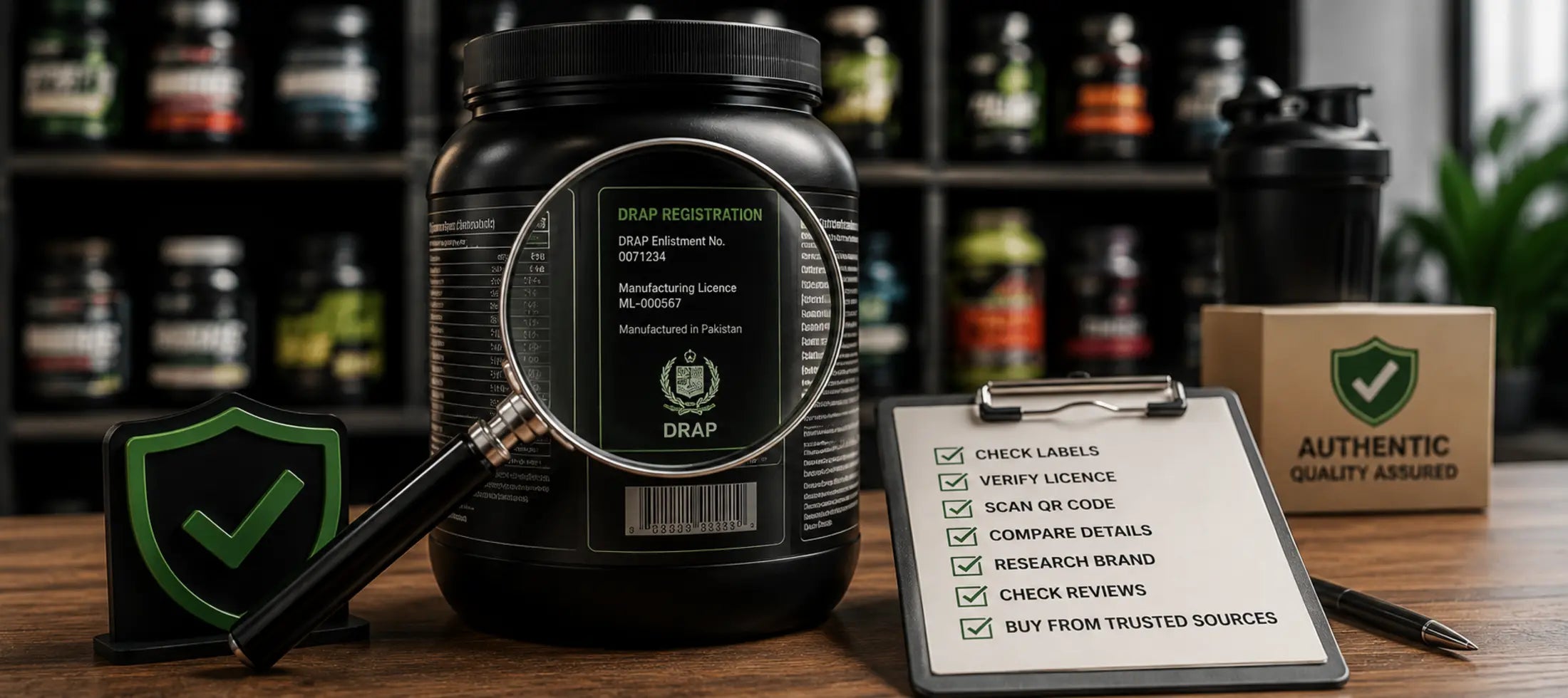

Yes, fake supplements in Pakistan are a real problem, and if you train regularly, you've probably worried about it at least once. Maybe a tub looked slightly different from your last purchase. Maybe the seal felt loose, or the powder mixed differently than it used to. If something about the packaging looks different, don't ignore it. Take a closer look before using the product.
The good news is that spotting a fake doesn't require a lab or a chemistry degree. It mostly comes down to knowing what genuine products look like, what paperwork actually matters, and which habits keep you safe when you're buying online or from a new store.
Counterfeit products usually enter the market through specific supply and selling channels. We'll look at how that happens, why an imported label no longer guarantees safety, and what to check before you hand over your money.
By the end, you'll have a short list you can run through in under a minute, every single time you buy.
Yes, Fake Supplements in Pakistan Are a Real Problem
"Fake" doesn't always mean an empty tub with a slapped-on label. It covers a few different problems, and they don't all look the same.
Sometimes a product is fully counterfeit, made to imitate a known brand while containing something else entirely. Sometimes it's diluted, where a cheaper filler quietly replaces part of the real ingredient. Other times it's simply underdosed. The label might promise 25 grams of protein per scoop, but the actual amount can fall well short. And in some cases, a used tub from a genuine brand gets collected, refilled with an unknown substance, and resealed for resale as if it were untouched.
Sports nutrition tends to get hit harder than most other product categories, and there's a reason for that. Protein powders, creatine, and pre-workouts move in high volume, carry decent margins, and most buyers have no easy way to test what's actually inside. That combination makes the category an easy target for anyone willing to skimp on quality.
How Fake Supplements Are Made and Sold in Pakistan
DRAP has warned that supplements entering the country through unauthorized channels can involve tampered labels and inadequate testing. These risks make it harder for buyers to know whether a product is genuine, properly tested, and sourced from the stated manufacturer.
That's exactly the gap that lets bulk raw powder, often protein or creatine, get relabelled and sold under a brand name it was never actually connected to. Nobody checks the purity along the way. Nobody checks the dosage either. By the time it reaches a buyer, it looks like a finished, trustworthy product.
Counterfeit packaging plays a role too. Empty containers from genuine brands can end up refilled and resealed to look factory fresh, a tactic that lines up with the same tampered labeling pattern DRAP has flagged. At a quick glance in a busy store, it's easy to miss.
So, where do these products actually show up? Mostly in open marketplaces with limited oversight, on unverified online stores, and through social media pages running flash sales at prices that seem a little too generous. If a seller can't explain where a product came from, or dodges the question, that's usually worth pausing on before you buy.
Why 'Imported' No Longer Means 'Authentic'
There's a common belief that an imported label automatically means a safer product. That assumption doesn't hold up as well as it used to, and it's worth understanding why before you let a foreign package convince you to skip the checks.
Grey market imports often pass through supply chains that aren't meant to handle supplements. A tub might sit in a hot warehouse for weeks or months, get shipped without proper temperature control, and lose potency long before it ever reaches a customer. The label on the outside stays the same. What's actually inside doesn't.
International brands get counterfeited too, and honestly, sometimes even more aggressively than local ones. Their packaging is often easier to copy convincingly, and buyers tend to trust the name enough to skip a closer look. That trust is exactly what makes the category attractive to counterfeiters.
There's also the accountability problem. When something goes wrong with a grey market import, there's usually no local contact to reach, no manufacturer to call, and no batch record anyone can pull up. You're left dealing with the fallout on your own.
Third-party testing is another useful way to think about supplement quality. Fullscript's guide to third-party supplement certifications explains how independent testing programs fill the gap that most regulators simply don't cover before a product reaches a shelf. A brand that invests in its own testing and licensing can offer something a random import usually can't match.
7 Ways to Verify a Supplement Is Authentic Before You Buy
Here's a practical checklist you can run through before buying anything, whether it's a local brand or an imported one.
-
Check for DRAP registration or a manufacturing licence. These can provide an important verification point when you're checking a supplement's source. A registered product, or better yet a licensed manufacturing facility, has actually been through regulatory review.
-
Look for a batch number, manufacturing date, and expiry date. Genuine products carry all three, clearly printed. If one is missing, smudged, or looks like it was added afterward, treat that as a warning sign.
-
Confirm the seller is an authorised stockist. Buying directly from a brand's own store, or from a retailer listed as authorised, removes most of the guesswork immediately.
-
Inspect the seal, print quality, and label spelling. Counterfeiters are more likely to compromise on quality here than anywhere else. Blurry fonts, uneven spacing, or misspelled ingredient names are common giveaways once you know to look.
-
Read the full ingredient and amino acid panel. A legitimate product spells everything out clearly. Check that the ingredients, serving size, and amounts match the manufacturer's official product information.
-
Compare the price against realistic market rates. If one seller's price sits well below everyone else's for the exact same product, that gap usually has an explanation, and it's rarely a good one.
-
Ask where the product was actually manufactured. A seller who answers clearly and without hesitation is usually one worth trusting. Vague or defensive answers tell you something too.
Even running through three or four of these before checkout filters out most fakes. Our product authentication page explains exactly what to check on Jacked Nutrition packaging for every product we sell.
What DRAP Approval Means and Why a Manufacturing Licence Is Stronger
DRAP, short for the Drug Regulatory Authority of Pakistan, oversees supplement and pharmaceutical registration across the country. Two terms come up a lot in this conversation, and buyers often assume they mean the same thing. They don't.
|
Term |
What It Covers |
What It Actually Tells You |
|
Product Registration (Form 6/7) |
A specific product formula and its label claims |
The formula has been reviewed on paper |
|
Manufacturing Licence |
The physical facility, its equipment, and its processes |
The place making the product meets safety and quality standards |
Form 6 and Form 7 relate to registering an individual product with DRAP. It's a meaningful step and shouldn't be dismissed, but it only covers the formula as submitted on paper. A manufacturing licence goes a fair bit further. It certifies the actual facility where a product gets made, including its equipment, hygiene practices, and internal testing processes.
For you as a buyer, that distinction matters more than it might seem. A product can carry valid registration while still being produced somewhere with weak quality control behind the scenes. A manufacturing licence tells you the facility itself has been checked, not just the paperwork sitting in front of it.
How Jacked Nutrition and Farma Labs Approach Authenticity
Jacked Nutrition manufactures its products at Farma Labs, which holds DRAP Manufacturing Licence 01542. The licence applies to the manufacturing facility itself, giving customers another way to verify where the product is made.
Making our own product from start to finish changes what we're actually able to promise you. We control raw material sourcing, batch testing, and packaging ourselves, without the product passing through a long chain of importers or resellers along the way. If you're curious how that setup actually works day to day, our recent piece on Farma Labs' batch testing process discusses what USP grade testing looks like in practice, not just on paper.
You can also read more about the facility itself on our Farmalabs page, which operates as Pakistan's first DRAP licensed sports nutrition factory.
Frequently Asked Questions
Are supplements sold in Pakistan fake?
Some are, yes. Counterfeit, diluted, and underdosed products do circulate, especially through unregulated marketplaces and unverified online sellers. Not every product on the market is fake, but the risk is real enough to justify checking before you buy, particularly with protein powders and pre-workouts.
How can I tell if my whey protein is real or fake?
Start with the batch number, seal quality, and label print. Compare the scoop size and mix texture against a previous authentic tub if you still have one. If the taste, smell, or mixability suddenly feels off compared to your last purchase, it's worth looking into further.
Is DRAP approval required for supplements in Pakistan?
Product registration through DRAP is the standard pathway for supplements sold legally in the country. A manufacturing licence goes a step further than registration, since it certifies the actual facility, not just the product formula on paper.
Are imported supplements safer than locally made ones in Pakistan?
Not automatically, no. Imported products can pass through broken storage chains or grey market channels with little accountability if something goes wrong along the way. A DRAP licensed local manufacturer often gives you better traceability than an unverified import ever could.
What is the difference between DRAP product registration and a DRAP manufacturing licence?
Registration reviews a specific product formula and its label claims. A manufacturing licence certifies the actual facility, including its equipment and internal processes. Of the two, the licence is generally the stronger indicator of consistent quality.
What should I do if I think I bought a fake supplement?
Stop using it right away. Hold on to the packaging and batch number, and contact the seller directly to report what happened. You can also reach out to the brand itself; most have a support channel set up for exactly this kind of complaint.
Before you buy, check the seal, ask for the batch number, and confirm who actually made the product before you pay. If you'd like to check a Jacked Nutrition product specifically, verify your product on our authentication page before you use it.
Share:
USP-Grade Creatine in Pakistan: Inside Farma Labs’ Batch Testing Process
Advanced Protein Testing at Farma Labs: Quality at Every Stage