

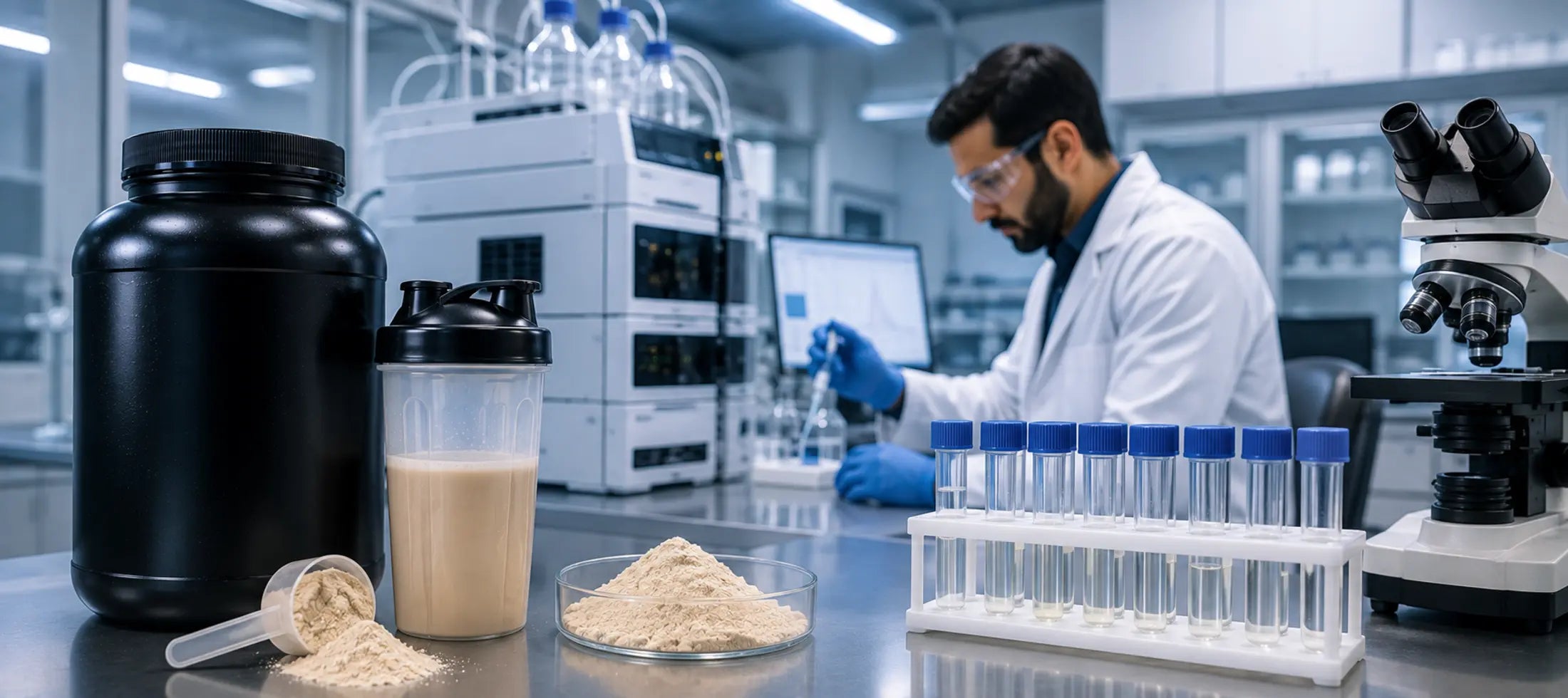

Advanced protein testing is the laboratory process used to check the actual protein content, purity, amino acid profile, and label accuracy of protein supplements.
At Farma Labs, protein testing helps brands verify whether their products contain the claimed amount of protein and meet internal quality standards before reaching consumers. This may include nitrogen analysis, the Kjeldahl Method, amino acid profiling, raw material testing, and finished product testing.
The Importance of Protein Accuracy in Supplements
Protein supplements are used by athletes, gym users, health-conscious consumers, and people who need extra protein in their diet. Products like whey protein, mass gainers, protein blends, and meal replacement powders are often purchased based on their protein claim.
If a label says “24g protein per serving,” the product should actually provide close to that amount. If the protein content is lower than claimed, consumers may not get the value or nutritional benefit they expect.
Accurate protein testing helps prevent:
-
Misleading protein claims
-
Low-quality supplement products
-
Poor batch consistency
-
Under-dosed protein formulas
-
Loss of consumer trust
For any supplement brand, protein accuracy is not just a technical detail. It is a major part of product quality.
Why Advanced Protein Testing Matters
Basic testing may only estimate total protein. Advanced protein testing gives a clearer picture of protein quality, purity, and formulation accuracy.
This matters because two protein powders can look similar on the label but have very different quality. One may contain high-quality whey protein with a strong amino acid profile, while another may have lower protein purity or inaccurate label claims.
Advanced protein testing helps answer key questions:
-
Does the product contain the claimed amount of protein?
-
Is the protein level consistent from batch to batch?
-
Is the protein source suitable for the product claim?
-
Does the amino acid profile match the expected protein type?
-
Is the product properly formulated?
For consumers, testing builds trust. For brands, it protects reputation.
Techniques Used at Farma Labs for Protein Analysis
Farma Labs uses laboratory testing methods to evaluate protein content and product consistency. The main techniques may include nitrogen analysis, the Kjeldahl Method, amino acid profiling, and finished product testing.
1. Kjeldahl Method
The Kjeldahl Method is a widely used method for estimating protein content. It works by measuring the nitrogen content in a sample and converting that nitrogen value into an estimated protein value.
Because protein contains nitrogen, this method is commonly used in food, nutrition, and supplement testing.
However, the Kjeldahl Method estimates crude protein. It does not directly measure the full quality of protein. That is why it is stronger when combined with other tests, such as amino acid profiling.
2. Nitrogen Analysis
Nitrogen analysis helps estimate the total protein content in a supplement sample. It is useful for checking whether a product is close to its claimed protein value.
For example, if a whey protein product claims a specific amount of protein per serving, nitrogen analysis can help verify whether the product meets that expected range.
This test is important for:
-
Whey protein
-
Protein blends
-
Mass gainers
-
Meal replacement powders
-
High-protein nutrition products
3. Amino Acid Profiling
Amino acid profiling gives deeper information about protein quality. Instead of only checking total protein, it measures the amino acids present in the product.
This is important because protein quality depends on amino acid composition, not only total grams.
For example, whey protein is naturally rich in essential amino acids and branched-chain amino acids such as leucine, isoleucine, and valine. Amino acid profiling can help confirm whether the product’s protein profile matches the expected source.
This test is especially useful for checking:
-
Protein quality
-
Protein source consistency
-
Amino acid composition
-
Sports nutrition claims
4. Protein Purity Testing
Protein purity refers to how much of the product is actually protein compared with other ingredients such as carbohydrates, fats, flavors, sweeteners, fillers, and moisture.
A product may claim to be a protein supplement, but the actual protein percentage can vary. Protein purity testing helps brands understand the real nutritional value of the product.
This is important for whey protein concentrates, whey protein isolates, hydrolyzed proteins, and protein blends.
Step-by-Step Protein Testing Process at Farma Labs
Step 1: Raw Material Review
The process starts with checking raw materials before production. This may include reviewing supplier documents, batch details, and ingredient specifications.
The goal is to confirm that the raw protein ingredient is suitable for manufacturing.
Step 2: Sample Collection
A sample is collected from the raw material or finished product batch. Proper sampling is important because the sample must represent the full batch.
Poor sampling can lead to inaccurate results.
Step 3: Sample Preparation
The sample is prepared for testing. This may include weighing, mixing, digestion, dilution, or other laboratory preparation steps depending on the method used.
Correct preparation improves testing accuracy.
Step 4: Protein Analysis
The prepared sample is tested using methods such as nitrogen analysis or the Kjeldahl Method. These tests help estimate total protein content.
The result is then compared with the expected product specification.
Step 5: Amino Acid Profile Review
If needed, amino acid profiling is performed to check the amino acid composition of the protein.
This gives deeper insight into the quality and authenticity of the protein source.
Step 6: Finished Product Testing
After manufacturing, the finished product is tested to confirm that the final formula matches the intended protein claim.
This step is important because errors can happen during weighing, blending, flavoring, or packaging.
Step 7: Documentation and Review
The test results are recorded and reviewed. Documentation may include:
-
Batch number
-
Sample details
-
Testing method
-
Protein result
-
Date of testing
-
Quality review notes
This helps maintain traceability and supports internal quality control.
How Farma Labs Supports Quality Through Internal Testing
Farma Labs does not claim FDA approval or GMP certification. Instead, it supports quality through structured internal testing and documentation.
This includes:
-
Raw material checking
-
Protein content verification
-
Amino acid profile review
-
Finished product testing
-
Batch-level documentation
-
Internal quality control review
This approach helps brands identify quality issues before products reach the market.
Benefits of Accurate Protein Testing for Consumers
1. More Reliable Labels
Consumers depend on labels to choose supplements. Accurate protein testing helps verify whether the product contains the protein amount mentioned on the label.
2. Better Product Quality
Testing helps identify under-dosed formulas, poor raw materials, and batch inconsistencies. This improves the overall quality of the supplement.
3. More Consumer Trust
When a brand tests its products properly, consumers can trust the product more. Laboratory testing shows that the brand is serious about quality.
4. Better Value for Money
Protein supplements can be expensive. Testing helps ensure that consumers are paying for the protein they expect to receive.
5. Improved Brand Reputation
For supplement brands, accurate testing reduces complaints, protects credibility, and supports long-term customer loyalty.
Conclusion: Quality at Every Stage
Advanced protein testing is essential for verifying the quality, purity, and label accuracy of protein supplements.
At Farma Labs, protein testing supports quality at every stage, from raw material review to finished product testing. Methods such as the Kjeldahl Method, nitrogen analysis, amino acid profiling, and protein purity checks help brands confirm that their products meet internal quality expectations.
For consumers, this means better trust. For brands, it means stronger quality assurance and more reliable supplement products.
FAQs
What is advanced protein testing?
Advanced protein testing is the laboratory process used to check protein content, protein purity, amino acid composition, and label accuracy in protein supplements.
Which protein testing methods does Farma Labs use?
Farma Labs may use testing methods such as nitrogen analysis, the Kjeldahl Method, amino acid profiling, raw material testing, and finished product testing.
How does protein testing improve supplement quality?
Protein testing helps confirm whether a supplement contains the claimed amount of protein. It also helps detect low-quality raw materials, formulation errors, and batch inconsistencies.
Is Farma Labs FDA-approved or GMP-certified?
No. Farma Labs should not be described as FDA-approved or GMP-certified unless official documentation confirms it. The correct wording is that Farma Labs supports quality through internal testing, laboratory analysis, and documentation.
Can consumers trust protein labels after testing?
Protein testing makes label claims more reliable because it verifies whether the product contains the expected protein amount. It improves transparency and helps consumers make better supplement choices.
Why is amino acid profiling important?
Amino acid profiling shows the amino acid composition of a protein product. It helps evaluate protein quality and confirms whether the protein source matches the expected profile.
Why is the Kjeldahl Method used in protein testing?
The Kjeldahl Method is used to estimate protein content by measuring nitrogen in a sample. It is commonly used in food and supplement testing, but it is best supported with additional tests such as amino acid profiling.
Share:
Are Supplements in Pakistan Fake? How to Tell the Difference Before You Buy
The Real Difference Between Imported and Locally Manufactured Supplements in Pakistan