

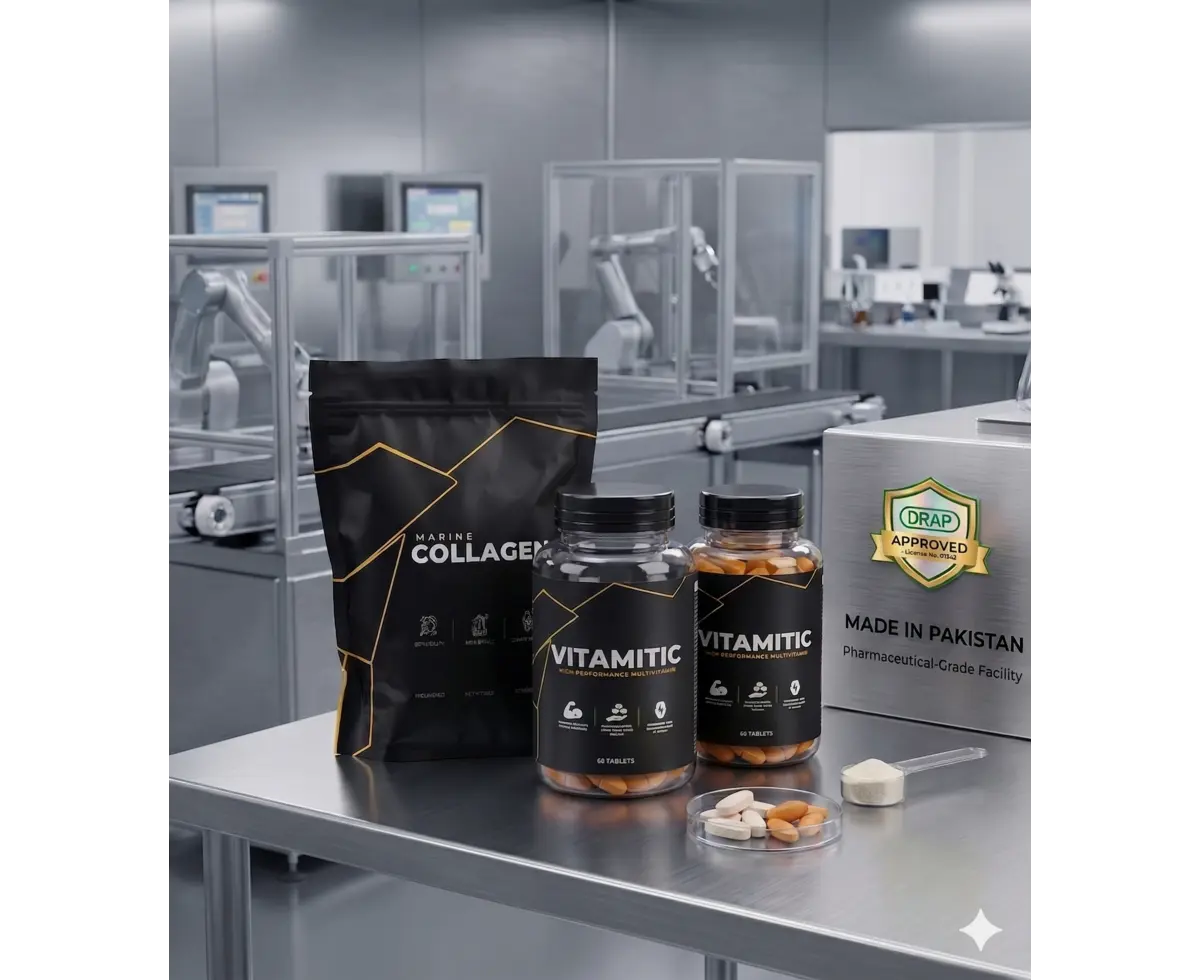

Heavy-weight training places immense mechanical stress on the shoulder complex, accelerating joint wear and tear. To protect the articular cartilage and prevent structural degradation, athletes require targeted joint wear and tear supplements. A clinical-grade stack of hydrolyzed collagen peptides, glucosamine sulfate, and chondroitin sulfate provides the exact biochemical building blocks needed to rebuild tissue, restore synovial fluid, and cushion the joint. Consistent, daily supplementation is clinically proven to reduce inflammation, repair the extracellular matrix, and allow you to train safely and pain-free.
Every time you unrack a heavy barbell, your muscles perform the visible work, but your joint structures pay the hidden physical tax. For many lifters, the focus remains strictly on muscle hypertrophy. However, ignoring the structural foundation, your cartilage, tendons, and ligaments, ultimately leads to persistent pain and limited mobility.
To achieve lasting performance, you must protect your framework. This comprehensive guide explores the precise anatomy of shoulder breakdown and explains how the right joint health supplement in Pakistan provides an undeniable shield against permanent damage.
The Hidden Cost of Heavy Lifting: Understanding Joint Wear & Tear in the Shoulder
Lifting weights builds a resilient body, but repetitive heavy loading demands a toll. The shoulder is the most mobile joint in human anatomy. This exceptional range of motion directly results in it being the most vulnerable to structural failure.
Shoulder Anatomy 101: What's Actually at Risk When You Train Heavy
To understand the mechanics of injury, you must look at the internal architecture. Your shoulder primarily consists of the glenohumeral joint, the shallow ball-and-socket where your arm meets your body. This joint is stabilized by the rotator cuff muscles and structurally protected by the glenoid labrum (a thick cartilage ring) and smooth articular cartilage. When you perform heavy presses, these specific tissues absorb massive, concentrated force.

How Repetitive Bench Press Stress Breaks Down Shoulder Cartilage Over Time
Every heavy repetition creates microtrauma; microscopic tears in the connective tissue. While muscle tissue possesses a rich blood supply and heals rapidly, cartilage is avascular (lacking blood flow) and recovers exceptionally slowly. Repetitive stress from movements like the bench press accelerates cartilage degradation. This constant bone-on-cartilage friction heavily stresses the AC joint, leading to chronic shoulder impingement and pain.
The Role of Collagen Loss and Synovial Fluid Depletion in Joint Deterioration
Healthy joints rely on synovial fluid for vital lubrication. As athletes age and accumulate training volume, natural collagen synthesis declines. This decline reduces synovial fluid production and weakens the extracellular matrix (ECM). Depleted of fluid and structural proteins, the joint environment becomes dry and brittle, accelerating rapid joint deterioration.
The Most Common Shoulder Injuries in Gym Athletes: And What Causes Them
When structural joint health is neglected, predictable pathologies emerge.
Rotator Cuff Tears: Why Lifters Are at Risk and How to Protect Yourself
The rotator cuff acts as the primary stabilizing force for the shoulder. The supraspinatus tendon is particularly susceptible to tearing under the heavy loads of benching and overhead pressing. Protection requires strict exercise form, comprehensive prehab, and maintaining high levels of Type I collagen to ensure tendon elasticity and tensile strength.
Shoulder Impingement Syndrome: The Silent Injury Destroying Your Progress
A sharp, pinching pain during lateral arm raises strongly indicates shoulder impingement syndrome. This occurs when the tendons or the subacromial bursa become physically trapped and compressed between the bones of the shoulder joint. Left untreated, this triggers severe, chronic inflammation.
SLAP Tears, AC Joint Stress & Tendinopathy: The Strength Athlete's Injury Triad
-
SLAP Tears: A precise tear in the superior labrum, frequently caused by heavy, sudden pulling forces.
-
AC Joint Stress: Localized pain at the highest point of the shoulder, highly prevalent among powerlifters.
-
Tendinopathy: The progressive degeneration of the tendon due to relentless overuse and failed biological healing.
Collagen Peptides for Shoulder Health: The Science Behind the Shield
To combat this structural decay, strength athletes require high-quality collagen for shoulder health.
Type I vs Type II Collagen: Which One Does Your Shoulder Actually Need?
The human body utilizes different collagen structures. Type I collagen forms the rigid framework of your tendons, skin, and ligaments. Type II collagen, however, is the exclusive building block of joint cartilage. A complete collagen peptides for joints Pakistan protocol must supply the materials to support both tendon repair (Type I) and cartilage regeneration (Type II or Undenatured Collagen UC-II).
How Hydrolyzed Collagen Peptides Stimulate Cartilage & Tendon Repair
Hydrolyzed collagen peptides are pharmaceutically broken down into microscopic amino acid chains, ensuring maximum bioavailability. These peptides deliver concentrated doses of glycine, proline, and hydroxyproline. Upon entering the bloodstream, they actively signal chondrocytes (the body’s cartilage-producing cells) to initiate rapid tissue repair.
Anti-Inflammatory Properties of Collagen: Calming the Inflamed Joint
Collagen functions as more than just a structural protein; it actively regulates the immune response. Clinical-grade collagen suppresses pro-inflammatory cytokines (such as IL-1β and TNF-α), effectively neutralizing the severe joint inflammation that halts training.
Clinical Evidence: What the Research Actually Says About Collagen for Joint Health
The medical consensus is clear. Rigorous Randomized Controlled Trials (RCTs) confirm that targeted collagen supplementation significantly increases cartilage volume, reduces structural pain, and improves joint mobility in high-performance athletes.
Glucosamine & Chondroitin: The Cartilage-Rebuilding Duo Every Lifter Needs
While collagen provides the architectural scaffolding, glucosamine and chondroitin are the essential compounds that provide hydration and impact absorption.
How Glucosamine Restores Cartilage Matrix and Reduces Joint Pain
Glucosamine sulfate is a naturally occurring amino sugar. As a targeted glucosamine supplement Pakistan, it supplies the exact biological precursors required to synthesize Glycosaminoglycans (GAGs) and proteoglycans. These macromolecules retain water, keeping cartilage thick and resilient. Furthermore, glucosamine actively inhibits the NF-κB pathway, a primary driver of joint pain.
Chondroitin Sulfate: Cushioning Your Joints and Blocking Cartilage Breakdown
If glucosamine constructs the cartilage matrix, chondroitin sulfate defends it. Chondroitin acts as a molecular magnet for water, providing the vital hydraulic cushioning needed to survive heavy lifting. Crucially, it inhibits Matrix Metalloproteinases (MMPs), the aggressive enzymes responsible for destroying healthy cartilage.
The GAIT Trial and Beyond: Clinical Evidence for Glucosamine + Chondroitin
The landmark GAIT Trial (Glucosamine/chondroitin Arthritis Intervention Trial) provides the definitive clinical standard. The study conclusively demonstrated that administering glucosamine and chondroitin together delivers a potent synergistic effect, dramatically outperforming single-ingredient protocols in reducing pain and halting cartilage loss.
The Optimal Joint Health Stack: Collagen + Glucosamine + Chondroitin Combined
To secure the best joint supplement for gym performance, isolated ingredients are insufficient. Maximum clinical efficacy requires a complete, integrated stack.
Why These Three Work Better Together: Synergistic Joint Protection
A unified collagen glucosamine chondroitin stack addresses every mechanism of joint failure. Collagen rebuilds the structural tendons. Glucosamine forces chondrocytes to synthesize new cartilage. Chondroitin hydrates the joint and blocks enzymatic destruction. This triad provides comprehensive, anti-catabolic joint protection.

Dosage Protocol: How and When to Take Your Joint Supplements for Best Results
Strict adherence to dosing protocols dictates your success:
-
Loading Phase: A verified therapeutic dose must be taken daily; many protocols recommend a higher initial dose for the first 14-28 days.
-
Timing: Consume your stack 30–60 minutes prior to training. This ensures peak blood amino acid levels exactly when joint hyperemia (increased blood flow) occurs during exercise.
-
Vitamin C Co-ingestion: Always pair this stack with Vitamin C, the mandatory catalyst for endogenous collagen synthesis.
Jacked Nutrition's Joint Health Range: Pharmaceutical-Grade Collagen, Glucosamine & Chondroitin
When integrating a shoulder joint pain supplement into your regimen, purity and potency are non-negotiable. Jacked Nutrition provides the strictest compliance products, which you can trust. We guarantee pharmaceutical-grade precision, complete batch traceability, and exact therapeutic dosages in every serving.

Protect Your Shoulders Now: Before the Damage Is Done
Cartilage degradation is a progressive, silent process. Waiting until you require a dedicated bench press shoulder pain supplement means the structural damage is already severe. Implementing a premium joint stack is mandatory "prehab" for the serious athlete. Supply your body with these critical raw materials today to ensure decades of heavy, pain-free performance.
Frequently Asked Questions: Collagen, Glucosamine & Shoulder Joint Health
Can collagen supplements actually repair damaged shoulder cartilage?
Yes. Clinical trials confirm that specific hydrolyzed collagen peptides directly stimulate chondrocyte activity, promoting the regeneration of the extracellular matrix and repairing degraded articular cartilage.
What is the difference between glucosamine sulfate and glucosamine HCl?
Glucosamine sulfate is the clinically superior form. The sulfate molecule is a mandatory component for the body to synthesize new cartilage. Glucosamine HCl lacks this sulfate group and consistently demonstrates lower efficacy in scientific literature.
How long does it take for glucosamine and chondroitin to work?
Cartilage remodeling is a biological process that requires time. A strict loading phase of 4 to 8 weeks at a therapeutic dose is required to achieve high systemic bioavailability and experience significant reductions in joint pain.
Should I take collagen before or after my workout for shoulder health?
Scientific protocol dictates taking collagen peptides 30 to 60 minutes before training. This precise timing ensures that the necessary amino acids are actively circulating in the joint capsule precisely when mechanical stress and blood flow are at their highest.
Share:
The Anti-Inflammatory Athlete: Using Omega-3s and Curcumin to Combat Gym-Induced Joint Pain and Chronic Inflammation
Fortifying Your Frame: Can Vitamin D3 and K2 Prevent Bone Stress Fractures?