

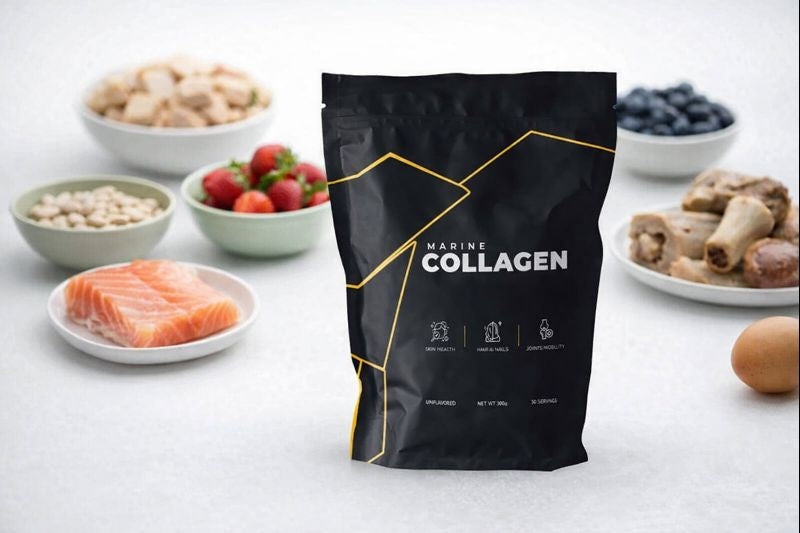

Introduction: Why Collagen is Important
Collagen is a vital protein that helps keep skin firm and elastic. It also supports joints, bones, and gut health. When we include collagen-rich foods in our diet, we help our body maintain strength and a youthful glow. Aging, poor diet, and sun exposure can naturally reduce collagen levels. These factors can make skin look older, and joints ache. Let’s explore foods that can help.
Factors That Reduce Collagen Levels Naturally
-
Aging: Collagen production declines with age, leading to wrinkles and stiff joints.
-
Sun Exposure: UV rays break down collagen fibers in skin, causing sagging.
-
High Sugar & Unhealthy Diet: Excess sugar can damage collagen through glycation.
-
Smoking and Stress: These habits lower collagen production over time.
-
Vitamin C Deficiency: Vitamin C is needed to make collagen, so low C levels hurt collagen.
SEE ALSO: Collagen-Types, Functions, Natural Sources, Benefits, Causes & Supplements
Top 10 Collagen-Rich Foods to Include in Your Diet
Wondering what foods increase collagen production? Try adding these top choices to your meals. Including these foods in a collagen-rich diet can improve skin, hair, nails, joints, and bone health. They are natural sources of collagen or help the body make it.
-
Bone Broth: A traditional soup (paya) made by simmering bones. Bone broth is very rich in collagen and minerals. It can help strengthen the gut lining, reduce joint pain, and support bone health. Bone broth is one of the best foods for collagen production. Many people drink it as a warm, nourishing comfort food.
-
Chicken: Chicken, especially the skin and cartilage, contains lots of collagen. Chicken soup or stock is an easy way to get animal-based, collagen-rich foods. Eating chicken provides key amino acids like glycine to help rebuild collagen in skin and joints.
-
Fish and Shellfish: Fish like salmon, tuna, and sardines have collagen in their skin and bones. Shellfish such as shrimp also contain collagen. Fish collagen (marine collagen) absorbs well in our bodies. These provide healthy fats and nutrients that improve skin and joint health.
-
Egg Whites: Egg whites contain amino acid proline, one building block of collagen. Including eggs in your diet can help your body make more collagen naturally. Egg whites also have protein and other nutrients that aid skin repair and strength.
-
Citrus Fruits: Oranges, lemons, limes, and mosambi (sweet lime) are full of vitamin C, which is crucial for collagen production. These natural collagen foods for skin boost the body’s collagen-making process. Eating citrus fruits regularly supports strong, elastic skin.
-
Berries: Strawberries, blueberries, and raspberries are rich in vitamin C and antioxidants. Antioxidants protect collagen fibers from damage. Berries are collagen-rich foods for anti-aging and overall wellness. They help keep skin healthy and reduce signs of aging.
-
Garlic: Garlic contains sulfur and taurine, which support collagen production. It also has antioxidants that protect skin cells. Adding garlic to meals is an easy way to get these collagen-boosting nutrients.
-
Leafy Greens: Spinach, kale, methi (fenugreek), and other greens are high in vitamins A and C. These vitamins help build collagen and protect it from damage. Leafy greens are plant foods that help collagen production and keep skin supple.
-
Nuts and Seeds: Almonds, walnuts, flaxseeds, and pumpkin seeds provide protein, zinc, and vitamin E. These nutrients support collagen formation and help heal skin. Snacking on nuts and seeds can improve skin elasticity and strength.
-
Beans: Beans and legumes like chickpeas, lentils, and kidney beans are high in protein and zinc. They help boost collagen production and support bone health. Beans add fiber and nutrients to a collagen-rich diet, making it balanced and nutritious.
How Collagen Benefits Skin, Hair, Nails, Joints, and Bones
Collagen gives skin its structure and elasticity, making it smooth and firm. It also helps strengthen hair and nails by supporting keratin production. For joints and bones, collagen supports cartilage and bone matrix.
Including these foods means getting the nutrients needed for joint pain relief and strong bones. Eating collagen-rich foods for gut health also soothes digestion by healing the gut lining.
Collagen also helps the body recover. It supports tissue repair. It improves flexibility. It helps reduce stiffness. With regular intake, movement feels easier. The body feels stronger and more balanced.
SEE ALSO: Best Anti-Inflammatory Supplements for Joint and Bone Health
Common Myths About Collagen Supplements
-
Myth: Collagen Supplements are better than food. Fact: Whole foods provide collagen plus other nutrients that work together. A collagen-rich diet from natural sources is best.
-
Myth: You only need collagen powder. Fact: A balanced diet with enough protein and vitamin C is crucial. Supplements can help, but they are not magic.
-
Myth: All animal collagen is the same. Fact: Chicken, fish, and bone broth provide different types of collagen. A varied diet ensures you get all types of collagen.
-
Myth: Plant foods don’t matter. Fact: Plant foods support collagen by giving vitamins and minerals. Natural sources like fruits and leafy greens are important.
Conclusion
Eating collagen-rich foods is a simple way to support healthy aging and overall wellness. By focusing on a collagen-rich diet with both animal and plant foods, you give your body the nutrients it needs. This approach benefits skin, hair, nails, joints, bones, and even gut health. For example, bone broth and beans are collagen-rich foods for bone health and strong joints.
Instead of relying on supplements, trust whole foods like bone broth, citrus fruits, and leafy greens. These tips show how to increase collagen naturally and help you look and feel your best.
FAQs
Can collagen-rich foods improve skin elasticity?
Yes. Foods like bone broth, citrus fruits, and leafy greens provide building blocks that help improve skin elasticity over time.
How does diet affect collagen production in the body?
Eating protein, vitamin C, and zinc-rich foods gives your body the nutrients to produce collagen effectively.
Are collagen supplements better than collagen-rich foods?
Whole foods offer collagen and extra vitamins and minerals, making them generally a better choice than supplements alone.
Can eating collagen-rich foods reduce joint pain?
Yes. Foods like bone broth and fish can help support joint health, potentially reducing discomfort.
Can collagen-rich foods help strengthen hair and nails?
Yes. Nutrients from collagen foods help build keratin, which can strengthen hair and nails.
Share:
Probiotics, Prebiotics, and the Gut-Brain Axis
15 Desi Low-Calorie Foods to Control Appetite in Your 30s