

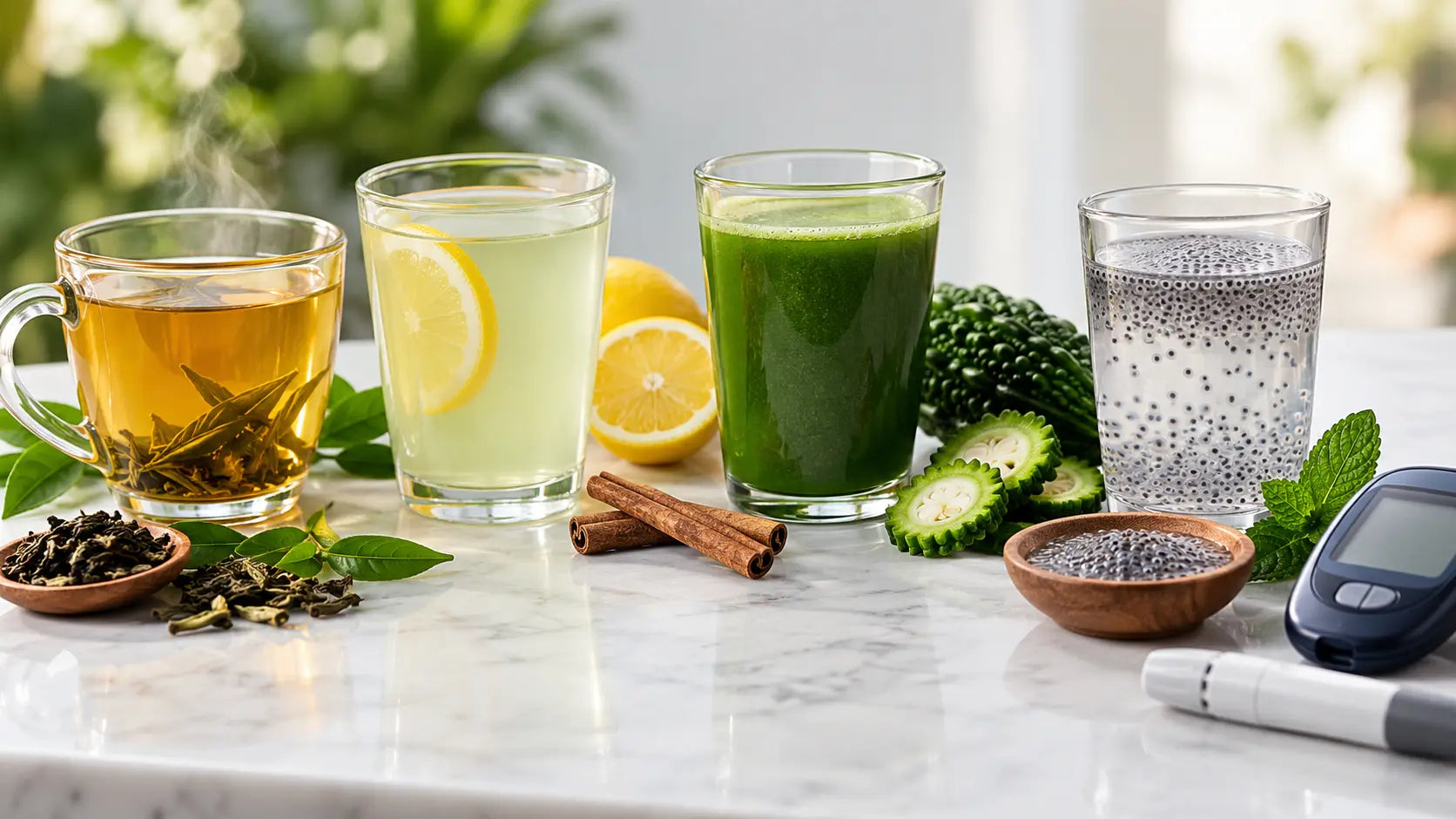

If you've just tested your blood sugar and the number is higher than you'd like, your instinct is probably to search for something, anything to drink right now to bring it down. That instinct makes sense. But here's what the research actually shows: no beverage lowers blood sugar as fast, or as reliably, as insulin or prescribed medication does.
That doesn't mean drinks don't matter. Water supports the kidneys in clearing excess glucose. Unsweetened tea and coffee don't add to the problem the way sugary drinks do, and a handful of options, such as apple cider vinegar, cinnamon, fenugreek, and green tea, have real clinical trial evidence behind them when used consistently over weeks, not minutes. This guide separates what's proven from what's folklore, tells you exactly how much evidence each drink actually has, and flags the one thing no article like this should bury: when a high reading needs a phone call instead of a beverage.
Quick answer: No drink lowers blood sugar within minutes the way insulin does. Water supports your kidneys' ability to clear excess glucose and prevents dehydration from making things worse. Unsweetened tea, coffee, and milk alternatives are safe daily choices. Apple cider vinegar, cinnamon, and fenugreek have clinical trial support for modest reductions in fasting glucose and A1C when used daily over 8–12 weeks. If your reading is above 300 mg/dL with symptoms like vomiting, confusion, or fruity-smelling breath, that's a medical emergency. Contact your provider or seek emergency care.
Key Takeaways:
-
No drink acts as fast as insulin or prescribed medication to treat any "instant fix" claim with skepticism.
-
Water and unsweetened tea are the safest, most evidence-backed everyday choices, mainly by supporting hydration and kidney function rather than actively "burning off" sugar.
-
Apple cider vinegar, cinnamon, and fenugreek have real clinical trial support, but the effects show up over 8 to 12 weeks of daily use, not in one sitting.
-
A reading above 300 mg/dL along with vomiting, confusion, rapid breathing, or fruity-smelling breath is a medical emergency, not a beverage decision.
-
Recent research complicates old advice: a 2025–2026 randomized trial found that swapping daily diet soda for water didn't improve blood sugar control in people with type 2 diabetes, and A1C actually ran slightly higher in the water group
When Is High Blood Sugar a Medical Emergency?
Before we get to drinks, it's worth being direct about something most articles on this topic bury near the bottom: some blood sugar readings need medical attention, not a beverage.
Call your healthcare provider immediately, or go to the emergency room, if you have a high blood sugar reading together with any of these symptoms :
-
Vomiting or nausea severe enough that you can't keep fluids down
-
Rapid or labored breathing
-
Breath that smells unusually fruity or sweet
-
Confusion, extreme drowsiness, or trouble staying awake
-
Severe or worsening abdominal pain
-
Signs of significant dehydration very dry mouth, dizziness when you stand, and little to no urination
These are warning signs of diabetic ketoacidosis (DKA), a condition that develops when the body doesn't have enough insulin to use glucose for energy and starts breaking down fat instead, producing acids called ketones that build up in the blood. DKA can escalate from mild to severe within 24 hours. It's most common in type 1 diabetes but can also occur in type 2 diabetes, particularly during illness, infection, or missed medication doses. Mayo Clinic and the CDC both recommend checking for urine or blood ketones whenever your blood sugar climbs above roughly 250 mg/dL, and you feel unwell. Moderate-to-large ketones alongside a high reading are when DKA becomes likely and urgent.
A second, less common but more dangerous emergency is hyperosmolar hyperglycemic state (HHS). It develops mostly in older adults with type 2 diabetes, usually over several days rather than hours, and is marked by extremely high blood sugar, typically above 600 mg/dL, severe dehydration, and confusion that can progress to seizures or loss of consciousness. HHS carries a notably higher mortality rate than DKA, partly because its slow onset makes it easy to mistake for simple fatigue or a passing illness until it's advanced.
Doctor's Advice: If your blood sugar is persistently above 250 mg/dL or above 300 mg/dL on any single reading, this isn't the moment to "drink it down." Check for ketones if you have testing supplies, follow your sick-day plan, and contact your healthcare provider. If you can't reach them and you have any of the symptoms listed above, seek emergency care right away.
Nothing in this article, no tea, no vinegar, and no electrolyte drink, is a substitute for insulin, prescribed medication, or emergency treatment. They're tools for everyday management, not a reason to delay a call you should be making.
How Blood Sugar Spikes and How Drinks Actually Affect It
When you eat carbohydrates, your digestive system breaks them down into glucose, which enters your bloodstream. In response, your pancreas releases insulin, a hormone that helps glucose move out of the blood and into your cells for energy. With diabetes or insulin resistance, that process is impaired, so glucose lingers in the blood longer and at higher concentrations, causing a spike.
Drinks influence this picture in three distinct ways, and knowing which one you're dealing with helps set realistic expectations.
Dilution. Drinking water increases the fluid volume in your bloodstream, which can modestly lower the concentration of glucose your meter reads. This isn't the same as removing sugar from your body. It's closer to stirring more water into a strong cup of coffee than decaffeinating it; the total sugar is still there, just less concentrated.
Supporting glucose clearance. Your kidneys filter excess glucose out of the blood and into urine, a process that depends on adequate hydration to work efficiently. When you're dehydrated, that clearance slows, and the body also releases stress hormones like cortisol that can push blood sugar higher still. In practice, a drink's biggest job during a high reading may be preventing that downward spiral rather than actively "burning off" sugar.
Direct metabolic effects. A smaller group of drinks contains compounds that appear to influence insulin sensitivity or glucose absorption more directly. Apple cider vinegar's acetic acid, cinnamon's cinnamaldehyde, and green tea's catechins fall into this category. Notably, these effects are documented in clinical trials measuring changes over weeks of consistent use, not single servings.
Myth vs. Fact Myth: A cup of cinnamon tea or a shot of apple cider vinegar can bring a 250 mg/dL reading down within the hour the way insulin does. Fact: The clinical trials behind these drinks measured effects after 8 to 12 weeks of daily use, not a single servingThey're best understood as complementary daily habits, not rescue remedies.
This is also why the word "immediately" is doing a lot of work in a search like this one. If you need your blood sugar down in the next few minutes because you feel unwell, that's a call to your healthcare provider or emergency services, not a beverage decision. If you're managing glucose day to day and want your drink choices to genuinely help over time, the rest of this guide is for you.
Normal Blood Sugar Levels: Chart & Targets
Blood sugar targets are individualized, but the American Diabetes Association's Standards of Medical Care in Diabetes lays out general reference ranges that most healthcare providers use as a starting point:
|
Category |
Fasting / Before Meals |
1–2 Hours After Eating |
A1C |
|
No diabetes |
Below 100 mg/dL |
Below 140 mg/dL |
Below 5.7% |
|
Prediabetes |
100–125 mg/dL |
140–199 mg/dL |
5.7%–6.4% |
|
Diabetes typical treatment target* |
80–130 mg/dL |
Below 180 mg/dL |
Below 7.0% |
|
Diabetes diagnostic threshold |
126 mg/dL or higher |
200 mg/dL or higher |
6.5% or higher |
*Targets for people with diagnosed diabetes are individualized based on age, how long you've had diabetes, other health conditions, and hypoglycemia risk. This row reflects a common general target, not a universal one. Pregnant women, including those with gestational diabetes, are held to tighter targets, typically fasting at or below 95 mg/dL and 1-hour post-meal at or below 140 mg/dL; always follow your OB or maternal-fetal medicine provider's specific numbers.
If you use a continuous glucose monitor, you may also track Time in Range (TIR), the percentage of the day your glucose stays between 70 and 180 mg/dL. The ADA and international consensus guidelines recommend a TIR above 70% for most adults with diabetes, since it captures day-to-day variability that a single A1C number can miss.
A single reading is a snapshot, not a verdict. One elevated number after a big meal isn't the same as a sustained pattern, but a pattern of readings above your target range, or any single reading above 250–300 mg/dL, is worth a conversation with your healthcare provider, regardless of what you drink afterward.
The Best Drinks for Lowering Blood Sugar
Each entry below covers what the evidence actually shows, how long effects take to appear, a practical serving size, and who should be cautious. Evidence strength is rated strong (multiple meta-analyses/systematic reviews of RCTs), moderate (several RCTs or one solid meta-analysis, some inconsistency), or preliminary (small trials, mixed results, or mostly mechanistic/animal data).
Water
Plain water doesn't lower blood sugar by "burning off" glucose, but it plays a bigger supporting role than people expect. Dehydration concentrates glucose in the blood, slows your kidneys' ability to filter excess sugar into urine, and triggers stress hormones like cortisol that can push readings higher. Staying ahead of thirst, rather than catching up to it, is the actual mechanism.
-
Evidence strength: Moderate (well-established physiology; direct glucose-lowering effect size is modest)
-
Best time: Throughout the day, and specifically alongside high-carbohydrate meals
-
Serving: Sip steadily rather than large volumes at once; a common target is roughly 6–8 cups (about 1.5–2 liters) daily, adjusted for activity, climate, and any fluid restrictions from your provider
-
Who should be cautious: People with advanced kidney disease or heart failure who have fluid restrictions should check their personal limit with their care team.
-
Medication interactions: None
Summary: Water won't dramatically lower a high reading on its own, but chronic mild dehydration is a genuinely underrated contributor to elevated blood sugar, making water your most reliable, zero-risk daily choice.
Electrolyte & Sports Drinks
Traditional sports drinks like Gatorade and Powerade typically contain roughly 21–25 grams of sugar per 12-ounce serving, which can raise blood sugar rather than lower it. That said, electrolyte replacement genuinely matters during prolonged exercise, illness, or heat exposure, when fluid and sodium losses are significant. The fix isn't avoiding electrolytes altogether; it's choosing sugar-free or low-carbohydrate formulations or making your own with water, a pinch of salt, and a splash of citrus.
-
Evidence strength: Moderate (electrolyte replacement itself is well-supported; "blood sugar lowering" claims for commercial products are not)
-
Best time: During or after exercise lasting more than 60 minutes, during illness, or in high heat
-
Serving: Check labels for total carbohydrates and added sugar; sugar-free versions can be used more freely
-
Who should be cautious: People with kidney disease or on blood-pressure medications that affect potassium (ACE inhibitors, ARBs) should check with their provider before regular use of high-potassium electrolyte drinks
-
Medication interactions: Potassium-heavy formulas can interact with potassium-sparing diuretics and some blood pressure medications
Summary: Regular sports drinks are one of the more sugar-dense choices on this list. Reach for a sugar-free electrolyte option unless you're mid-workout and need the carbohydrates.
Green Tea
Green tea (from the leaves of Camellia sinensis) is rich in catechins, particularly epigallocatechin gallate (EGCG), a compound studied for its ability to reduce hepatic (liver) glucose production and improve insulin sensitivity. A meta-analysis of 22 randomized controlled trials in 1,447 people with type 2 diabetes found that regular green tea consumption significantly reduced fasting blood glucose, fasting insulin, and A1C compared with control groups. That said, not every trial agrees; some smaller studies have found no significant effect, so consider this a supportive daily habit rather than a guaranteed one.
-
Evidence strength: Moderate (positive in most, not all, meta-analyses)
-
Best time: Between meals; some people find caffeine sensitivity makes afternoon or evening cups disruptive to sleep
-
Serving: 2–3 cups (about 8 oz each) daily, unsweetened
-
Who should be cautious: People sensitive to caffeine, or with iron-deficiency anemia (tea can reduce iron absorption when consumed with meals)
-
Medication interactions: Can modestly affect blood-thinning medications like warfarin due to vitamin K content in some preparations; caffeine content can compound stimulant medications
Summary: Green tea has some of the more consistent research behind it for gradual glycemic support, a reasonable daily swap for sugary drinks, though not a fast-acting fix.
Black Tea, Herbal Tea & Chamomile
Black tea shares many of the same polyphenols as green tea, though in different proportions due to its oxidation process, and observational research links regular tea drinkers (of any type) to modestly lower type 2 diabetes risk over time. Herbal teas, such as chamomile, hibiscus, and peppermint, among them, contain no caffeine and no calories, making them safe, neutral choices that won't raise blood sugar even if the evidence for actively lowering it is thinner and more preliminary. Chamomile specifically has some small human trials suggesting modest fasting glucose improvements, though sample sizes are too small to draw firm conclusions.
-
Evidence strength: Preliminary to Moderate (black tea: moderate/observational; herbal and chamomile: preliminary)
-
Best time: Any time; herbal teas are a good caffeine-free evening option
-
Serving: 1–3 cups daily, unsweetened
-
Who should be cautious: Chamomile can interact with sedatives and has mild blood-thinning properties in large amounts.
-
Medication interactions: Chamomile may amplify the effect of anticoagulants like warfarin
Summary: None of these will meaningfully move a high reading, but as unsweetened, zero-calorie swaps for soda or juice, they're an easy net positive.
Cinnamon Tea or Cinnamon Water
Cinnamon is one of the more heavily studied spices for blood sugar, and the research is genuinely encouraging for consistent use. A 2023 dose-response meta-analysis of 24 randomized controlled trials found statistically significant reductions in fasting blood sugar, insulin resistance (HOMA-IR), and A1C with regular cinnamon supplementation in people with type 2 diabetes. An earlier umbrella review pooling 11 separate meta-analyses found a similar pattern: fasting glucose dropped by an average of nearly 11 mg/dL with regular use.
Here's the detail most articles on this topic skip: not all cinnamon is the same. Cassia cinnamon, the common grocery-store variety, contains meaningfully more coumarin, a compound that can stress the liver at high, regular doses; food-safety authorities set a tolerable daily coumarin intake that as little as 1–2 teaspoons of cassia can approach or exceed with daily use. Ceylon cinnamon ("true cinnamon") contains a fraction of the coumarin and is the better choice if you're drinking cinnamon tea daily rather than sprinkling cinnamon occasionally in cooking.
-
Evidence strength: Moderate (consistent direction across multiple meta-analyses; effect sizes are modest)
-
Best time: With or after meals
-
Serving: ½–1 teaspoon (roughly 1–2 grams) of Ceylon cinnamon steeped in hot water, once or twice daily
-
Who should be cautious: People with liver disease should use Ceylon only, or avoid daily supplemental cinnamon; avoid high-dose cassia cinnamon as a daily habit
-
Medication interactions: Additive blood-sugar-lowering effect with insulin or oral diabetes medications (monitor for lows); mild blood-thinning effect that can add to warfarin or aspirin
Summary: Cinnamon has some of the strongest evidence on this list for regular use. Just choose Ceylon over cassia if you're making it a daily habit, and monitor for lows if you're on glucose-lowering medication.
Apple Cider Vinegar
Apple cider vinegar (ACV) is arguably the most searched "natural remedy" for blood sugar, and unlike many home remedies, it has genuine trial support. A 2025 GRADE-assessed systematic review and dose-response meta-analysis of seven controlled trials found that daily ACV intake significantly reduced fasting blood sugar and A1C in people with type 2 diabetes. An earlier 2021 meta-analysis of nine trials found ACV reduced fasting plasma glucose by nearly 8 mg/dL on average and A1C by about half a percentage point. The proposed mechanism is that acetic acid slows the breakdown of starches in the digestive tract and improves insulin sensitivity, most convincingly shown when vinegar is taken with a carbohydrate-containing meal rather than on its own.
-
Evidence strength: Moderate (consistent direction, but study quality is mixed and sample sizes are small; researchers themselves describe evidence as "conflicting" pending larger trials)
-
Best time: Diluted, alongside or just before a carbohydrate-containing meal
-
Serving: 1–2 tablespoons (15–30 mL) diluted in a full glass of water, never taken undiluted
-
Who should be cautious: People with delayed stomach emptying (gastroparesis), acid reflux, or esophageal irritation
-
Medication interactions: Can have an additive effect with insulin and sulfonylureas, raising hypoglycemia risk; may interact with diuretics and digoxin by affecting potassium levels
Summary: Apple cider vinegar has some of the best clinical evidence of any home remedy on this list, but it must be diluted, and anyone on insulin or diabetes medication should monitor closely for lows.
Coffee & Black Coffee
Coffee is genuinely confusing territory, and most articles gloss over why. In the short term, caffeine can raise blood sugar and reduce insulin sensitivity. A systematic review of trials in people with diabetes found that roughly 200–500 mg of caffeine (about 2–4 cups of coffee) increased post-meal blood glucose by 16–28% and reduced insulin sensitivity by 14–37% compared to placebo. A separate meta-analysis in healthy adults found a similar acute drop in insulin sensitivity. Yet long-term, habitual coffee drinkers tend to show a lower risk of developing type 2 diabetes in large population studies, the opposite pattern from what the acute trials would predict, and an area researchers are still working out.
The practical takeaway: black coffee (no sugar, minimal cream) is a reasonable everyday drink, but if you notice your glucose readings run higher after your morning cup, you're not imagining it; that's a documented, short-term effect, not a lasting one.
-
Evidence strength: Moderate, but directionally mixed (acute effect: raises glucose; long-term habitual use: associated with lower diabetes risk)
-
Best time: If you're sensitive to caffeine's glucose effect, consider decaf or spacing coffee away from meals you're actively trying to keep flat
-
Serving: Up to 3–4 cups daily is generally considered a moderate intake for most adults.
-
Who should be cautious: People who notice post-coffee spikes on a continuous glucose monitor; those with anxiety or sleep issues
-
Medication interactions: Caffeine can mask the early warning symptoms of hypoglycemia (shakiness, racing heart) in some people
Summary: Black coffee isn't a blood-sugar-lowering drink in the short term; if anything, caffeine can nudge readings up temporarily, but moderate habitual intake hasn't been shown to worsen long-term glucose control and may even be protective.
Milk, Soy Milk & Almond Milk
Unsweetened dairy and plant milks are lower-glycemic-index choices than juice or soda, and the protein and fat in dairy and soy milk in particular can blunt the glucose spike from a meal when consumed alongside carbohydrates. Soy milk has additional research interest for its isoflavone content, with some studies suggesting modest improvements in insulin sensitivity. Almond milk is naturally very low in carbohydrates but also low in protein, so it does less to blunt a meal's glucose response than dairy or soy milk.
-
Evidence strength: Preliminary to Moderate (mainly indirect, via glycemic index and protein content rather than dedicated glucose-lowering trials)
-
Best time: With meals or in coffee/tea in place of sweetened creamers
-
Serving: 1 cup, unsweetened varieties only; flavored and sweetened versions often contain 15–20+ grams of added sugar per serving
-
Who should be cautious: People with dairy allergies or lactose intolerance (choose soy or almond); soy allergy sufferers should avoid soy milk
-
Medication interactions: None significant, though calcium content can modestly reduce absorption of certain medications (like some thyroid medications) if taken at the same time
Summary: Choose unsweetened versions, and you get a genuinely neutral-to-helpful daily drink; sweetened "vanilla" or "original" versions often sneak in as much sugar as soda.
Kefir & Unsweetened Yogurt Drinks
Kefir is a fermented milk drink containing multiple strains of probiotic bacteria and yeast. Small randomized controlled trials in people with type 2 diabetes have found modest but statistically significant improvements in fasting blood glucose and A1C, typically in the range of 0.2 to 0.4 percentage points of A1C after 8 weeks of daily kefir consumption compared with conventional fermented milk. The proposed mechanism involves short-chain fatty acids and improved gut barrier function, which may reduce the low-grade inflammation linked to insulin resistance.
-
Evidence strength: Preliminary to Moderate (small trials, promising and consistent direction, but limited in number)
-
Best time: With breakfast or as a snack
-
Serving: About 1 cup (240 mL) daily, plain and unsweetened
-
Who should be cautious: People with dairy allergies; those on immunosuppressants should discuss probiotic foods with their provider
-
Medication interactions: None significant with plain kefir
Summary: Plain kefir is one of the more promising "food as medicine" choices here, but flavored kefir often contains 18–30 grams of added sugar per cup, which cancels out the benefit. Read the label.
Vegetable Juice & Tomato Juice
Vegetable juice and tomato juice are meaningfully lower in natural sugar than fruit juice, making them a reasonable substitution if you're craving something juice-like. Tomatoes are also a source of lycopene, an antioxidant studied for cardiovascular benefits that often accompany diabetes management. That said, juicing removes the fiber that would otherwise slow sugar absorption in a whole vegetable, so even vegetable juice still raises blood sugar faster than eating the vegetable would.
-
Evidence strength: Preliminary (mostly indirect, based on lower sugar content and antioxidant profile rather than dedicated glucose trials)
-
Best time: With a meal that includes protein or fat, which slows absorption
-
Serving: 4–8 oz, no-salt-added or low-sodium versions
-
Who should be cautious: People managing blood pressure should check the sodium content; standard tomato juice can be high in sodium
-
Medication interactions: None significant
Summary: A smart swap for fruit juice, but treat it as a food choice rather than a glucose-lowering intervention. Whole vegetables do more for blood sugar than their juiced form.
Fenugreek Water
Fenugreek seeds (Trigonella foenum-graecum) have a long history in South Asian and Middle Eastern traditional medicine for blood sugar, and modern research backs some of that reputation. A meta-analysis of 10 clinical trials found that fenugreek seed intake significantly reduced fasting blood glucose, 2-hour post-meal glucose, and A1C compared with control interventions, though the effect was only reliably seen at medium-to-high doses (5 grams or more daily), not in small culinary amounts. Soluble fiber in the seeds is thought to slow carbohydrate digestion and glucose absorption in the gut.
-
Evidence strength: Moderate (consistent direction, but studies were generally small and of mixed quality)
-
Best time: Before meals
-
Serving: Soak 1–2 teaspoons of fenugreek seeds in water overnight and drink the strained water, or use 5 grams of seed powder daily as studied in trials
-
Who should be cautious: Pregnant women should avoid therapeutic doses of fenugreek, which has traditionally been linked to uterine stimulant effects; people with peanut or chickpea allergies may cross-react
-
Medication interactions: Additive effect with insulin and diabetes medications (hypoglycemia risk); can enhance the effect of blood thinners like warfarin
Summary: Fenugreek has some of the better-supported evidence among traditional remedies on this list, but the effective dose is higher than most people use casually, and it isn't appropriate during pregnancy.
Bitter Melon Juice
Bitter melon (Momordica charantia) is used traditionally across Asia, Africa, and the Caribbean for blood sugar, and there's real clinical interest in compounds it contains that appear to mimic some of insulin's actions. A 12-week randomized controlled trial in adults with prediabetes found that bitter melon extract modestly improved glucose tolerance test results. However, a comprehensive 2019 systematic review and meta-analysis concluded the overall evidence for meaningful, reliable blood-sugar benefit in people with type 2 diabetes remains weaker than supplement marketing suggests, with significant variation in preparation and dosing across studies.
The safety profile deserves more attention than most sites give it: bitter melon is considered unsafe during pregnancy, as compounds in the fruit and seeds have been linked to uterine bleeding and miscarriage risk in animal and case-report data. People with G6PD deficiency (a common inherited enzyme condition) should avoid bitter melon seeds specifically, which can trigger a serious reaction called favism.
-
Evidence strength: Preliminary (mixed-quality trials; more consistent for prediabetes than established type 2 diabetes)
-
Best time: With meals
-
Serving: No standardized safe dose for juice; if trying it, start with small amounts (2–4 oz) and monitor your glucose response.
-
Who should avoid it: Pregnant women, people with G6PD deficiency, and children
-
Medication interactions: Additive effect with insulin and oral diabetes medications, raising hypoglycemia risk
Summary: Bitter melon has genuine traditional and preliminary clinical interest, but it's not a casual choice; the pregnancy and G6PD warnings are firm, not precautionary fine print.
Aloe Vera Juice
Aloe vera juice is marketed heavily for blood sugar, and there's a kernel of real research behind it: small randomized trials of aloe vera leaf gel (not latex) have shown modest reductions in fasting and post-meal glucose in people with type 2 diabetes. But the safety picture is more complicated than most product labels let on. Aloe vera has two very different parts: the inner gel and the outer latex, and they behave differently in the body.
Aloe latex contains anthraquinone compounds with a strong laxative effect; regular or high-dose use can cause diarrhea, cramping, and potassium loss, and there are documented case reports of liver inflammation (hepatitis) linked to aloe latex use. The Mayo Clinic specifically flags that taking aloe by mouth alongside diabetes medications can raise the risk of blood sugar dropping too low and that aloe latex's potassium-depleting effect can dangerously amplify the heart medication digoxin.
-
Evidence strength: Preliminary (small trials, promising direction, safety data more robust than efficacy data)
-
Best time: With meals, if used
-
Serving: Choose products explicitly labeled "latex-free" or "decolorized"; avoid whole-leaf extracts.
-
Who should avoid it: Pregnant or breastfeeding women, anyone on digoxin, people with inflammatory bowel disease, or liver conditions
-
Medication interactions: Additive hypoglycemia risk with diabetes medications; dangerous interaction with digoxin via potassium depletion; can reduce absorption of oral medications taken at the same time
Summary: If you try aloe vera juice, choose a latex-free product. Specifically, this is one case where the "natural" and "safe" versions of a drink are genuinely not the same thing.
Protein Shakes, Meal Replacement Drinks & Protein Water
Protein slows gastric emptying and blunts the glucose spike that follows a carbohydrate-containing meal, which is well-established basic nutrition science, not a specific claim about any one product. This is why a protein shake alongside (not instead of) a meal can help flatten a post-meal glucose curve. Diabetes-specific nutrition shakes (formulated with slower-digesting carbohydrates and added fiber) are designed with this principle in mind and are sometimes recommended as a portion-controlled meal replacement rather than a snack add-on. Protein water, a flavored water with added protein and no fat or carbohydrate, is a newer category that can serve a similar blunting purpose with fewer calories than a full shake.
-
Evidence strength: Moderate (the underlying mechanism protein slowing carbohydrate absorption is well-established; evidence for specific commercial products varies by formulation)
-
Best time: Alongside meals, or as a portion-controlled meal replacement
-
Serving: Check total carbohydrate and added sugar content. Some "protein" shakes contain 20+ grams of added sugar, which defeats the purpose
-
Who should be cautious: People with kidney disease should discuss protein intake targets with their provider, since high protein loads can stress compromised kidneys
-
Medication interactions: None significant
Summary: The protein itself is genuinely useful for blunting glucose spikes. The catch is that many commercial shakes bury that benefit under added sugar, so label-reading matters more here than with almost any other drink on this list.
Quick-Reference Table: Every Drink Compared
|
Drink |
Effect on Blood Sugar |
Evidence Strength |
Best Use |
|
Water |
Supports clearance, dilutes concentration |
Moderate |
Anytime, especially with meals |
|
Electrolyte drinks (sugar-free) |
Neutral; supports hydration |
Moderate |
During/after exercise, illness, heat |
|
Electrolyte/sports drinks (regular) |
Raises blood sugar |
N/A (avoid) |
Only during prolonged intense exercise |
|
Green tea |
Modest reduction with regular use |
Moderate |
Daily, between meals |
|
Black tea |
Neutral to modestly helpful |
Preliminary–Moderate |
Daily, any time |
|
Herbal tea (chamomile, peppermint, hibiscus) |
Neutral, zero-calorie swap |
Preliminary |
Evening, caffeine-free option |
|
Cinnamon tea (Ceylon) |
Modest reduction with daily use |
Moderate |
With meals, daily |
|
Apple cider vinegar (diluted) |
Modest reduction with daily use |
Moderate |
Diluted, with carb-containing meals |
|
Coffee/black coffee |
Raises glucose short-term; neutral-to-protective long-term |
Moderate |
Moderate daily intake |
|
Low-fat milk |
Neutral, blunts meal spikes via protein |
Preliminary |
With meals |
|
Soy milk (unsweetened) |
Neutral to modestly helpful |
Preliminary–Moderate |
With meals |
|
Almond milk (unsweetened) |
Neutral, very low carb |
Preliminary |
With meals or in coffee/tea |
|
Kefir (plain) |
Modest reduction with regular use |
Preliminary–Moderate |
Daily, with breakfast |
|
Unsweetened yogurt drinks |
Neutral to modestly helpful |
Preliminary |
Daily |
|
Tomato/vegetable juice (no added sugar) |
Lower-sugar alternative to fruit juice |
Preliminary |
With meals |
|
Fenugreek water |
Modest reduction at higher doses |
Moderate |
Before meals, daily |
|
Barley water |
Lower glycemic index than sweetened drinks |
Preliminary |
With meals |
|
Amla (Indian gooseberry) juice |
Antioxidant-rich, preliminary glucose benefit |
Preliminary |
Small servings, diluted |
|
Bitter melon juice |
Modest reduction; real safety caveats |
Preliminary |
Caution: see safety notes above |
|
Aloe vera juice (latex-free) |
Modest reduction; real safety caveats |
Preliminary |
Caution: see safety notes above |
|
Cucumber juice |
Very low sugar, hydrating |
Preliminary |
Anytime |
|
Ginger tea |
Neutral to modestly helpful; anti-inflammatory |
Preliminary |
Anytime |
|
Turmeric milk (golden milk) |
Preliminary insulin-sensitivity support from curcumin |
Preliminary |
Evening |
|
Coconut water |
Natural sugars and electrolytes moderate, not zero-carb |
Preliminary |
Post-exercise, in moderation |
|
Sparkling water (unflavored) |
Neutral |
N/A (safe default) |
Anytime, soda substitute |
|
Lemon water |
Neutral, no meaningful glucose effect despite popular claims |
Preliminary (weak) |
Anytime |
|
Protein shakes (low-sugar) |
Blunts meal spikes |
Moderate |
With meals |
|
Diabetes nutrition shakes |
Formulated for a slower glucose response |
Moderate |
Portion-controlled meal replacement |
|
Protein water |
Blunt's meal spikes, low-calorie |
Preliminary–Moderate |
With meals or as a snack |
Drinks and Foods to Avoid
Some drinks work directly against blood sugar management, and it's worth naming them plainly rather than hedging.
Worst Drinks Ranked (most to least glucose-disruptive):
-
Regular soda and sweetened sodas often contain 35–40+ grams of sugar per can, absorbed quickly with little to slow it down
-
Fruit juice (including 100% juice) juicing removes the fiber that would normally slow sugar absorption; a glass of orange juice can raise blood sugar similarly to soda despite feeling "healthier"
-
Sweetened coffee and specialty coffee drinks, a large flavored latte or frozen coffee drink can contain 50+ grams of sugar.
-
Regular sports drinks and energy drinks have high sugar, plus, in energy drinks, high caffeine, which can compound insulin resistance.
-
Sweetened tea (bottled or homemade), sweet tea, and bottled iced teas frequently rival soda in sugar content
-
Alcohol, especially sweet cocktails and beer, has a complex, biphasic effect: it can spike blood sugar initially (especially mixed with sugary mixers) and then cause delayed drops in blood sugar for up to 24 hours afterward, which is particularly risky for anyone on insulin or sulfonylureas.
-
Flavored plant milks and "creamer" coffee additives, on vanilla and flavored almond/oat milks, can carry as much added sugar as soda per serving.
Clinical Bottom Line: If you remove only one category of drink from your routine, sugar-sweetened beverages (soda, sweet tea, juice, and specialty coffee drinks) will move the needle more than adding any "superfood" drink will. The research on cutting these is far more consistent than the research on any single natural remedy.
Head-to-Head Drink Comparisons
Water vs. Green Tea |
Water |
Green Tea |
|
Direct glucose effect |
Dilution + kidney support |
Modest reduction with regular use (catechins) |
|
Calories/caffeine |
0 calories, 0 caffeine |
0 calories (unsweetened), ~25–30 mg caffeine/cup |
|
Evidence strength |
Moderate |
Moderate |
Verdict: Both are excellent daily choices. Green tea adds a modest, evidence-backed active benefit, but it supplements water intake rather than replacing it.
Water vs. Apple Cider Vinegar |
Water |
Apple Cider Vinegar (diluted) |
|
Direct glucose effect |
Dilution + kidney support |
Modest reduction with daily user |
|
Risk profile |
None |
Tooth enamel erosion, GI irritation if undiluted; hypoglycemia risk with diabetes medication |
|
Evidence strength |
Moderate |
Moderate |
Verdict: ACV has the more "active" evidence, but it's not risk-free and requires proper dilution. Water remains the foundation either way.
Coffee vs. Tea |
Coffee (black) |
Tea (green or black, unsweetened) |
|
Acute effect |
Can raise glucose short-term via caffeine |
Generally neutral to modestly helpful |
|
Long-term association |
Habitual use linked to lower diabetes risk |
Habitual use linked to lower diabetes risk |
|
Evidence strength |
Moderate, directionally mixed |
Moderate |
Verdict: Neither is off-limits, but if you're troubleshooting a specific post-breakfast spike, coffee is a more likely suspect than tea.
Diet Soda vs. Water
This comparison deserves more than a table, because the newest research complicates the "obviously water wins" assumption. A randomized controlled trial published in Diabetes Care in 2025–2026, the Study of Drinks with Artificial Sweeteners (SODAS), followed 181 adults with type 2 diabetes who regularly drank artificially sweetened beverages (ASBs). Half continued their usual diet soda; half switched to plain water instead for 24 weeks. The result ran against expectations: A1C was slightly higher in the water group than the diet-soda group, and no glycemic measure improved with the switch to water. The study's authors concluded there was no evidence that substituting water improved glycemic control in this population and suggested that for people with T2D already using ASBs as a sugar-free alternative, continuing that pattern may be a reasonable tool rather than something to "fix."
Research Update: This doesn't mean diet soda is better than water in general or that artificial sweeteners are risk-free. Long-term questions about sweeteners and gut health are still an active area of research. It means the specific claim "switch your diet soda to water to lower your blood sugar" isn't supported by the best current evidence for people already using diet soda as their sugary-drink alternative. If you're deciding between diet soda and regular soda, the evidence for diet soda is still clearly favorable.
Verdict: Water is the better default beverage overall. But if you already rely on diet soda instead of sugary soda, current evidence doesn't support that a forced switch to water will improve your glucose control. The more important comparison is diet soda vs. regular soda, not diet soda vs. water.
Electrolytes vs. Water |
Plain Water |
Electrolyte Drinks |
|
When it wins |
Daily hydration, no exercise |
Prolonged exercise (60+ min), illness, heat exposure |
|
Sugar content |
0g |
0g (sugar-free versions) to 25g+ (regular sports drinks) |
|
Evidence strength |
Moderate |
Moderate (for sugar-free versions during genuine electrolyte loss) |
Verdict: Water covers most daily needs. Reach for a sugar-free electrolyte drink specifically around exercise, illness, or heat, not as a default replacement for water.
Natural Remedies Comparison
|
Remedy |
Evidence Strength |
Effective Dose |
Key Safety Flag |
|
Cinnamon (Ceylon) |
Moderate |
½–1 tsp daily |
Cassia coumarin content with daily use |
|
Apple cider vinegar |
Moderate |
1–2 tbsp diluted |
Must dilute hypoglycemia risk with medication |
|
Fenugreek |
Moderate |
5g+ seed powder |
Avoid in pregnancy |
|
Green tea |
Moderate |
2–3 cups daily |
Caffeine sensitivity |
|
Bitter melon |
Preliminary |
No standardized dose |
Unsafe in pregnancy; G6PD deficiency risk |
|
Aloe vera |
Preliminary |
Latex-free only |
Digoxin interaction: hepatotoxicity case reports |
Best Drinks Ranked (Overall)
-
Water is zero risk, foundational
-
Unsweetened green tea has moderate evidence, zero calories
-
Diluted apple cider vinegar has moderate evidence and requires proper use
-
Ceylon cinnamon tea has moderate evidence, safer than cassia for daily use
-
Sugar-free electrolyte drinks situational but useful
-
Black coffee neutral-to-protective long-term, watch acute spikes
-
Fenugreek water has moderate evidence at adequate doses
-
Unsweetened plant or dairy milk good meal companion
-
Plain kefir promising, small evidence base
-
Herbal tea is safe, zero-calorie, preliminary evidence
Your Daily Drink Schedule
|
Time |
Suggested Drink |
Why |
|
First thing in the morning |
Water (16 oz), then coffee or tea if desired |
Rehydrates after hours without fluids; overnight dehydration can contribute to higher morning readings |
|
Before a meal |
Diluted apple cider vinegar or fenugreek water, if using either |
Best absorption and evidence when timed with carbohydrate intake |
|
With meals |
Water, unsweetened tea, or milk/soy milk |
Supports digestion without adding sugar |
|
After eating something sugary |
Water |
Supports hydration and kidney glucose clearance; don't reach for a "fix-it" remedy, just resume your normal routine at the next meal |
|
After exercise |
Water for sessions under 60 minutes; sugar-free electrolyte drink for longer or high-heat sessions |
Matches fluid loss without adding unnecessary sugar |
|
Evening/before bed |
Herbal tea (chamomile) or water |
Caffeine-free, won't disrupt sleep, supports overnight hydration |
Special Situations
|
Population |
Key Consideration |
|
Type 1 diabetes |
Drinks are never a substitute for insulin dosing. Ketone testing is especially important during illness or high readings, since DKA risk is higher in type 1. |
|
Type 2 diabetes |
Most of the evidence in this article comes from type 2 diabetes trials. Natural remedies (cinnamon, ACV, fenugreek) are best framed as complements to, not replacements for, prescribed medication. |
|
Gestational diabetes |
Targets are tighter (fasting ≤95 mg/dL, 1-hour post-meal ≤140 mg/dL). Avoid fenugreek, bitter melon, and aloe vera in therapeutic amounts during pregnancy. Stick to water, milk, and diluted juice, and follow your OB's specific guidance. |
|
Older adults |
Higher risk for hyperosmolar hyperglycemic state (HHS), which can develop gradually and be mistaken for simple fatigue. Hydration matters more, since thirst sensation naturally declines with age. |
|
Children |
Avoid cinnamon supplements, fenugreek, bitter melon, and aloe vera in therapeutic doses; a pediatric endocrinologist should guide any drink-based approach. Water and unsweetened milk are the safe defaults. |
|
Athletes with diabetes |
Electrolyte needs are genuinely higher during long or intense training. Sugar-free electrolyte drinks, or small amounts of regular sports drinks timed around activity, are more defensible here than for sedentary use. |
What to Do at Different Blood Sugar Levels
A note before this section: no beverage is "the fix" at any of these levels. Drinks support hydration and comfort your personal diabetes care plan, medication, and, at higher levels, medical care are what actually bring glucose down safely. Use this as a general guide and defer to your provider's specific instructions when they differ.
100–140 mg/dL: Often normal, especially within two hours of eating. Water is all that's needed; no action required beyond your usual routine unless this is a fasting reading, in which case mention the pattern to your provider.
140–180 mg/dL: Generally not urgent, especially post-meal. Water and, if appropriate for you, a short walk support gradual normalization. This is a reasonable range to build in an evidence-based habit drink like unsweetened green tea or diluted ACV with your next meal as a long-term habit, not a rescue attempt.
180–250 mg/dL: Worth attention if this is a fasting reading or a repeating pattern. Hydrate with water, skip additional carbohydrates and sugary drinks, and follow your personal correction or sick-day plan if you have one. Contact your provider if readings in this range become frequent.
250–300 mg/dL: This calls for more than a drink choice. Check for ketones if you have testing supplies, especially with type 1 diabetes or if you feel unwell. Follow your sick-day plan and contact your healthcare provider, particularly if this is unusual for you.
300–350 mg/dL: Contact your healthcare provider promptly and check ketones if possible. Hydrate with water while you d,o but treat this as a medical situation to manage with your care team, not a beverage decision to make alone.
350 mg/dL and above, or any reading with symptoms like vomiting, confusion, rapid breathing, or fruity-smelling breath: This is a potential medical emergency. Contact your healthcare provider immediately or go to the emergency room. No drink is an appropriate response at this level on its own.
The Bottom Line
There's no drink that lowers blood sugar the way insulin does, and any article claiming otherwise is overselling what the research actually supports. What genuinely helps is more modest and more useful than a magic fix: staying hydrated, choosing unsweetened drinks over sugary ones, and, if you want to add an evidence-backed habit, trying diluted apple cider vinegar, Ceylon cinnamon tea, fenugreek water, or green tea consistently over weeks, not as a one-time rescue attempt.
Just as important is knowing where drinks stop being the answer. A reading above 300 mg/dL, or any reading paired with vomiting, confusion, rapid breathing, or fruity-smelling breath, calls for your healthcare provider or emergency care,e not a beverage. If you're newly navigating high readings, or home strategies aren't keeping your numbers where your provider wants them, that's a conversation for your care team, not a search engine.
Share:
How to Block DHT Naturally Without Medication
What MMA Fighters Eat for Peak Performance?