

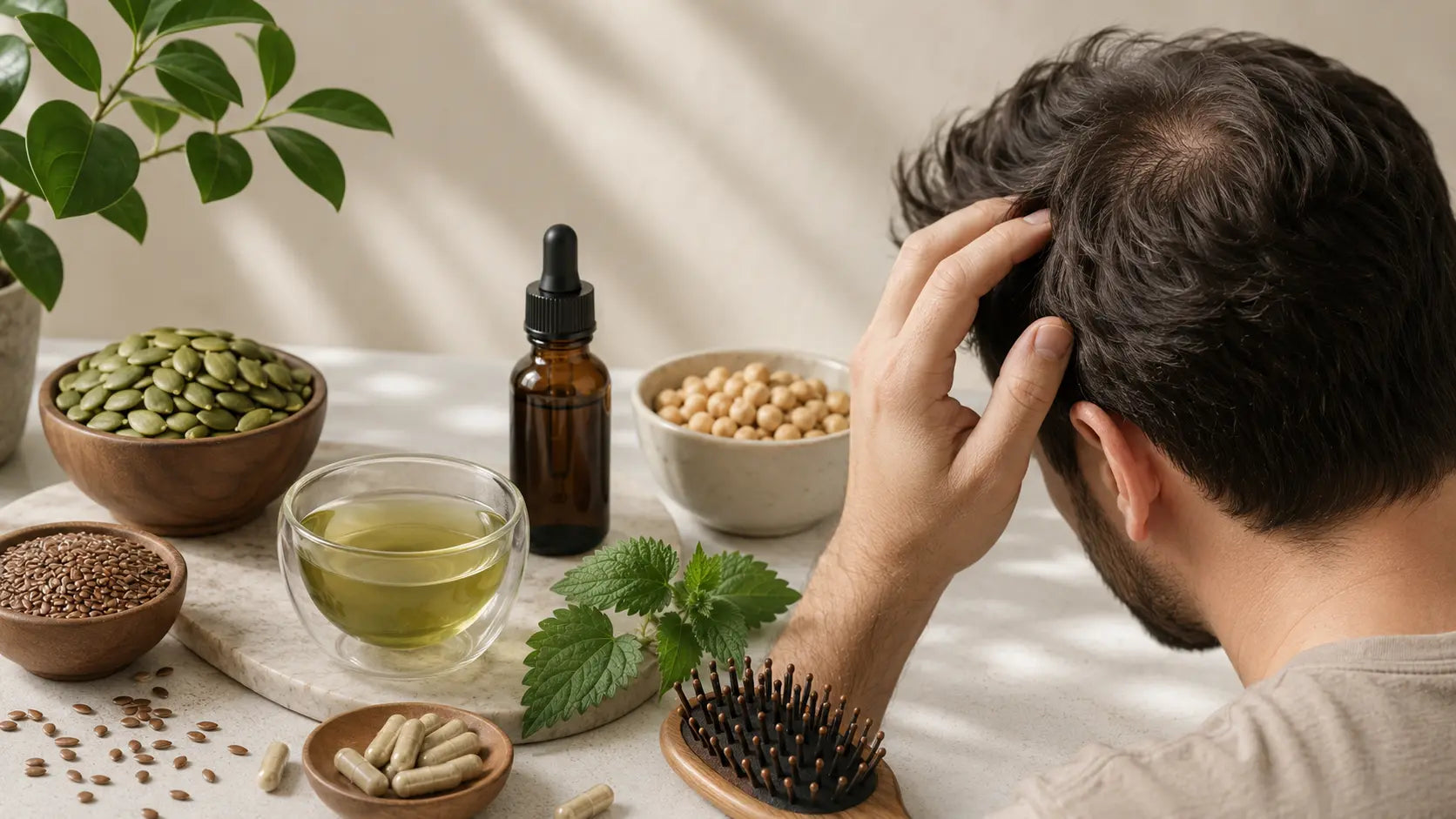

You spot a few extra strands on your pillow. Then you notice more scalp showing in the mirror. Suddenly, everyone starts talking about DHT. Don't panic. Before you reach for a prescription, know this: certain foods, supplements, and healthy lifestyle habits may help support healthy DHT regulation and hair health. .
Natural methods may help some people, particularly those with early-stage hair loss, although results vary between individuals.
In this guide, you'll learn how DHT forms in your body, which foods and supplements help block it, and what daily habits protect your follicles. Let's dive in!
Natural Ways to Reduce DHT for Hair Loss
Most people try natural DHT blockers first. The reason? Fewer side effects, lower cost, and habits that fit into daily life. Prescription options like finasteride work, but they carry hormonal risks. Many men don't want those risks long-term.
Why do most people try natural DHT blockers first?
The reason is simple. It has fewer side effects, lower cost, and habits that slot into a routine you already have. Prescription options like finasteride are clinically proven, but they carry hormonal risks that make plenty of people pause before committing for years. Natural methods skip that tradeoff, even if they ask for a little more patience in return.
Can natural DHT reduction actually help hair growth?
Yes, and real clinical research backs this up. Some foods and supplements have been studied for their potential to influence pathways involved in DHT production or support hair health. Results take time since hair grows in slow cycles. But a steady three-to-six-month effort can slow shedding and protect what you still have.
How DHT Is Produced in the Body
How Testosterone Converts Into DHT
Your body doesn't make DHT directly. It starts as testosterone. Then an enzyme converts part of that testosterone into DHT, a much stronger hormone. A review on the NIH's StatPearls platform confirms that DHT binds to hair follicle receptors far more strongly than testosterone. That's why DHT gets blamed for shrinking your follicles.
The Role of 5-Alpha Reductase in DHT Production
The enzyme responsible for this conversion is called 5-alpha reductase, and it comes in two main types. Type II is the one that concentrates in hair follicles and the scalp, which explains why some people lose hair while keeping plenty of body hair elsewhere. The more active this enzyme is in your follicles, the more testosterone gets converted locally, and the faster those follicles can shrink over time.
Why Natural DHT Reduction Takes Time
Here's the part nobody wants to hear. Hair grows in cycles. Each strand rests for months before it falls out, and a new one grows in. Even a solid natural routine takes months to show up in the mirror. Don't stress if week three brings no change. Give it three to six months before you judge the results.
DHT-Blocking Foods to Add to Your Diet
Pumpkin Seeds, Flaxseeds, and Green Tea: Top Food Sources
These three show up in nearly every credible list of DHT-friendly foods, and for good reason.
-
Pumpkin seeds are rich in zinc and phytosterols that may interfere with DHT production.
-
Flaxseeds contain lignans, plant compounds that appear to influence hormone metabolism.
-
Green tea carries catechins that have shown the potential to inhibit 5-alpha reductase in laboratory studies, although human evidence remains limited.
Toss a handful of pumpkin seeds into your morning oats or swap your afternoon coffee for green tea. Simple as that.
Zinc-Rich Foods That Naturally Regulate DHT Levels
Zinc plays a supporting role in regulating hormone-converting enzymes, which is why low zinc levels often show up alongside hair thinning. Good everyday sources include chickpeas, lentils, cashews, oysters, and pumpkin seeds again. Eggs and yogurt also carry useful amounts and are easy to work into breakfast without much planning.
Building a meal around two or three of these a few times a week is an easy, low-effort habit to lock in. You don't need a strict tracking app or a supplement cabinet to get there. Just keep these foods visible and reachable in your kitchen, and the habit tends to build itself.
Foods to Avoid That May Increase DHT Production
On the flip side, a few dietary habits seem to work against you.
-
Heavily processed, high-sugar foods that spike insulin and inflammation
-
Excess saturated fat from fried and fast food
-
Regular high alcohol intake, which can disrupt hormone balance
You don't need to cut these out entirely. Just don't let them dominate your plate every day.
Natural Supplements That Block DHT
Saw Palmetto: The Most Researched Natural DHT Inhibitor
If there's a star player in the natural DHT-blocking world, it's saw palmetto. A 2020 review published in Skin Appendage Disorders examined five randomized clinical trials and found that oral and topical saw palmetto supplements improved hair density in over 80% of participants with androgenetic alopecia. That's a meaningful number for a supplement you can buy without a prescription.
Pumpkin Seed Oil, Nettle Root, and Biotin: Supporting Options
Pumpkin seed oil deserves its own mention beyond the seeds themselves. A 2014 study published in Evidence-Based Complementary and Alternative Medicine, involving 76 men with androgenetic alopecia, found that 400 mg of pumpkin seed oil daily led to significantly more hair growth than placebo over 24 weeks. Nettle root and biotin are commonly stacked alongside it, with nettle root believed to support a healthy testosterone-to-DHT balance and biotin supporting general hair structure and strength.
How to Choose a Quality DHT-Blocking Supplement
Not all supplements on the shelf are created equal. Look for products that list standardized extract percentages instead of vague proprietary blends, and favor brands that share third-party testing results. If you're already eating a zinc and pumpkin-seed-rich diet, talk to a professional before stacking multiple supplements on top of it, since more isn't automatically better here.
Lifestyle Changes That Help Lower DHT Naturally
Exercise, Stress Management, and Their Effect on DHT
Moderate strength training supports healthy hormones. Too much high-intensity training, though, can spike testosterone and lead to more DHT. Chronic stress raises cortisol, which throws your hormone balance off, DHT included. A short walk, ten minutes of stretching, or basic breathing can lower that stress load.
Three or four moderate workouts a week, plus a calm wind-down before bed, covers most of what your body needs.
Scalp Care Routines That Support Follicle Health
A clean scalp with good blood flow gives your follicles a better chance to stay healthy. Massage your scalp for a few minutes each day to boost blood flow. Use a gentle, sulfate-free shampoo so you don't strip the natural oils that protect your follicles. One massage won't do much. Daily practice will.
Sleep Quality and Its Role in Hormonal Balance
Most hormone regulation, DHT included, happens while you sleep. Aim for seven to nine hours a night, and try to keep a consistent bedtime. Poor sleep quality is linked to disrupted hormone cycles across the board, so this one habit quietly supports everything else on this list.
Limitations of Blocking DHT Without Medication
When Natural Methods Are Not Enough
Genetics still controls a lot of what happens with hair loss. Some people respond well to diet and supplements. Others see only a small slowdown in shedding. Your results depend on how far along your hair loss is, how sensitive your follicles are to DHT, and how consistent you stay. Don't feel down if natural methods alone don't fully work for you.
Advanced Hair Loss Stages Where Medical Help Is Needed
If you're already at an advanced stage of hair loss, natural methods likely can't reverse that level of damage on their own. At that point, a skin doctor can walk you through medical options and build a plan around your scalp.
Setting Realistic Expectations for Natural Results
Natural DHT blockers are better at slowing loss than triggering dramatic regrowth. That's still a useful outcome. Go in expecting to maintain what you have and see some improvement, not a full change in a few months. .
Build Your Natural DHT Plan and Stay Consistent
Blocking DHT naturally comes down to a few steady habits. Eat a zinc and antioxidant-rich diet. Add a research-backed supplement like saw palmetto or pumpkin seed oil. Manage stress and sleep well. Care for your scalp daily. None of these works overnight, and that's okay. The goal is steady, long-term hormone balance, not a quick fix.
If your hair loss is mild to moderate, give this natural route a focused three-to-six-month trial. Pair good daily nutrition, including zinc and biotin-rich choices like those in Jacked Nutrition's supplement lineup, with the habits covered above. Track your progress with photos instead of guesswork. If things don't shift after a few months, or your hair loss is more advanced, see a skin doctor with a clear picture of your hair loss.
FAQs: Blocking DHT Naturally
Can You Really Block DHT Without Medication?
Yes, to a meaningful degree. Foods, supplements like saw palmetto, and lifestyle changes can lower DHT activity and support your existing hair. Results come more slowly than with medication, but they are real.
Which Foods Are Most Effective at Reducing DHT?
Pumpkin seeds, flaxseeds, green tea, and zinc-rich foods like chickpeas and lentils appear most often in research and clinical reviews.
How Long Does It Take to See Results Naturally?
Most people need three to six months of steady effort. Hair growth cycles move slowly, so patience is part of the process.
Is Saw Palmetto the Best Natural DHT Blocker?
It's the most studied option, backed by several clinical trials. It's a strong place to start, though not the only option that works.
Can Diet Alone Stop DHT-Related Hair Loss?
Diet helps, but it works best alongside supplements and lifestyle changes, especially for hair loss driven by genetics.
Should I Use Natural and Medical DHT Blockers Together?
Some people do combine the two under medical supervision. Talk to a dermatologist before stacking natural supplements with prescription treatments to avoid unnecessary interactions.
Share:
Healthy Fats and Protein: Why Peanut Butter is Popular in Fitness Diets
What to Drink to Lower Blood Sugar Immediately