

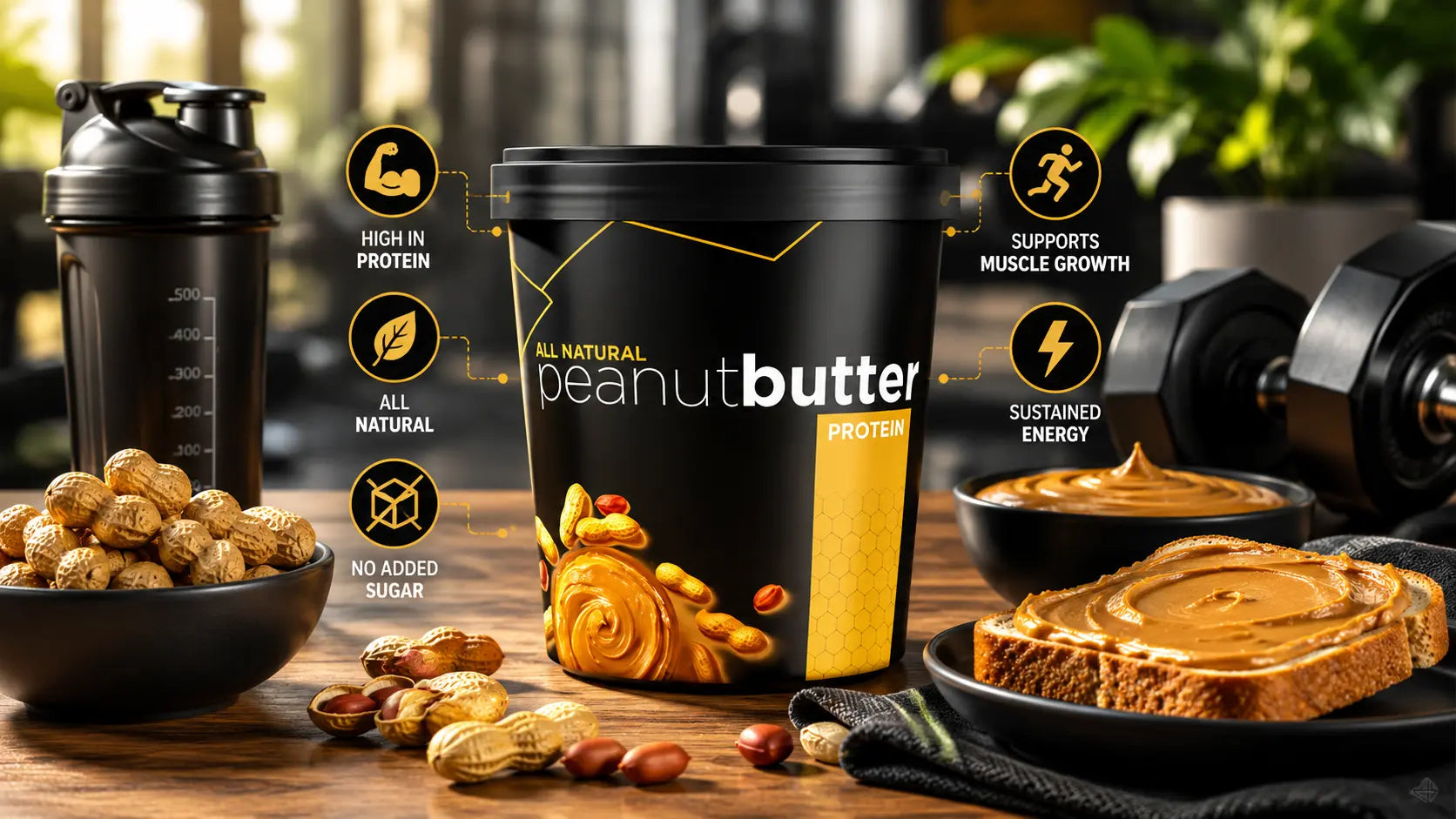

If you enter the gym and ask three people about their pre-workout meal, you'll get three different answers. At least two of them will mention peanut butter. Everyone is using peanut butter on toast, in shakes, and as a snack.
But here is the thing most of those people ignore: they have never once checked the label on their jar. They just grab the products on sale and assume it is healthy because it is peanut butter.
That assumption is affecting their results. Some jars are genuinely good for you. Others are basically dessert because they are packed with added sugar and cheap oils that do nothing for their performance. Knowing the difference takes two minutes, and it changes everything.
This guide will show you exactly what to look for, what to ignore, and which peanut butter actually matches your fitness goal. Let's get into it.
Why Choosing the Right Peanut Butter Matters
The benefits you get from peanut butter are directly related to your choice. There are so many brands in the market that claim their peanut butter is the best. But you should always check the label before buying.
Good peanut butters have few ingredients, mainly peanuts and salt. It does not include added sugars. If you are training consistently but eating the wrong peanut butter every day, you are adding hidden calories and bad fats without even realising it. That quietly adds up over weeks and months.
The right peanut butter gives you clean energy, supports muscle recovery, and fits your daily nutrition. The wrong one just tastes good and does nothing else.
Not All Peanut Butters Are the Same: Here Is What You Need to Know
Your choice of peanut butter mainly depends on your specific fitness goals and your personal preferences. Some people like simple and plain peanut butter. While some prefer a crunchy texture, they can go for crunchy peanut butter.
Natural vs. Regular Peanut Butter: Which One Actually Helps?
Natural peanut butter contains just peanuts and sometimes a pinch of salt. These are enough for good results. Regular peanut butter often contains added sugar, hydrogenated oils, and stabilisers to make it smoother.
For fitness, natural peanut butter is always the better choice. It gives you clean fats and protein and nothing your body does not need. It may have a layer of oil on top; just mix it and eat it.
Crunchy vs Smooth: Does It Really Matter?
Nutritionally, they are almost identical. Crunchy peanut butter has slightly more texture, and some people find it more filling. Smooth peanut butter can easily blend into shakes and be spread on food.
You can choose based on how you use it. If you mix it into oats or smoothies, go smooth. If you eat it straight or on bread, crunchy works just as well.
Protein-Enhanced Peanut Butter: Legit or Just Marketing?
Some brands add extra protein to their peanut butter. This can be useful if you struggle to hit your daily protein target. But check the label carefully because some of these products also add sugar and artificial flavours to improve the taste.
If the ingredient list is long and confusing, put it back. A clean product with added protein is fine. A product with added protein and a list of ingredients you cannot pronounce is not worth it.
What to Check on the Nutrition Label Before You Buy?
How Much Protein Does Peanut Butter Actually Have?
A standard brand of peanut butter gives you around 7 to 8 grams of protein per two-tablespoon serving. That is a good amount, but not enough to meet your requirements. It works best as a protein booster alongside other sources like eggs, chicken, or protein shakes.
People who are serious about muscle gain need around 1.6 to 2.2 grams of protein per kilogram of body weight daily. Peanut butter alone will not get you there, but it helps you close the gap easily.
Healthy Fats: Why Your Body Needs Them for Training
Peanut butter is rich in monounsaturated and polyunsaturated fats. These are the good fats your body needs for energy, hormone production, and absorbing vitamins. Don’t be scared of fat in peanut butter.
A 2024 study published in the American Journal of Clinical Nutrition found that people who ate peanuts daily while reducing calories saw improvements in both body weight and blood pressure, showing that healthy fats in peanuts support fitness goals.
Sugar, Salt, and Additives: The Ingredients Quietly Ruining Your Diet
This is where most people get deceived. They buy peanut butter thinking it is healthy without checking how much sugar is inside. Some brands contain up to 3 grams of added sugar per serving. This added sugar can lead to extra calories and sugar spikes.
Look for zero added sugar on the label. A small amount of salt is fine. Avoid anything with hydrogenated oil or palm oil listed in the ingredients. These are red flags.
Caloric Density: How to Enjoy It Without Overdoing It
Peanut butter can absolutely support weight loss when used correctly. The protein and fibre keep you full for longer, which helps you eat less overall without feeling deprived.
Research published in Healthline's review of weight-loss nutrition shows that if you eat foods containing peanuts and peanut butter in moderation, it can help in weight maintenance. Stick to one tablespoon per serving, choose zero-sugar natural peanut butter, and track your portions.
Which Peanut Butter Should You Buy Based on Your Fitness Goals?
For Muscle Building:
-
Go for natural peanut butter with no added sugar
-
Aim for 2 to 4 tablespoons per day, spread across meals
-
Pair it with oats, eggs, or whole-grain bread for a complete meal
For Weight Loss:
-
Stick to 1 to 2 tablespoons per day and always measure
-
Choose zero-sugar natural peanut butter only
-
The protein and fibre keep you full and help you eat less overall
For Endurance and Energy:
-
Use it before long sessions, runs, or sports training
-
Mix it into oats or a smoothie for slow-releasing fuel
-
The combination of healthy fats and carbohydrates gives your muscles steady energy without a crash
How to Add Peanut Butter to Your Diet Without Overthinking
How Much Should You Actually Eat Per Day?
For muscle gain, two to four tablespoons daily works well. For weight loss, stick to one to two tablespoons. For general fitness and energy, two tablespoons is the sweet spot for most people.
Your goal should be consistency and portion control. Measure it until you have a natural feel for the right amount.
Best Foods to Pair It With: Smoothies, Oats, and Snacks
You should always pair peanut butter with foods that can balance its carbohydrate and protein content. Some simple and effective combinations include:
-
Peanut butter mixed into oats with a banana before training.
-
A spoonful blended into a protein shake for extra calories and healthy fats
-
Spread on whole-grain toast with a boiled egg for a balanced meal
-
Mixed into Greek yoghurt with a drizzle of honey as a post-workout snack
Three Easy Recipes Every Fitness Beginner Should Try
Peanut Butter Protein Shake: For a protein shake, you need one scoop of protein powder, one tablespoon of peanut butter, one banana, and a cup of milk. Blend all these ingredients, and your healthy protein shake is ready.
Peanut Butter Oat Bowl: Oats are a good source of complex carbs that can add to the benefits of peanut butter. For a bowl of porridge, you need to mix rolled oats with hot water. Stir in one tablespoon of peanut butter, and top with sliced banana. A complete pre-workout meal.
Peanut Butter Energy Balls: Energy balls can be a good source of snacks for adults and children. For this recipe, mix oats, peanut butter, honey, and dark chocolate chips. Roll into balls and refrigerate. A clean snack you can carry anywhere.
Mistakes You Are Probably Making With Peanut Butter
Eating Too Much Without Tracking Calories
We should eat everything in moderation. The same case is with peanut butter. If you’re eating too much without tracking your calories. And also, if you ignore the labels before consumption, it will lead to harm instead of benefits.
Buying Brands With Hidden Sugars and Cheap Oils
Always read the label before buying. If you see sugar, corn syrup, palm oil, or hydrogenated oil anywhere on the ingredients list, put it back and choose another brand.
For a clean option with a short ingredient list you can actually trust, check out Jacked Nutrition peanut butter. No unnecessary additives, just what your body actually needs.
Ignoring Your Overall Daily Nutrition
If you think eating peanut butter is enough for a healthy lifestyle, you’re wrong. For overall health improvement, you need a well-balanced diet including all essential vitamins and minerals and protein content. So relying only on peanut butter for your fitness goals isn’t a smart choice.
The Choice of Peanut Butter isn’t a hard decision now
You should always choose peanut butter based on your fitness goal. Natural peanut butter works best for everyone. Be careful with labels. Never choose brands that are selling peanut butter with added sugars and cheap oils.
If you want a peanut butter that checks every box, Jacked Nutrition's peanut butter is exactly what you are looking for. It includes clean ingredients and is made for people who are serious about their fitness goals.
Never choose the wrong jar because your nutrition deserves the same effort you put into your training.
H2: FAQs About Choosing Peanut Butter for Fitness
Which Type of Peanut Butter is Best for Muscle Gain?
Natural peanut butter is a good option for muscle gain because it has no added sugars. But if you want to have more protein content, then you should go for a protein peanut butter source.
Can I Eat Peanut Butter if I’m Trying to Lose Weight?
Yes, you can have peanut butter on your weight loss journey by keeping an eye on your caloric intake. The main thing to consider for your weight loss goal is to have a calorie-deficient diet. So you can eat anything while staying in the calorie deficit window.
How Much Peanut Butter Should I Eat Each Day?
If your goal is general health and fitness, you can go for 2 tablespoons per day. But if you want to add to your protein intake, you can use 4 tbsp. But be careful about your overall caloric intake.
Can peanut butter be a post-workout snack?
Yes, but pair it with a fast-digesting carbohydrate and a protein source. On its own, the high fat content slows digestion, which is not ideal right after training. Mix it into a shake or eat it with fruit, and it works well.
Are There Any Hidden Ingredients I Should Watch For?
Yes, always check the label carefully. If the ingredients list says 'added sugar', 'hydrogenated oil', 'trans fats' and 'extra sweeteners', place it back. Choose the peanut butter with a simple ingredient list, like peanuts and salt. Sugar content must be 0-1 g.
Share:
Creatine Complete Guide: Benefits, Dosage, Safety, and Who Should Take It Daily
How Magnesium Bisglycinate Improves Sleep and Calms the Mind The Complete Guide