

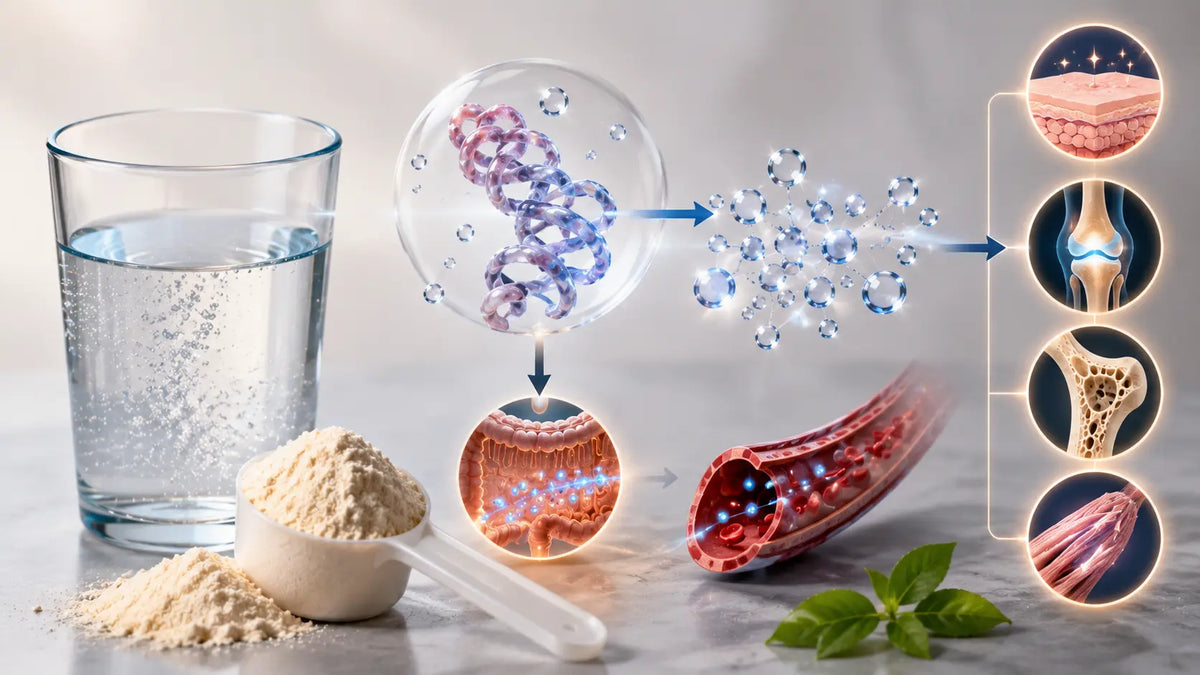

Collagen is digested into amino acids and small peptides rather than being absorbed as intact collagen. Some peptides, especially Pro-Hyp and Hyp-Gly, can enter the bloodstream and may signal collagen-producing cells such as fibroblasts.
Hydrolyzed collagen peptides are the most absorbable form and have the strongest evidence for supporting skin hydration, elasticity, and joint comfort.
Collagen works best alongside adequate protein, vitamin C, exercise, sleep, and a healthy diet.
What Is Collagen?
Collagen is a structural protein rich in:
-
Glycine
-
Proline
-
Hydroxyproline
-
Lysine
These amino acids form collagen's strong triple-helix structure.
Main Types of Collagen
Type I
Found in:
-
Skin
-
Bones
-
Tendons
-
Ligaments
Most bovine and marine collagen supplements contain Type I collagen.
Type II
Found mainly in cartilage and commonly used for:
-
Joint health
-
Cartilage support
Type III
Found in:
-
Skin
-
Blood vessels
-
Muscles
-
Organs
It often works alongside Type I collagen.
Why Collagen Declines With Age
Collagen production decreases naturally with age and may be further affected by:
-
UV exposure
-
Smoking
-
Poor diet
-
Inflammation
-
Hormonal changes
This can lead to:
-
Wrinkles
-
Dry skin
-
Reduced elasticity
-
Slower tissue repair
What Are Collagen Supplements?
Collagen supplements are made from animal connective tissues and are available as:
-
Powders
-
Capsules
-
Liquids
-
Gummies
Their purpose is to provide collagen-derived amino acids and peptides.
Sources of Collagen
Bovine Collagen
Derived from cows and rich in Types I and III collagen.
Marine Collagen
Derived from fish and mainly contains Type I collagen. Often used for skin-focused products.
Porcine Collagen
Derived from pigs and contains Types I and III collagen.
Forms of Collagen
Hydrolyzed Collagen Peptides
The most studied form. Collagen is broken into smaller peptides for easier digestion and absorption.
Gelatin
Partially broken-down collagen commonly used in foods.
Native Collagen
Maintains its original structure. Undenatured Type II collagen is often used for joint support.
The Science of Absorption
How Collagen Is Digested
After consumption, collagen is broken down into:
-
Amino acids
-
Dipeptides
-
Tripeptides
-
Small peptides
These compounds are absorbed through the intestine and enter the bloodstream.
Why Hydrolyzed Collagen Matters
Hydrolyzed collagen peptides are smaller and easier to digest than intact collagen. This is why most clinical studies use hydrolyzed collagen.
Pro-Hyp and Hyp-Gly
Research shows that collagen-derived peptides such as:
can appear in the bloodstream after ingestion.
These peptides may help stimulate fibroblasts and support collagen production in connective tissues.
What Research Shows
Studies indicate that hydrolyzed collagen increases circulating collagen peptides after consumption.
This does not mean collagen travels directly to the skin or joints. Instead, it provides building blocks and signaling molecules that may support collagen synthesis.
Does Collagen Reach the Skin and Joints?
Skin Benefits
Research suggests consistent collagen supplementation may improve:
-
Skin hydration
-
Skin elasticity
-
Skin firmness
-
Wrinkle appearance
Most studies show benefits after 8–12 weeks of daily use.
Joint Benefits
Collagen may help support:
-
Joint comfort
-
Mobility
-
Cartilage health
Both hydrolyzed collagen and undenatured Type II collagen have been studied for joint support.
Collagen should be viewed as a supportive tool, not a cure for joint disease.
Bone and Muscle Support
Some studies suggest collagen peptides may support bone density, particularly in older adults.
Collagen may also support tendons and connective tissue around muscles. However, it is not a complete protein and should not replace high-quality protein sources such as meat, fish, eggs, dairy, or soy.
Factors That Affect Collagen Absorption
Vitamin C is essential.
Vitamin C is required for collagen synthesis.
Good sources include:
-
Citrus fruits
-
Guava
-
Kiwi
-
Strawberries
-
Bell peppers
-
Broccoli
Without adequate vitamin C, collagen production is impaired.
Effective Dosage
Common research-based doses are:
-
2.5–5 g daily for skin support
-
5–10 g daily for general skin and joint health
-
10–15 g daily for connective tissue and exercise-related goals
For most people, 5–10 g daily is sufficient.
Best Time to Take Collagen
Timing matters less than consistency.
Common options include:
-
Morning
-
With meals
-
After exercise
-
Before bed
Taking collagen with a vitamin C-rich meal may be beneficial.
Choosing a Quality Supplement
Look for:
-
Hydrolyzed collagen peptides
-
Clear collagen source
-
Dose per serving
-
Third-party testing
-
Allergen information
-
Low added sugar
Avoid products making unrealistic claims such as curing arthritis or permanently removing wrinkles
Limitations and Scientific Criticisms
Is Collagen Just Another Protein?
A common criticism is that collagen is simply digested into amino acids like any protein source.
This is partly true. However, collagen also produces unique peptides such as Pro-Hyp and Hyp-Gly, which may have biological effects beyond standard protein intake.
Research Limitations
Many collagen studies have limitations, including:
-
Small sample sizes
-
Short durations
-
Industry funding
-
Different collagen sources and doses
As a result, collagen should be viewed as promising rather than proven for every claim.
What We Still Need to Learn
Future research should clarify:
-
The best collagen source
-
Optimal dosing
-
Long-term effects
-
Which populations benefit most
Conclusion
Final Verdict
Yes, collagen is absorbed. The body breaks collagen into amino acids and small peptides, some of which enter the bloodstream and may support collagen-producing pathways.
Current evidence suggests collagen supplements can help improve:
-
Skin hydration
-
Skin elasticity
-
Joint comfort
when taken consistently for several weeks.
Collagen is not a miracle supplement, but hydrolyzed collagen peptides can be a useful addition to a healthy lifestyle.
Practical Recommendations
-
Choose hydrolyzed collagen peptides.
-
Take 5–10 g daily.
-
Use consistently for at least 8–12 weeks.
-
Ensure adequate vitamin C intake.
-
Maintain sufficient overall protein intake.
-
Choose reputable, tested products.
-
Avoid exaggerated marketing claims.
Frequently Asked Questions
Does the body absorb collagen or just break it down?
Both. Collagen is broken into amino acids and peptides, and some of those peptides are absorbed into the bloodstream.
Is marine collagen better than bovine collagen?
Marine collagen may have smaller peptides, but current evidence does not clearly show it is significantly better than high-quality bovine collagen.
How long does collagen take to work?
Most studies report noticeable benefits after 8–12 weeks of consistent daily use.
Do I need vitamin C with collagen?
Yes, adequate vitamin C is necessary for collagen synthesis, whether it comes from food or supplements.
Can food replace collagen supplements?
Foods such as bone broth, fish skin, chicken skin, and gelatin provide collagen nutrients. Supplements offer a more standardized and convenient dose but should complement, not replace, a healthy diet.
Share:
How to Take Collagen Properly: Dosage, Timing, and Absorption Tips
Does Creatine Cause Hair Loss and Baldness?