

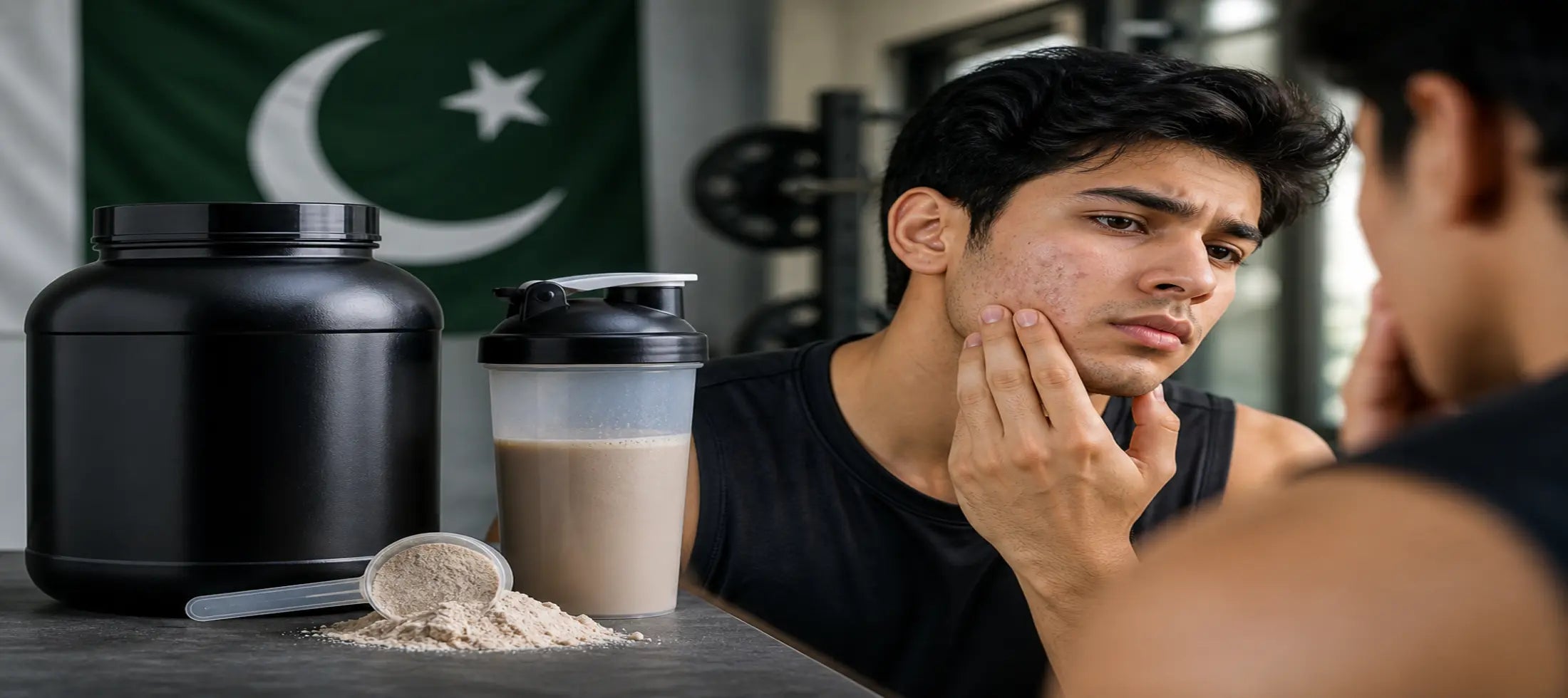

Whey protein can trigger or worsen acne in some people, but it does not affect everyone. The risk is linked to:
-
Increased IGF-1 (insulin-like growth factor)
-
Higher insulin response
-
Increased sebum (oil) production
However, many users take whey protein with no skin issues at all. Whey protein is not a direct cause of acne, but it can be a trigger in acne-prone individuals.
Introduction: Why This Concern Is Growing in Pakistan
In Pakistani gyms, a common pattern is becoming noticeable. A person starts whey protein for muscle gain, and within a few weeks:
-
Small pimples appear
-
Oiliness increases
-
Acne becomes more visible on face, chest, or back
This creates confusion and frustration. Some people immediately blame whey protein. Others say it is unrelated. The truth lies somewhere in between. Dermatologists generally agree that whey protein can worsen acne in sensitive individuals, but it is not the root cause for everyone.
How Whey Protein May Trigger Acne (Scientific Explanation)
Whey protein affects several biological pathways related to skin health.
1. IGF-1 and Hormonal Activity
Whey protein can increase levels of IGF-1 (Insulin-like Growth Factor 1).
What IGF-1 does:
-
Stimulates cell growth
-
Increases skin oil production
-
Can accelerate acne formation in sensitive skin
Key insight:
Higher IGF-1 activity is associated with more acne in genetically prone individuals.
2. Insulin Response and Skin Oil Production
Whey protein can cause a mild insulin response.
What this leads to:
-
Increased activity in sebaceous glands
-
More sebum (oil) production
-
Clogged pores in acne-prone skin
Result:
Higher chance of breakouts in sensitive individuals.
3. mTOR Pathway Activation
Whey protein activates the mTOR pathway, which plays a role in:
-
Cell growth
-
Protein synthesis
-
Sebum regulation
In acne-prone people:
Overactivation can contribute to inflammation and clogged pores.
Does Whey Protein Cause Acne in Everyone?
No, it does not affect all users.
Two different responses:
1. Acne-prone individuals:
-
Breakouts may increase
-
Skin becomes oilier
-
Inflammation may worsen
2. Non-acne-prone individuals:
-
No visible skin changes
-
No impact on acne formation
Key insight:
Genetics and skin sensitivity matter more than whey itself.
Whey Protein vs Dairy Acne: What Is the Link?
Whey is derived from milk, so it shares some biological properties with dairy.
Dairy components involved:
-
Beta-lactoglobulin
-
Alpha-lactalbumin
-
Lactose (in some whey types)
These can indirectly influence insulin and IGF-1 levels in sensitive individuals.
Important clarification:
This does not mean whey is “dirty” or “harmful,” only that it can be a trigger for some skin types. Even so, there are some foods that can cause acne. So acne is not limited only to whey protein or dairy products.
Whey Isolate vs Whey Concentrate for Acne
Not all whey protein is the same.
Whey Concentrate:
-
Contains more lactose
-
Slightly higher fat content
-
More likely to trigger acne in sensitive users
Whey Isolate:
-
Higher protein purity
-
Lower lactose content
-
Often better tolerated for acne-prone skin
Key insight:
If whey causes acne, switching to isolate may reduce the issue.
What Dermatologists Commonly Suggest
The dermatology perspective is balanced, not extreme.
Common recommendations:
-
Do not assume whey is the only cause
-
Evaluate diet, stress, and sleep
-
Try switching whey type before stopping completely
-
Monitor skin reaction for 2–4 weeks
Important point:
Acne is usually multi-factorial, not caused by one product alone.
How to Prevent Acne While Using Whey Protein
You do not always need to stop whey protein.
1. Switch to Whey Isolate
Lower lactose and impurities may reduce breakouts.
2. Reduce Sugar and High-Glycemic Foods
Foods that spike insulin can worsen acne alongside whey.
3. Improve Skincare Routine
-
Clean face after workouts
-
Use non-comedogenic products
-
Avoid heavy, oily creams
4. Monitor Dosage
Some users react only at higher intake levels.
5. Hydration and Sleep
Skin inflammation increases with poor recovery and dehydration.
Should You Stop Whey Protein If You Get Acne?
Not immediately.
Try this approach first:
-
Reduce dose
-
Switch to isolate
-
Improve diet and skincare
Stop whey only if:
-
Acne becomes severe or cystic
-
No improvement after adjustments
-
Dermatologist advises discontinuation
Whey Protein Acne vs Muscle Gains Dilemma
Many Pakistani lifters face a real conflict:
-
Stop whey → acne improves but muscle progress slows
-
Continue whey → gains improve but skin may worsen
Balanced solution:
-
Adjust type and dosage
-
Use alternative protein sources if needed
-
Focus on overall diet quality
Final Verdict
Whey protein does not cause acne in everyone, but it can worsen acne in people who are already genetically or hormonally prone.
The effect is linked to:
-
IGF-1 increase
-
Insulin response
-
Sebum production
Final takeaway:
Whey protein is not an acne-causing supplement for all users. It is a potential trigger for sensitive individuals, and the solution is customization, not complete avoidance.
FAQs
1. Does whey protein cause pimples in everyone?
No, whey protein does not cause pimples in everyone. Only people who are acne-prone or sensitive to dairy-related hormones may experience breakouts. Many users take whey without any skin issues.
2. How can I prevent acne from whey protein?
You can reduce acne risk by switching to whey isolate, reducing dosage, improving skincare after workouts, and controlling high-sugar foods that increase insulin response. These steps often reduce breakouts without stopping whey completely.
3. Will acne stop if I stop taking whey protein?
In many cases, acne may improve after stopping whey protein if it was a trigger. However, acne is usually influenced by multiple factors like hormones, diet, and skincare, so stopping whey alone may not fully solve the issue.
Share:
Do Cheap Whey Proteins Have Hidden Fillers? How to Check Labels in Pakistan (2026 Guide)
Is All Whey Protein Spiked in Pakistan? How to Verify Your Protein Quality