

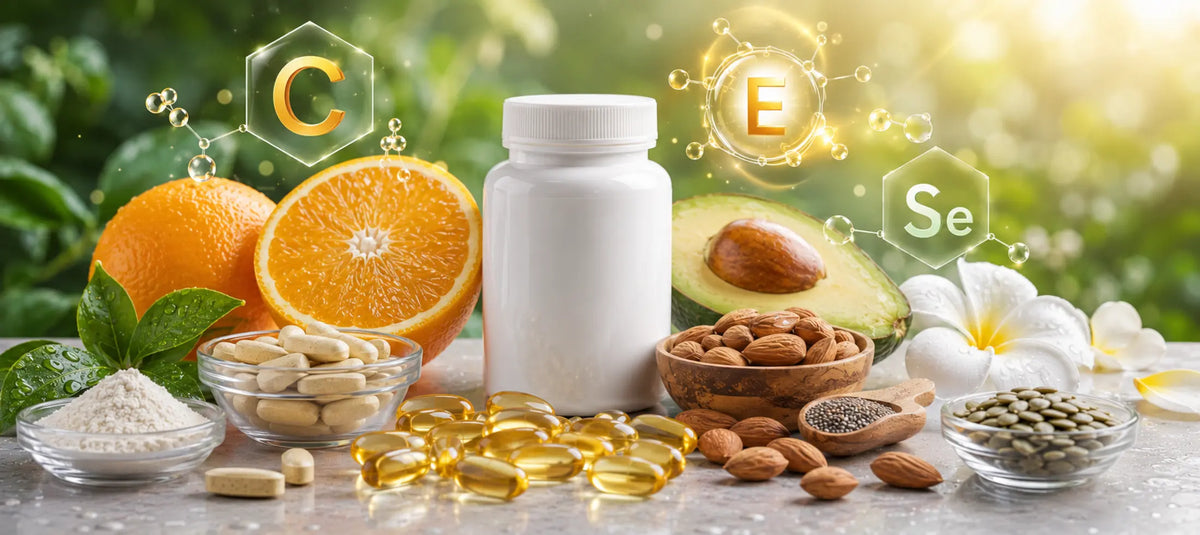

Multivitamins for glowing skin are everywhere right now. Scroll through any skincare page, and you'll see claims about vitamins that fix dull, tired skin from the inside. But do they actually work, or is this just clever marketing? Let's look at what the science says about vitamin C, vitamin E, and selenium, and whether they earn a spot in your daily routine.
The Skin Nutrition Connection Explained
Your skin is your body's largest organ. It needs steady nutrition, just like your muscles or your heart. When your diet lacks key nutrients, your skin often shows it first. You might notice dullness, dryness, or slower healing after a breakout.
Nutrients travel through your bloodstream to reach skin cells. This means what you eat and what you supplement play a real role in how your skin looks and functions. Antioxidants for skin health matter here because they fight the oxidative stress that speeds up aging.
However, supplements aren't magic. They work best when they fill actual gaps in your diet. If you already eat a varied diet rich in fruits and vegetables, a multivitamin simply adds a layer of insurance.
Vitamin C: Collagen Production and Antioxidant Defense
Vitamin C for skin is probably the most researched nutrient on this list. Your body needs it to build collagen, the protein that keeps skin firm and bouncy. Without enough vitamin C, collagen production slows down, and skin can start to sag or look tired sooner.
Vitamin C also acts as an antioxidant. It helps neutralize free radicals caused by sun exposure and pollution. Research from the Linus Pauling Institute notes that vitamin C works as a small molecular weight antioxidant and a critical factor for collagen synthesis, and it contributes to photoprotection while decreasing photodamage. In simple terms, it helps protect your skin and support its structure at the same time.
Now, oral vitamin C won't replace sunscreen or a good skincare routine. But it does support your skin from within, especially if your diet runs low on fruits and vegetables. For a deeper look at how this nutrient interacts with your skin barrier, this detailed guide on vitamin C serum benefits breaks down the research well.
Vitamin E and Selenium: Repair and Protection
Vitamin E skin benefits center around repair. This nutrient helps protect cell membranes from damage and supports tissue growth. Many people don't realize that vitamin E works better when it's paired with vitamin C. The two support each other, almost like a tag team against oxidative stress.
Selenium for skin health plays a quieter but still important role. It's a trace mineral, meaning your body needs it in small amounts, but those small amounts matter. Selenium supports your immune system and helps manage inflammation. Chronic inflammation, by the way, is one of the hidden reasons skin can look dull or uneven over time.
Together, vitamin E and selenium form a kind of defense system. Vitamin E patches up damage while selenium calms inflammation before it gets out of hand. Neither works instantly, though. These are gradual, supportive nutrients, not overnight fixes.
How Vitamitic's Antioxidant Blend Supports Skin Health
If you're looking for a practical way to get these nutrients daily, Vitamitic multivitamin combines vitamin C, vitamin E, and selenium in one tablet. It's formulated to support immunity, skin, and joint health together, which makes sense since these systems often rely on the same core nutrients.
Vitamitic's vitamin C content supports your immune defenses while also feeding into collagen production. Its vitamin E helps with tissue repair, giving skin a better shot at that youthful look people chase. And the selenium in the formula adds anti-inflammatory support, rounding out the antioxidant profile.
What's nice about this approach is convenience. Instead of tracking down separate supplements, one tablet covers the basics. It's not a replacement for good nutrition, but it does close common gaps, especially for people with busy schedules who skip meals or eat the same few foods on repeat.
Diet vs Supplements: Can Food Alone Be Enough
Honestly, food should always come first. Citrus fruits, bell peppers, and leafy greens are packed with vitamin C. Nuts and seeds offer vitamin E. Brazil nuts, in particular, are loaded with selenium, sometimes more than you'd expect from just one or two nuts.
If your diet already includes these foods regularly, you might get enough on your own. Many people, though, don't eat this way every day. Life gets busy. Meals get skipped. Diets get repetitive. This is where supplements for healthy skin start to make sense, not as a replacement for food, but as a backup plan.
There's also the absorption question. Some people have digestive issues that limit how well they absorb nutrients from food alone. In these cases, a well-formulated multivitamin can help fill in what diet alone might miss.
Still, no supplement fixes a poor diet completely. Think of multivitamins as support, not a shortcut. They work best alongside vegetables, protein, water, and sleep. If you're serious about skin health, check out this multivitamin collection to compare options and find a formula that suits your goals.
Get Glowing Skin Support Try Vitamitic
So, do vitamin C, E, and selenium actually work for skin? The evidence suggests yes, though results vary from person to person and take time to show. These nutrients support collagen, fight oxidative stress, and help manage inflammation, all of which play into how your skin looks and feels over time.
If you want a simple way to cover these bases daily, Vitamitic offers a practical option. It's formulated with the antioxidant trio discussed here, plus support for joints and immunity. Pair it with a decent diet, some water, and consistent sleep, and you're giving your skin a real chance to look its best.
Curious about building a full routine? This guide on multivitamins for daily use covers how to choose and use these supplements wisely. Small, consistent habits tend to beat quick fixes, and that's true for skin just as much as anything else.
Share:
Joint Pain and Stiffness: Can a Multivitamin with Glucosamine Really Help?
Peak Performance with Ahmed Mujtaba & Muhammad Abbas