

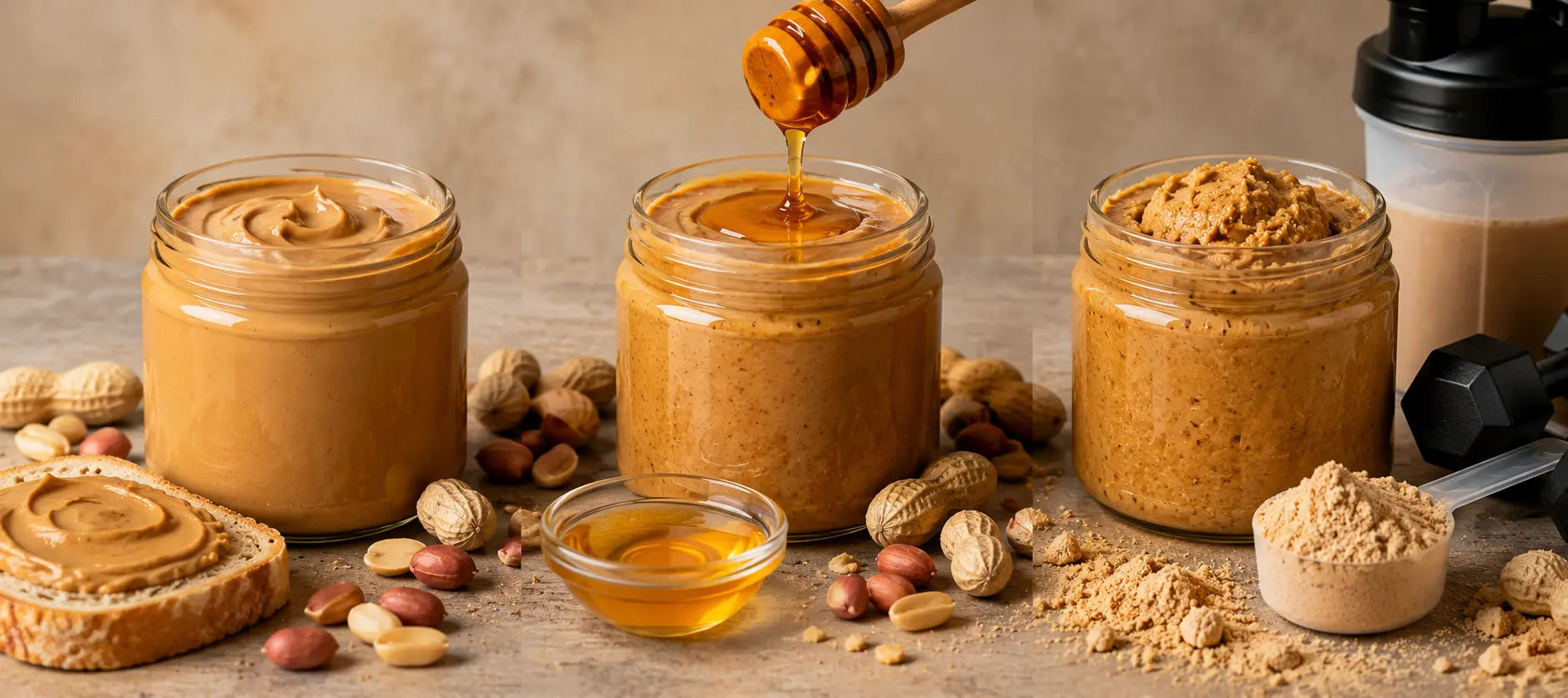

You're standing in the grocery store, staring at three jars of peanut butter. Original, honey, and protein on the same shelf. And you have no idea which one actually deserves a spot in your kitchen.
The differences between these three aren't just about taste. They affect your sugar intake, your protein targets, and your fitness goals. If you're not reading labels carefully, you could be making the wrong choice for your goals.
This guide will break down exactly what's inside each jar of peanut butter, how they compare nutritionally, and which one is the right fit for you, whether you're building muscle, losing weight, or just looking for a smarter snack.
Let’s dive in!
What is Original Peanut Butter?
Original peanut butter is simply roasted peanuts blended into a paste, ideally with nothing more than a little salt added. That’s the benchmark every other peanut butter variation should be compared against.
The issue is that many commercial “original” peanut butters may contain added sugars, hydrogenated oils, and emulsifiers to improve texture and shelf life. But a good original peanut butter should have a short, clean ingredient list.
Nutritional Profile
A typical 2-tablespoon serving contains:
-
162 calories
-
8g protein
-
12g healthy fats
-
6g carbohydrates
-
1-2g natural sugar
-
2g fiber
What is Honey Peanut Butter?
Honey peanut butter starts with the same peanut base but uses honey as a sweetener instead of refined sugar. While that sounds healthier, the quality depends entirely on the brand.
The best versions contain only peanuts, honey, and possibly salt. Many commercial options may include added sugar, palm oil, and preservatives, so you must buy from a trusted source.
Nutritional Value and Sweeteners
Per 2-tablespoon serving, honey peanut butter typically provides:
-
172calories
-
8g protein
-
12g fat
-
9g carbohydrates
-
5-6g sugar
Compared to original peanut butter, the main difference is the higher sugar content. However, honey has a lower glycemic index than refined sugar, meaning it releases energy more gradually. Research also suggests that the fats and fiber in peanut butter may help reduce blood sugar spikes when consumed with carbohydrates.
What is Protein Peanut Butter?
Protein peanut butter takes regular peanut butter and adds concentrated protein sources like whey, pea protein, or casein to significantly increase the protein content.
The protein source matters. Whey is fast-digesting and ideal post-workout, pea protein suits plant-based diets, and casein digests slowly for longer-lasting recovery.
Fitness Benefits
Most protein peanut butters deliver around 10-12g of protein per serving, nearly double that of original peanut butter. For people focused on muscle growth, recovery, or hitting daily protein targets, that increase can make a meaningful difference. But if you want to build more muscle, you should use protein powders in addition to peanut butter.
Key Nutritional Differences
Calories and Macronutrients
Here's how the three compare side by side per 2-tablespoon serving:
|
Type |
Calories |
Protein |
Fat |
Carbs |
Sugar |
|
Original |
162 kcal |
8g |
12g |
6g |
1-2g |
|
Honey |
172 kcal |
8g |
12g |
9g |
4-6g |
|
Protein |
180 kcal |
12g |
12g |
6g |
1-2g |
Protein Content Comparison
Original and honey peanut butter contain nearly the same protein content, which is around 7-8g per serving. Protein peanut butter pulls ahead significantly, often delivering 10-12g. If protein intake is your primary concern, you should prefer the one with high protein content.
Sugar and Fat Levels
Honey peanut butter carries the highest sugar content of the three. That sugar comes from a lower-GI source than refined sugar. Original natural peanut butter has the lowest sugar. Protein peanut butter usually comes in between. Protein peanut butter usually sits in between, though some brands add flavouring agents that raise sugar content. That’s why, always check the label.
On fat, original peanut butter typically has the highest fat content, which is not a problem. These are predominantly heart-healthy monounsaturated fats. Protein varieties sometimes reduce fat slightly to make room for the added protein in the calorie budget.
Ingredients Comparison: What’s Inside Each Type?
This is where most people get misled. The marketing on the front of the jar tells one story. The ingredients list on the back tells the real one.
What you want to see:
-
Original: Peanuts, salt.
-
Honey: Peanuts, honey, salt. Three ingredients maximum.
-
Protein: Peanuts, whey/pea/casein protein, salt. No added oils or sugars.
What to avoid in all three:
-
Hydrogenated or partially hydrogenated vegetable oil
-
High fructose corn syrup or added cane sugar (especially in honey varieties)
-
Artificial flavours or preservatives
-
Palm oil is listed as a primary ingredient
Which Peanut Butter is Best for Your Fitness Goals?
Muscle Building
Peanut butter helps with muscle building because of its added protein content. The elevated protein content, especially from whey, gives you a more complete amino acid profile and meaningfully contributes to daily protein targets. Pair it with milk or eggs, and you've got a solid muscle-building snack that actually delivers good results.
Original peanut butter plays a useful supporting role. It backs hormone production through healthy fats and adds calories efficiently during a bulk, but it shouldn't be your primary protein source.
Weight Loss
Original natural peanut butter is the smartest choice. It has the lowest sugar, clean ingredients, and high satiety from fat and fiber. It doesn’t add unnecessary calories from added sweeteners or protein concentrates you don't need.
Honey peanut butter works too, but only if it's genuinely made with real honey and no added sugar. The extra carbohydrates aren't a dealbreaker as long as they fit your daily targets. Protein peanut butter also supports weight loss by keeping you fuller for longer, since protein has a higher thermic effect than fat or carbohydrates.
Weight Gain
Honey, peanut butter, or protein peanut butter is the smarter choice here, depending on your approach. Honey peanut butter adds slightly more carbohydrates and calories per serving, making it a tastier, higher-calorie option for those who struggle to eat enough.
Protein peanut butter supports weight gain with a cleaner calorie surplus while simultaneously keeping protein intake high. It ensures the weight you gain leans more toward muscle than fat. Original works in a pinch, but if you're actively bulking, the added nutritional benefits of the other two make them the better strategic choice.
Taste and Texture Comparison
Original
Original has the purest, most familiar peanut flavour. Nutty, slightly salty, and satisfying. Natural versions have a slightly grainier texture, and the oil separation is normal.
Honey
Honey is noticeably sweeter and creamier. The honey reacts with the peanut particles to create a thicker, more indulgent texture that many people find more enjoyable as a spread. It's the most palatable option for those who find original peanut butter too plain.
Protein
Protein varies the most by brand. Some taste excellent. Others have a chalky, artificial aftertaste from the protein concentrate or added flavourings. Chocolate and vanilla varieties tend to mask this better.
How to Choose the Right Peanut Butter
Before you grab a jar, keep in mind these five things:
-
Start with your goal
If you're building muscle,go for protein peanut butter with whey . If you're cutting, original natural nature is your best friend. If you're bulking, honey or protein PB gives you the extra calories and carbs to get there without eating ridiculous amounts of food.
-
Flip the jar over before you buy it
You should always check the label. The original should say peanuts and salt. Honey should say peanuts, honey, and salt. Protein should clearly name the protein source inside. If you see hydrogenated oils, corn syrup, or ingredients you can't pronounce, put them back.
-
Pay attention to the protein source
Not all protein peanut butters work the same way. Whey is your best post-workout option, pea protein works well if you're vegan or avoiding dairy, and casein is ideal for slower, sustained protein release through the night. If the label doesn't tell you which one it uses, that's already a red flag.
-
Be honest about your portion sizes
All three varieties are calorie-dense, and it's easy to go from one tablespoon to four without noticing. If you're tracking your intake, measure it out every time rather than scooping straight from the jar.
-
Think about your budget
Original natural peanut butter is the most affordable option. Honey sits in the middle, and protein PB can run two to three times the price of the original. If protein is the priority but budget is tight, a clean original peanut butter paired with a separate whey shake will often give you better value for money.
Common Myths About Peanut Butter Types
There's a lot of misinformation floating around about peanut butter. Let's clear up the ones that actually affect your buying decisions:
Honey peanut butter is always healthier than the original
Not automatically. If the honey version contains added sugar on top of the honey, it's nutritionally worse than a clean original. The word honey on the label doesn't guarantee a healthier product; it just guarantees better marketing.
Protein peanut butter can replace a protein shake
It contributes, but 10 to 15 grams of protein per serving isn't the same as a 25 to 30-gram whey shake. Use it as a complement to your protein intake throughout the day, not a direct replacement for a dedicated protein source.
The fat in peanut butter makes you fat
Peanut butter's fat is predominantly monounsaturated, the same type found in olive oil. Research suggests that its fat and fiber combination increases satiety and naturally reduces overall intake, meaning moderate daily consumption is unlikely to drive fat gain in an otherwise balanced diet.
Natural peanut butter has less protein because it's less processed
Processing level usually doesn’t impact protein content. Natural peanut butter delivers the same protein as any commercial version.
Conclusion: What’s the Real Difference?
At the end of the day, original, honey, and protein peanut butter are all good choices. The right one simply depends on what you're trying to achieve. What separates a smart choice from a random one is knowing your goal, reading the label, and picking a brand that clearly mentions the ingredients.
If you want all three options in one place, organic, preservative-free, and made without hydrogenated oils, Jacked Nutrition's peanut butter range is worth checking out. Whether you go original, honey, or protein, you're getting a clean product that does exactly what it promises.
FAQs
What is the main difference between original, honey, and protein peanut butter?
Original is just peanuts and salt. Honey adds natural sweetness with slightly more sugar and carbohydrates. Protein adds a concentrated protein source, roughly doubling the per-serving protein content. The differences come down to ingredients, sugar levels, and what each version is actually designed to do.
Is honey peanut butter healthier than original peanut butter?
Not automatically. A good honey PB made with real honey and nothing else is a reasonable alternative. But if it contains added sugar on top of honey, a clean original is the better choice. .
Does protein peanut butter help with muscle building?
Yes, particularly when the added protein source is whey. It contributes meaningfully to muscle repair and recovery, but works best as part of a structured diet and consistent training program rather than a standalone solution.
Can I eat protein peanut butter daily?
Yes, in controlled portions. One to two tablespoons fit comfortably into most diets. Just prioritise brands with clean ingredients and a clearly identified protein source.
Which peanut butter tastes better: original or honey?
Honey wins for most people. It's sweeter, creamier, and more indulgent as a spread. Original suits those who prefer a pure, nutty flavour without added sweetness. It really comes down to personal preference.
What is the price difference between original, honey, and protein peanut butter?
At Jacked Nutrition, the price of all types of peanut butter ranges from Rs. 1,935 to Rs. 3,105, depending on the variant and size.
Share:
How to Use Shilajit Safely: Dosage, Timing, and Best Practices
Is Peanut Butter Good for Muscle Gain? A Complete Nutritional Guide