

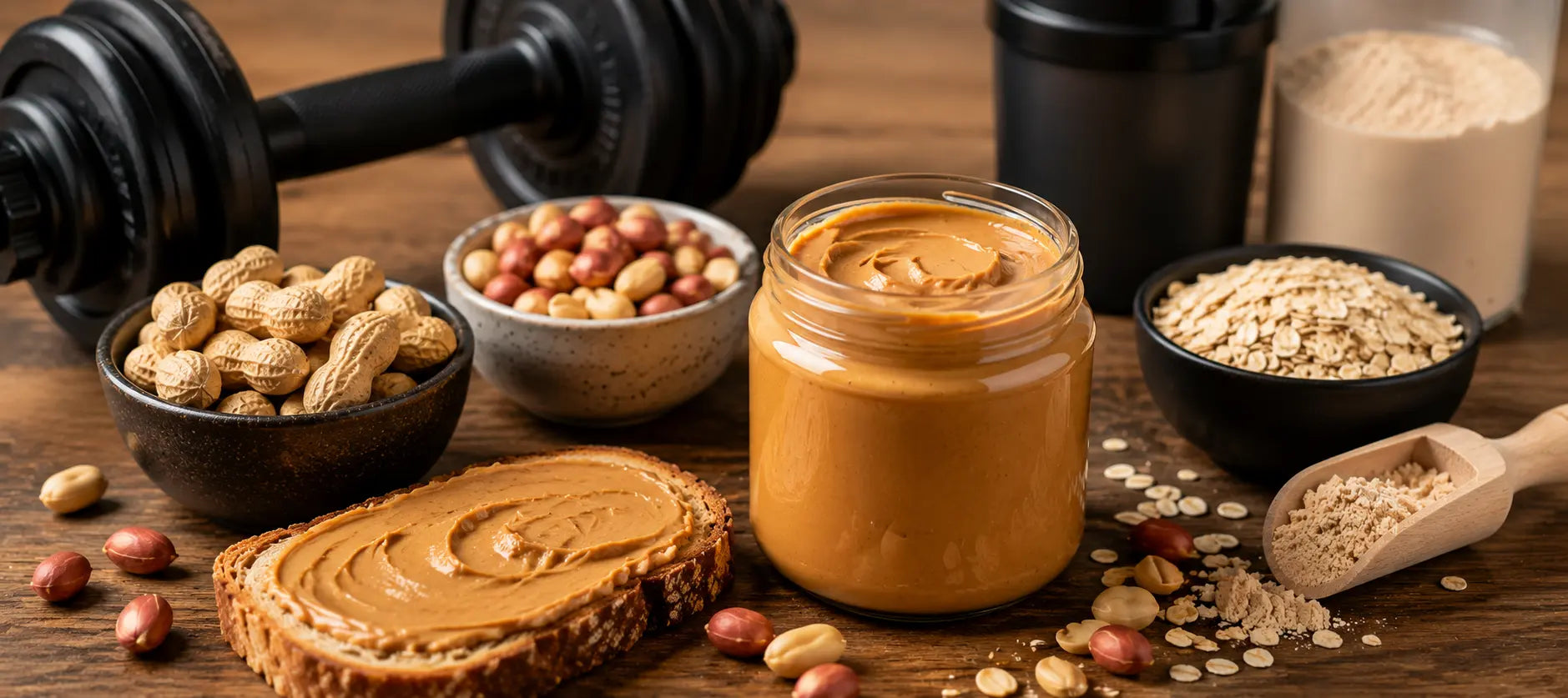

Peanut butter is the new favourite of every fitness enthusiast. Why not? Because it gives you both protein and a snack in one form. But here is a question most people are confused about: can peanut butter help in muscle gain?
The short answer is yes. But with some important nuances. Peanut butter supports muscle growth, but it's a supporting player, not the star. Understanding how and when to use it can make a real difference in your results.
Let's break it all down.
Why Peanut Butter is Popular Among Fitness Enthusiasts
Muscle building isn’t just about lifting heavy weights. Your body needs the right fuel to repair and grow muscle tissue after every workout. That means adequate protein, healthy fats, carbohydrates, and a caloric surplus.
This is where peanut butter earns its place. It's calorie-dense, easy to add to almost any meal, affordable, and packed with nutrients that directly support muscle-building goals. Whether you're a beginner trying to bulk up or an experienced lifter maintaining lean mass, peanut butter fits naturally into a strength training diet.
It's also incredibly convenient. No cooking, no prep, no measuring out chicken or boiling eggs. Just open the jar, and you're done. For busy athletes and working professionals who don't always have time for full meal prep, that kind of simplicity is genuinely valuable
Nutritional Profile of Peanut Butter
Macronutrients: Protein, Fats, and Carbohydrates
A standard 2-tablespoon serving of peanut butter contains approximately the following:
-
Calories: 190 kcal
-
Protein: 8g
-
Fat: 16g
-
Carbohydrates: 6g
-
Fibre: 2g
That's a solid macronutrient profile for anyone focused on muscle building. The protein contributes to muscle repair, the fats provide sustained energy, and the carbs help replenish glycogen stores after training.
Vitamins and Minerals in Peanut Butter
Beyond macros, peanut butter is rich in micronutrients that directly support athletic performance:
-
Magnesium: It supports muscle function and recovery
-
Zinc: Essential for hormone production and immune health
-
Vitamin E: A powerful antioxidant that reduces oxidative stress after workouts
-
Niacin (B3): It supports energy metabolism
-
Potassium: It reduces muscle cramping and aids recovery
Caloric Density and Energy Benefits
One of peanut butter's biggest advantages is its caloric density. If you're in a bulking phase and struggling to hit your daily calorie targets, peanut butter is one of the easiest ways to add 200-400 calories without feeling stuffed. A couple of tablespoons on toast, blended into a shake, or stirred into oats can meaningfully increase your intake without a huge volume of food.
Peanut Butter and Muscle Growth
When you perform high-intensity training, it creates tiny tears in your muscles. After training, you need to fuel your muscles for repair and to build them back stronger. But only if you give it enough protein to work with. Peanut butter contributes to that process with roughly 8 g of protein per serving. And if you choose protein peanut butter, it gives you around 12 g of protein per serving.
It's not the highest protein source out there, but it's consistent, accessible, and easy to stack with other foods throughout the day.
Because of its high fat content, peanut butter slows down digestion and delays amino acid delivery to the muscles. This means it's not the fastest post-workout option on its own. The smart approach is to pair it with a fast-digesting protein source like whey or milk. If you have a peanut butter banana smoothie with a scoop of whey, that's an effective post-workout combo.
How to Include Peanut Butter in Your Diet
Recommended Serving Size
For most people, 1 to 2 tablespoons of peanut butter per day is good. It gives you roughly 8 to 12 grams of protein along with healthy calories to support muscle growth without overdoing it.
If you're trying to gain weight or build muscle faster, you can increase it to 3 or 4 tablespoons, as long as it still fits your overall calorie and protein goals. The key is to use it intentionally instead of adding extra spoonfuls without tracking your intake.
Pairing Peanut Butter with Other Muscle-Building Foods
Peanut butter becomes much more effective for muscle growth when paired with other protein-rich foods. Since it is low in leucine, combining it with complete protein sources helps support better muscle recovery and growth.
-
Peanut butter with a whey protein shake for a complete amino acid boost
-
Peanut butter mixed into whole milk for an easy high-calorie bulking drink
-
Peanut butter with Greek yogurt for a filling, high-protein snack
-
Peanut butter and eggs on whole-grain toast for a balanced muscle-building breakfast
Peanut Butter Recipes for Muscle Gain
1. Peanut Butter Muscle Smoothie
Blend 2 tablespoons of peanut butter, 1 scoop of whey protein, 1 banana, and 250ml whole milk. It's a quick and convenient post-workout option.
2. Peanut Butter Overnight Oats
Mix rolled oats, 1 tablespoon peanut butter, chia seeds, Greek yoghurt, and a little honey. Leave it overnight for an easy, calorie-dense breakfast.
3. Peanut Butter Toast Stack
Spread 2 tablespoons of natural peanut butter on whole-grain bread, top with sliced bananas, and add a drizzle of honey. Simple, tasty, and great for extra calories.
Potential Drawbacks of Peanut Butter
High in Calories
Peanut butter is packed with calories, which can help during a muscle-building phase. But if portions are not controlled, those extra calories can quickly lead to unwanted fat gain. Even a few extra tablespoons can add hundreds of calories without you realising it, so moderation matters.
Peanut Allergies
Peanut allergies are very common and can be serious. If you have a peanut allergy or sensitivity, avoid peanut butter completely and always check ingredient labels carefully.
Added Sugar and Unhealthy Oils
Many commercial peanut butter brands contain added sugar, hydrogenated oils, and excess sodium. These ingredients do not support muscle growth or overall health.
Peanut Butter vs Other Nut Butters: Which Has More Protein?
Other than peanut butter, there are different nut butters available in the market. Here are some differences between these nut butters.
|
Nut Butter |
Recommended Serving (32g) |
Protein |
Fat |
Calories |
|
Peanut Butter |
2 tbsp |
8g |
16g |
190 kcal |
|
Almond Butter |
2 tbsp |
6-7g |
18g |
200 kcal |
|
Cashew Butter |
2 tbsp |
4-5g |
14g |
188 kcal |
|
Sunflower Seed Butter |
2 tbsp |
6g |
14g |
180 kcal |
Peanut butter gives good protein content compared to others. Almond butter comes close and offers more vitamin E and calcium, but for pure muscle-building value per gram, peanut butter is the better choice. Cashew butter is the weakest protein option of the group.
If your primary goal is muscle gain and you're choosing between nut butters, peanut butter is good to go.
Final Words
Peanut butter can definitely support muscle gain when used as part of a balanced diet and training routine. It provides healthy fats, extra calories, and a decent amount of protein, making it a simple and convenient option for people trying to build size and strength.
The key is to use it in moderation, choose natural varieties, and combine it with high-quality protein sources like whey, milk, eggs, or Greek yoghurt. On its own, peanut butter is not a complete muscle-building food, but when paired correctly, it can be a valuable addition to your diet.
FAQs About Peanut Butter and Muscle Gain
Is peanut butter good for muscle gain?
Yes, peanut butter can support muscle gain because it provides healthy fats, calories, and protein. However, it works best when combined with complete protein sources like whey protein, eggs, milk, or chicken.
How much peanut butter should I eat daily?
For most people, 1 to 2 tablespoons per day is enough. If you are in a calorie surplus or bulking phase, you can increase the amount based on your daily nutrition goals.
Can peanut butter cause weight gain?
Peanut butter is high in calories, so eating too much can lead to unwanted weight gain. When consumed in controlled portions as part of a balanced diet, it can help support healthy muscle growth instead.
Is peanut butter good before or after workouts?
It can work well at both times. Before a workout, it provides steady energy. After a workout, pairing it with a fast-digesting protein source can help with muscle recovery.
What type of peanut butter is best?
Natural peanut butter is usually the best option. Look for products with simple ingredients such as peanuts and a small amount of salt, without added sugars or hydrogenated oils.
Share:
Original vs Honey vs Protein Peanut Butter: What’s the Real Difference?
Peanut Butter in Fitness: Benefits, Nutrition, and Best Ways to Use It