

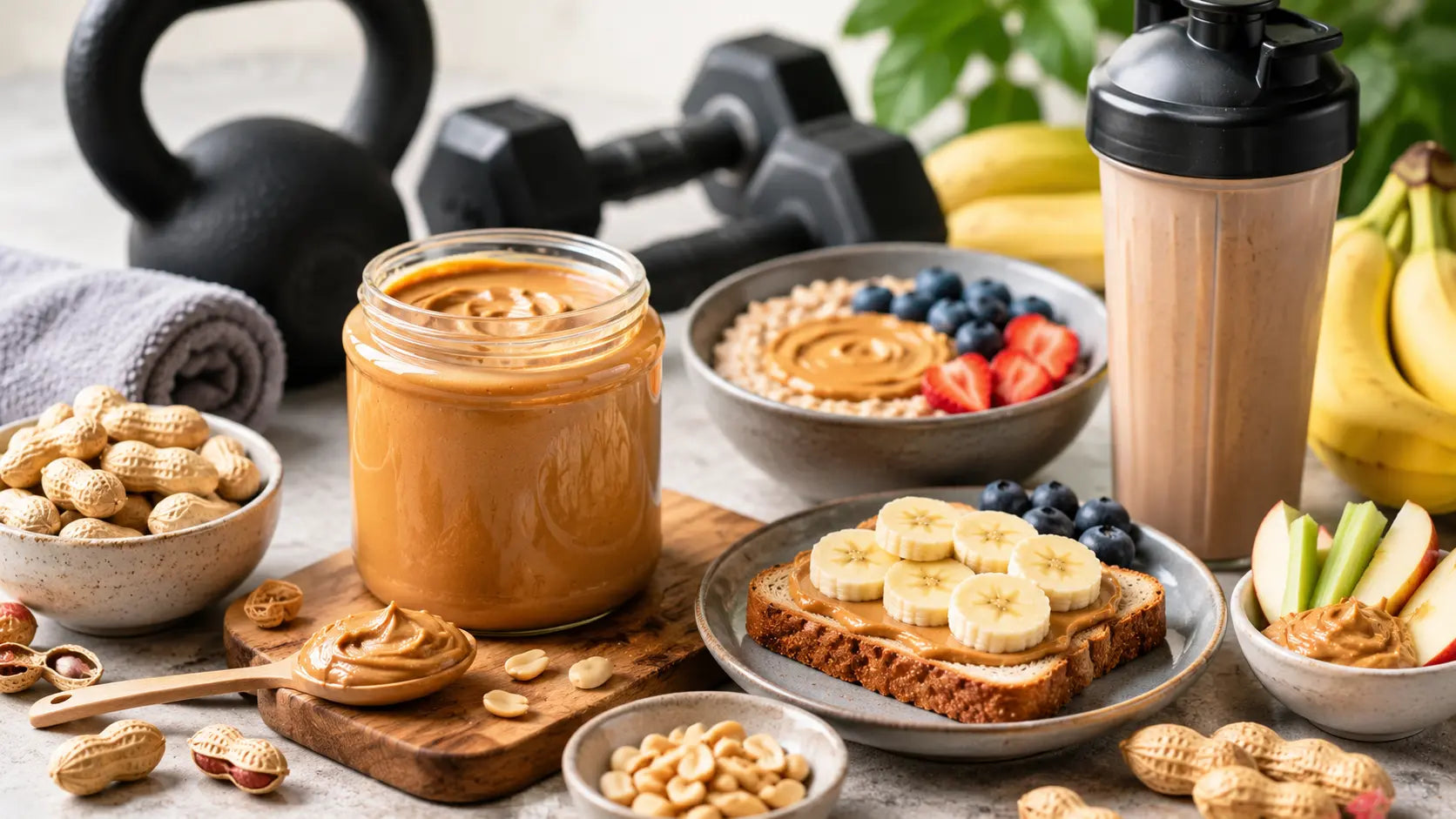

Peanut butter is the supporting character that quietly holds everything together. It may help add calories when you're struggling to eat enough, provide healthy fats that support normal hormone function, and help manage hunger during a calorie-controlled diet. It is one of the most practical, affordable, and genuinely useful whole foods you can keep in your kitchen.
This guide breaks down what's actually in it, what the research says it may do for your body, and how to use it strategically around your training.
What is Peanut Butter Made Of?
At its core, peanut butter is roasted peanuts ground into a paste. A clean, natural jar contains nothing more than peanuts and a pinch of salt. That's the version your body actually benefits from.
Most commercially available peanut butters have a much longer ingredient list. They add hydrogenated oils for texture and sugar for taste. They may use emulsifiers to prevent the natural oil separation that's actually a sign of a quality product. The moment those additives enter the picture, the nutritional value starts to drop.
If the oil separates in your jar, that's not a defect. That's peanut butter doing exactly what it's supposed to do.
Nutritional Value of Peanut Butter
A standard 2-tablespoon serving of natural peanut butter delivers:
-
Calories: 162 kcal
-
Protein: 8g
-
Fat: 12g
-
Carbohydrates: 6g
-
Fibre: 2g
-
Sugar: 1-2g
-
Magnesium: 49mg
-
Potassium: 205mg
-
Vitamin E: 1.9mg
What makes this nutritional profile genuinely useful for fitness is the combination. The protein supports muscle repair. The monounsaturated fats fuel hormone production and keep you satiated. Magnesium and potassium support muscle contraction, may reduce cramping, and can support recovery. It's not one standout nutrient: it's the whole package working together.
Health Benefits of Peanut Butter in Fitness
Peanut butter does more than hit your macros. Here's what it may be doing for your body every time you eat it.
Support Heart Health
The monounsaturated fats in peanut butter are the same heart-protective fats found in olive oil. A 2022 randomised clinical trial found that peanut consumption may help reduce triglyceride levels and improve cholesterol ratios in participants. For athletes who train hard and put stress on their cardiovascular system, this may offer a meaningful benefit beyond the gym.
Help Regulate Blood Sugar
Peanut butter is low on the glycemic index. Its combination of protein, fat, and fiber slows glucose absorption, which may help keep energy levels more stable throughout training rather than spiking and crashing. This makes it a potentially valuable pre-workout food, as it may provide steadier, more sustained energy rather than a short burst followed by fatigue.
Contains Antioxidants That May Support Recovery
Natural peanut butter contains resveratrol, vitamin E, and p-coumaric acid: antioxidants that may help combat oxidative stress caused by intense training. For anyone training five or more days a week, managing post-workout inflammation is just as important as the training itself.
Support Bone Health
The magnesium and phosphorus in peanut butter contribute to bone density: often overlooked in fitness nutrition but critical for anyone doing heavy compound lifts over the long term.
Peanut Butter for Muscle Building
Peanut butter may support muscle building through two primary mechanisms: protein and fat.
On the protein side, each serving delivers around 8 grams of plant-based protein containing key amino acids needed for muscle repair. Research on peanut protein supplementation in resistance training has shown that peanut protein supplementation alongside resistance training produced meaningful adaptations in younger adults.
On the fat side, the monounsaturated fats may support testosterone production, the primary hormone driving muscle growth. Combined with the magnesium content, which has been associated with hormonal health in active individuals, peanut butter can serve as a genuinely functional muscle-supporting food.
Peanut butter is not a complete protein on its own. Pairing it with leucine-rich sources like milk, eggs, or whey may maximize the muscle-building response per meal.
Peanut Butter for Weight Gain vs Weight Loss
Here's where most people get confused, and where peanut butter actually proves its versatility.
For Weight Gain
Peanut butter is one of the most calorie-efficient bulking tools available. Two to four tablespoons added to shakes, oats, or toast can contribute 300 to 600 calories daily without adding significant food volume. For hardgainers who struggle to eat enough, that kind of caloric density in a convenient, palatable form is genuinely hard to replicate with other foods.
For Weight Loss
This is where the fear usually kicks in, and where it's mostly unwarranted. Peanut butter may help keep you fuller for longer. And when you're full, you tend to eat less of everything else. One to two tablespoons as part of a calorie-tracked diet may support weight management by helping reduce hunger without sacrificing nutritional quality. The key is portion control, not avoidance.
How to Use Peanut Butter in Your Diet
Pre-Workout Ideas
The goal before training is sustained energy without digestive discomfort. Peanut butter fits well here because its fat and fiber content slows digestion and may provide a steady energy release rather than a spike.
-
PB on whole-grain toast with a banana:
Eat 60 to 90 minutes before training. The carbs from the banana and toast provide immediate fuel, while the peanut butter may help extend that energy through your session.
-
PB stirred into oats with honey
Ideal for morning training. Slow-digesting carbs plus healthy fat may support sustained output from warm-up to final set.
Avoid eating peanut butter immediately before training, within 30 minutes, as the fat content can cause sluggishness during high-intensity work.
Post-Workout Meals
Post-workout, your priority is protein for muscle repair and carbohydrates to replenish glycogen. Peanut butter contributes to both, but works best when paired with a faster-digesting protein source.
-
PB and whey protein smoothie with banana and whole milk:
A solid post-workout combination. Fast protein from whey, glycogen replenishment from banana and milk, and sustained recovery support from peanut butter's healthy fats.
-
PB on rice cakes with Greek yogurt:
A lighter option that still hits protein and carbohydrate targets without feeling heavy post-session.
Healthy Snacks and Smoothies
Outside of workout windows, peanut butter earns its keep as a snack that actually satisfies.
-
PB with apple slices:
Natural sugars from the apple paired with protein and fat from peanut butter. May support stable blood sugar and genuine satiety.
-
PB stuffed dates
A compact, energy-dense snack ideal between meals during a bulk.
-
PB yogurt parfait:
Greek yogurt, peanut butter, granola, and berries. High protein, great texture, works as a meal replacement on lighter training days.
Different Types of Peanut Butter
Natural vs Processed
Natural peanut butter contains peanuts and salt. Processed versions add hydrogenated oils, sugar, and emulsifiers. For fitness purposes, natural is the better choice because it has cleaner macros, no trans fats, and no unnecessary sugar affecting your daily targets.
Creamy vs Crunchy
Nutritionally, these are identical. The difference is purely textural. Creamy blends more smoothly into shakes and oats, making it better for cooking and recipes. Crunchy offers more bite and tends to feel more satisfying as a straight snack. For fitness use, choose based on how you're eating it. Neither has an advantage on the macro sheet.
Flavoured Options
Chocolate, vanilla, and other flavoured peanut butters have grown significantly in popularity. They're a useful tool for making high-protein snacks more enjoyable, which matters for consistency. The important thing to check is what's been added to create that flavour.
A good flavoured peanut butter uses minimal natural flavouring with no significant added sugar. A poor one uses artificial sweeteners, corn syrup, and flavour compounds that add calories without nutritional value. Check the label. The same rule applies here as everywhere else.
Conclusion: Is Peanut Butter Good for Fitness?
For many people, peanut butter can be a practical addition to a balanced fitness diet. It may support muscle repair, fuel training, manage hunger, and protect heart health, all while fitting into virtually every dietary approach from bulking to cutting. It's not a supplement. It's not a magic food. It's a practical, nutrient-dense staple that earns its place in any serious fitness diet.
Choose natural. Measure your portions. Pair it smartly. And let it do what it's been doing quietly in every athlete's kitchen for years.
FAQs
Is peanut butter good for muscle building?
Yes. It contributes protein for repair and healthy fats that may support testosterone production. It's not a replacement for whey or eggs. Pair it with complete protein sources to get the most out of it.
Can peanut butter help with weight loss?
It may, in controlled portions. The fat and fibre combination helps manage hunger, which can naturally reduce overall calorie intake throughout the day.
What is the best time to eat peanut butter?
You can use 60 to 90 minutes before training for steady energy, or post-workout alongside a fast protein source. It also works well as a between-meal snack to keep hunger in check.
How much peanut butter should I eat per day?
One to two tablespoons per day is generally enough for balanced nutrition and portion control. Two to four tablespoons during a bulk. Always measure your portions because peanut butter is easy to overconsume without noticing.
Is peanut butter a good source of protein?
It gives you around 8g per serving, but not a complete protein. Pair it with leucine-rich foods like whey, eggs, or milk to complete the amino acid profile.
What is the average price of peanut butter?
At Jacked Nutrition, all three variants (original, honey, and protein) start from Rs. 1,305. Same price across the range, so pick based on your goal.
Share:
Is Peanut Butter Good for Muscle Gain? A Complete Nutritional Guide
Peanut Butter in Supplements: Myths, Benefits, and Daily Usage Tips