

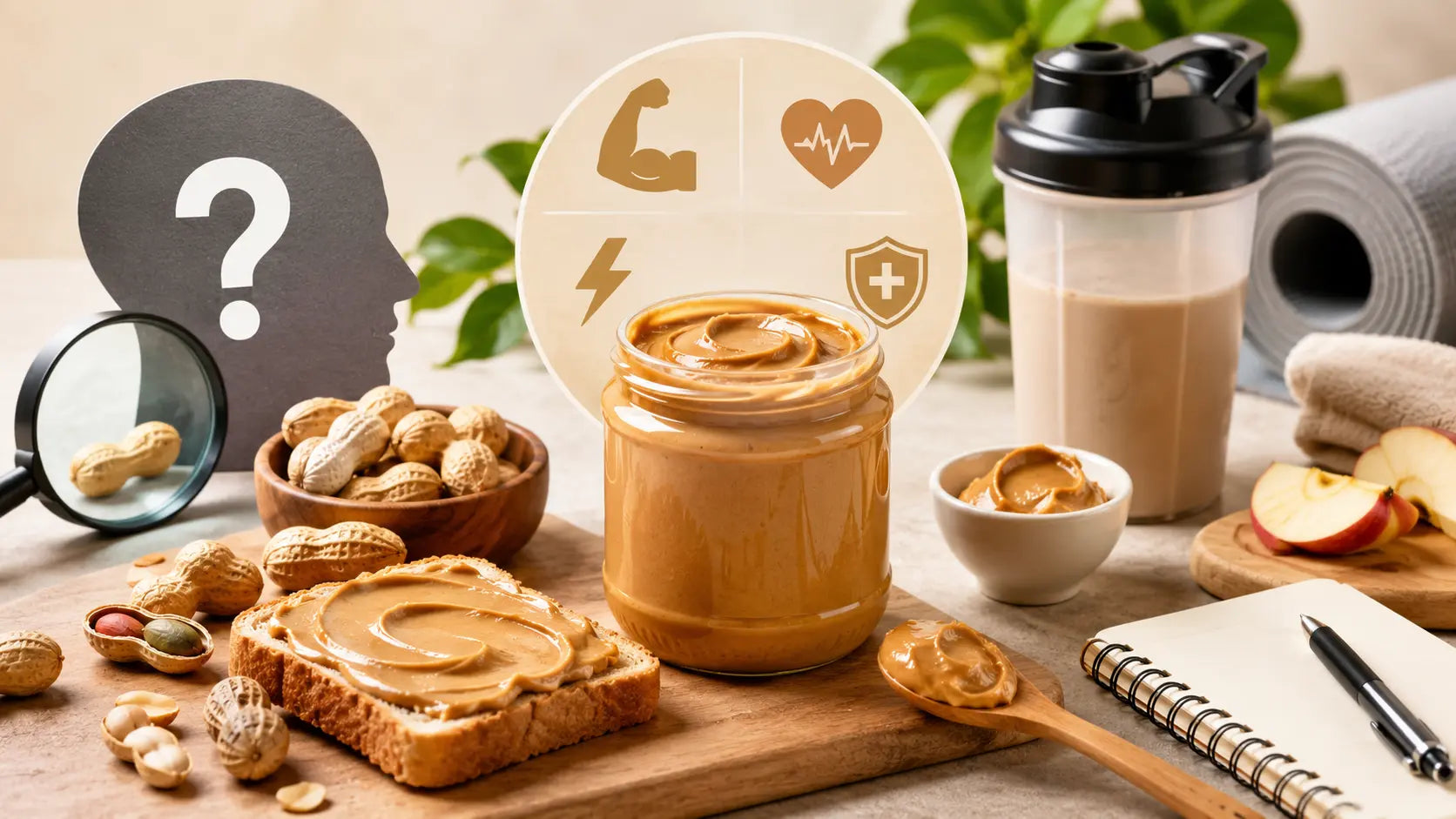

Walk into any gym, and you'll notice something interesting. One person is drinking a protein shake. Another is mixing creatine into water. And somewhere in the corner, someone is eating peanut butter.
You may wonder why it has become one of the most popular additions to fitness diets worldwide. The reason is simple. Peanut butter offers a combination of protein, healthy fats, calories, and essential nutrients that support an active lifestyle. It's affordable, convenient, and easy to add to meals and snacks. But despite its popularity, there is still a lot of confusion around it.
In this guide, we'll show you how to use it effectively in your daily routine.
Common Myths About Peanut Butter in Supplements
Myth 1: Peanut Butter Causes Excess Fat Gain
There is no “single food item” that can cause weight gain. It totally depends on your caloric consumption. The same rule applies to peanut butter. Around half of its fat content is oleic acid, the same fat in olive oil, known for heart health and improved insulin sensitivity. Research shows that eating peanuts daily may help reduce the risk of heart disease.
Myth 2: All Peanut Butters are the Same
They are absolutely not. A commercial spread loaded with hydrogenated oils and added sugars is a different product nutritionally. Hydrogenated oils introduce trans fats that may raise LDL cholesterol and undermine the cardiovascular benefits that peanuts naturally provide.
Myth 3: Peanut Butter Can Replace Protein Supplements Completely
It can't. Peanut butter contributes to daily protein intake but doesn't provide the fast-digesting protein that a post-workout whey shake delivers. You should take it as a complementary supplement, not a replacement for protein powders. It adds quality protein and healthy fats, but it is not your entire protein strategy.
Myth 4: Peanut Butter is Only for Bodybuilders
This myth holds back everyday gym-goers and people just trying to eat better. A 2022 study showed that individuals who added peanuts to a low-calorie diet lost the same weight as those who followed a low-calorie diet alone. In addition, they have also observed a feeling of fullness because of the healthy fat content in peanut butter. Its benefits apply to anyone who moves regularly.
Nutritional Benefits of Peanut Butter in Supplements
Protein Content and Muscle Repair
Peanuts have a comparatively higher protein content than other nuts, and their amino acid profile includes leucine, the key trigger for muscle protein synthesis. A study found that athletes who consumed peanuts and peanut butter alongside resistance training experienced improvements in lean body mass. The researchers noted that weight gain skewed toward lean mass rather than fat. That makes it a genuinely useful tool for anyone in the building phase.
Healthy Fats and Energy Boost
The monounsaturated and polyunsaturated fats in peanut butter may provide slow-release energy without the crash that comes from simple carbohydrates. These fats help maintain steady blood sugar levels during exercise, which matters more than most people realize. Stable blood sugar means consistent output, better focus, and no mid-session energy dips. That's the kind of fuel that holds up through an entire training session.
Vitamins, Minerals, and Micronutrients
One serving of peanut butter contains some amount of vitamin E, magnesium, vitamin B6, and phosphorus, all of which may support energy metabolism, muscle contraction, and bone health. Few whole foods pack that range of micronutrients into such a small serving. That is what makes peanut butter a practical addition to any fitness nutrition plan.
Supporting Satiety and Workout Endurance
Hunger is one of the biggest obstacles in any structured fitness plan. Peanut butter's combination of protein, fat, and fiber creates a satiety response that keeps you away from high-sugar snacks between meals. This matters for workout endurance, too, because athletes who manage hunger well tend to train more consistently. That consistency compounds over time in ways no single supplement can replicate.
How to Use Peanut Butter in a Daily Diet and Supplements
Recommended Serving Sizes
An ideal daily recommended serving of peanut butter is two tablespoons. If you exceed this amount without tracking your calories, that is where unplanned calorie surplus may lead to weight gain. That is why you should always consume any supplement within your recommended daily serving.
Combining Peanut Butter with Protein Powders and Shakes
Blending one to two tablespoons into a whey or plant-protein shake adds healthy fats, extends satiety, and rounds out the macro profile in a single serving. One serving costs roughly Rs. 124, making it one of the most affordable ways to improve a shake's nutritional quality. It also improves the flavor and texture of most protein shakes noticeably.
Best Timing: Pre-Workout, Post-Workout, or Snacks
For pre-workout use, consume it as part of a mixed meal 60 to 90 minutes before training on oats, with a banana, or blended into a shake. Post-workout, pair it with fast-digesting protein and carbs since the fat content slows digestion on its own. For between-meal snacking on a rice cake or apple slices, it keeps cravings in check until your next full meal.
Easy Supplement-Friendly Recipes
Adding peanut butter to your routine doesn't require complicated prep or expensive ingredients. These three simple recipes cover your main training windows.
Peanut Butter Protein Shake
Blend one scoop of whey protein, one tablespoon of natural peanut butter, one banana, and 250ml of milk. This gives you roughly 35 to 40 grams of protein with a balanced mix of carbohydrates and healthy fats. You can swap the banana for frozen berries if you prefer a lower-sugar option.
Pre-Workout Overnight Oats
Stir one tablespoon of peanut butter into rolled oats with Greek yogurt and a drizzle of honey. Prep it the night before and eat it 60 to 90 minutes before training. The oats provide slow-digesting carbohydrates, the yogurt adds extra protein, and the peanut butter helps maintain steady energy through your session.
Post-Workout Rice Cake Stack
Stack two rice cakes with one tablespoon of peanut butter and a sliced banana right after training. Rice cakes replenish muscle glycogen quickly, the banana adds natural sugars and potassium, and the peanut butter supports recovery with a small amount of protein and healthy fat.
Choosing the Right Peanut Butter for Supplements
Natural vs Flavored Varieties
Natural peanut butter with peanuts and, optionally, salt as the only ingredients is always the right choice for supplement use. Flavored varieties almost always carry added sugars, artificial flavors, and stabilizers that reduce nutritional quality and add empty calories. You can trust Jacked Nutrition Peanut Butter as it is prepared with natural ingredients without any additives. The oil separation you see in natural jars is a sign of quality, not a defect. Stir it in and refrigerate it after opening.
Low Sugar and Low Salt Options
If you're managing blood sugar or sodium intake, look for unsalted, unsweetened natural peanut butter available in most grocery stores and health food outlets. Check for no maltodextrin, dextrose, or corn syrup solids in the ingredients list. These are common in "light" or "diet" products that look clean on the front label but aren't. The full ingredient list never lies.
Protein-Enriched Peanut Butter
Several brands now offer peanut butters with added whey or plant protein, pushing content from 8 grams up to 10 to 15 grams per serving. These are a legitimate option for anyone who wants more protein without adding another full shake to their day. Check the ingredient quality carefully.
Potential Drawbacks and Precautions
Caloric Density and Weight Management
Peanut butter's greatest strength is also its biggest risk if you're not paying attention. Small portions look deceptively modest, and it's very easy to overconsume. Two tablespoons six times a day add over 1,100 unplanned calories to your diet. Use a measuring spoon every time; it takes five seconds and removes all the guesswork.
Allergies and Sensitivities
Peanuts are one of the most common and potentially severe allergens. If you have a known allergy or intolerance, no form of peanut butter is safe for you. Almond butter or sunflower seed butter are structurally similar alternatives worth exploring. Consult before introducing peanut butter to a child's diet, especially if there is any family history of nut allergies.
Overconsumption Risks
High-volume consumption can push your omega-6 fatty acid intake too high relative to omega-3s, which may contribute to low-grade inflammation if not balanced elsewhere in your diet. Keep servings within the one-to-two tablespoon range and pair your diet with oily fish or an omega-3 supplement. That balance is easy to maintain once you're aware of it.
FAQs About Peanut Butter in Supplements
Can Peanut Butter Be Used as a Protein Supplement?
It contributes meaningfully to your daily protein intake but shouldn't be your only source. Pair it with higher-protein foods like Greek yogurt, eggs, or protein powder for a balanced and complete approach.
How Much Peanut Butter Should I Eat Daily for Fitness?
One to two tablespoons, once or twice per day, is the practical range for most active individuals. Adjust based on your total caloric needs and how many other fat sources are already in your diet.
Is Natural Peanut Butter Better for Supplement Use?
Yes, consistently. No hydrogenated oils, no added sugars, no artificial stabilizers. Just the nutritional profile you actually want without anything working against your goals.
Can Peanut Butter Cause Fat Gain Even in a Fitness Diet?
Only if it creates a sustained caloric surplus correctly within your total daily calories. It won't cause fat gain, and the research supports better body composition over time.
When is the Best Time to Consume Peanut Butter?
In a pre-workout meal 60 to 90 minutes before training, blended into a post-workout shake, or as a between-meal snack. Avoid a large serving immediately before or after training on its own.
Are There Any Hidden Ingredients in Supplement Peanut Butter I Should Watch For?
Yes. hydrogenated oils, added sugars like maltodextrin and corn syrup, and artificial stabilizers are the main ones. Always read the full ingredient list, not just the macros panel on the front of the jar.
Use Peanut Butter for Better Gains
Peanut butter is a research-backed addition to any fitness nutrition plan. It delivers protein, slow-release energy, and key micronutrients at a fraction of the cost of most commercial supplements. The myths around it come from misuse and poor product choices, not the food itself.
Pick up a jar of natural peanut butter with minimal ingredients. Measure one to two tablespoons per serving, and add it to your pre-workout meal, protein shake, or between-meal snack. Track your portions and stay consistent. It won't replace your protein supplement, but if used with intention, it will meaningfully improve your nutrition without adding cost or complexity.
Share:
Peanut Butter in Fitness: Benefits, Nutrition, and Best Ways to Use It
How to Identify Pure Shilajit: A Complete Buyer’s Guide for Safe and Effective Supplementation