

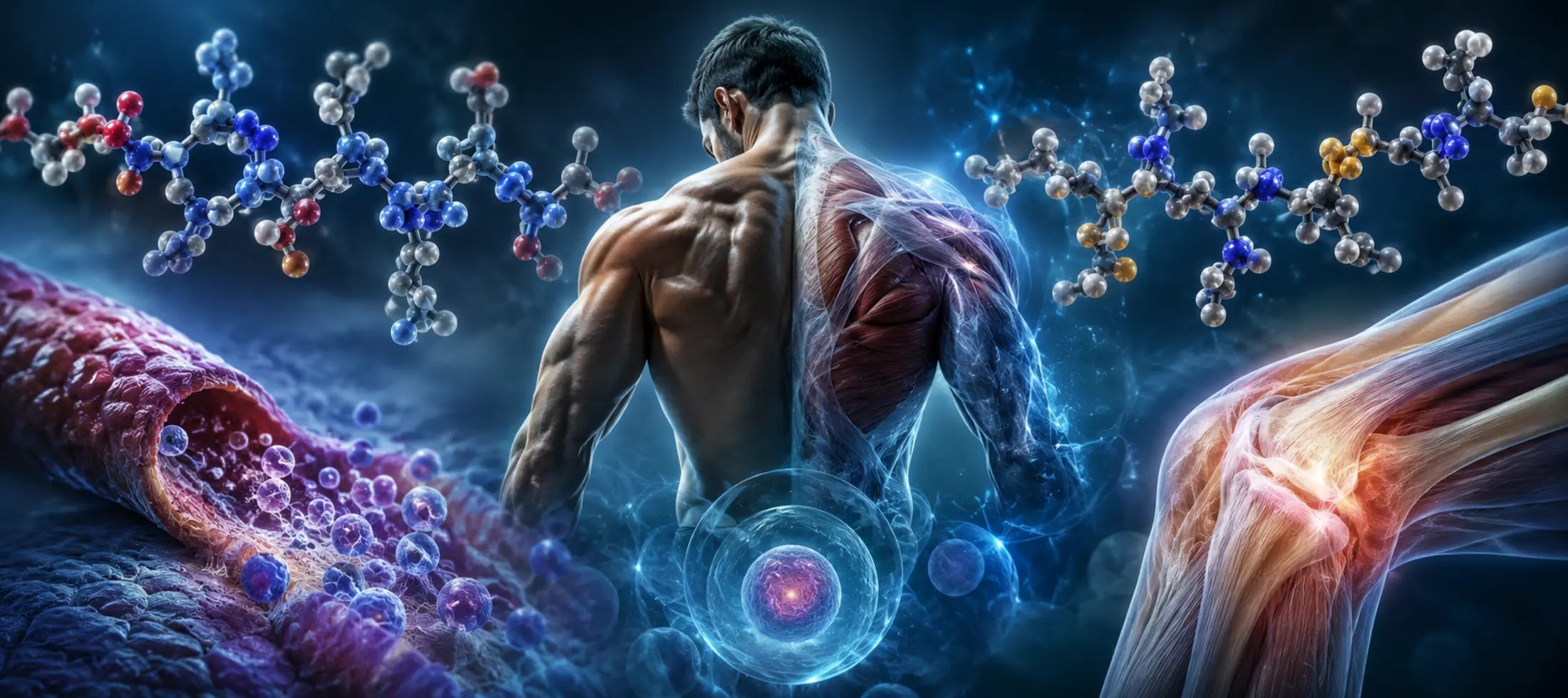

The Wolverine Stack usually refers to the combined use of BPC-157 and TB-500 peptides for recovery. It is popular among athletes, gym users, and biohacking communities because these peptides are claimed to support soft tissue recovery, tendon healing, muscle repair, and injury recovery.
However, the most important point is this: BPC-157 and TB-500 are not proven recovery treatments for humans. Most evidence comes from animal, laboratory, or early experimental research. They are not ordinary supplements, and their safety, legality, and long-term effects remain serious concerns.
What Is the Wolverine Stack?
The Wolverine Stack is a nickname for using BPC-157 and TB-500 together. The name comes from the idea of fast healing, similar to the fictional character Wolverine.
In recovery discussions:
|
Peptide |
Common Claim |
|
BPC-157 |
Tendon, ligament, gut, and soft tissue recovery |
|
TB-500 |
Muscle recovery, wound healing, cell migration, and tissue repair |
|
Wolverine Stack |
Combined peptide recovery stack |
Although the stack is popular online, there is no strong human clinical evidence proving that this combination safely or effectively improves injury recovery.
Understanding BPC-157
BPC-157 is a synthetic peptide made of 15 amino acids. It has been studied mainly in animal and lab models for tissue healing, tendon repair, ligament recovery, and gut protection.
Possible research-based benefits include:
-
Soft tissue repair
-
Tendon and ligament healing support
-
Inflammation-related tissue protection
-
Blood vessel and repair pathway support
-
Gut protection in experimental models
But these are not confirmed human benefits. A peptide may look promising in animal studies but still lack proof of safety and effectiveness in people.
Understanding TB-500
TB-500 is commonly described as a synthetic peptide related to thymosin beta-4, a natural compound involved in tissue repair, wound healing, cell movement, and blood vessel formation.
Possible research-based benefits include:
-
Cell migration support
-
Wound healing support
-
Soft tissue repair signaling
-
Angiogenesis, or new blood vessel formation
-
Possible inflammation control
However, many TB-500 claims are based on thymosin beta-4 research, not strong evidence from TB-500 use in humans.
Why BPC-157 and TB-500 Are Popular
BPC-157 and TB-500 are popular because many people want faster recovery from injuries, workouts, tendon pain, ligament strain, and muscle damage.
They are commonly searched as:
-
Peptide recovery stack
-
Healing peptides
-
Muscle recovery peptides
-
Soft tissue recovery peptides
-
BPC-157 and TB-500 recovery
-
Injury recovery supplements
The problem is that online marketing often makes these peptides look safer and more proven than they actually are.
Possible Benefits in Recovery
The Wolverine Stack is mainly discussed for:
1. Soft Tissue Recovery
BPC-157 is often linked with tendon and ligament recovery in animal research.
2. Muscle Recovery
TB-500 is often discussed for muscle repair and cell movement, but strong human evidence is limited.
3. Wound Healing
Thymosin beta-4 research suggests possible wound-healing effects, but this does not prove that TB-500 products work the same way.
4. Tendon and Ligament Support
BPC-157 has animal research related to tendon healing, but human injury recovery needs better proof.
5. Inflammation Control
Both peptides are discussed for inflammation-related pathways, but inflammation is also a normal part of healing. Blocking or changing it without medical guidance may not always be safe.
BPC-157 vs. TB-500
|
Feature |
BPC-157 |
TB-500 |
|
Main claim |
Tendon, ligament, gut, and tissue repair |
Muscle, wound, and soft tissue recovery |
|
Evidence |
Mostly animal and lab studies |
Mostly thymosin beta-4-related research |
|
Human proof |
Limited |
Limited |
|
Safety status |
Not well established |
Not well established |
|
Best description |
Experimental peptide |
Experimental peptide |
Neither peptide should be treated as a proven recovery solution.
Safety, Risks, and Limitations
The biggest concern with BPC-157 and TB-500 is that human safety is not well established.
Possible risks include:
-
Unknown long-term safety
-
Immune reactions
-
Product impurity or contamination
-
Incorrect labeling or poor quality control
-
Injection-related risks
-
Delayed medical treatment
-
Anti-doping violations for athletes
-
Unclear legal and regulatory status
BPC-157 is also prohibited in sport under anti-doping rules as an unapproved substance. Competitive athletes should be especially careful.
Are BPC-157 and TB-500 safe?
At this time, the safest answer is:
BPC-157 and TB-500 cannot be called safe or proven for human recovery because strong human clinical trials are lacking.
They are not the same as protein powder, creatine, vitamins, collagen, or standard recovery supplements. They are experimental peptides and should not be used without proper medical guidance.
What Actually Supports Recovery Better?
Before considering any experimental peptide, recovery should focus on proven basics:
-
Proper diagnosis
-
Physical therapy
-
Progressive loading
-
Enough calories
-
Good sleep
-
Hydration
-
Vitamin and mineral adequacy
-
Controlled return to training
-
Medical follow-up when needed
For tendon, ligament, muscle, or joint injuries, evidence-based rehabilitation is still the foundation.
Final Thoughts
The Wolverine Stack, made up of BPC-157 and TB-500 peptides, is popular because it is marketed as a powerful recovery and healing peptide stack. Some early research suggests possible roles in tissue repair, wound healing, tendon recovery, and inflammation control.
But the honest conclusion is clear:
BPC-157 and TB-500 are experimental peptides, not proven recovery supplements.
They may have interesting research potential, but human evidence is limited, safety is not fully known, and athletes may face anti-doping risks. Anyone dealing with an injury should prioritize medical evaluation, rehabilitation, nutrition, and evidence-based recovery methods first.
FAQs
What is the Wolverine Stack?
The Wolverine Stack is a nickname for combining BPC-157 and TB-500 peptides for recovery. It is commonly discussed for soft tissue, tendon, ligament, and muscle recovery.
What is BPC-157 used for?
BPC-157 is commonly discussed for tendon, ligament, gut, and soft tissue recovery, but its benefits in humans are not proven.
What is TB-500 used for?
TB-500 is commonly discussed for wound healing, muscle recovery, cell migration, and tissue repair, but strong human evidence is limited.
Are BPC-157 and TB-500 safe?
Their safety is not well established. Long-term human data is limited, and product quality can be a serious concern.
Are BPC-157 and TB-500 approved supplements?
No. They should not be treated like ordinary supplements. They are experimental peptides with regulatory and safety concerns.
Is the Wolverine Stack good for injury recovery?
It is popular for injury recovery claims, but it is not clinically proven. Physical therapy, proper nutrition, sleep, and medical care remain more reliable recovery foundations.
Can athletes use BPC-157 and TB-500?
Competitive athletes should be very careful because BPC-157 and similar unapproved peptides may create anti-doping violations.
Which is better: BPC-157 or TB-500?
Neither can be called better, as both lack strong human evidence of recovery. BPC-157 is more often discussed for tendon and ligament repair, while TB-500 is more often discussed for muscle and wound repair.
Share:
Useful Tips to Take Care of Your Skin in Hot Weather
I Was Fit, That’s Why I Survived: Why Lifelong Fitness is Your Ultimate Medical Insurance