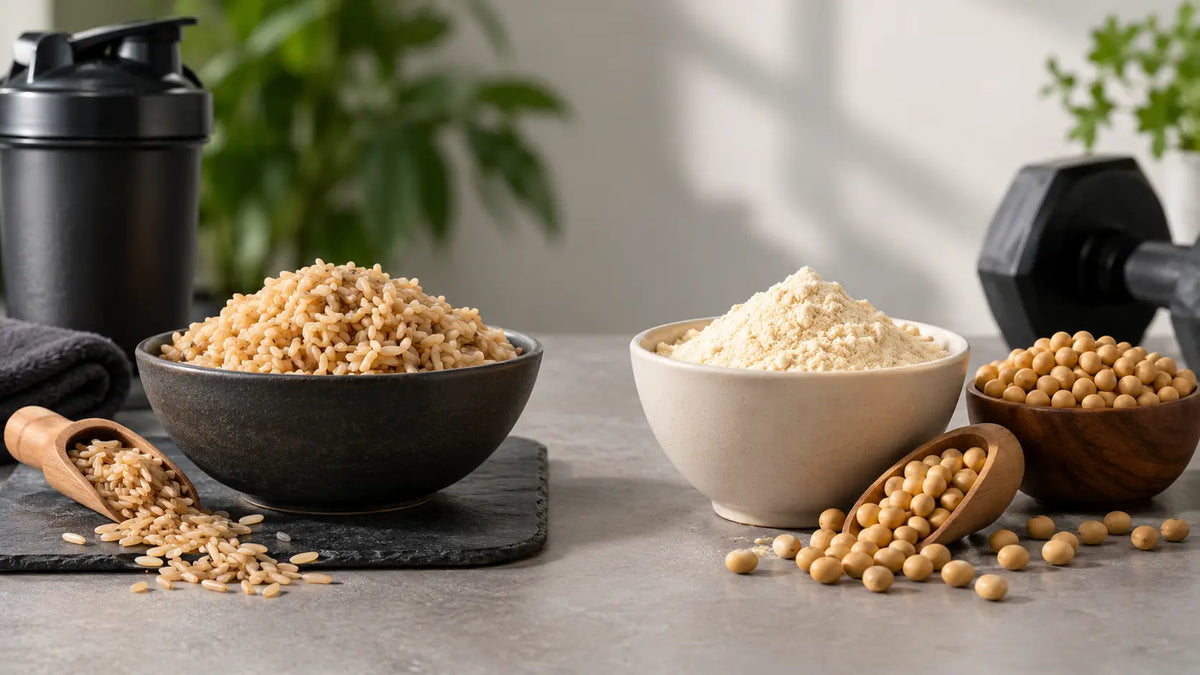

Are you a vegetarian struggling to meet your protein needs? Although it's challenging, you can still choose some healthy vegan options to fulfil your requirements. Two major vegan protein sources are brown rice protein and soy protein.
The rice protein vs. soy protein debate isn't as confusing as the supplement aisle makes it out to be. Soy protein has a well-established amino acid profile, while brown rice protein offers an alternative for people avoiding soy. Both can support protein intake, and individual digestive tolerance varies. In this guide, you will learn how each one performs for muscle growth, digestion, and everyday use.
Let's dive in!
Rice vs Soy Protein: The Short Answer
Here's the quick version before we get into the nitty-gritty.
Soy protein is a complete protein. It has a higher digestion score than rice protein on its own. It also builds muscle just as well as whey, study after study. Brown rice protein may suit people who do not tolerate soy protein well, although digestive responses vary from person to person . It comes with zero hormone worries. But it needs a lysine boost to match soy's amino acid profile. That's exactly why Jacked Brown Rice Protein adds extra lysine to close that gap.
|
Factor |
Brown Rice Protein |
Soy Protein |
|
Protein quality (DIAAS) |
Lower on its own, needs lysine |
Higher, near-complete |
|
Digestion |
Gentle, low bloating |
Can cause gas in some users |
|
Allergen risk |
Very low |
Common allergen |
|
Hormone concerns |
None |
Myth, not backed by research |
|
Taste |
Mild, slightly earthy |
Beany, needs flavouring |
|
Best for |
Sensitive stomachs, allergy sufferers |
Budget lifters wanting max protein quality |
So which one wins? It depends on your gut. It depends on your goals. And it depends on how your body handles soy. Neither protein is a bad choice on its own. The right pick just comes down to what your body agrees with and what fits your daily routine. Keep reading, and you'll know exactly where you stand.
Protein Quality: Amino Acids and DIAAS
Not all protein powders are equal. Scientists score protein quality with a tool called DIAAS. It stands for Digestible Indispensable Amino Acid Score. The higher the score, the more your body absorbs and uses.
A recent review looked at plant and animal proteins side by side. It ranked soy protein as high-quality, scoring well above the 75 mark on the DIAAS scale. Rice protein is relatively low in lysine, which can limit its protein-quality score. That's because it's naturally short on one amino acid called lysine.
Think of lysine as the missing puzzle piece. Rice protein has plenty of other amino acids. It just falls short on this one. Soy doesn't have that problem, which is why it scores higher on paper.
Here's the good news. This gap is easy to fix. That's exactly why Jacked Brown Rice Protein adds extra lysine to every scoop, about 1.14 g in total between what's naturally in the rice and what's added. This one tweak pushes rice protein's amino acid profile much closer to soy and whey.
So don't panic about the raw DIAAS number on a lab chart. What matters is the final product in your scoop, not the plain, unfortified ingredient on paper.
The Soy and Hormones Question
This is the question everyone asks in a hushed voice at the gym. "Bro, doesn't the soy protein lower testosterone?" No, it doesn't. Let's put this myth to rest for good.
What the isoflavone research actually shows
Soy contains natural plant compounds called isoflavones. These compounds look a bit like estrogen in their chemical structure. That's where the fear comes from. But looking similar doesn’t mean they will work the same. Your body doesn't treat soy isoflavones like real estrogen.
A large meta-analysis pooled data from 41 studies. It covered more than 1,700 men. The result? No real effect on total testosterone. No real effect on free testosterone. No real effect on estrogen levels either. This held no matter the dose or how long the men used soy.
That's so simple, and it's backed by real data, not gym talk.
Realistic intake from one scoop
Let's talk numbers so you can stop worrying for good. A typical soy scoop of 25 to 30 grams holds roughly 20 to 100 mg of isoflavones. The exact amount depends on the brand. The studies that found zero hormone effect used doses of 60 to 240 mg per day, taken for weeks at a time. Clinical research has not found significant adverse effects of soy or isoflavone intake on the reproductive hormone levels measured in men. Actual exposure varies by product and serving size.
Unless you're drinking soy milk by the litre and eating tofu at every meal, your testosterone has nothing to fear.
Digestibility, Bloating and Allergies
Now let's talk about the part nobody warns you about until it hits mid-workout: bloating.
Soy protein isolate digests fine for most people. But soy is also one of the most common food allergens in the world. If your stomach turns into a balloon after a shake, that's the sign of bloating. Some users also feel gas and mild discomfort, especially with cheaper soy blends that still carry fibre and other plant compounds.
Brown rice protein is easy to handle for most stomachs. It's naturally gentle and rarely causes the bloating that soy, or even whey, can trigger. Jacked Brown Rice Protein goes a step further. It uses sprouted organic brown rice, which is naturally free of lactose, gluten, dairy, and soy.
Sprouting also matters here. When rice is sprouted before processing, it breaks down some of the tougher plant compounds first. That makes the final powder even easier on your gut. So if your stomach has ever betrayed you mid-set, this one is worth a try. No need to be scared of switching things up.
Muscle Growth Evidence for Both Proteins
Here's the real question: does it actually build muscle? For both proteins, the answer is yes.
Soy protein has decades of research behind it. It shows strength and lean mass gains close to whey, as long as you're training hard too. Rice protein has fewer studies, but the results are strong. A 2013 study followed 24 resistance-trained men for eight weeks. One group took 48 grams of rice protein after training. The other took 48 grams of whey. Both groups gained similar muscle mass, strength, and power. There was no real difference between them.
And you know what, that result surprised even the researchers. Rice protein, once seen as the weaker plant option, held its own against the gold standard.
The takeaway is simple. When you eat enough protein and train hard, the exact source matters less than most people think. Total daily protein and consistent training still do most of the heavy lifting. That's reassuring news for anyone who assumed only whey could get the job done.
Taste, Mixability and Everyday Use
Soy protein has a naturally beany, slightly bitter edge. Most brands cover it up with heavy flavouring and sweeteners. Mixability is decent, though it can feel a little chalky in plain water.
Brown rice protein has a milder, slightly earthy taste. It blends better into shakes, especially with milk, banana, or peanut butter. Jacked Brown Rice Protein comes in Chocolate and Strawberry. Both flavours mix smoothly, without the gritty texture older rice proteins were known for. If you're curious how this stacks up against dairy-based options on taste and texture too, our whey vs plant protein comparison breaks that down as well.
Just remember, taste always improves when you blend your shake instead of shaking it in a bottle. Simple trick, big difference.
Sourcing, Processing and GMO Concerns
Most soy grown for protein powder is genetically modified, unless the label clearly says non-GMO or organic. That's not automatically bad, but it's a fair concern if you prefer cleaner sourcing. Many Pakistani buyers simply can't tell how a soy tub was processed just by reading the front of the label.
Rice protein mostly sidesteps this worry. Jacked Brown Rice Protein is made from sprouted organic brown rice. It also carries real certifications, including EU Organic, Halal, Kosher, and USDA NOP. Every batch also goes through lab testing, so you can check exactly what's inside before you buy. So if clean sourcing matters to you, brown rice protein has a clear edge here.
Who Should Choose Brown Rice Jacked
Brown rice protein makes sense if you deal with lactose sensitivity, soy allergies, or frequent bloating. It's also a smart pick if you simply want the cleanest plant-based option on the shelf. Maybe you've tried soy or whey before, and your stomach just didn't agree. This one is built for exactly that.
Jacked Brown Rice Protein fits this need well. Each scoop gives you 24 grams of protein from 77% pure sprouted brown rice. It comes with added lysine to close the amino acid gap, plus zero sugar and zero lactose. Want the full breakdown of how the lysine boost works? Our detailed guide on the added-lysine formula covers it in depth.
If your gut handles soy just fine, and you want the highest protein quality score on a budget, soy remains a solid, well-tested pick too. It works well for lifters who train hard and just need extra grams without spending too much.
Either way, don't let hormone myths or old rumours choose for you. Base it on your gut, your budget, and your daily routine instead.
Which One Is Actually Good For You?
So, rice protein vs soy protein, who actually wins? Honestly, both are solid choices. Neither one is the villain the internet makes it out to be. Soy protein brings a higher raw protein score and decades of research behind it. Brown rice protein brings easier digestion, zero hormone drama, and a cleaner allergen profile.
If your gut has ever punished you for trying a new protein, this one is worth a shot. Jacked Brown Rice Protein gives you 24 grams of protein, added lysine, and zero lactose in every scoop. It takes the guesswork out of your next pick. So what's holding you back? Grab a tub and feel the difference in your very next shake.
Frequently Asked Questions
Does soy protein lower testosterone in men?
No. Large studies covering thousands of men found no real effect of soy protein or isoflavones on testosterone or estrogen, at any normal dose.
Is brown rice protein a complete protein?
On its own, rice protein is short on lysine. Jacked Brown Rice Protein fixes this by adding extra lysine to every scoop, giving you a fuller amino acid profile.
Which digests easier, rice protein or soy protein?
Brown rice protein usually digests easier and causes less bloating. Soy is a common allergen and can cause gas or discomfort in sensitive users.
Can rice protein build muscle as well as whey or soy?
Yes. An eight-week study found rice protein gave muscle and strength gains similar to whey, when taken at 48 grams a day.
Is soy protein safe to use daily?
Yes, for most people. A couple of scoops a day stays well within the range that clinical studies have already tested and found safe.
Which one should I pick if I have a sensitive stomach?
Start with brown rice protein. It's gentle on digestion and rarely triggers the bloating some people feel with soy or dairy proteins.
Can I mix rice protein and soy protein?
Yes. Blending the two can actually round out your amino acid profile, since rice covers what soy lacks and soy covers what rice lacks. Just watch your total calories and protein for the day.
Share:
Brown Rice Protein vs Dal, Chickpeas and Whole Foods: Do You Even Need a Vegan Protein Powder?
L-Citrulline for Blood Flow: How It Works and What the Research Shows