

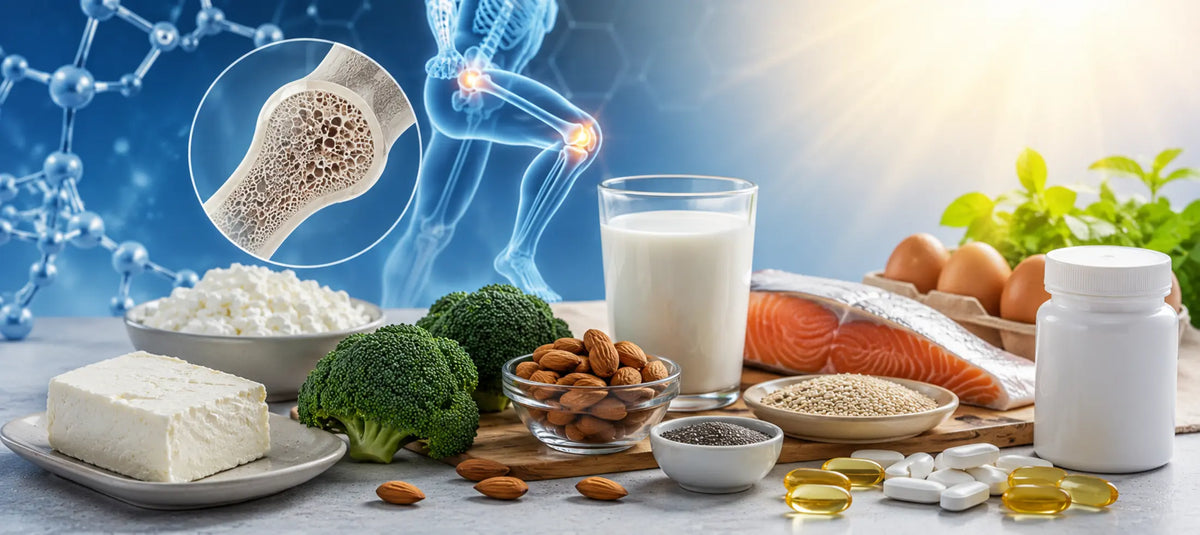

Bones do more than hold your body upright. They protect your organs, store minerals, and support every move you make. Getting enough calcium and vitamin D for bones is one of the simplest ways to protect this system, yet most diets in Pakistan don't provide enough of either nutrient. This gap builds up slowly and often goes unnoticed until a fracture or a bone scan reveals the problem.
Why Bone Density Matters at Every Age
Bone isn't a fixed structure. It rebuilds itself constantly throughout life. In childhood and the teenage years, bone formation outpaces breakdown, and density builds up fast. Around age 30, bone mass peaks. After that, the balance shifts, and bones slowly lose density if you don't support them properly.
This matters for everyone, not just older adults. Athletes need strong bones to handle impact and training loads. Office workers with sedentary routines often lose density faster than they realize. Women face a sharper decline after menopause, since estrogen plays a role in maintaining bone mass. A daily bone health multivitamin can help fill the gaps that diet alone often misses, no matter your age or activity level.
Weak bones don't always show obvious symptoms early on. Some signs of weak bones include frequent joint discomfort, brittle nails, receding gums, or a fracture from a minor fall. If any of this sounds familiar, it's worth looking at your calcium and vitamin D intake before the problem gets worse.
Calcium's Role in Bone Structure
Calcium is the main building block of bone tissue. Around 99% of the calcium in your body sits in your bones and teeth, giving them their hardness and structure. The remaining 1% circulates in your bloodstream. It supports essential functions such as muscle contraction, nerve signaling, and a normal heart rhythm.
Here's the catch. Your body doesn't produce calcium on its own. It has to come from food or supplements. And when your diet doesn't supply enough, your body pulls calcium from your bones to keep blood levels stable. Over time, this constant withdrawal weakens bone structure and raises the risk of fractures.
Dairy products, leafy greens, almonds, and sesame seeds are decent calcium sources. But portion sizes and absorption rates vary a lot, so many people still fall short even when they think they're eating well. That's where calcium absorption tips actually matter more than just counting milligrams on a label.
Why Vitamin D Is Essential for Calcium Absorption
Eating calcium-rich foods doesn't guarantee your body actually uses that calcium. Without enough vitamin D, your body cannot absorb calcium efficiently. As a result, much of the calcium you consume passes through your digestive system instead of reaching your bones. Vitamin D enables your intestines to absorb calcium efficiently. This makes it just as important as calcium itself, and arguably even more important.
Unfortunately, vitamin D deficiency in Pakistan is widespread, despite the country's sunny climate. Indoor lifestyles, pollution, darker skin tone, and limited sun exposure all contribute to low levels. According to a detailed breakdown of vitamin D deficiency in Pakistan, a large share of the population, including women and children, shows insufficient or deficient vitamin D levels. That's a serious concern, since low vitamin D doesn't just weaken bones. It can also affect mood, immunity, and muscle function.
Sunlight helps your skin produce vitamin D naturally. However, getting 15 to 20 minutes of midday sun exposure isn't always practical for people with desk jobs or those who wear covered clothing. Fortified foods provide small amounts too, but rarely enough on their own. This is exactly why so many nutritionists recommend supplementation alongside diet and sun exposure.
How Vitabasic Combines Calcium & Vitamin D for Bone Support
You don't have to struggle to find a quality bone health supplement. Vitabasic combines calcium and vitamin D in one formula. It also includes 24 other activated vitamins and minerals to support overall health.
-
The calcium in Vitabasic helps maintain bone density,
-
Vitamin D ensures your body actually absorbs and uses that calcium efficiently
-
Vitabasic also includes vitamin K, which plays a role in directing calcium to your bones instead of soft tissue.
-
Magnesium rounds out the formula, since it helps activate vitamin D within the body.
Together, these nutrients work as a system rather than as isolated ingredients. This approach is closer to the way your body naturally uses and processes nutrients.
Many multivitamins on the market focus heavily on energy or immunity while treating bone support as an afterthought. Vitabasic takes a more balanced approach by focusing directly on bone strength. Instead of making a long list of unrelated claims, it targets what matters most for bone health. For anyone comparing options, checking the calcium and vitamin D content per serving is a good place to start. Some products advertise "bone support" without providing meaningful amounts of either nutrient.
Common Diet Gaps in Pakistan That Affect Bone Health
Traditional Pakistani diets often rely heavily on rice, wheat, and meat. They also tend to include fewer dairy servings than recommended and a limited variety of vegetables. Lactose intolerance is also common, which pushes many people away from milk and yogurt, two of the most reliable calcium sources.
Fasting practices, skipped meals, and a general lack of nutrition awareness add another layer to the problem. Sunlight exposure is often limited too, especially for people who work indoors or cover up for cultural or climate reasons. Our earlier guide on the best multivitamins in Pakistan breaks down how these gaps show up across different nutrients, not just calcium and vitamin D.
Processed and fast-food consumption has also risen sharply in urban areas. These foods rarely offer meaningful calcium or vitamin D, and they can crowd out more nutritious options from your daily meals. Fixing this doesn't require a total diet change. Small changes can make a big difference, such as adding dairy back into your meals or spending a few minutes in the sun. Combined with a reliable supplement, these habits can close most of the gap fairly quickly.
Strengthen Your Bones, Shop Vitabasic:
Bone health isn't something to think about only after a fracture or a doctor's warning. Calcium and vitamin D work best for bone health when you support them consistently. Do this through a balanced diet, regular sunlight exposure, and supplementation when needed. Vitabasic offers a simple way to cover that gap, without vague claims. Your bones carry you through every stage of life, so it makes sense to give them the support they actually need, starting today.
Share:
How Much Omega-3 Do You Need Daily? A Practical Dosage Guide
B-Complex Vitamins for Energy: How They Fight Daily Fatigue