

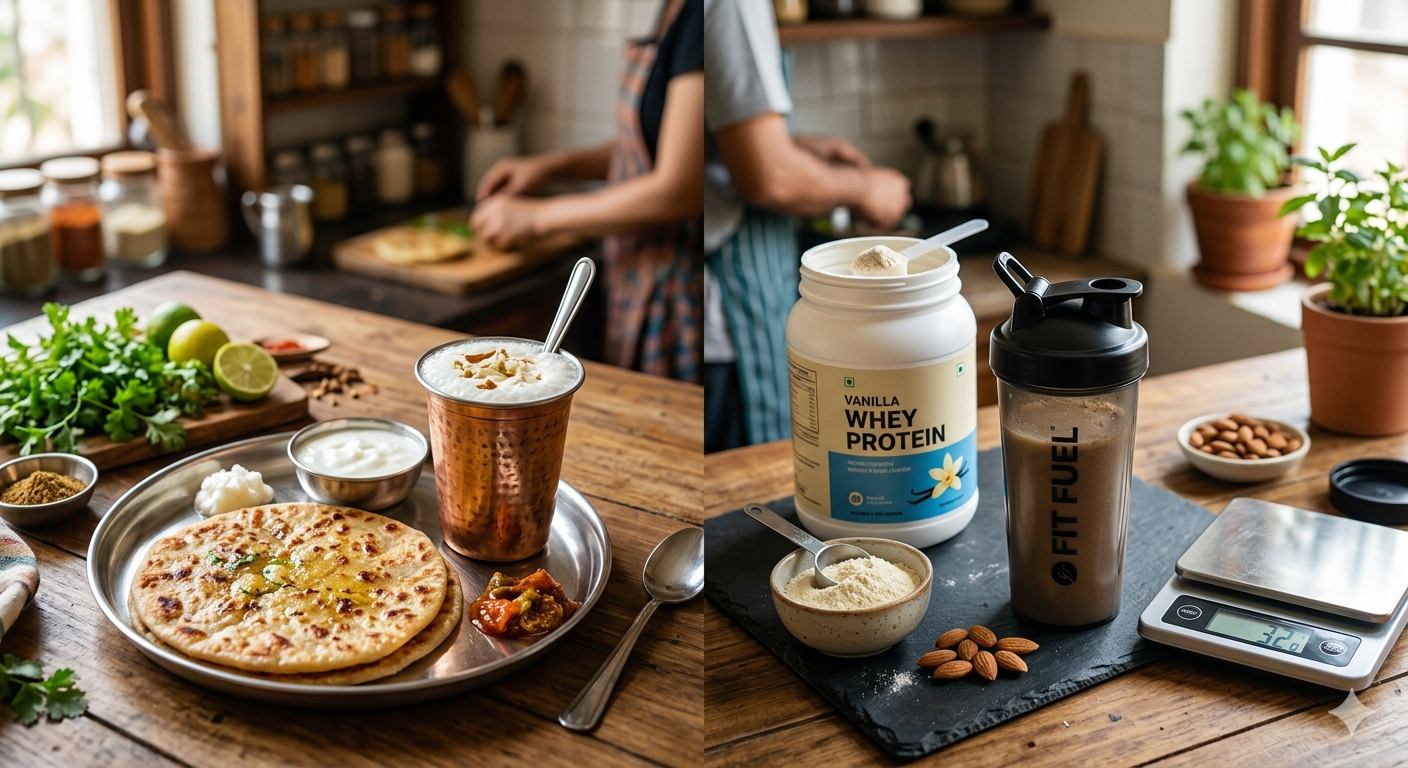

Paratha lassi provides around 12–18 grams of protein per meal at a cost of roughly Rs. 10–17 per gram, but comes with high calories and low protein density. Whey protein provides 22–25 grams of protein per scoop at around Rs. 16–21 per gram, with low calories and higher protein efficiency.
Final insight:
Paratha lassi is slightly cheaper per gram, but whey protein is more efficient for muscle gain due to higher protein concentration and better calorie control.
Introduction: The Real Debate in Pakistani Fitness Culture
In Pakistan, fitness advice often clashes with tradition. A typical morning starts with paratha and lassi, a combination trusted for generations. It is filling, affordable, and part of everyday life.
But once someone starts training seriously, a different voice appears. Trainers suggest whey protein. Online fitness content promotes protein shakes. This creates a practical confusion, especially for students and early earners who need results without wasting money.
The real question is not emotional. It is practical. How much protein are you actually getting, and what is the cost for each gram?
What Are You Comparing: Meal vs Protein Source
Paratha lassi and whey protein serve different roles, which is why this comparison often gets misunderstood.
Paratha lassi is a traditional Pakistani breakfast made from whole wheat atta, oil or desi ghee, and lassi prepared from yogurt or milk. It delivers energy, fullness, and a mix of nutrients.
Whey protein is a refined dairy supplement. It is processed to isolate protein, removing most fats and carbohydrates. It is designed specifically to support muscle recovery and increase protein intake efficiently.
So this is not simply desi food vs supplement. It is a comparison between a full meal and a concentrated protein source.
Paratha Lassi Protein Content (Realistic Breakdown)
A standard serving includes two parathas and one glass of lassi. The meal feels heavy, but protein content is often overestimated.
Average protein breakdown:
-
1 paratha: 4 to 6 grams protein
-
2 parathas: 8 to 12 grams protein
-
1 glass lassi: 4 to 8 grams protein, depending on thickness
Total protein:
12 to 18 grams per meal
Calories:
600 to 900 kcal on average
Most of these calories come from fats and carbohydrates. The protein content is moderate, not high. This is why many lifters feel full but still fall short of their daily protein requirement.
Whey Protein Content (High Protein Efficiency)
Whey protein is designed to deliver maximum protein with minimal calories.
Per scoop:
-
Protein: 22 to 25 grams
-
Calories: 110 to 140 kcal
-
Fat and carbs: very low
Whey protein contains all essential amino acids and is quickly absorbed by the body. This makes it one of the most efficient sources of protein for muscle recovery and growth.
Cost Per Gram Protein in Pakistan (2026 Reality)
Cost efficiency is the deciding factor for most Pakistani lifters.
Paratha Lassi Cost
Typical cost:
-
2 parathas: Rs. 60 to 120
-
1 glass lassi: Rs. 50 to 100
Total cost:
Rs. 110 to 220
Protein:
12 to 18 grams
Cost per gram:
Rs. 10 to 17
Whey Protein Cost
Typical market price:
-
Rs. 11,000 to 15,000 per tub
-
Around 30 servings
Per serving:
-
~24 grams protein
Cost per serving:
Rs. 370 to 500
Cost per gram:
Rs. 16 to 21
Direct Comparison: What Actually Matters
|
Factor |
Paratha Lassi |
Whey Protein |
|
Protein per serving |
12–18g |
22–25g |
|
Calories |
High |
Low |
|
Cost per gram |
Lower |
Slightly higher |
|
Protein density |
Low |
High |
|
Digestion speed |
Slow (casein) |
Fast |
|
Muscle efficiency |
Moderate |
High |
The Key Insight Most Lifters Miss
Paratha lassi may look cheaper per gram of protein, but it delivers low protein per calorie. This means you consume a large amount of calories before reaching your protein target.
Whey protein, although slightly more expensive, delivers high protein with minimal calories, making it more efficient for muscle gain and fat control.
This difference becomes critical for:
-
Lean muscle gain
-
Daily protein tracking
Is Paratha Lassi Good for Muscle Gain?
Paratha lassi can support muscle gain, but only under the right conditions.
It works when:
-
You are already meeting your protein needs
-
You require high calorie intake
-
You are not focused on strict body composition
It becomes limiting when:
-
It is your main protein source
-
You are trying to stay lean
-
You rely on it multiple times per day
The issue is not the food. It is using it as a primary protein strategy. Use foods that help to control calories.
Whey Protein: When It Makes More Sense
Whey protein is not mandatory, but it is practical in many situations.
It is useful when:
-
You cannot meet protein needs through food
-
You want lean muscle gain
-
You need quick post-workout nutrition
-
You want precise control over macros
It simplifies protein intake without increasing meal size or calories.
Cheapest Protein Sources in Pakistan (Practical Ranking)
For budget-focused lifters, protein cost matters.
Most cost-efficient sources:
-
Lentils (daal)
-
Eggs
-
Milk and yogurt
-
Chicken (varies by market)
-
Whey protein
-
Paratha lassi
Paratha lassi ranks lower because it is not protein-dense. It is mainly a calorie-heavy meal.
Practical Strategy for Pakistani Lifters
The smartest approach is not choosing one over the other. It is using both strategically.
Simple daily structure:
-
Morning: Paratha lassi for energy and routine
-
Post-workout: Whey protein for protein intake
-
Other meals: Eggs, chicken, lentils, milk
This approach balances culture, affordability, and performance.
Final Verdict
Paratha lassi and whey protein are not direct competitors. They serve different purposes. Paratha lassi is a traditional meal with moderate protein and high calories. It is slightly cheaper per gram but inefficient for protein-focused diets. Whey protein is a concentrated protein source. It is slightly more expensive per gram but provides higher protein density, better amino acid quality, and easier tracking.
Final takeaway:
For Pakistani lifters in 2026, the best approach is not choosing between tradition and supplements. It is understanding protein efficiency and using both in a way that supports consistent muscle growth within budget.
FAQs
How much protein is in one glass of lassi in Pakistan?
A typical glass of lassi (250–300 ml) provides around 4 to 8 grams of protein, depending on how it is prepared. Thick lassi made with more dahi or whole milk contains higher protein, while watery lassi has lower protein content. Most of the protein comes from dairy, mainly casein and whey.
2. Is paratha lassi good for muscle gain?
Paratha lassi can support muscle gain, but it is not an efficient protein source on its own. It provides moderate protein with high calories, which can help in bulking. However, relying only on it makes it difficult to meet daily protein needs without consuming excess calories. For better results, it should be combined with higher protein sources.
3. Which is better: lassi or whey protein for bodybuilding?
Whey protein is better for bodybuilding because it provides higher protein per serving, faster absorption, and better amino acid availability. Lassi contains natural protein but in smaller amounts and with more calories. Lassi can be part of a healthy diet, but whey protein is more efficient for meeting muscle-building protein targets.
4. What is the cheapest way to get protein in Pakistan in 2026?
The cheapest protein sources in Pakistan are lentils (daal), eggs, milk, and yogurt. These provide good protein at a lower cost per gram compared to supplements. Whey protein is more expensive but offers convenience and higher protein density. Paratha lassi is not considered a cheap protein source because it is low in protein relative to its calories.
Share:
Is Online Protein Powder Always Fake in Pakistan? How to Buy Authentic Supplements
Do Cheap Whey Proteins Have Hidden Fillers? How to Check Labels in Pakistan (2026 Guide)