

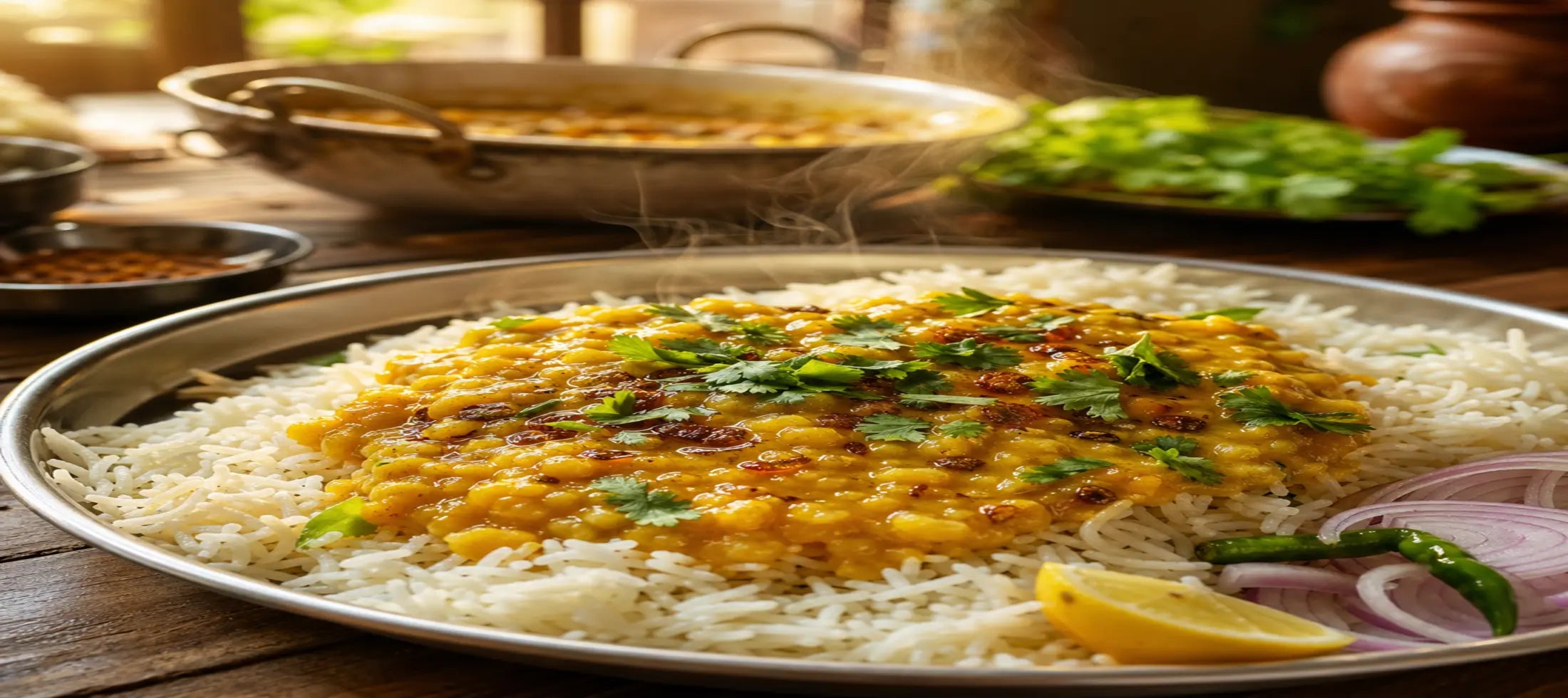

For many people in Pakistan, the question is simple but important. Is it possible to rely on daal chawal for protein, or is whey protein necessary for muscle growth?
This is not just a fitness question. It is about affordability, accessibility, and trust in traditional food. With whey protein prices reaching PKR 15,000 to 25,000 per tub, many students, hostel residents, and budget-conscious gym-goers are looking for realistic alternatives.
This article gives a clear, evidence-based answer using nutrition science and real Pakistani diet patterns.
Why This Question Matters in Pakistan
Daal chawal is one of the most common meals in Pakistan. It is affordable, widely available, and part of daily life in homes and hostels. For many people, it is eaten once or even twice a day.
At the same time, whey protein is often seen as essential for building muscle. Social media and gym culture reinforce the idea that progress is difficult without supplements.
The reality lies somewhere in between. Understanding that balance is key.
Daal Chawal Protein Content: Actual Numbers
Let’s begin with the basic question most people ask.
How much protein is in one plate of daal chawal?
A typical serving includes:
-
One cup of cooked lentils
-
One cup of cooked rice
Protein breakdown:
-
Lentils provide around 12 to 15 grams of protein
-
Rice provides around 4 to 5 grams
Total protein per plate is approximately 16 to 20 grams
This is a meaningful amount, especially for a single meal. However, total daily intake matters more than individual meals.
Protein Quality and Amino Acid Profile
Protein is not only about quantity. Quality plays a major role in muscle growth.
Proteins are made of amino acids. The body requires all essential amino acids to effectively repair and build muscle tissue.
Lentils and rice have different amino acid strengths:
-
Lentils are rich in lysine but low in methionine
-
Rice contains methionine but is low in lysine
When eaten together, they form what is known as complementary proteins. This improves the overall amino acid profile of the meal.
This is one reason traditional food combinations often have strong nutritional value.
Is Daal Chawal a Complete Protein?
Daal chawal comes close to being a complete protein when combined, but it does not match the quality of whey protein.
Protein quality is measured using systems such as:
-
PDCAAS (Protein Digestibility Corrected Amino Acid Score)
-
DIAAS (Digestible Indispensable Amino Acid Score)
-
Biological value
Whey protein scores very high in all of these. It is rapidly digested and provides all essential amino acids in optimal proportions.
Daal chawal provides a good amino acid balance but has lower digestibility and lower protein efficiency compared to whey.
Daal Chawal vs Whey Protein for Muscle Building
A direct comparison helps clarify the difference.
Daal Chawal
-
Protein per serving: 16 to 20 grams
-
Amino acid profile: good when combined
-
Digestibility: moderate
-
Absorption speed: slower
-
Muscle-building efficiency: moderate
-
Protein per serving: 24 to 27 grams
-
Amino acid profile: complete
-
Digestibility: very high
-
Absorption speed: fast
-
Muscle-building efficiency: high
This shows that whey protein is more efficient, especially for post-workout recovery. However, efficiency does not mean necessity.
Can You Build Muscle on Daal Chawal Only?
Yes, it is possible, but there are limitations.
To build muscle, the body needs sufficient daily protein intake. A general guideline is:
-
1.6 to 2.2 grams of protein per kilogram of body weight
For a 70 kg individual, that equals approximately 110 to 150 grams of protein per day.
If daal chawal provides around 18 grams per plate, reaching this target would require multiple servings. This creates two challenges:
-
High food volume can lead to discomfort
-
Calorie intake may become excessive before protein needs are met
In addition, the lower protein quality means muscle recovery may be slower.
So while muscle gain is possible on daal chawal alone, it is not the most practical or efficient approach.
Common Misconception About Traditional Diets
A common belief is that previous generations built strong bodies without supplements, so modern users should do the same.
This idea ignores important differences:
-
Physical activity levels were much higher in the past
-
Diets included more variety such as milk, butter, and meat
-
Fitness goals were different from modern bodybuilding standards
Today’s lifestyle often includes long sitting hours and limited protein diversity. This changes nutritional requirements.
A Practical Pakistani Diet Approach
The best approach is not choosing between daal chawal and whey protein. Instead, focus on total protein intake and balanced food choices.
A practical strategy includes:
-
Using daal chawal as a base meal
-
Adding eggs for high-quality protein
-
Including milk or yogurt daily
-
Using chicken when the budget allows
-
Using whey protein only when convenient or necessary
This approach improves both protein quantity and quality without significantly increasing cost.
Cheap Protein Sources in Pakistan
For those on a limited budget, the following foods provide strong nutritional value:
-
Eggs
-
Lentils such as moong daal, masoor daal, and chana daal
-
Milk and yogurt
-
Peanuts and peanut butter
-
Chicken in controlled portions
These options can help meet protein requirements without relying entirely on supplements.
Pakistani Vegetarian High-Protein Diet
A vegetarian diet can meet protein needs if planned carefully.
Key components include:
-
Multiple types of lentils
-
Dairy products if included
-
Chickpeas and beans
-
Soy products were available
Without planning, protein intake may remain insufficient.
Final Verdict
Daal chawal is a valuable protein source and an important part of the Pakistani diet. It provides a reasonable amount of protein and a better amino acid profile when combined.
However, it does not fully match whey protein in terms of protein quality, digestibility, and efficiency for muscle growth.
The most accurate conclusion is:
-
Daal chawal can support muscle building
-
Whey protein improves convenience and efficiency
-
Total daily protein intake is the most important factor
FAQs
How much protein is in one plate of daal chawal?
A standard plate provides around 16 to 20 grams of protein, depending on portion size.
Can I build muscle on daal chawal only?
Yes, but it requires large quantities and careful planning. Progress may be slower.
Is daal chawal a complete protein?
It becomes nearly complete when combined but still does not match whey protein quality.
Daal chawal vs whey protein for gym which is better?
Whey protein is more efficient for muscle growth, but daal chawal is a strong natural base.
What are cheap protein sources in Pakistan?
Eggs, lentils, milk, chickpeas, and chicken are among the most affordable options.
Do I need whey protein to build muscle?
No. It is a convenient supplement but not essential if your diet meets protein requirements.
Share:
Role of Desi Ghee in Improving Nutrient Absorption
Healthy Fats and Protein: Why Peanut Butter is Popular in Fitness Diets