

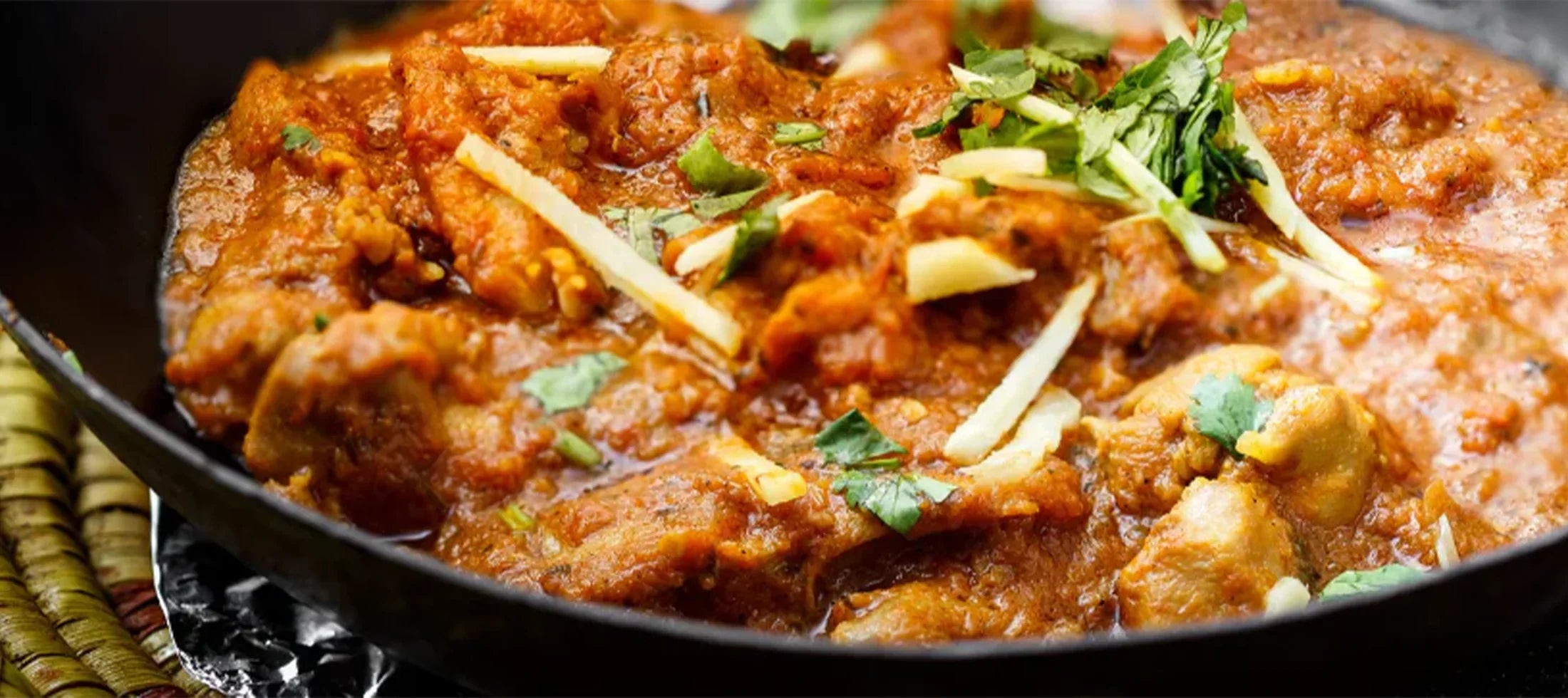
There's nothing quite like a steaming hot bowl of butt karahi to tantalize your taste buds and satisfy your hunger. This spicy and flavorful dish is a favorite among foodies all over Pakistan, and for good reason — it's delicious!
The Butt Karahi is typically made with chicken, mutton, or beef, along with a variety of spices and herbs. It's traditionally served with naan bread or rice, making it a filling and satisfying meal.
Now, onto the burning question!
How many calories are in a serving of butt karahi?
The number of calories in Butt Karahi can vary depending on the type of meat and the amount of oil used in the cooking process. However, on average the chicken karahi dish provides roughly 190 calories per 100-gram serving, with 4 grams of carbohydrates, 15 grams of protein, and 13 grams of fat.
On the other hand, mutton karahi has about 230 calories per 120-gram serving, with 5 grams of carbs, 14 grams of protein, and 17.5 grams of fat.
The beef karahi dish contains approximately 200 calories per 100-gram serving, consisting of 11.7 grams of fat, 44.9 grams of carbs, and 19.68 grams of protein.
While Butt Karahi is undoubtedly delicious, it may not always be the healthiest option if you are watching your calorie intake. However, with a few simple tweaks, it can be a relatively healthy dish that still satisfies your taste buds.

One simple tip is to opt for leaner cuts of meat, such as chicken breast or beef sirloin, which can help lower the calorie count. Another way to reduce the calorie count is to use less oil when cooking, or to use healthier cooking oils such as olive or vegetable oil.
In addition to reducing calorie intake, adding more nutrients to your Karahi is also important for a healthier meal. One great option is to pair it with grilled vegetables, such as zucchini, eggplant, or bell pepper, or with a fresh salad. These vegetables are high in fiber and nutrients, which can help you feel fuller for longer and more satisfied.
Another way to increase the nutrition content of your Karahi is to substitute cream or regular yogurt with Greek yogurt. Greek yogurt has less saturated fat, high in protein and calories than cream or regular yogurt while still providing a creamy texture to your curry.
Healthier Alternatives and Portion Control
You can still enjoy Karahi and keep it lighter by changing a few small things in the way you cook it.
Here’s what helps the most:
-
Choose Chicken Over Mutton: Chicken naturally has less fat and absorbs less oil while cooking. It’s an easy swap that instantly lowers calories.
-
Switch the Oil Type: Try olive oil or mustard oil. Use just two tablespoons and you’ll still get that same deep, rich flavor without soaking the meat.
-
Skip the Butter and Cream: Restaurant-style Karahi often looks shiny because they add butter or cream at the end. It adds hundreds of calories with no real benefit. Instead, use yogurt or crushed tomatoes for a smoother texture.
-
Add Fresh Veggies: Toss in onions, green peppers, or tomatoes while cooking. They make the dish more filling and add nutrients without extra calories.
-
Go easy on salt and masala packs: They make you hungrier later. Use fresh spices instead of heavy ready-made mixes to keep it lighter on sodium and oil.
-
Control the Portion: Serve yourself a smaller bowl and fill the rest of your plate with salad or brown rice. Eating slower also helps you feel full with less food.
Homemade Karahi cooked with these changes can end up being 30 to 40 percent lower in calories compared to the restaurant version. Even small adjustments, like reducing oil or skipping the butter topping, make a noticeable difference.
Takeaway
It's natural to crave your favorite foods, but with the right ingredients and cooking techniques, you can make them much healthier without sacrificing taste.
So next time you're yearning for a bowl of spicy goodness, don't hesitate to indulge in some homemade Karahi. Just remember to enjoy it in moderation and make healthy choices to fuel your body with the nutrients it needs.
FAQs
Is Chicken Karahi healthier than Mutton Karahi?
Yes, chicken Karahi is lighter and has less fat. Mutton Karahi is heavier and higher in calories, which makes chicken the smarter pick if you’re eating clean.
How can I reduce the calorie count in Karahi?
Use less oil, skip the butter, and cook on low heat so the meat releases its natural juices. You’ll get the same rich taste without piling on extra calories.
Does using less oil make a big difference in calories?
It really does. Even one tablespoon less can save you 120–150 calories. That’s almost like skipping a biscuit or half a cup of chai worth of calories.
Are restaurant-style Karahis higher in calories than homemade ones?
Yes, because they use more oil, butter, and salt for flavor. Homemade Karahi is always easier to control because you know what you are adding.
How does Karahi compare to other Pakistani dishes in calories?
It’s heavier than daal or mixed sabzi, but lighter than biryani or nihari. So it sits somewhere in the middlle, rich in flavor, moderate in calories, depending on how it’s cooked.
Approved by Certified Dietitian
Share:
Summer’s Gift: Imli Aloo Bukhara Sharbat (Tamarind Plum Juice)
Red Beans/Lobia: The nutritious legume